The Reality of a Clean Building Site
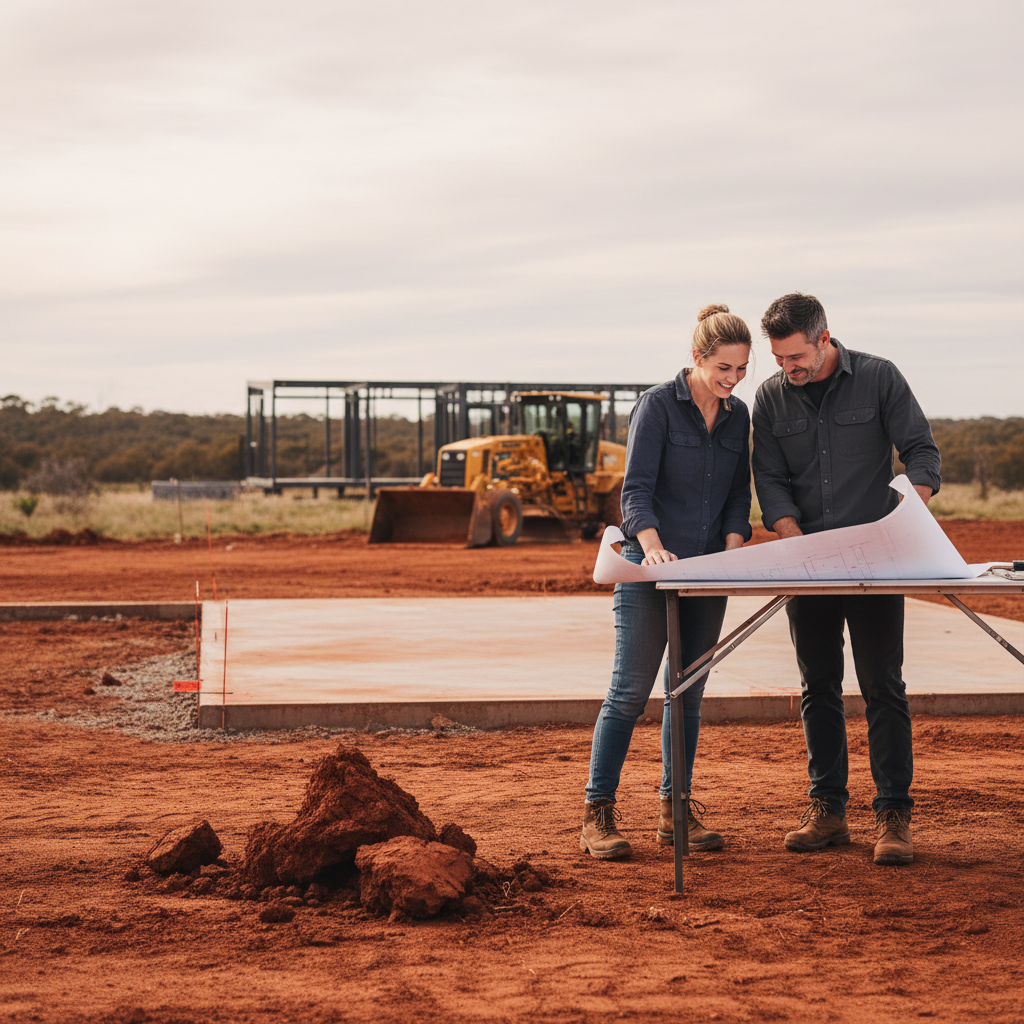
Most blokes think site prep is just hiring a bobcat for an hour to push some dirt around. It isn't. If you mess up the foundation or ignore the drainage, your steel frames won't sit flush, your windows will stick, and you'll be swearing at a spirit level for six months. I've seen it happen on jobs from the Sunshine Coast down to Gippsland. Site preparation is about 80 percent of the hard work. The actual assembly is just the reward for not being lazy during the earthworks phase.
Before that first semi-trailer arrives with your BlueScope TRUECORE frames, the ground needs to be more than just flat. It needs to be stable. We're talking about soil through-flow, compaction rates, and making sure your plumber isn't going to be digging through rock for three days because you didn't check the service depth. You’re the owner-builder. That means the buck stops with you, not the guy driving the excavator.
Soil Tests and the S-Class Nightmare
You can't skip the geotechnical report. Don't even try. Most councils won't let you anyway, but even if you're out in the sticks, you need to know what's under the grass. If you've got highly reactive clay, often called 'fatty' clay, your slab is going to move. It's just a fact. In Australia, we categorise these as Class S, M, H, or E. If you're building on H1 or H2 soil, your engineer is going to specify a lot more steel reinforcement in that concrete than if you were on sand. Actually, sand has its own problems with slumping during the pour.
Because steel frames are precision-engineered, they don't have the 'give' that old-growth timber used to have. If your slab heaves because you didn't put in proper spoon drains or because you ignored the soil class, you'll see it in the plasterboard later. Get a proper site classification report. It'll cost you maybe 500 to 800 bucks, but it saves you ten grand in cracked walls down the track. Plus, your slab designer needs those numbers to figure out the beam depths.
The Slab Tolerance Game
Steel frames are cut to the millimetre. If your slab is 20mm out of square or has a 15mm dip in the middle, you're in for a world of pain. I always tell owner-builders to be on-site when the concrete's going down. Specifically, check the placement of your rebate for the sliding doors. Nothing is worse than getting your kit with these beautiful powder-coated doors only to find the concrete is too high for the track to sit flush.
AS 2870 is the standard for residential slabs and footings. Read it. Or at least make sure your concretor has read it recently. You want that slab level within a 5mm tolerance across the entire footprint. If they mess it up, they’ll be out there with a concrete grinder for two days, and that dust gets into everything. It's a filthy job that can be avoided with a laser level and some basic competence during the screeding process.
Drainage is Your Best Friend
Water is the enemy of any building site. I've seen kits delivered to sites that look like a swamp because the owner didn't think about overland flow. If your block has even a slight slope, you need to divert water away from the building envelope before you even think about footings. Dig a temporary swale drain up-slope. It keeps your pad dry so your trades aren't sinking to their knees in mud while they're trying to stand frames.
Think about where your downpipes are going to go. In most parts of NSW and QLD, you need to have your stormwater pipes in the ground and connected to a legal point of discharge before the roof goes on. If you wait until after the kit is up, you'll be digging by hand under the eaves, which is a great way to ruin your weekend. Get the trenches sorted early. Lay the pipe, bed it in sand, and mark it with tape so the next guy with a shovel doesn't put a hole through it.
Access and the 'Turning Circle' Trap
This is where most DIYers get caught out. That kit arrives on a big truck. If you live down a skinny dirt track with overhanging gum trees or a tight 90-degree bend, that driver isn't going to make it. And they won't try. They'll drop your whole house on the side of the main road and drive off. Now you're spending your Saturday moving three tonnes of steel frames and roofing sheets with a ute and a trailer.
Look at your site access through the eyes of a heavy vehicle driver. You need at least 3.5 metres of width and 4.5 metres of height clearance. If there's a low-hanging power line, call the energy provider and get them to check the height. Also, where is the truck going to park while they unload with the crane or Moffett? You need a flat, hard-stand area. If it's been raining for a week, that truck will sink and you'll be paying a massive towing fee to get him out. Chuck down some road base or crushed rock where the delivery needs to happen. It's a small investment for peace of mind.
The Staging Area
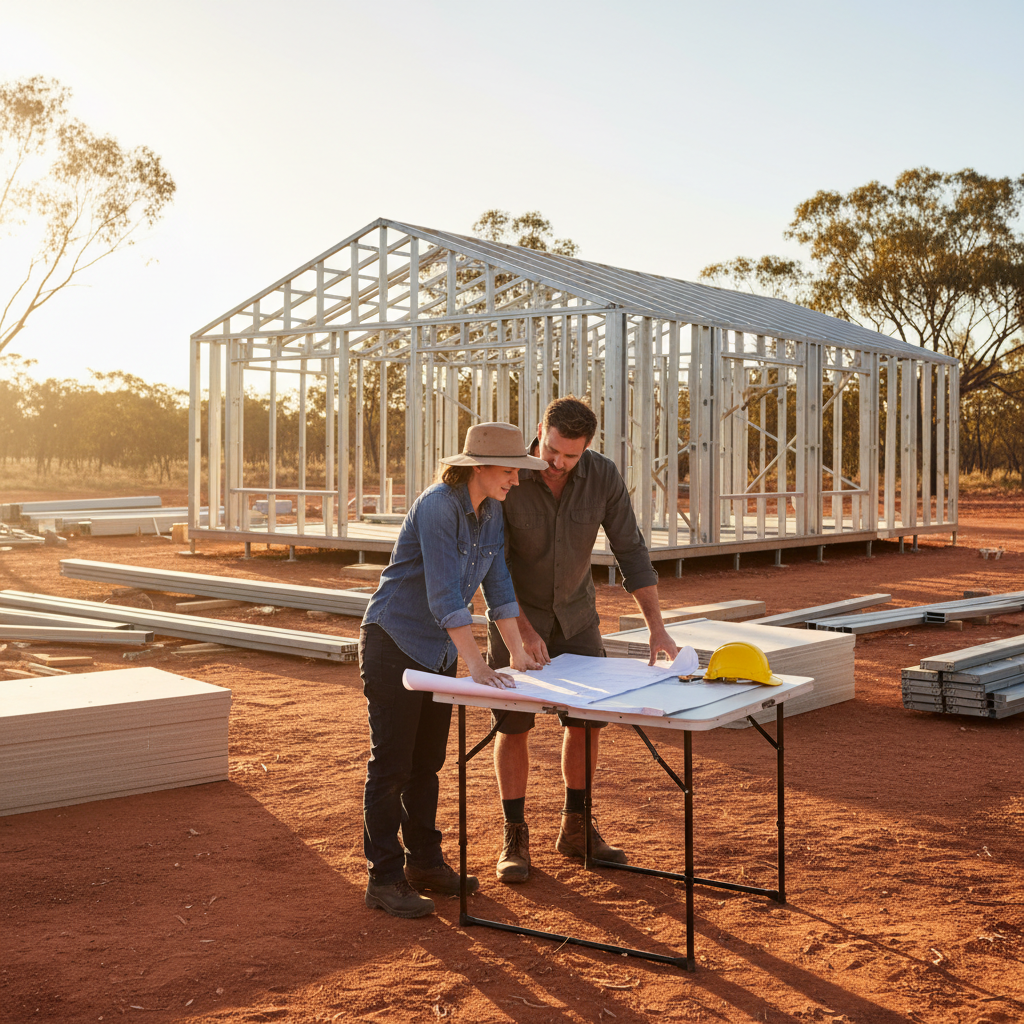
Once the kit is off the truck, you need a plan for where it sits. Don't just let them drop it in a big pile in the middle of where your driveway is supposed to go. You want the flooring and frames closest to the slab, and the roofing cladding further back because you won't need those for a few weeks. Keep everything off the ground. Use plenty of dunnage - those timber shipping skids or scrap 4x2 - to keep the steel out of the wet grass.
Cover it up, too. Even though it's high-quality BlueScope steel, you don't want a month of Aussie rain and dust sitting in the channels before you've even stood the walls. A few heavy-duty tarps from the local hardware store will do the trick. Just make sure you tie them down properly because a loose tarp in a gale can be dangerous. Actually, it’s more than dangerous, it can bend your flashing or scratch your windows before they're even out of the crate.
Services and the 'Rough-In' Logic
Before the slab is poured, you’ve got your 'under-slab' drainage and services. This is your one shot to get the toilet in the right spot. Double-check your floor plan measurements against the formwork. If that stack pipe is 100mm out, you'll be chipping concrete later. It's also worth running a spare conduit for future electrical or NBN cables. You might not need it now, but in five years when you want a shed or an outdoor kitchen, you'll think you're a genius for putting that 25mm pipe in the ground today.
Don't forget the termite protection. In Australia, white ants aren't a joke. Since you're using steel frames, they won't eat the structure, which is a massive win, but they'll still chew through your architraves, kitchen cabinets, and flooring if they get in. You need a physical or chemical barrier as per AS 3660.1. Most councils want a certificate from a licensed installer before they'll sign off on your slab. Keep that paperwork safe.
Final Check List Before Delivery
I reckon the best way to keep your head on straight is a final walk-through. Stand on your pad and look around. Is the temporary power pole in? Do you have a site toilet? Believe me, your trades will disappear faster than a meat pie at a footy match if there isn't a toilet. Is there a clear path for the forklift? If you can answer yes to all that, you're ahead of the game. Building a kit home is a'll about momentum. If you get the site prep right, you'll keep that momentum through the whole build. If you don't, you'll be fighting fires from day one.