Harnessing the Australian Sun through Technical Design
When you embark on the journey of building a kit home in Australia, you aren't just putting up a structure. You are creating a living environment that must withstand one of the most diverse and demanding climates on earth. From the humid tropics of Queensland to the frosty winters of the Tasmanian highlands, the way a house interacts with the sun determines its comfort and long term livability.
Solar passive design is the art and science of using a building's orientation, materials, and layout to control temperature naturally. By understanding these technical building techniques, owner-builders can significantly reduce their reliance on artificial heating and cooling. This guide dives deep into how you can apply these principles to your steel frame kit home project.
The North Facing Rule: Orientation is Everything
In the southern hemisphere, the sun travels through the northern sky. To maximize natural warmth in winter while staying cool in summer, the orientation of your home is the single most important technical decision you will make during the site planning phase.
Ideally, your main living areas should face within 15 to 20 degrees of true north. This allows the low-angle winter sun to penetrate deep into the house, warming the internal spaces. Conversely, the high-angle summer sun can be easily blocked using eaves and shading devices, keeping the interior cool.
Practical Site Planning Tips:
- Identify true north, not magnetic north, as there is a slight variation across Australia.
- Place utility rooms like the laundry, garage, and bathrooms on the south or west side of the home to act as thermal buffers.
- Minimize windows on the east and west walls. The morning and afternoon sun in summer is low and intense, making it difficult to shade and a primary cause of overheating.
Thermal Mass: Your Internal Heat Battery
Thermal mass refers to materials that have the capacity to absorb, store, and later release heat. In a solar passive home, thermal mass acts like a battery. During a winter's day, high thermal mass materials soak up the sun's radiation. As the air cools down at night, that stored warmth is slowly released back into the room.
Commonly, Australian owner-builders achieve this through a concrete slab floor. While the kit home provides the structural steel frame and cladding, your choices during the slab and fit-out phases are crucial. Polished concrete or slate flooring in north-facing living areas is highly effective. However, it is vital to remember that thermal mass must be paired with insulation to prevent that heat from escaping outward.
The Role of High Performance Insulation
Think of insulation as the protective skin that keeps your carefully managed internal temperature stable. In a steel frame kit home, insulation plays a critical role in breaking the thermal bridge between the external environment and the internal living space.
When using BlueScope TRUECORE steel frames, you have a precise and dimensionally stable structure that allows for the easy installation of high-quality insulation batts and reflective foils. For Australian conditions, a multi-layered approach is often best. A combination of reflective foil under the roofing sheets and thick bulk insulation in the ceilings and walls ensures that the heat you gain in winter stays in, and the scorching summer heat stays out.
Glazing and Shading: Controlling the Light
Windows are often the weakest point in a home's thermal envelope. From a technical building perspective, the size, type, and placement of glazing are paramount. To truly master solar passive design, you must look beyond standard clear glass.
The Technical Specs of Glass
Consider using Low-E (low-emissivity) glass, which has a microscopic coating to reflect heat while letting light through. In cooler climates, double glazing is an excellent investment to prevent heat loss. In the kit home context, choosing the right window specifications during the ordering process can save thousands of dollars in later retrofitting.
Shading Geometry
The beauty of solar passive design is that it works with the seasons. By calculating the correct width for your eaves, you can create a permanent solution for temperature control. A well-calculated eave will shade the window entirely during the summer solstice while allowing full sun to enter the home during the winter solstice. This is a simple, maintenance-free building technique that defines high-performance Australian housing.
Cross Ventilation and Natural Cooling
While solar passive design often focuses on winter warmth, many Australians spend more time worrying about summer heat. Natural cooling through cross-ventilation is a key technical pillar. This involves placing windows and doors in a way that encourages breezes to flow through the home.
To capture cooling breezes, you need to understand the local wind patterns. For example, many coastal regions benefit from a predictable afternoon sea breeze. By placing larger openings on the windward side and smaller openings on the leeward side, you create a pressure differential that pulls air through the house, a process known as the Venturi effect.
The Owner Builder Advantage
As an owner-builder managing a kit home project, you have a unique advantage. You are the one overseeing the site works and the final fit-out. This gives you the control to ensure that the solar passive elements are executed correctly.
For example, you can ensure that the slab is not covered by thick carpets in north-facing zones, which would insulate the thermal mass from the sun. You can also supervise the installation of insulation to ensure there are no gaps or compressions, which significantly reduce R-value performance. Building a kit home doesn't mean you have a cookie-cutter result, it means you have a precision-engineered frame that provides the perfect canvas for high-performance design.
Steel Frames and Precision Engineering
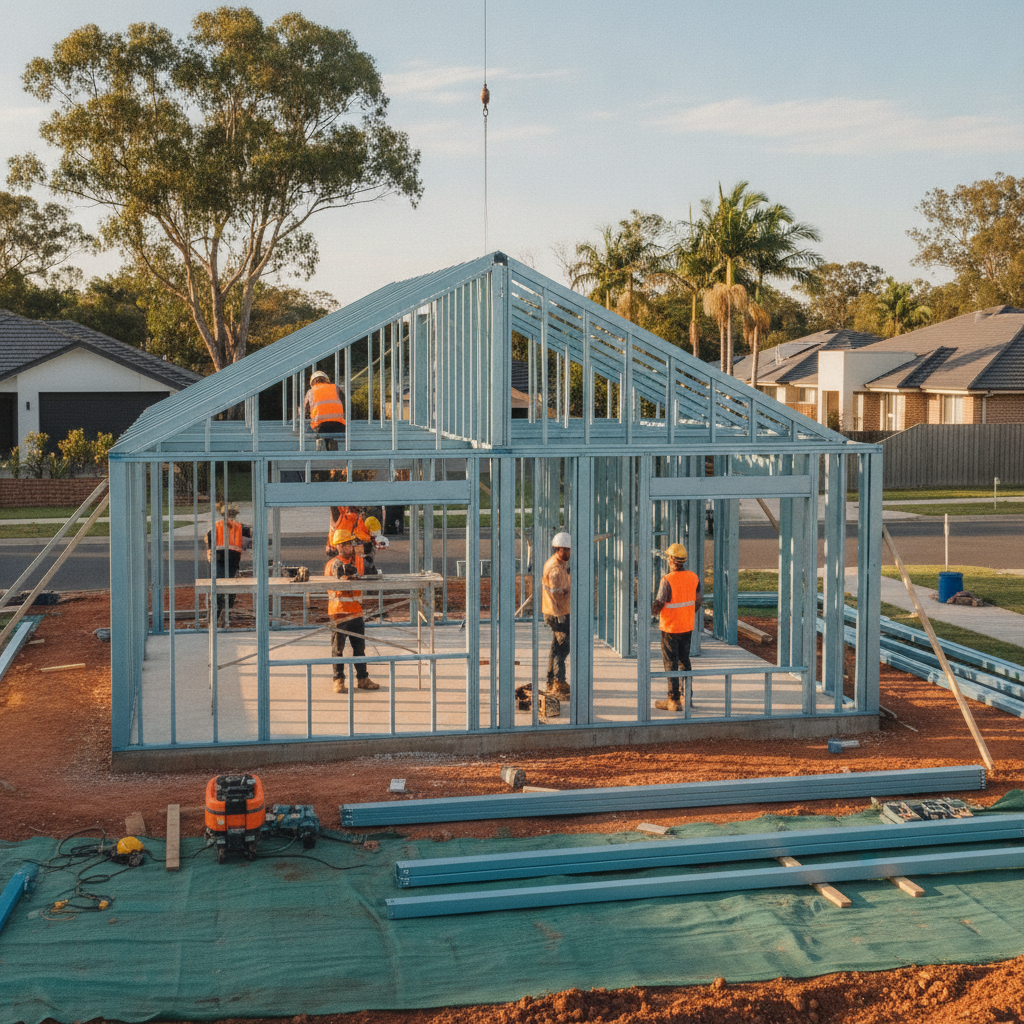
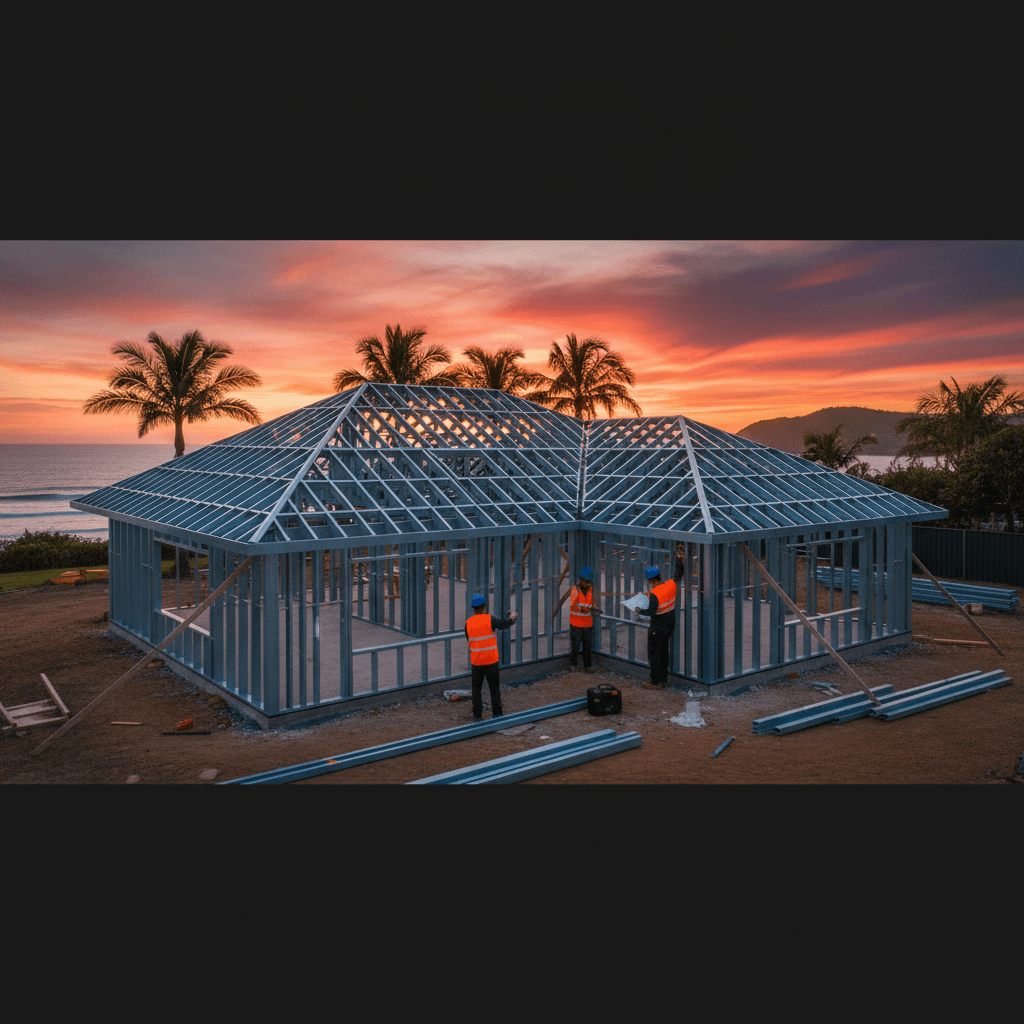
Using steel frames, such as those made from TRUECORE steel, offers distinct technical advantages for solar passive homes. Steel doesn't warp, twist, or shrink over time. This means that your door and window seals remain airtight for the life of the building. In a high-performance home, airtightness is essential to prevent unintended air leakage, which can account for up to 25 percent of heat loss in winter.
Furthermore, the strength-to-weight ratio of steel allows for larger spans and bigger window openings on north-facing walls without the need for massive, expensive lintels. This flexibility allows for better solar gain and more creative design choices that align with the principles of passive heating.
Conclusion: A Smarter Way to Build
Solar passive design is not a luxury or a trend, it is a fundamental shift in how we approach construction in Australia. By focusing on orientation, thermal mass, insulation, shading, and ventilation, you can create a kit home that is not only beautiful but also inherently comfortable and incredibly efficient.
For the Australian owner-builder, mastering these building techniques represents the ultimate win. It results in a home that responds to its environment, reduces the environmental footprint, and provides a healthier living space for years to come. When you combine modern kit home efficiency with age-old solar principles, you aren't just building a house, you're building a smarter future.