Steel Frames vs Timber: Why Your Kit Home Won't Warp or Shrink
Listen up. Building a home, especially a kit home you're probably planning to owner-build, is a huge effort. And if you've already spent an arvo or two scrolling through designs, dreaming about that perfect verandah, you'll know it's all about making solid choices from the get-go. One of the biggest, and often overlooked, choices is what your frame is actually made of. For us, and for anyone who's built with both, it's gotta be steel. Specifically, BlueScope TRUECORE steel.
Why? Because it doesn't warp. It doesn't shrink. It stands plumb and true, the way you built it, for decades. Timber's got its place, sure, but not when you're talking about the backbone of your home, not when you want predictable, reliable structural integrity.
The Heart of the Problem with Timber: Movement
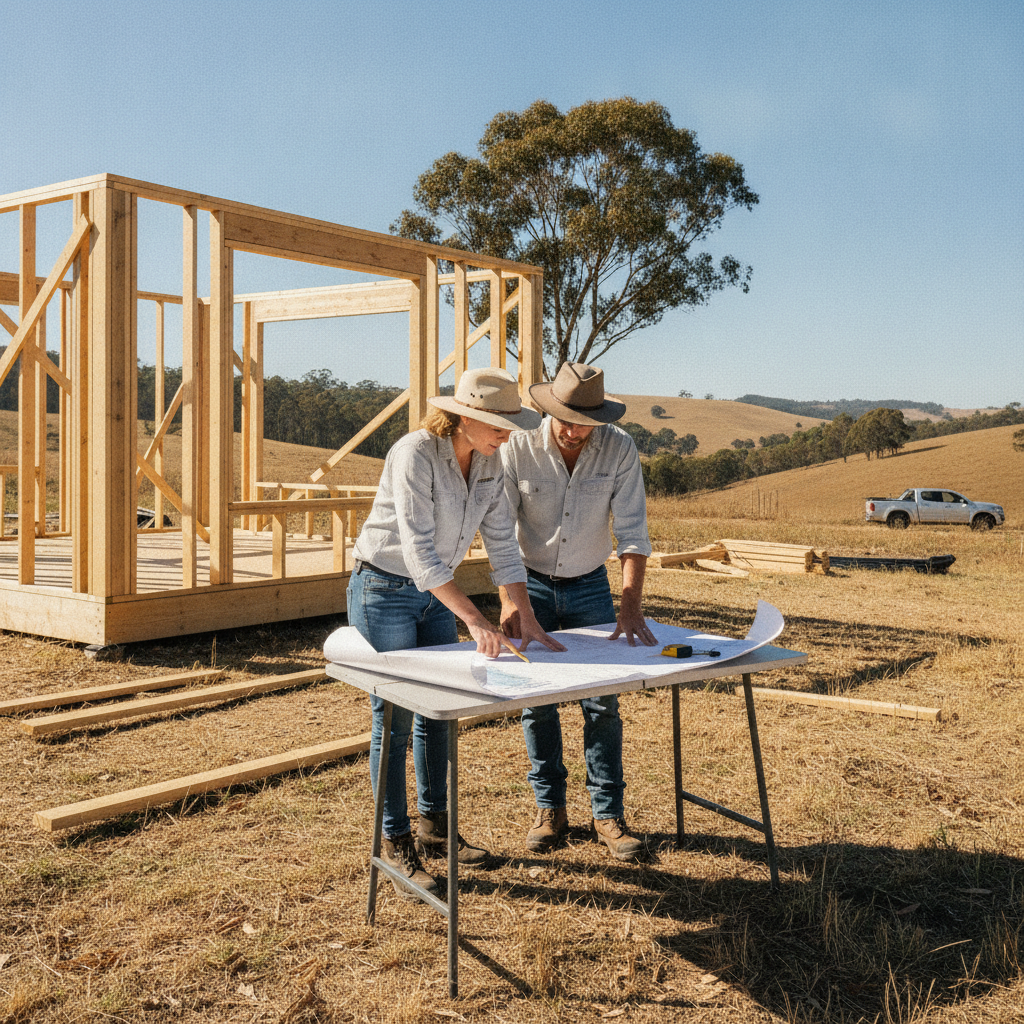
I've seen it heaps of times. A beautiful new timber-framed home, built in summer when everything's dry. Fast forward six months, a wet winter hits, then a scorching summer, and suddenly you're seeing cracks in cornices, doors that stick, and maybe even a slight wave in the plasterboard. What gives?
Timber's a natural product, right? And like all natural products, it breathes. It absorbs moisture from the air when it's humid, and it releases that moisture when things dry out. When it absorbs water, it swells. When it dries, it shrinks. This constant expansion and contraction, that 'movement', is the fundamental issue. It's not a fault of the builder; it's just how timber behaves.
Think about a fence post you've put in, or an old timber deck. Over time, that timber twists, bows, and checks. It's the same process, just on a grander scale, inside your walls. Even kiln-dried timber, which is certainly better than green timber, isn't immune. It'll still move, especially if it's exposed to significant changes in temperature and humidity before it's properly enclosed and protected within the home.
Steel: The Unmoving, Unflinching Backbone
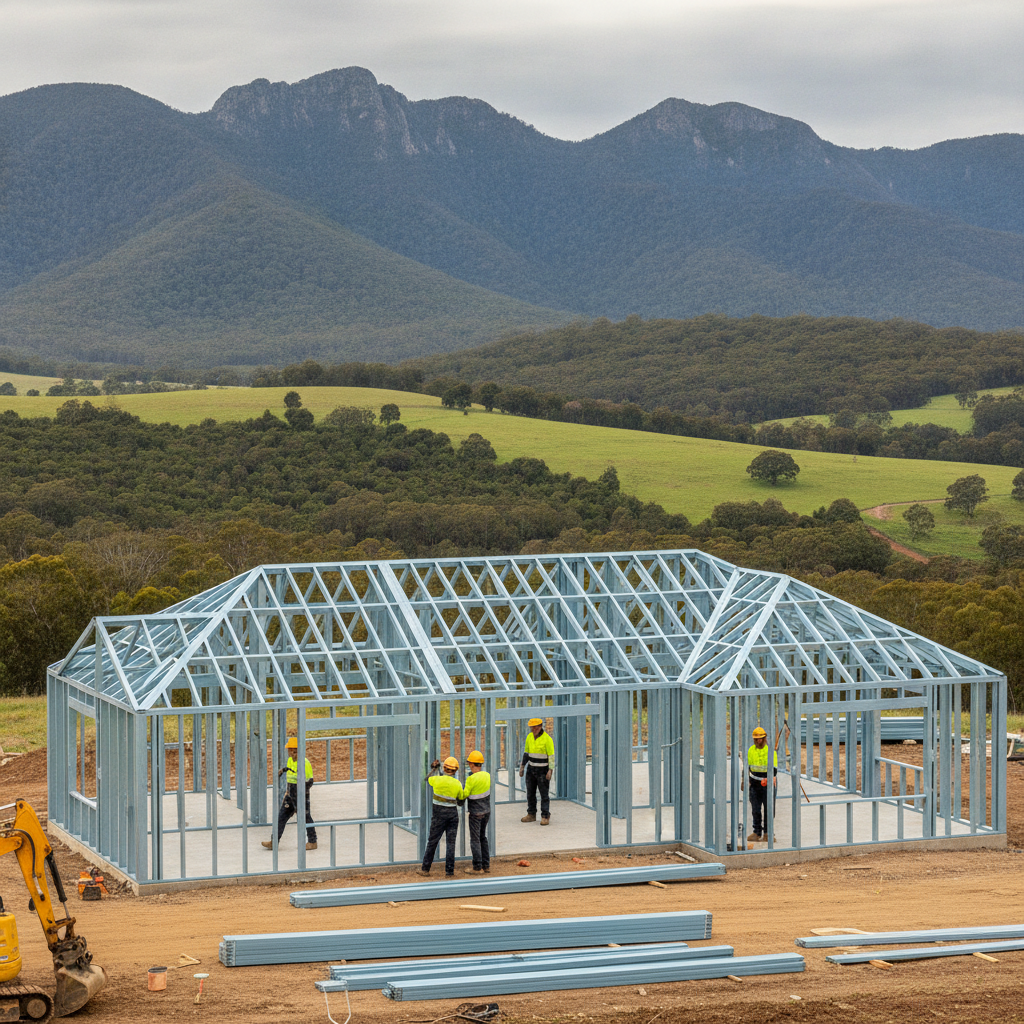
Now, steel, that's a different story. When we talk about kit homes built with TRUECORE steel frames, we're talking about a material that is dimensionally stable. It doesn't absorb moisture. It doesn't dry out. So, it doesn't expand, contract, warp, twist, or shrink due to changes in humidity. The frame you erect on day one, that's the frame you've got in ten years, in twenty years, in fifty years.
This stability is massive, especially for owner-builders. You're putting in the hard yards, making sure every stud is plumb, every top plate is level. You want that work to last. You don't want to come back in a year and start patching up cracks because the timber frame decided to have a bit of a wander.
What Does Dimensional Stability Really Mean for Your Build?
Alright, let's break down the practical advantages of this unmoving frame:
-
Perfectly Straight Walls: From day one, your walls will be dead straight. This isn't just about looking good; it makes fitting plasterboard a breeze. You're not shimming out studs or trying to bend sheets around a bow. Less fuss, less frustration, a better finish.
-
Seamless Finishes: That plasterboard, the cornices, the architraves - they all rely on a stable frame behind them. With steel, you get fewer cracking issues. The joints stay tight, the paint lines stay crisp. Your home looks newer for longer, and you're not constantly chasing minor repairs.
-
Doors and Windows That Always Work: Nothing's more annoying than a door that sticks in summer and rattles in winter. Timber movement can throw door and window frames out of square. With steel, your doors will swing freely, your windows will open and close smoothly, year in, year out. It's the little things that make a big difference to daily living.
-
No Nail Pop: Ever seen those little bumps under paint where a nail head has pushed through? That's often caused by timber drying and shrinking away from the plasterboard, leaving the nail proud. Steel frames don't shrink, so this problem virtually disappears. It means fewer callbacks for professional builders, and less frustration for owner-builders.
-
Consistency in Construction: For the owner-builder, consistency is key. You're not a full-time tradie; you need predictability. Steel frames offer that. Each component is manufactured to precise dimensions. You get a consistent product every time, making assembly straightforward. There are no surprises with warped studs or twisted joists to deal with. This predictability can really speed up the framing stage, too.
Beyond Stability: Other Steel Frame Perks for Kit Homes
While dimensional stability is a massive win, it's not the only reason we stick with steel for our kit homes. There are plenty of other advantages that make it the smart choice, especially in the Aussie climate.
Termite Proof
This is a big one. Australia is termite country. They're everywhere, and they love timber. A steel frame simply isn't a food source for termites. You eliminate a huge potential headache right there. No need for chemical treatments around your frame, no worries about structural damage from a hidden colony munching away. It's peace of mind you can't put a price on.
Fire Resistant
Bushfires are a harsh reality in many parts of Australia. Steel frames are non-combustible. They won't ignite, and they won't add fuel to a fire. This can be a critical factor, especially if you're building in a Bushfire Attack Level (BAL) zone. While other components of your home will still need to meet BAL requirements, having a steel frame as your core structure significantly improves your home's fire resilience.
Lighter and Stronger
It sounds contradictory, but it's true. Steel is stronger per weight unit than timber. This means you can often achieve the same structural integrity with lighter components, making handling easier on-site. Plus, a lighter frame can sometimes mean less load on your slab, though always check with your engineer. The strength also means it stands up well to high winds, which is a big deal in cyclonic regions, or just during a typical Aussie storm.
Sustainable Choice
TRUECORE steel contains recycled content, and it's 100% recyclable at the end of its very long life. It's a resource-efficient material. Plus, because steel frames don't need chemical treatments for pests, it's a healthier choice for your home's indoor environment. Less chemicals, less worry, especially if you've got little ones or are sensitive to those things.
Tips for the Owner-Builder and DIY Enthusiast
So, you're keen on a steel frame kit home. Good choice. Here's a few things to keep in mind:
-
Tools are Different, But Not Harder: You won't be using a nail gun for the frame. Steel frames bolt and screw together. You'll need an impact driver, some good quality self-tapping screws, and maybe a nibbler for any minor adjustments. It's different to timber, but it's not rocket science. The precision of the pre-cut components actually makes it quite straightforward.
-
Protect Your Frame: While steel is robust, you still need to protect it from corrosion, especially if you're near the coast. Our TRUECORE steel comes with a Zincalume coating, which is brilliant for protection. But keep an eye on any scratches during handling and touch them up with appropriate zinc-rich paint as needed. AS 4100, the Steel Structures standard, has plenty of good guidance on this.
-
Plan Your Electrical and Plumbing Carefully: Steel frames come with pre-punched holes for services. This is a huge time saver. But it means you need to have a solid plan for where your power points, light switches, and plumbing pipes are going. It’s harder to cut new holes in steel than to drill through timber, so get that layout right on paper before you start building.
-
Fixing Heavy Items: Hanging a big flat-screen TV or heavy cabinetry directly onto a steel stud isn't the same as timber. You'll need to use specific fixings designed for steel, or better yet, plan for noggins or blocking where you know heavy items will go. We include plenty of noggins in our kits, but always think ahead during the design and framing stage.
-
The Slab is Crucial: Steel frames are incredibly precise. This means your slab needs to be even more precise. A millimetre out on the slab becomes more noticeable with a perfectly straight steel frame. Get your concreter to do a top-notch job, and double-check those dimensions and levels yourself before the frame even arrives. This isn't just a steel frame thing, but it's amplified because of steel's lack of forgiveness for an uneven base.
The Final Word: Build Smart, Build Steel
Look, if you're going to put in the time, the sweat, and the cash to build your own kit home, you want it to be right. You want it to stand solid, square, and true for generations. You don't want to be fixing movement cracks in a few years, or worrying about termites chewing through your investment.
Choosing a BlueScope TRUECORE steel frame isn't just about strength; it's about the peace of mind that comes with dimensional stability. It means less hassle during construction, a better finish when it's done, and a home that stays looking and feeling solid, no matter what that harsh Aussie sun and rain throw at it. It's a smart choice, full stop.