The Reality of the Owner Builder Site
Stop thinking that your kit home is going to arrive and basically put itself together while you watch from the sidelines. It won't. I have seen too many blokes and families standing in a muddy paddock, looking at a pile of BlueScope steel, wondering where the hell the roof screws went. Building your own place is a massive undertaking. It is rewarding as all get out, but if you're disorganized, it will chew you up and spit you out before you even get the slab poured. You aren't just a builder now. You're a site manager, a logistics expert, and a professional problem solver. And usually, you're doing all this while your actual boss is calling you about a report that was due yesterday.
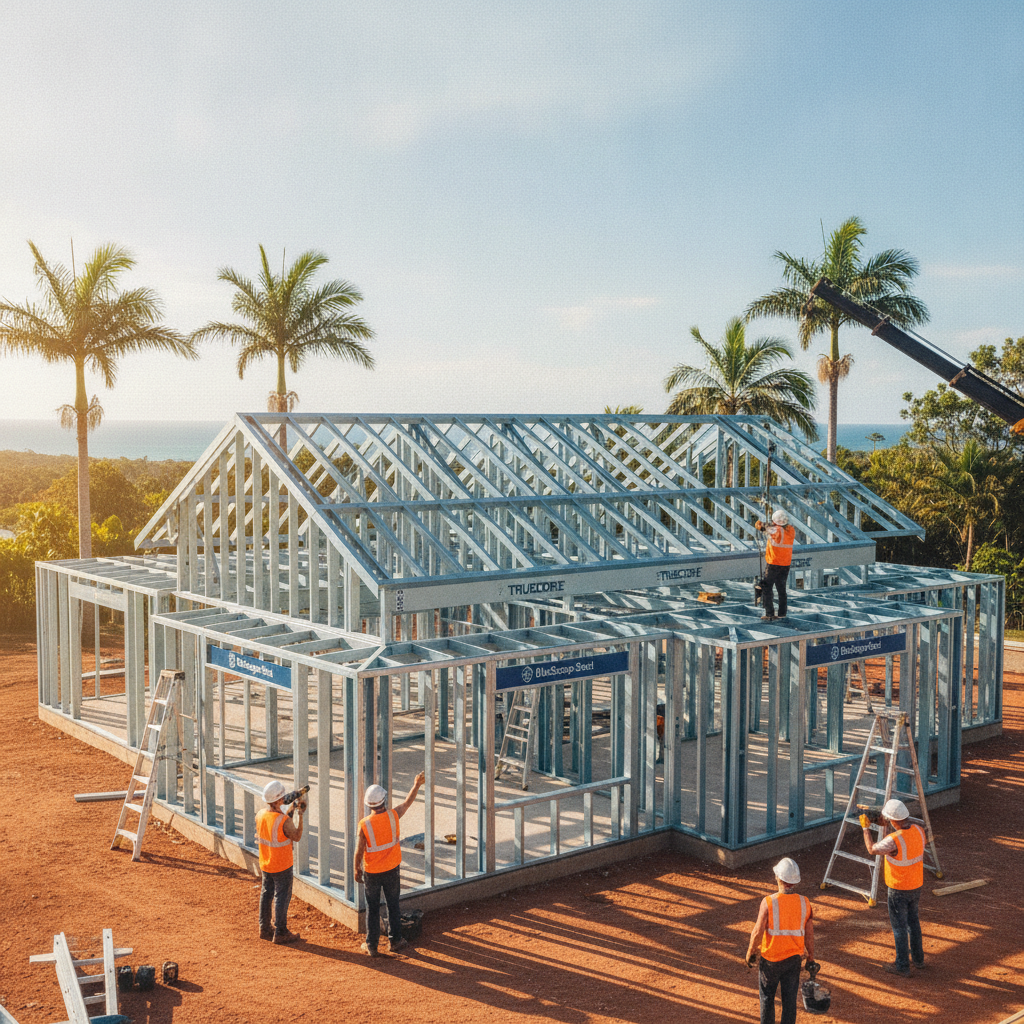
Organization is not just about having a tidy desk. On a building site, organization is about knowing exactly where your engineering drawings are when the inspector turns up unannounced. It's about having your TRUECORE steel frames staged in the right order so you aren't digging through a three-tonne pile to find one specific stud. If you're messy, you're slow. If you're slow, you're losing time. And time is the one thing you can't buy more of at Bunnings on a Sunday afternoon.
The Paperwork Trap
You need a physical folder. I don't care how good your phone is or how much you love the cloud. When you are standing in a gale with wet hands and the sparky needs to see the electrical layout, you do not want to be scrolling through 400 emails with 1% battery left. Get a big A3 ring binder. Put every single Council approval, every engineering spec for your steel frames, and every trade quote in there. Use plastic sleeves. Real ones. The thick ones that won't tear when they get a bit of grit in them.
Council DA processes in Australia are a special kind of headache. You'll deal with the NCC Volume 2 requirements and probably some specific Bushfire Attack Level (BAL) ratings if you're building anywhere near trees. Keep a log of every conversation you have with Council. Date it. Note down who you spoke to. 'Tracey from Planning' might say one thing on Tuesday, but 'Gary from Building' will say the opposite on Friday. Having a paper trail makes you look like you know what you're doing, even if you feel like you're drowning.
Managing Your Kit Delivery
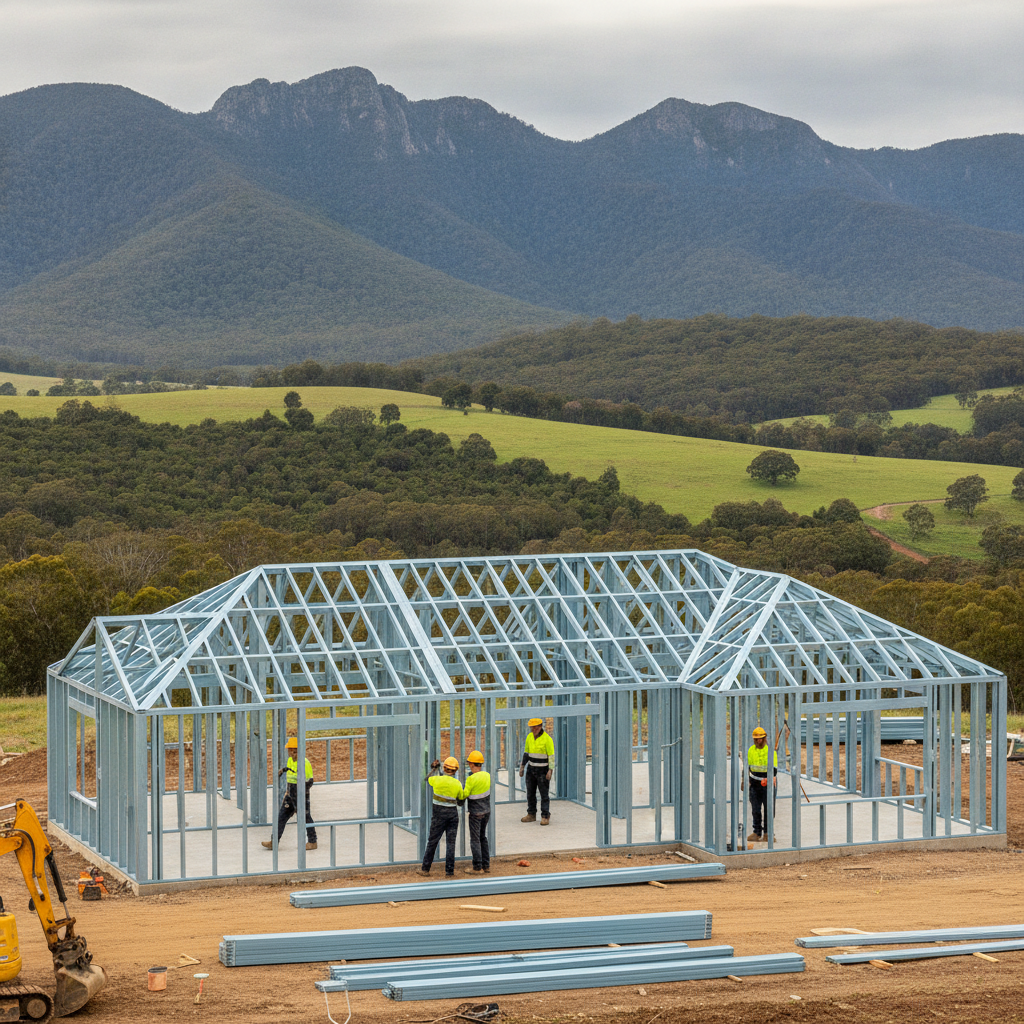
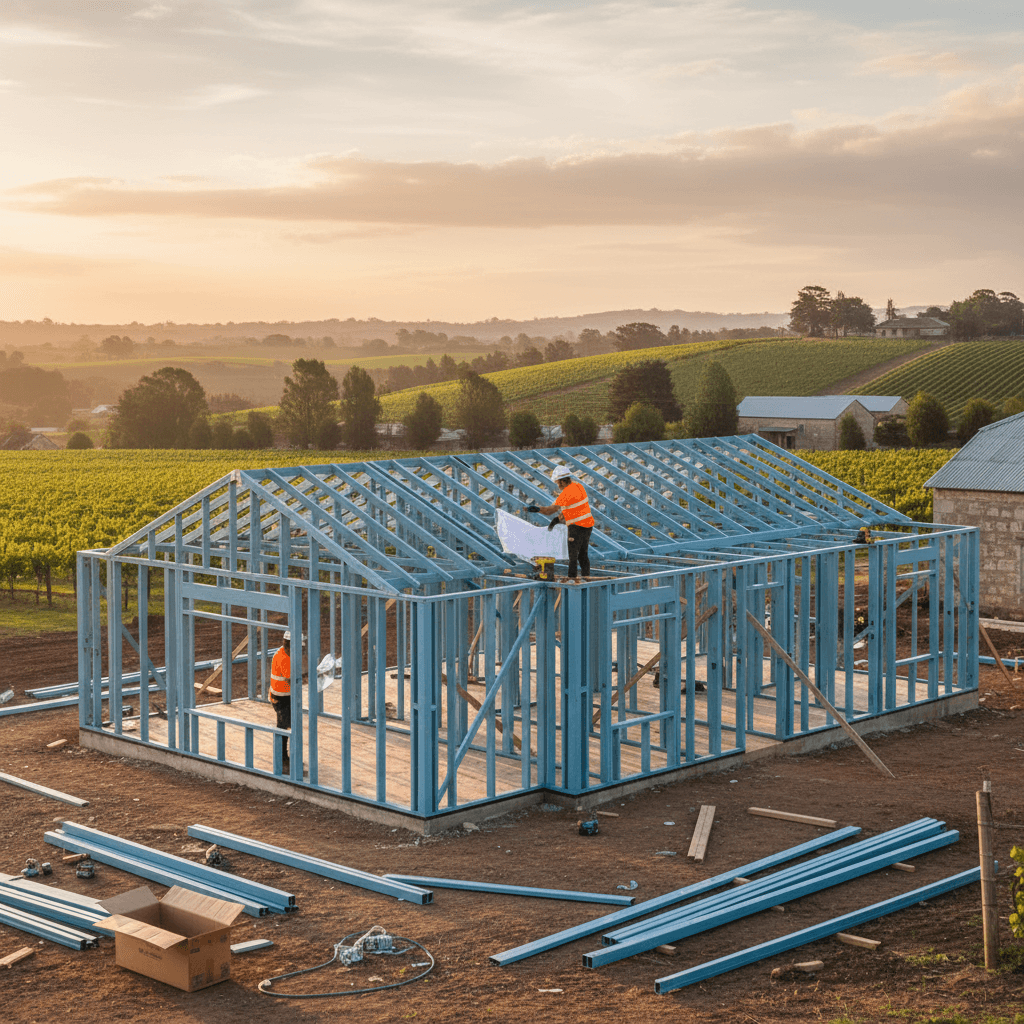
When the truck rolls up with your kit, the real work starts. This isn't like getting a pizza delivered. You're going to get frames, roofing, cladding, and windows all arriving, sometimes in one go, sometimes in stages. Our kits use BlueScope Steel, and it's tough stuff, but you still need to treat it right. Don't just let the driver dump the load in the middle of your driveway. You need a staging area.
Think about the build sequence. You want your floor system or slab ready first, obviously. Then your wall frames, then your roof trusses. If the cladding is buried under the roof sheets, you're going to be moving steel back and forth for three days just to get what you need. That is how things get scratched or bent. Wear your gloves, get some mates over for the heavy lifting, and tick off every single item on the delivery manifest as it comes off the truck. If a box of fasteners is missing and you don't realize it until Saturday morning, your whole weekend is shot. So, check it. Every nut, bolt, and flashing.
The Trade Schedule Shuffle
One of the biggest lies in construction is the 'standard' timeline. A plumber who says he'll be there Monday might actually mean Thursday, or he might mean three weeks from now when his current job stops leaking. As an owner builder, you are the one who has to juggle this. You need to be on the phone constantly. But don't be a pest. These blokes are busy. A quick text on Thursday arvo to confirm they're still coming Monday is better than a 20-minute call while they're under a sink.
And remember, your trades are people. If the site is a mess, they won't want to work there. Have a clear, flat area for them to park. Make sure there is a designated spot for their rubbish. If you treat your site like a tip, they'll treat your house like a tip. It's that simple. Plus, a clean site is a safe site. You don't want a subbie tripping over a stray piece of timber and ending up in the back of an ambulance. That's a paperwork nightmare nobody wants.
The Tool Kit Essentials
Don't buy the cheapest tools you can find. You'll regret it about ten minutes into your first day. But don't go and buy a $20,000 professional setup either if you're only building one house. Find the middle ground. You need a decent impact driver because you'll be driving a lot of screws into those steel frames. A good laser level is worth its weight in gold. Trying to level out a massive site with a 1.2-meter spirit level and a piece of string is a recipe for a wonky house.
Keep your tools organized in the back of the ute or a lockable on-site chest. Nothing slows a day down like searching for the one 10mm socket that's gone walkabout in the long grass. And for goodness sake, get a decent first aid kit. I'm talking about more than just a box of Band-Aids. You need eye wash, heavy bandages, and plenty of antiseptic. You're working with steel and power tools. Things happen.
Weather and Your Sanity
The Australian climate doesn't care about your build schedule. It'll be 40 degrees in the shade one day and a horizontal downpour the next. You need to plan for both. If it's a heatwave, you start at 5 AM and finish by lunch. If it's raining, you need a plan for what can be done under cover. Maybe that's the day you organize your receipts or pre-drill some components in the shed.
We had a bloke building near Gympie a few years back who lost two weeks of work because he didn't have a plan for his site drainage. His slab area turned into a swimming pool. If he'd spent half a day digging a few diversion trenches before the rain hit, he would've been back to work in 24 hours. Don't be that guy. Watch the Bureau of Meteorology app like it's your job. Because right now, it is.
Steel Frames: The Quiet Advantage
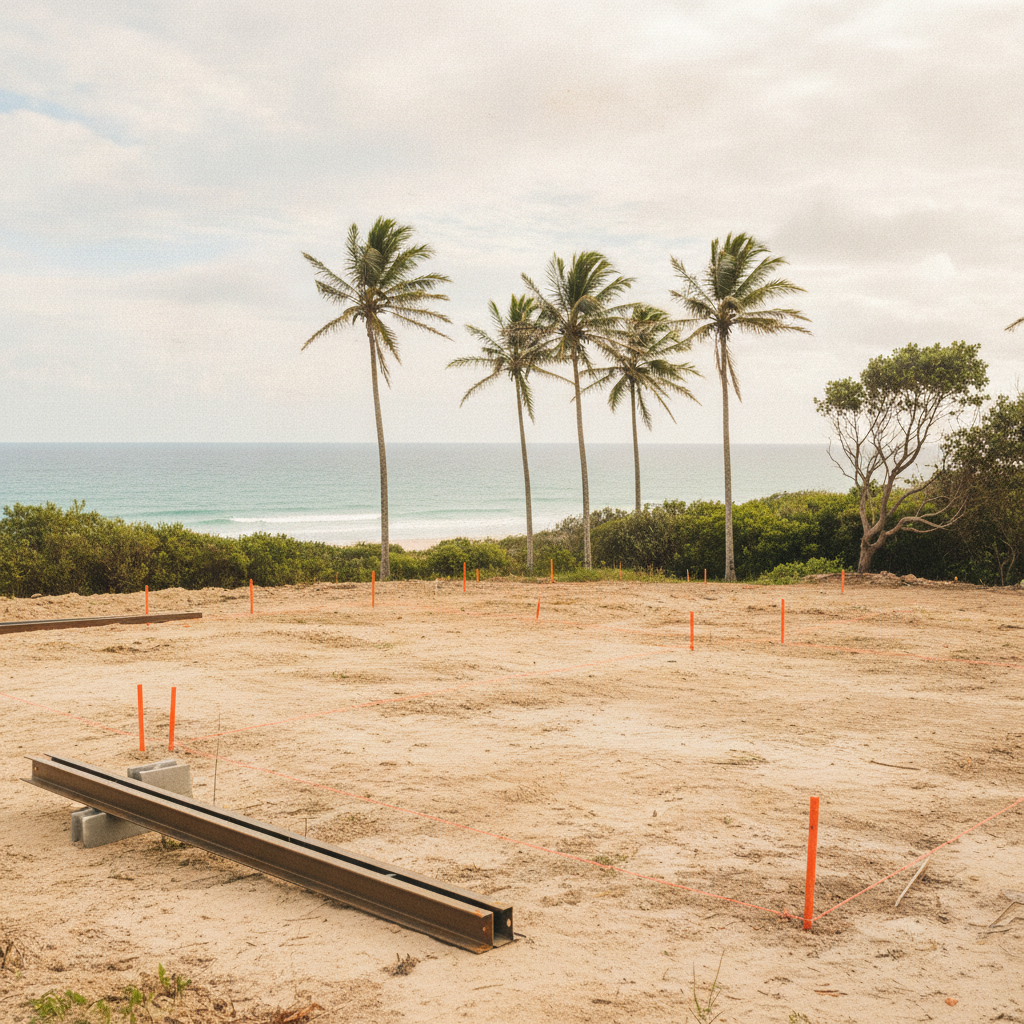
I like steel. Specifically, the TRUECORE stuff we use. It's straight. It stays straight. It doesn't twist while it's sitting on site waiting for you to find time to put it up. If you were using timber and it sat in the rain for a week, you'd be fighting bows and warps for the rest of the build. Steel doesn't do that. It's also termite proof, which is a big deal in most parts of Australia. But, you need to be precise. Steel doesn't have the 'give' that timber has. If your slab is out by 20mm, the steel won't hide it. You have to be right. Measure twice, then measure a third time, then maybe once more before you fix anything permanently.
The Finish Line Mentality
You'll hit a wall about halfway through. Every owner builder does. The excitement has worn off, the neighbors are complaining about the noise, and you're sick of eating meat pies for lunch. This is where organization saves you. If you have a checklist and you can see things getting ticked off, it keeps you sane. Focus on the small wins. 'Today I finished the internal wall frames.' 'Today the windows went in.'
Don't look at the whole house. It's too big. Look at the next task. And don't forget why you're doing this. You're building a home, not just a structure. It's your place. You'll know every screw and every stud in those walls. That's something you don't get when you just buy a finished house off the shelf. But you only get to enjoy it if you actually finish it. So, get your folder, clean your site, and keep your trades honest. You've got work to do.