The Importance of Fire Resilience in the Australian Landscape
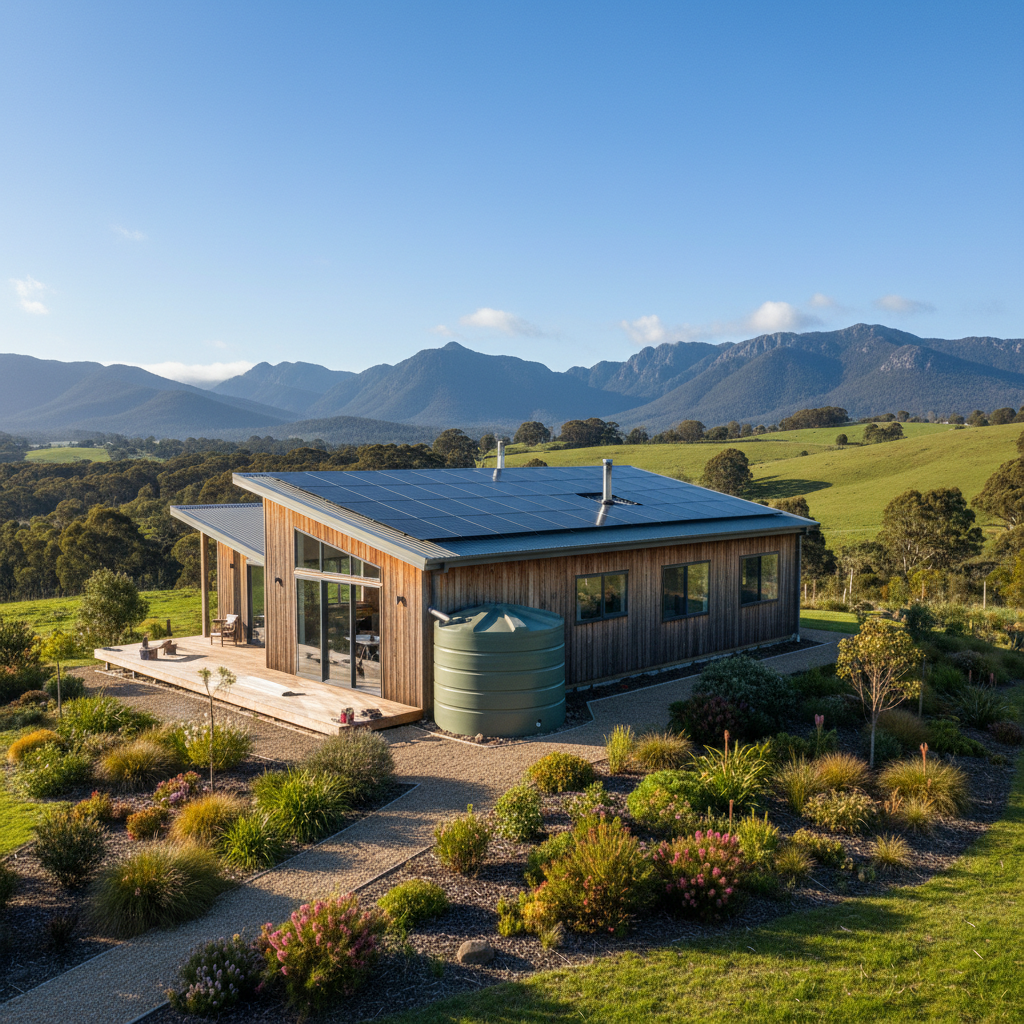
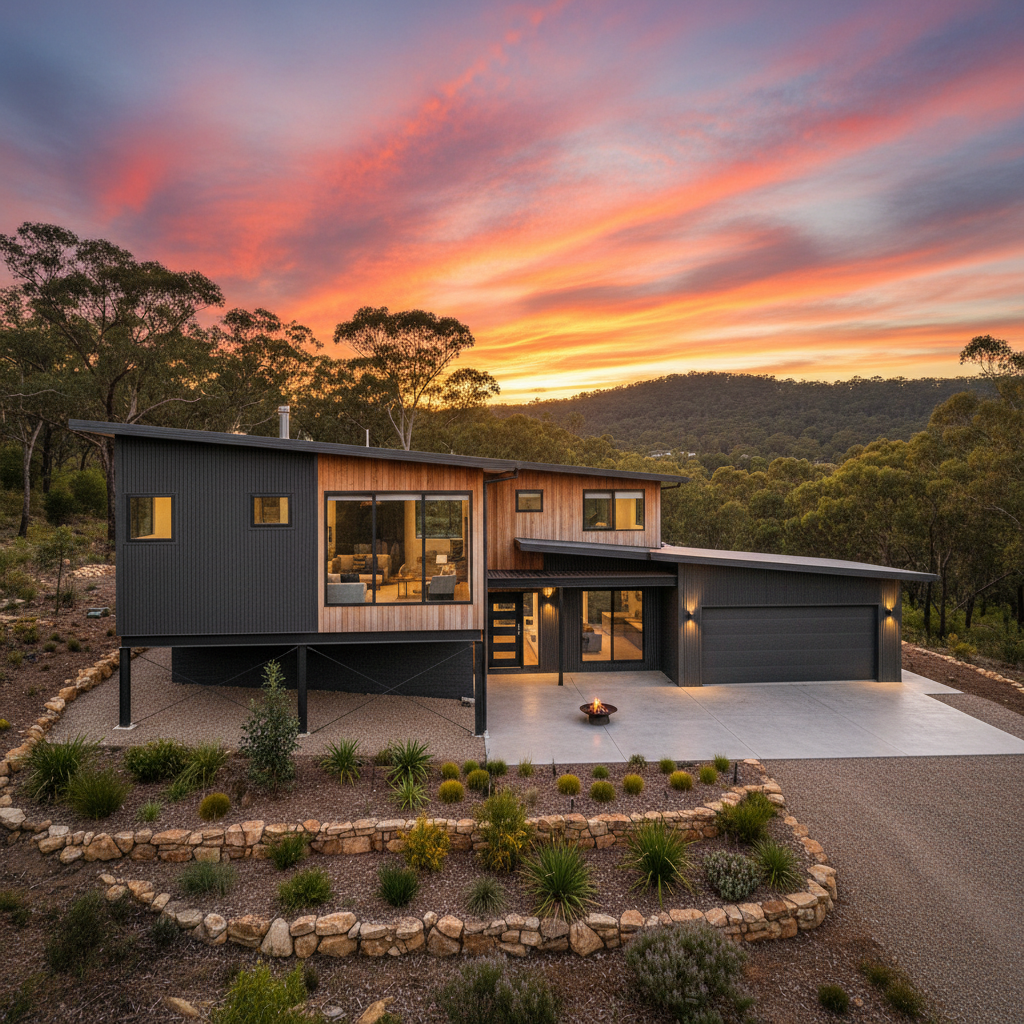
For many Australians, the dream of building a home often leads toward the quiet fringes of our beautiful bushland or the sprawling vistas of rural regional areas. While these locations offer an incredible lifestyle, they also come with a unique set of challenges, most notably the threat of bushfires. When you are planning a kit home project, safety and durability should be at the top of your priority list. This is where the structural choices you make during the design phase play a critical role in the longevity and safety of your future residence.
As we navigate an era of increasingly unpredictable weather patterns, the focus on fire resistant building materials has moved from a secondary consideration to a primary requirement. Choosing a steel frame kit home provides a significant advantage in this regard. Unlike traditional timber frames, steel is non-combustible. This single characteristic forms the foundation of a fire resilient home, providing peace of mind to owner-builders across the country.
Why Steel Frames are a Game Changer for Fire Protection
When we talk about steel frame benefits, the conversation naturally gravitates toward strength and termite resistance, but fire performance is arguably its most vital attribute in the Australian context. Using high quality materials like BlueScope TRUECORE steel ensures that the skeleton of your home won't contribute fuel to a fire.
In a bushfire scenario, extreme heat and flying embers are the primary threats. If a fire manages to breach the external cladding or enter the roof cavity, a timber frame can ignite, leading to rapid structural failure. Steel, however, does not burn. While it is important to remember that no building is completely fireproof, a steel frame remains structurally integral for much longer under heat stress, which can be the difference between a home that can be repaired and one that is lost entirely.
Navigating the Bushfire Attack Level (BAL) System
Before you begin your kit home journey, you need to understand the Bushfire Attack Level, or BAL rating, of your specific site. This rating is determined by a combination of factors, including the vegetation type surrounding your property, the distance from that vegetation, and the slope of the land. The BAL ratings range from Low to BAL-FZ (Flame Zone).
- BAL-Low: Very low risk of fire.
- BAL-12.5 to BAL-29: Increasing levels of risk from embers and radiant heat.
- BAL-40: High risk of ember attack and exposure to radiant heat high enough to ignite parts of the building.
- BAL-FZ: Direct exposure to flames from the fire front.
Steel frame kit homes are particularly well suited for higher BAL ratings. Because the frame itself is non-combustible, meeting the stringent requirements of BAL-40 or BAL-FZ becomes a much more streamlined process compared to using combustible alternative materials.
The Role of Non-Combustible Materials in Kit Home Design
A kit home is a complete system. While the steel frame is the core, the surrounding components like roofing, cladding, and insulation work together to create a fire-resistant shell. In Australia, using COLORBOND steel for roofing and wall cladding is a popular choice for more than just aesthetics. This material is tested to withstand harsh conditions and does not ignite when exposed to embers.
When you opt for a kit that includes these high quality steel components, you are building layers of defense. For example, a steel roof combined with high quality insulation and specialized weather strips helps prevent embers from entering the roof cavity, which is one of the most common ways homes are lost during bushfires.
Practical Tips for Owner-Builders Focusing on Fire Safety
If you are taking the reins as an owner-builder for your kit home, there are several practical steps you can take to enhance your home's fire resilience beyond just the frame selection:
- Seal it up: Ensure there are no gaps larger than 3mm in your external walls or roof. Embers can travel through tiny openings and ignite internal materials.
- Choose the right windows: In high BAL areas, toughened glass and specialized fire shutters are essential. Ensure your kit home windows match your site's rating requirements.
- Gutter protection: Opt for metal gutter guards. Leaves trapped in gutters are the number one cause of home ignition during a bushfire. Steel frame kit homes often pair well with specific metal gutter systems designed to shed debris.
- Clear the zone: Maintain a defendable space around your home by managing vegetation and keeping flammable materials (like woodpiles) far away from the main structure.
Precision Engineering and Fire Safety
One of the less discussed benefits of steel frames in kit homes is the precision of the engineering. Because steel frames are manufactured using computer-controlled technology, the pieces fit together with absolute accuracy. This results in tighter joints and more precise finishes.
From a fire safety perspective, this precision is invaluable. It reduces the likelihood of structural gaps that might appear over time due to warping or shrinking, which is common in timber. A steel frame stays straight and true, ensuring that the fire-rated seals and cladding you install remain effective for the life of the building.
Environmental Factors: Steel vs. The Elements
Australian weather is notoriously harsh. From the humidity of Queensland to the dry heat of the Victorian interior, building materials are under constant stress. Steel frames are uniquely equipped to handle these variations. Unlike other materials, steel does not absorb moisture, which means it won't swell, rot, or twist.
This stability is crucial when considering fire safety. If a structure has twisted or warped over time, the protective layers of cladding and insulation may become compromised, leaving the core of the home vulnerable. With a steel frame, you are investing in a stable base that maintains the integrity of your fire protection strategy year after year.
The Peace of Mind for Owner-Builders
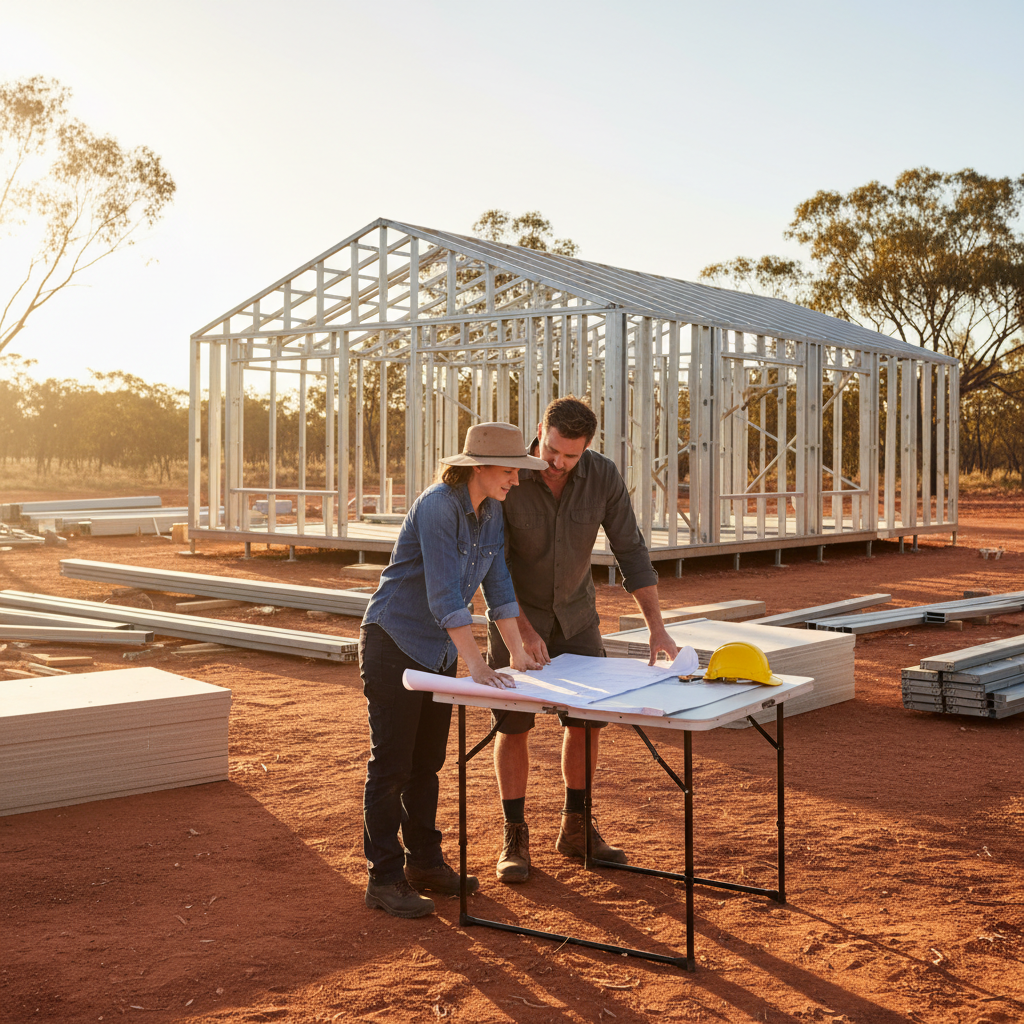
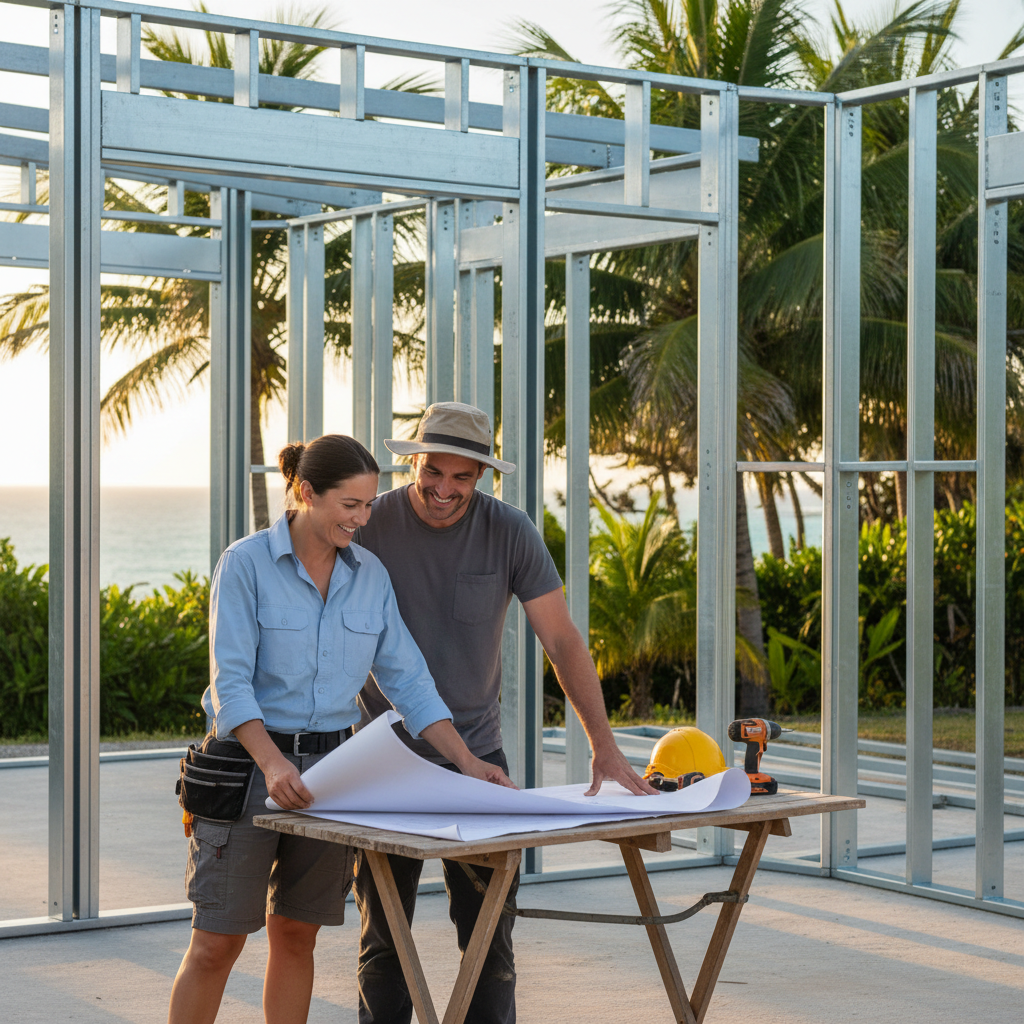
Embarking on an owner-builder project is an empowering experience, but it also carries significant responsibility. You are the project manager, and the safety of your family rests on the decisions you make during the build. Opting for a steel frame kit home simplifies many of the compliance hurdles related to fire safety.
When you present your plans to a local council or a building certifier, having a non-combustible steel frame often makes the approval process smoother, especially in bushfire-prone areas. It demonstrates a commitment to building a resilient, long-lasting structure that adheres to the Australian Standard AS 3959 (Construction of buildings in bushfire-prone areas).
Sustainability and Fire Resistance
There is also a sustainability angle to fire resistance. A home that is built to last and can survive a natural disaster is inherently more sustainable than one that needs to be replaced. Steel is also 100 percent recyclable. By choosing a steel frame kit home, you are making a choice that benefits both your immediate safety and the long-term health of the environment.
Furthermore, since steel is a lightweight material, it often requires less intensive footings and site works compared to heavy masonry, which can reduce the overall environmental footprint of your construction process.
Conclusion: A Future-Proof Choice
Building a home in Australia requires a forward-thinking approach. As we look at the landscape of modern construction, the benefits of steel frame kit homes are impossible to ignore. They offer a unique combination of structural strength, termite immunity, and, most importantly, superior fire resistance.
By choosing a kit home that utilizes high quality Australian steel, you are not just building a house, you are creating a sanctuary that is better prepared to face the elements. Whether you are an experienced DIYer or a first-time owner-builder, prioritizing materials that won't fuel a fire is the smartest decision you can make for your project. With the right planning, a focus on BAL ratings, and the inherent advantages of steel, your kit home will be ready to stand strong against the Australian bush for generations to come.