Mastering the Elements: The Art of Weatherproofing Your Kit Home
Building a home in Australia is a unique challenge. From the scorching sun of the outback to the salt spray of the coast and the sudden intensity of storm season, our local climate is one of the harshest in the world. For owner builders embarking on a kit home journey, understanding the technical side of weatherproofing is not just about comfort, it is about the longevity and integrity of your investment.
When you take the reins as an owner builder, you are responsible for ensuring that the assembly of your kit results in a shell that is tight, dry, and thermally efficient. In this guide, we dive deep into the building techniques that help a modern kit home stand up to the Australian elements, focusing on moisture management, heat mitigation, and structural resilience.
The First Line of Defence: High Performance Wall Wraps
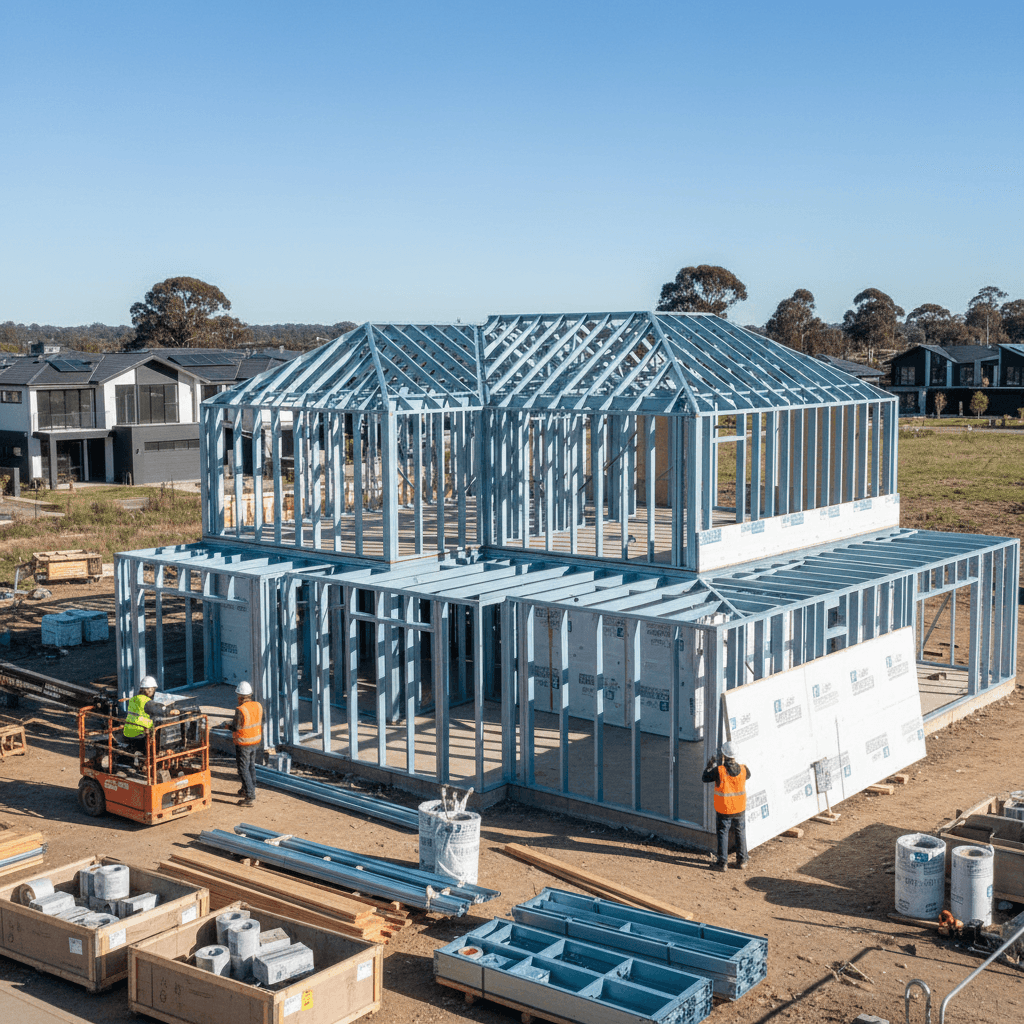
Weatherproofing starts long before your cladding goes on. The most critical layer in any Australian home is the sarking or wall wrap. This is a permeable membrane that sits between your steel frame and your external cladding. Its job is twofold: it keeps liquid water out while allowing internal moisture vapour to escape, preventing the dreaded build up of condensation within your wall cavities.
When installing wrap on a steel frame kit home, precision is key. You should ensure that all joins are overlapped by at least 150mm and sealed with high quality outdoor grade tape. Pay special attention to the areas around window and door openings. In Australia, we often see wind driven rain that can force water into the tiniest gaps. By using flexible flashing tapes over your wrap at the corners of openings, you create a water tight seal that protects your frame and your internal plasterboard from water damage.
Harnessing the Strength of BlueScope Steel
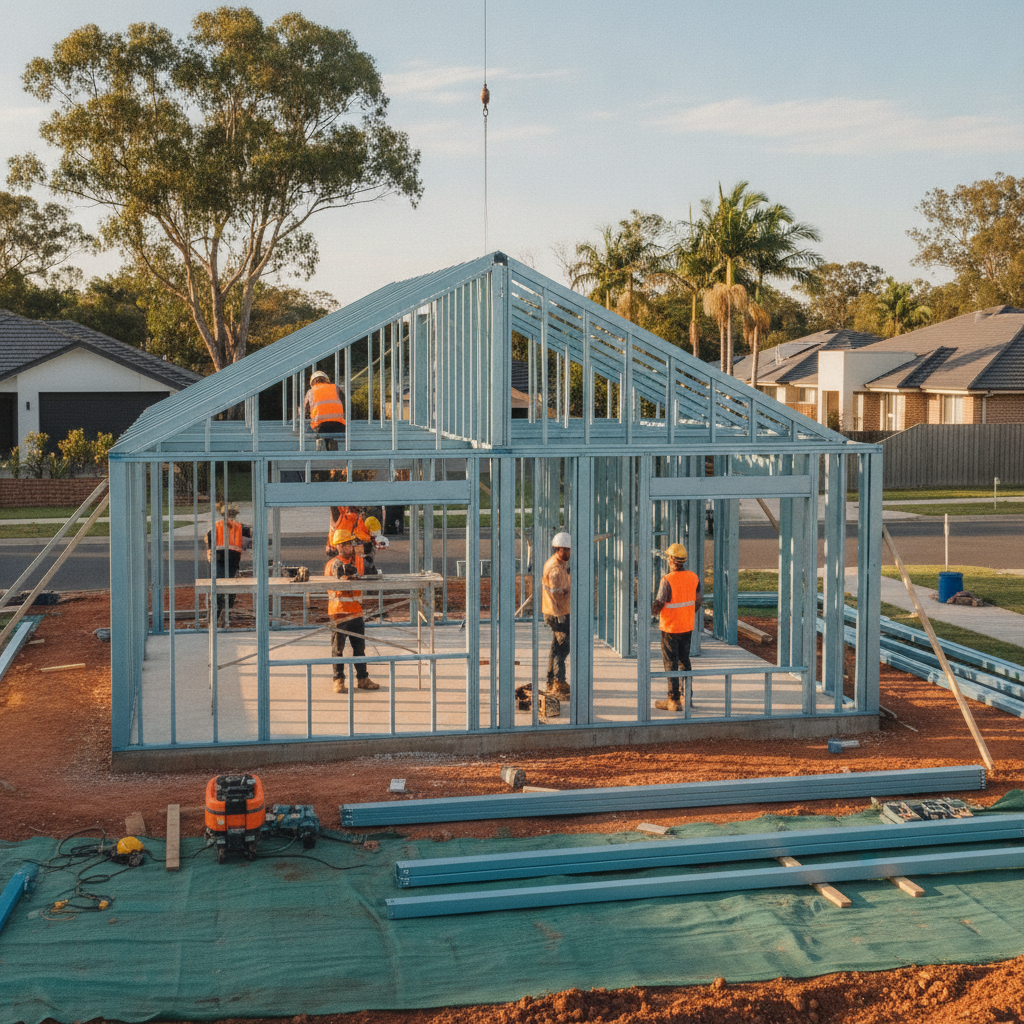
One of the best building techniques for Australian conditions is the use of a high quality steel frame. Steel, specifically brands like TRUECORE made by BlueScope, offers a distinct advantage when it comes to weather resilience. Unlike timber, steel does not swell, warp, or twist when exposed to moisture during the build process. This means your walls stay dead straight, which is crucial for the long term performance of your weatherproofing layers.
If a frame warps, it can pull at the cladding and create gaps in seals or caulking. A stable steel frame ensures that your windows and doors remain perfectly square, maintaining the integrity of their weather seals for decades. Additionally, steel is non combustible, providing an extra layer of reassurance for those building in bushfire prone areas around the country.
Managing Heat with Reflective Insulation
In many parts of Australia, weatherproofing is as much about keeping the heat out as it is about keeping the rain away. This is where the technical application of insulation comes into play. For a kit home, we recommend a multi layered approach. Using a combination of reflective foil laminates and bulk insulation batts creates a powerful thermal barrier.
The reflective foil acts as a radiant barrier, bouncing a significant portion of the sun's heat away before it even enters the wall cavity. However, the effective secret that many DIY builders miss is the air gap. To work correctly, reflective insulation needs an air space of at least 20mm in front of the foil surface. When you are fixing your cladding, using furring channels or battens over the wrap can create this essential gap, significantly boosting your home's thermal performance during a scorching Australian summer.
Roofing Resilience and Gutter Systems
The roof is arguably the hardest working part of any Australian house. Whether you choose a classic corrugated profile or a modern tray deck, the installation technique determines its success. For owner builders, ensuring the correct pitch and the use of appropriate fasteners with EPDM washers is vital to prevent leaks.
Don't overlook the importance of your guttering and downpipe system. In regions prone to tropical downpours, standard gutters may overflow, leading to water backing up under the eaves and into the wall cavity. Installing oversized gutters and ensuring a generous number of downpipes can mitigate this risk. Furthermore, if you are in a high wind or cyclonic zone, ensure your kit home specifies the correct screw patterns and cyclonic washers to keep the roof attached during extreme pressure events.
Creating a Sealed Envelope: Windows and Doors
Windows and doors are the most common failure points in a building's weather envelope. When your kit arrives, the windows will typically be double glazed or high performance single glazed units. The technique used to install them is what makes the difference. Always use a high quality structural silicone or polyurethane sealant around the perimeter of the fin or frame.
Consider the orientation of your home as well. In Australia, the western sun is brutal. Using technical additions like eave extensions or external shading devices over your windows can prevent the glass from becoming a heat radiator. From a weatherproofing perspective, ensure that your sills have a proper fall, away from the house, so that water cannot pool and eventually seep under the tracks.
The Importance of Subfloor Ventilation
If your kit home is built on a raised floor system rather than a concrete slab, subfloor ventilation is a non negotiable building technique. Without adequate airflow, moisture from the ground can rise and become trapped under your home, leading to mould, rot in floorboards, and a generally unhealthy living environment. Ensure that your enclosure or base cladding includes enough vents to meet Australian Standards, allowing the breeze to carry away any dampness.
Owner Builder Tips for Success
As an owner builder, you are the quality control manager. Here are some practical tips to ensure your weatherproofing is top notch:
- Inspect your site after a heavy rain before the cladding goes on. Look for any damp spots on the internal side of the wrap or near the base plates.
- Never skimp on tapes and sealants. Buy products rated for the Australian sun, as cheap tapes will often peel off within a single season.
- Ensure your cladding has the correct ground clearance. Most cladding products require a gap of at least 75mm to 100mm from the finished ground level to prevent wicking moisture.
- Keep a digital photo log of your weatherproofing layers (wrap, flashing, insulation) before they are covered up. This is invaluable for future maintenance or if you ever decide to sell.
Modern Trends in Durable Design
We are seeing a massive shift in Australian housing trends toward "resilient design." Homeowners are no longer just looking for a pretty facade; they want a home that can withstand the increasing volatility of our weather. This has led to the popularity of mixed material exteriors, combining steel cladding with heat treated timbers or compressed fibre cement. These materials are chosen specifically for their low maintenance and high resistance to the elements, fitting perfectly with the kit home philosophy of efficiency and durability.
Final Thoughts: Quality In, Quality Out
Weatherproofing your kit home is not about a single magic product; it is about a series of deliberate, technical choices. By focusing on high quality wraps, leveraging the stability of steel frames, and being meticulous with seals and insulation, you create a sanctuary that remains comfortable and dry regardless of what it's like outside. Being an owner builder gives you the unique opportunity to oversee these details personally, ensuring that your home is built to the highest possible standard for the Australian landscape.