The Australian Landscape and Residential Safety
For many Australians, the dream of building a home is tied to the rugged beauty of the bush, the serenity of the coast, or the quiet charm of a rural block. However, building in our beautiful landscape comes with a unique set of challenges, with bushfire safety being at the top of the priority list. When you are taking on the role of an owner-builder, selecting the right materials is not just about aesthetics or cost, it is about long-term resilience and safety.
In recent years, the shift toward steel frame construction in the kit home industry has been significant. This transition is driven by a need for materials that can withstand the harsh Australian climate. At the heart of this movement is the use of high-quality Australian steel, like BlueScope TRUECORE steel, which offers a level of fire resistance that traditional timber frames simply cannot match. This guide explores why steel is the gold standard for fire-rated construction and how it benefits those building their own kit homes.
Understanding the Fire Resistance of Steel
One of the most common misconceptions about house fires is that the frame is only a secondary concern. In reality, the frame is the backbone of the structure. Steel is inherently non-combustible. Unlike timber, which acts as fuel for a fire, steel will not ignite, spread flames, or contribute to the fire load of a building. This simple fact provides a massive advantage when building in areas where ember attacks or radiant heat are a constant threat during the summer months.
While no building material is entirely invincible to extreme heat over a prolonged period, steel maintains its structural integrity longer than many alternatives in a standard bushfire scenario. Because it does not burn, a steel frame helps to contain the fire and reduces the risk of the entire structure collapsing quickly, providing precious time and potentially saving the home from total destruction.
Navigating the Bushfire Attack Level (BAL) Ratings
If you are planning a kit home in Australia, you will likely encounter the BAL rating system. This measurement determines the requirements for construction to improve protection against bushfire attack. The ratings range from BAL-Low to BAL-FZ (Flame Zone). As an owner-builder, understanding how your choice of frame impacts your BAL compliance is crucial.
BAL-12.5 to BAL-40
For homes situated in these zones, the focus is on preventing ember entry and resisting radiant heat. Using a steel frame kit home provides a non-combustible primary structure. When paired with appropriate cladding, metal roofing, and toughened glass, a steel-framed home becomes a formidable fortress against external fire threats. Steel frames do not warp or twist when exposed to moderate heat, ensuring that window and door seals remain intact to keep out deadly embers.
BAL-FZ (Flame Zone)
In the highest risk areas, the requirements are incredibly stringent. While the frame alone does not dictate the rating, having a non-combustible steel skeleton makes it much easier to achieve the necessary fire-rated system for the walls and roof. Steel works seamlessly with fire-rated boards and specialized insulation to create a barrier that meets the high standards of Flame Zone construction.
The Role of Precision in Kit Home Construction
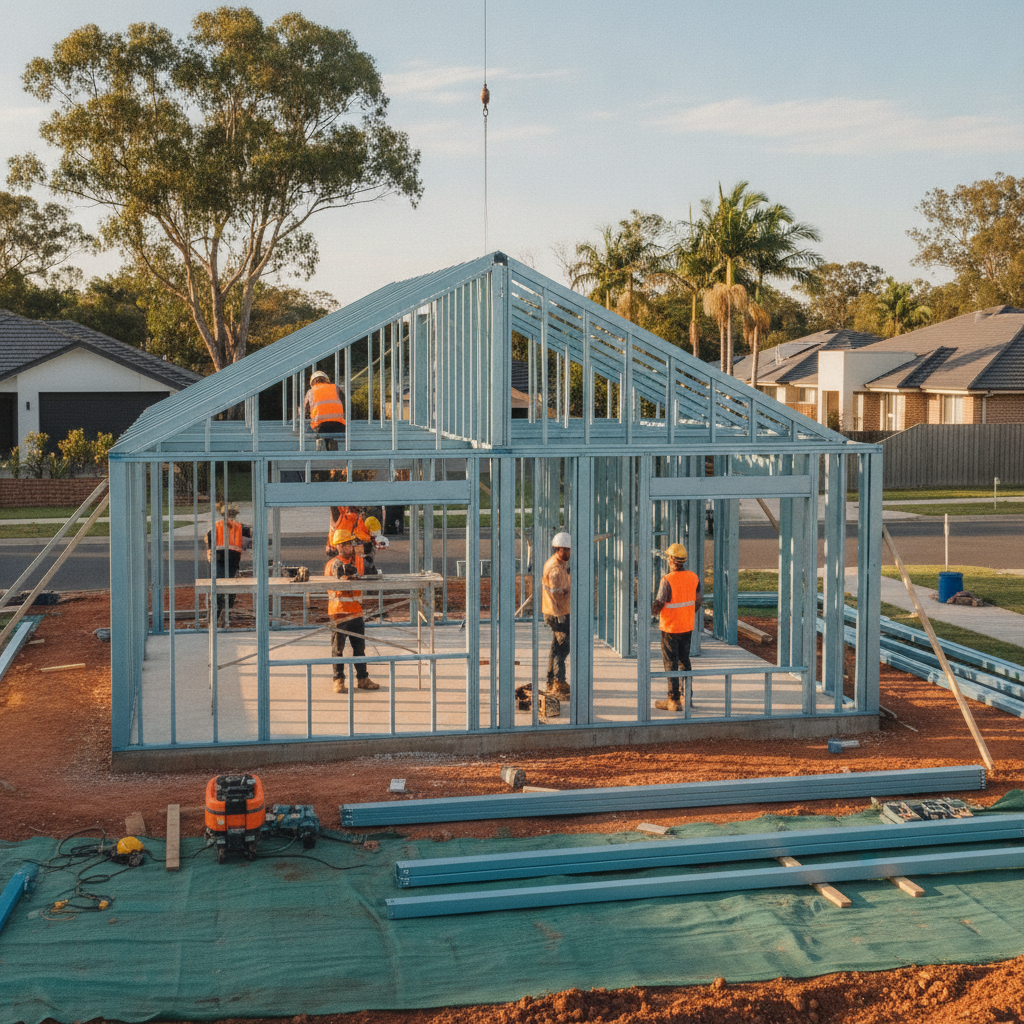
Beyond the material properties of the steel itself, the way a kit home is manufactured plays a role in fire safety. Modern steel frames are precision engineered using advanced technology. This means every piece of the frame, from the floor joists to the roof trusses, is cut to the exact millimetre. For an owner builder, this precision is a lifesaver.
When a frame fits together perfectly, there are no gaps or misalignments that could allow embers to penetrate the wall cavity. In a traditional build, small gaps are common, but in a steel frame kit, the tight tolerances ensure a sealed and secure structure. This level of accuracy is particularly important for the roof, where ember attack is most common. A steel-framed roof provides a stable, non-flammable platform for metal roofing sheets, creating a cohesive fire-resistant envelope.
Practical Tips for Owner-Builders Focusing on Fire Safety
Building your own home is a rewarding journey, but it requires careful planning. Here are some practical tips for those looking to maximize fire resistance in their kit home project:
- Choose the Right Cladding: While the steel frame provides the internal protection, your external cladding is the first line of defence. Opt for non-combustible materials like fibre cement or metal cladding that complement the steel frame.
- Seal Every Entry Point: Ensure that all gaps where the roof meets the walls are properly sealed. Use fire-rated sealants and ember guards on all vents and weep holes.
- Don't Forget the Sub-Floor: If your kit home is on a raised floor system rather than a slab, make sure the sub-floor is enclosed with fire-resistant materials or that the steel floor joists are protected from potential fuel build-up underneath the house.
- Maintain Your Asset: Even the most fire-resistant steel home needs a clear perimeter. Keep gutters free of leaves and maintain a defensible space around the building.
The Durable Nature of Steel Construction
Fire resistance is just one facet of the durability offered by steel frames. In the Australian context, we also have to deal with termites. Termites are a significant threat to timber-framed homes and can weaken the structure, making it more vulnerable to other stresses, including fire. Steel frames are 100% termite proof. This means you don't need to worry about chemical treatments or the risk of your structural integrity being eaten away from the inside.
Furthermore, steel does not rot, warp, or sag over time. This dimensional stability ensures that your home stays straight and true for decades. For an owner-builder, knowing that the frame you assemble today will remain in the exact same condition fifty years from now provides immense peace of mind. It also makes the internal fit-out much easier, as walls are perfectly square, which simplifies the installation of plasterboard and cabinetry.
Sustainability and Steel
Choosing steel is also a responsible choice for the environment. Steel is one of the most recycled materials on the planet. Most steel used in Australian construction contains a significant portion of recycled content and is fully recyclable at the end of its long life. Additionally, because steel frames are lightweight, they can be easier to transport to remote building sites, reducing the carbon footprint of the delivery process. This aligns perfectly with the lifestyle values of many Australians who choose kit homes as a way to live more sustainably and closer to nature.
Conclusion: A Secure Future with Steel
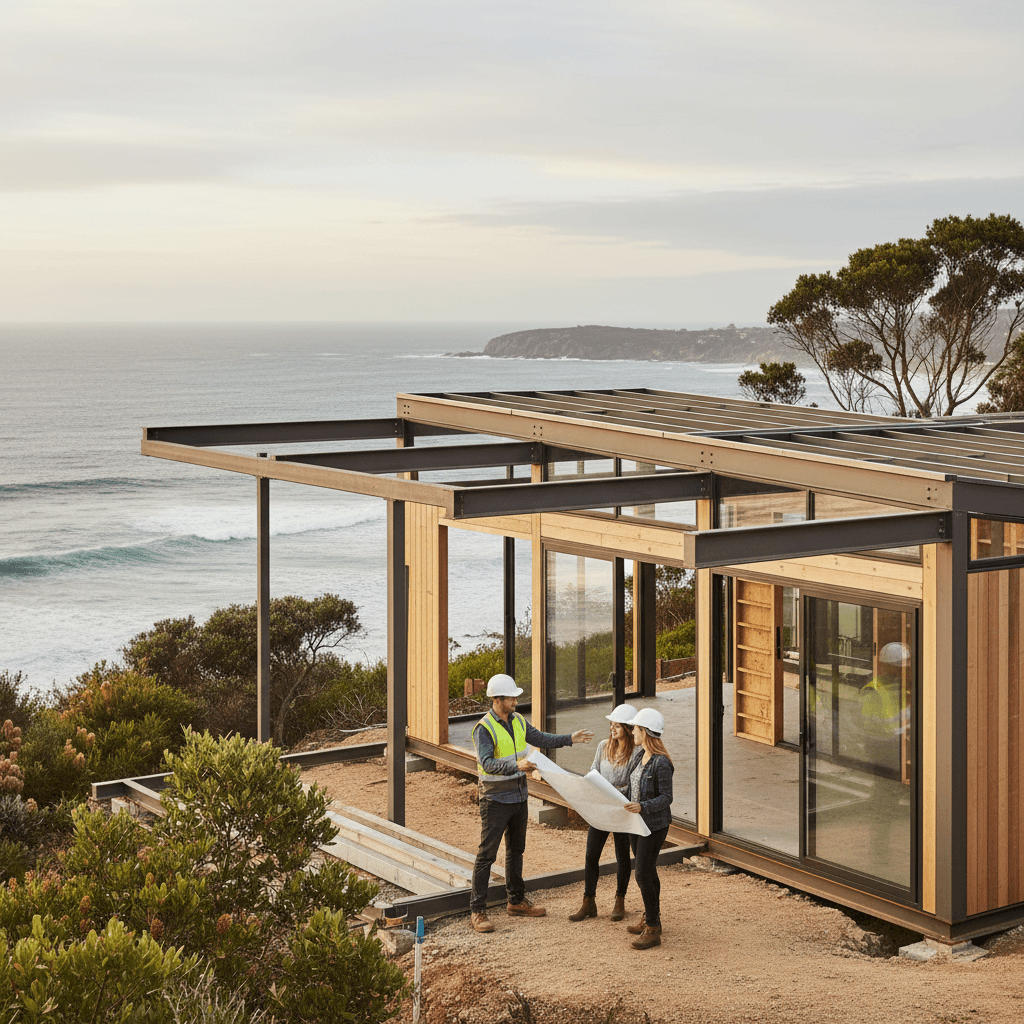
Embarking on an owner-builder project is a bold and exciting step. By choosing a steel-framed kit home, you are investing in more than just a house, you are investing in a structure designed to endure the specific challenges of the Australian environment. The combination of fire resistance, termite protection, and engineered precision makes steel the ideal choice for anyone looking to build a safe, modern, and resilient home.
While the process of building requires many decisions, prioritizing a non-combustible frame is one of the smartest moves you can make. It protects your family, your investment, and your future. Whether you are building in a suburban street or a remote bush block, the strength of Australian steel ensures that your kit home is ready for whatever the Australian climate throws its way.