Building for the Australian Landscape: Why Fire Resistance Matters
Australia is a land of incredible beauty, but as many of us know, it can also be a land of extremes. From the sweeping plains of the Outback to the lush coastal fringes, the threat of bushfires is a reality that many homeowners must consider during the design and construction phase. For those looking at the owner-builder path, choosing the right structural materials isn't just about aesthetics or ease of assembly, it is about long-term resilience and safety.
In this guide, we are diving deep into the world of steel frame kit homes. Specifically, we will explore why steel is often the gold standard for fire resistance and how it helps Australian families build more secure, durable homes in regions where fire safety is a top priority.
The Science of Non-Combustibility
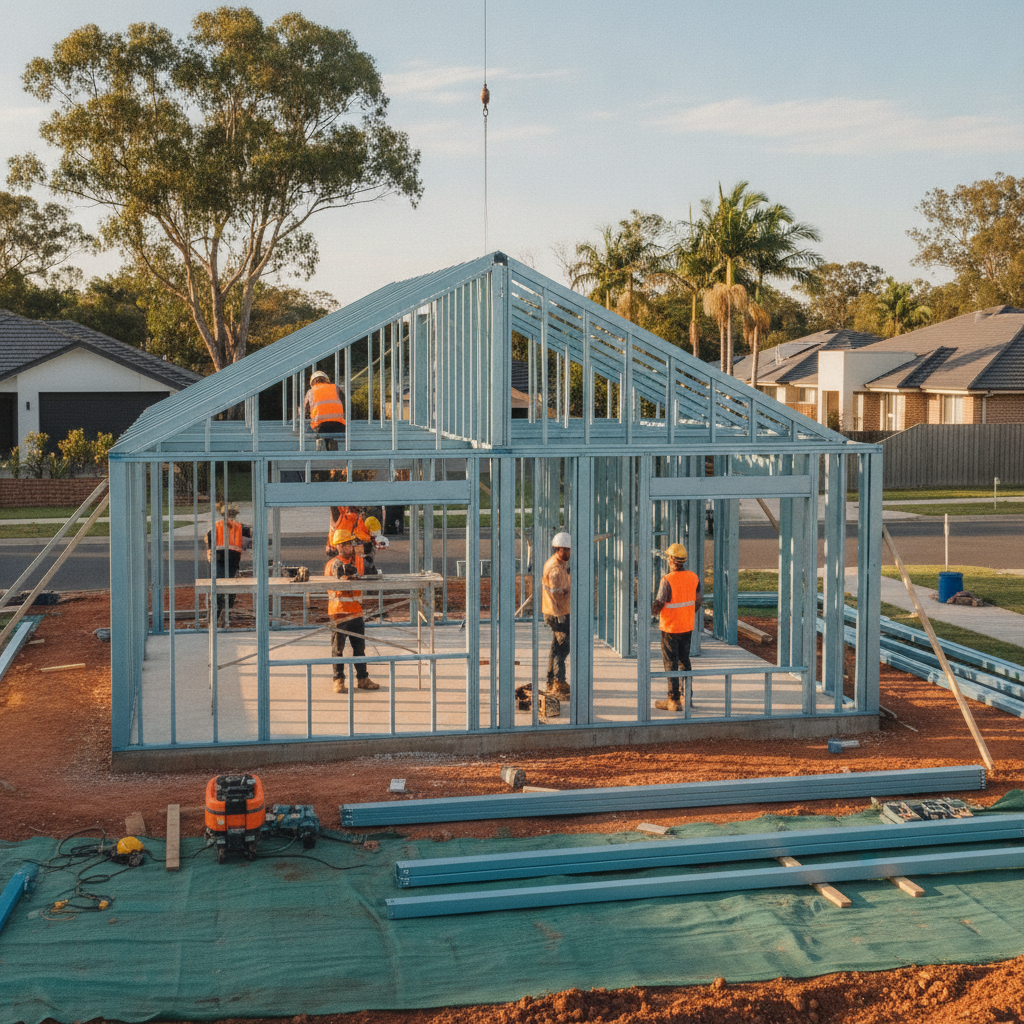
The most significant advantage of choosing a steel frame for your kit home is a simple scientific fact: steel is non-combustible. Unlike traditional timber framing, steel does not provide fuel for a fire. In the unfortunate event of a bushfire or even an internal house fire, a steel frame will not ignite, nor will it contribute to the spread of flames.
Most high-quality Australian kit homes utilize TRUECORE steel by BlueScope. This material is engineered specifically for the harsh Australian climate. Because the framing itself cannot catch fire, it provides a structural integrity that is vital during an emergency. While no home can be 100 percent fireproof, starting with a non-combustible skeleton significantly increases the chances of a building surviving a fire event and protects the investment you have worked so hard to build.
Understanding BAL Ratings for Your Kit Home
If you are planning to build in Australia, you have likely come across the term BAL. This stands for Bushfire Attack Level. It is a scale used to determine the severity of a building's potential exposure to ember attack, radiant heat, and direct flame contact. The ratings range from BAL-LOW to BAL-FZ (Flame Zone).
When you purchase a kit home, understanding your site's BAL rating is the first step in the planning process. A steel frame provides a massive head start in meeting the stringent requirements of higher BAL ratings. Because steel does not burn, it is much easier to achieve compliance for BAL-12.5 through to BAL-40 and even Flame Zone requirements when paired with the right cladding, roofing, and insulation systems.
Key BAL Categories:
- BAL-12.5: Risk of ember attack.
- BAL-19: Increasing levels of ember attack and burning debris, with heat flux between 12.5 and 19 kW per square metre.
- BAL-29: Significant risk of ember attack and burning debris, with increased heat flux.
- BAL-40: High risk of ember attack, burning debris, and exposure to flames.
- BAL-FZ: Direct exposure to flames from the fire front.
The Role of Precision Engineering in Fire Safety
One of the overlooked aspects of fire resistance is how well the home is sealed. Embers are often the primary cause of house loss during bushfires. They can find their way into tiny gaps in the eaves, under the roofing, or through wall cavities. This is where the precision of a steel frame kit home shines.
Because steel frames are manufactured using advanced CAD software and precision rolling technology, every piece of the frame is straight and true. They do not warp, twist, or shrink over time like timber can. This means that your external cladding, doors, and windows fit more tightly and stay that way for the life of the building. By maintaining a tight building envelope, you are effectively reducing the entry points for dangerous embers during a fire event.
Practical Tips for Owner Builders Prioritizing Fire Safety
As an owner builder, you are in the driver's seat when it comes to the safety features of your home. While the kit provides the essential structural components, there are several steps you can take to maximize the fire resistance of your steel frame project.
1. Choose Your Cladding Wisely
Pairing your steel frame with non-combustible cladding is essential. Materials like fibre cement sheets, brick veneer, or metal wall cladding work harmoniously with steel frames to create a fire-resistant barrier. Avoid using flammable decorative timbers on the exterior if you are in a high BAL area.
2. Focus on the Roof and Gutters
The roof is often the most vulnerable part of a home during a fire. Steel roofing (like COLORBOND steel) is excellent for shedding embers. However, you should also consider ember guards for your gutters or even a gutterless design to prevent the buildup of dry leaves and debris that could ignite.
3. Don't Skimp on Insulation
Modern kit homes come with specialized insulation. Ensure you are using fire-rated batts or blankets that are designed to perform under high temperatures. This not only helps with thermal efficiency but adds an extra layer of protection between your external cladding and your internal living spaces.
4. Seal Every Gap
Use fire-rated sealants around windows and door frames. As an owner builder, you have the ability to pay close attention to these small details during the installation phase, ensuring that no gap is left unprotected.
Steel Frames vs. Traditional Construction
In the context of the Australian bush, the comparison between steel and timber is stark. Timber is a fuel source, whereas steel is a deterrent. Furthermore, steel frames are immune to termite damage. This is relevant to fire safety because timber that has been hollowed out by termites is structurally weakened and becomes even more flammable.
By using a steel frame, you are removing two of the greatest threats to Australian homes in one go: fire and termites. This peace of mind is invaluable for those building in rural or semi-rural areas where emergency services might be further away.
The Importance of Metal Roofing and Windows
A kit home package typically includes the roofing and joinery. When looking at fire resistance, the quality of these components is vital. Metal roofing is non-combustible and provides a smooth surface that makes it harder for embers to take hold. Additionally, ensuring that your windows are fitted with toughened glass or specialized bushfire shutters can prevent the glass from shattering under intense heat, which would otherwise allow fire to enter the home.
Sustainability and Future-Proofing
Building with steel isn't just about fire safety; it is also a sustainable choice. Steel is one of the most recycled materials in the world. As we look toward a future where we need to build smarter and daha resiliently, steel frame kit homes offer a solution that lasts for generations without the need for toxic chemical treatments against pests or the risk of structural combustion.
Owner Builders: Taking Control of the Process
The beauty of the kit home model for an Australian owner builder is the balance of support and control. You receive a high-quality, engineered system including the TRUECORE steel frames, roofing, and cladding, but you manage the assembly and site works. This allows you to oversee every bolt and screw, ensuring that your fire safety measures are implemented exactly as planned.
When you are on-site, managing your trades, you can ensure that the slab is poured perfectly, the frames are anchored correctly, and the fire-rated materials are handled with care. This hands-on approach often leads to a higher quality finish and a deeper understanding of how your home protects you.
Final Thoughts: A Safe Haven in the Sunburnt Country
Choosing a kit home with a steel frame is a proactive step toward building a safer future. While we can't control the weather or the landscape, we can control what we build our homes out of. The inherent fire-resistant properties of steel, combined with precision Australian engineering, make it an ideal choice for anyone looking to build a durable, beautiful, and secure home.
Whether you are building a weekend retreat in the bush or a family home on the outskirts of the city, prioritizing fire resistance is a decision you will never regret. Stay safe, build smart, and enjoy the journey of creating your own Australian sanctuary.