Engineered for the Elements: The Strength of Steel in Northern Australia
Australia is a land of beautiful extremes, but for those living in our northern coastal regions, those extremes come with a unique set of challenges. When you are planning a kit home in Queensland, Western Australia, or the Northern Territory, the conversation starts and ends with structural integrity. We are talking about regions where wind speeds can escalate in minutes, putting immense pressure on every joint, fastener, and beam of a dwelling.
Choosing a steel frame kit home isn't just about modern design or termite resistance, though those are excellent perks. In cyclone-prone areas, steel is a fundamental safety choice. Using high-quality Australian steel, specifically brand names like TRUECORE by BlueScope, ensures that your home is engineered to meet and exceed the stringent requirements of Australia’s wind classification system.
Understanding Wind Classifications and Kit Home Engineering
Before you even turn a sod of soil, your kit home journey starts with a site classification. In Australia, wind speeds are categorized from N1 (low) right up to the terrifying C4 (severe tropical cyclone). If you are building in a Region C or Region D zone, your home needs to be more than just a shelter, it needs to be a fortress.
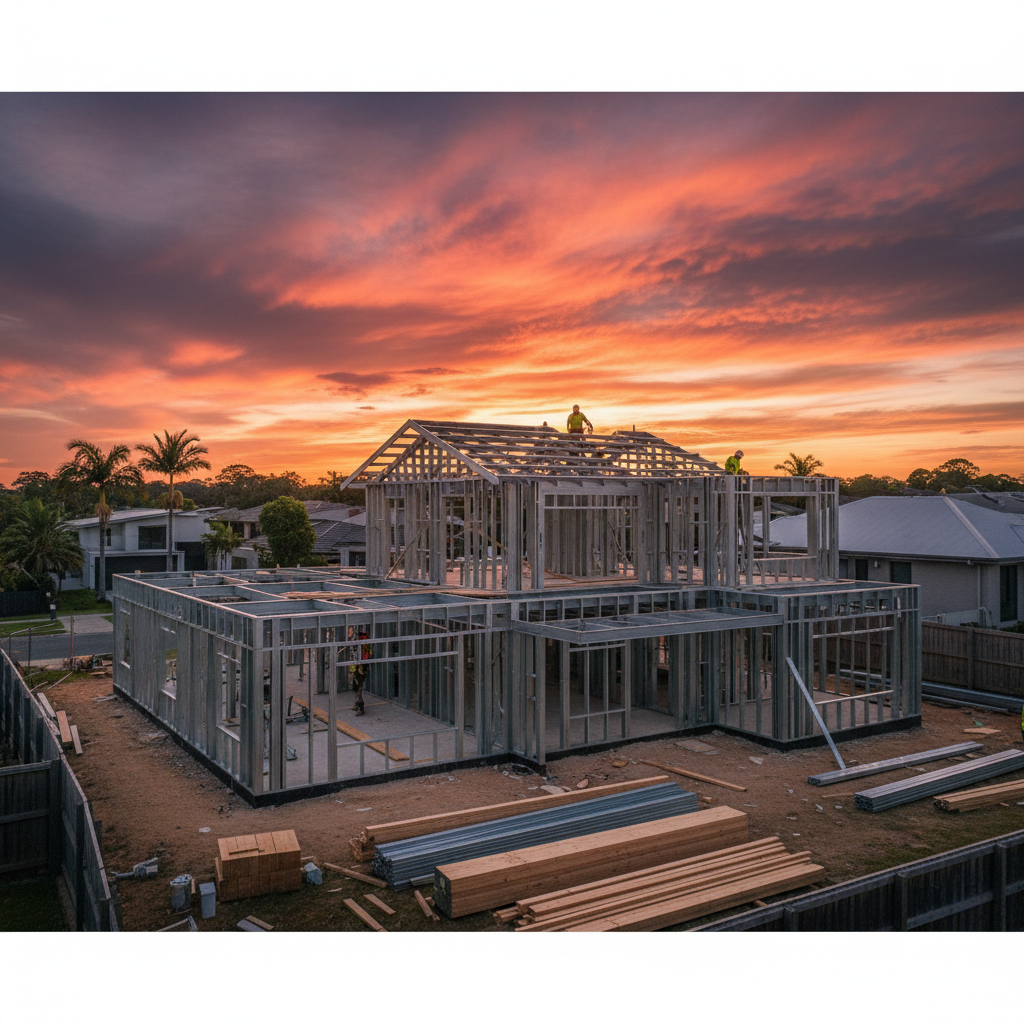
Steel frames offer a distinct advantage here because of their strength-to-weight ratio. Steel is incredibly strong yet lightweight, which allows for advanced engineering solutions that timber simply struggles to match without becoming excessively bulky. When a kit home is engineered for a cyclone zone, every component is scrutinized. This includes the gauge of the steel, the frequency of the bracing, and the specific anchoring systems that tie the roof into the wall frames, and the frames into the concrete slab.
The Precision of BlueScope TRUECORE Steel
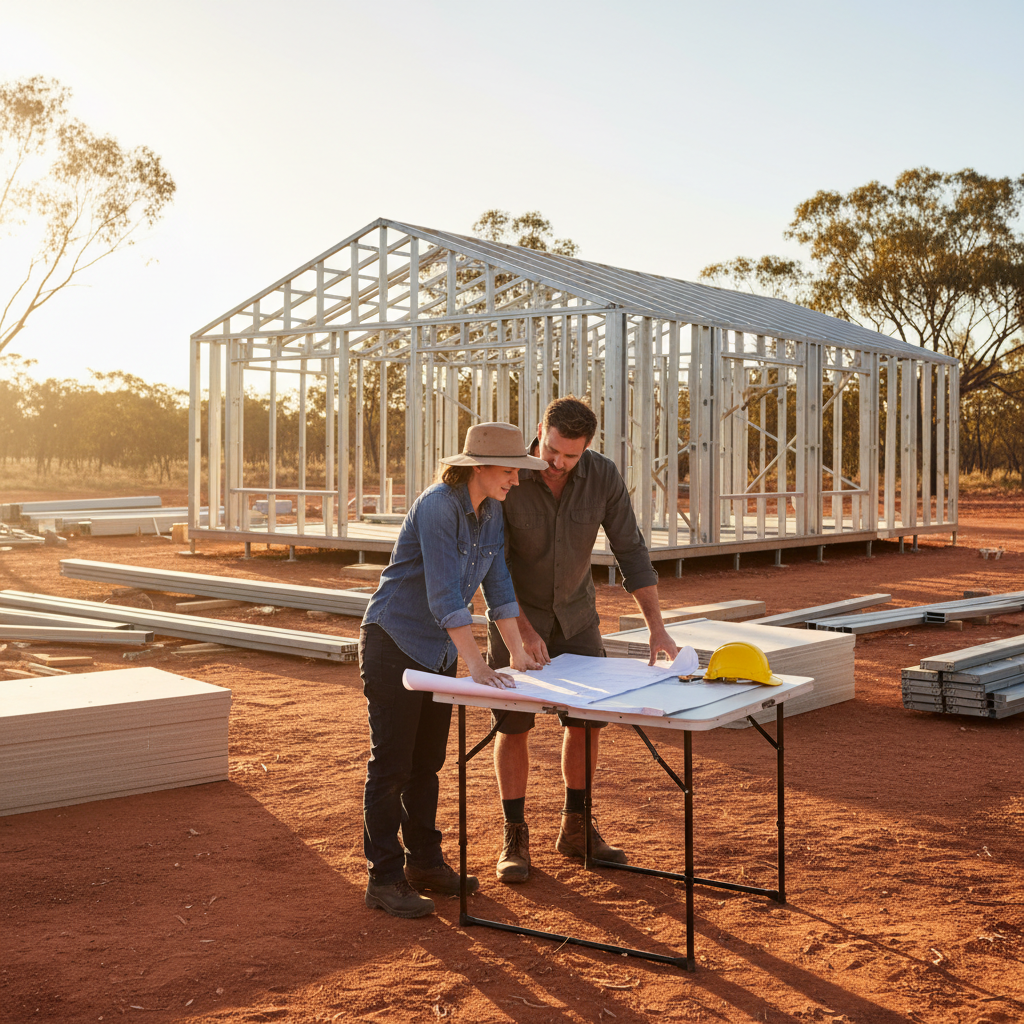
One of the biggest hurdles for an owner-builder is ensuring that what is on the plan is exactly what ends up on the site. This is where the beauty of a steel frame kit shines. Because these frames are manufactured using precise computer-controlled technology, there is no guesswork involved. Every hole is pre-punched, and every piece is cut to the exact millimeter.
For those in high-wind areas, this precision is vital. In a tropical storm, the structural integrity of a building depends on every connection point performing as intended. Because steel doesn't warp, twist, or shrink over time, those connections remain tight for the life of the building. Unlike traditional materials that might move with the humidity of the tropics, steel stays dead straight and true, ensuring the building envelope remains sealed against the elements.
Practical Tip: Checking Your Local Council Requirements
As an owner-builder, your first step should always be a chat with your local council. They will provide the specific wind rating for your block. Don't assume that because the bloke down the road built an N3 home, you can too. Terrain categories, shielding from other buildings, and elevation all play a part in determining how much wind force your kit home will need to withstand.
The Role of the 'Tie-Down' System
In a cyclone, the main threat to a house isn't actually the wind pushing it over, it's the vertical lift. High-velocity winds racing over a roof create a vacuum effect, essentially trying to suck the roof off the walls. This is known as uplift.
Steel frame kit homes are designed with a continuous 'tie-down' chain. This means the roof is securely fastened to the wall frames, which are in turn bolted directly into the concrete slab using heavy-duty chemical or mechanical anchors. In a steel frame system, these connections are often made with specialized brackets and high-tensile bolts, creating a singular, unified structure that works together to resist those massive lifting forces.
Resilience Beyond the Wind: Salt and Humidity
If you are building in a cyclone zone, chances are you are also near the ocean. This brings another enemy into play: corrosion. Australian steel made for these environments is coated with an alloy of aluminium, zinc, and magnesium. This protective layer is designed to sacrifice itself to protect the steel core, providing long-term durability even in salty, humid coastal air.
For an owner-builder, this means less maintenance over the decades. You won't be worrying about rot or the structural degradation that can occur when moisture gets trapped inside wall cavities. The steel remains unaffected by the tropical humidity that can be so punishing on organic building materials.
Owner-Builder Guidance: Managing the Site Works
While the kit arrives with your frames, cladding, and roofing ready to go, the success of a cyclone-rated home starts in the ground. As the owner-builder, it is your responsibility to ensure the slab is poured to the exact specifications provided in the engineering drawings.
In high-wind areas, the footings are often deeper and the steel reinforcement within the concrete is more robust. When it comes time to anchor your steel frames, ensure your tradespeople are following the torque requirements for the bolts to the letter. It is these small, technical details that transform a house into a resilient cyclone shelter.
Key Advantages for Regional Builders
- Reduced Wastage: Because kit homes are pre-cut, there is minimal waste on site. This is a huge benefit if you are building in a remote area where skips and waste removal are expensive.
- Speed of Assembly: Getting the structure 'dried in' (roof and walls on) quickly is essential in the tropics to avoid the sudden afternoon downpours.
- Termite Immunity: Termites are a massive issue in Northern Australia. Steel frames are 100 percent termite proof, saving you thousands in chemical barriers and potential repairs down the track.
The Peace of Mind Factor
There is a certain feeling you get when the clouds turn grey and the wind begins to howl, knowing that your home was engineered specifically for this moment. When you choose a steel frame kit home, you aren't just buying a set of walls. You are investing in an engineered system that has been tested in some of the harshest conditions on earth.
Australian standards for building in cyclone zones are among the toughest in the world. By choosing a kit that utilizes high-quality BlueScope steel and follows strict engineering protocols, you are ensuring that your dream home is a safe haven for your family, no matter what the Australian summer decides to throw at you.
Conclusion: A Future-Proof Investment
Building your own home as an owner-builder is one of the most rewarding projects you can take on. By opting for a steel frame kit home, you are simplifying the process while simultaneously choosing the highest level of protection for your property. In the face of extreme weather, the structural integrity, precision, and durability of steel provide a level of confidence that is simply unmatched.
Whether you are looking at a small coastal cottage or a large family residence, the benefits of steel in Australia's cyclone zones are clear. It is about building smart, building strong, and building a home that will stand tall for generations to come. Take the time to understand your site requirements, work closely with your engineers, and enjoy the process of creating a resilient, beautiful Australian home.