The Crucial Role of Cladding in Kit Home Construction
When you embark on the journey of building a kit home in Australia, your focus is often on the internal layout or the strength of the structural frame. However, the exterior skin of your home, known as cladding, is one of the most critical technical decisions you will make. It is the first line of defence against the harsh Australian elements, from the scorching summer sun to the driving rains of the tropical north.
Choosing the right cladding is a balance of aesthetics, thermal performance, and installation complexity. For the owner builder, it is also a choice that impacts the overall timeline and the specific skill sets required during the construction phase. In this guide, we dive deep into common cladding materials and how they integrate with steel frame kit homes.
The Enduring Appeal of Weatherboard
Weatherboard is arguably the most iconic Australian cladding choice. It offers a timeless, coastal, or country aesthetic that settles perfectly into most landscapes. But beyond looks, weatherboard is a highly practical choice for owner builders.
Modern Fibre Cement Weatherboards
Gone are the days when weatherboards were prone to rot and termite damage. Modern kit homes often utilise fibre cement weatherboards. These are manufactured from a mix of cellulose fibre, sand, and cement, making them incredibly durable and resistant to both fire and pests. This material is particularly useful in Bushfire Attack Level (BAL) rated areas, providing a high level of protection when installed according to specification.
From a building technique perspective, weatherboard is relatively straightforward to install. Because it is fixed directly to the steel frame, usually with a layer of breathable thermal wrap in between, it allows for a fast enclosure of the building. Owner builders can often tackle this phase themselves with the right tools, such as a quality nail gun and a precise spirit level.
Brick Veneer: The Traditional Powerhouse
While many people associate kit homes with lightweight cladding, brick veneer remains a popular option for Australians who prefer a solid, traditional appearance. It is important to understand the technical difference between full masonry and brick veneer. In a kit home, the steel frame provides the structural integrity, while the brick layer acts as a decorative and protective outer skin.
Technical Considerations for Brick Veneer
If you choose brick veneer, your slab design must accommodate the extra width and weight of the bricks. Unlike lightweight cladding, bricks require a specific footing or an edge rebate in the concrete slab. Additionally, bricklaying is a skilled trade. Unless you are an experienced brickie, this is one area where most owner builders will need to hire a contractor.
One of the technical benefits of brick veneer is its thermal mass. While it can hold heat for a long time, it also provides excellent acoustic insulation, which is a major plus if you are building near a busy road or in a suburban setting.
Metal Cladding: The Contemporary Choice
Steel cladding is surging in popularity across Australia, particularly in modern architectural designs. Using profiled steel sheets, like those manufactured from high quality Australian steel, creates a sleek, industrial look that is virtually maintenance free.
Vertical vs. Horizontal Installation
The beauty of metal cladding lies in its versatility. Installing sheets vertically can make a small kit home appear taller and more modern. Technically, metal cladding is excellent for water shedding. When installed with the correct flashing and sealants, it provides an incredibly tight building envelope. Because the material is lightweight, it places less stress on the footings compared to brick, making it an ideal choice for sloping blocks where piers might be used instead of a slab.
Rendered Finishes and Autoclaved Aerated Concrete (AAC)
For those who want a smooth, rendered look without the labour intensive process of traditional brickwork, AAC panels (like Hebel) are a fantastic alternative. These lightweight masonry panels are fixed to the steel frame and then finished with a texture coating.
From a building technique standpoint, AAC offers superior insulation properties. The air pockets within the material provide high thermal resistance, which keeps the home cooler in summer and warmer in winter. It is also exceptional for fire resistance, often achieving high BAL ratings with ease. For the owner builder, these panels are larger than bricks, meaning they cover more area faster, although they do require specific cutting tools and adhesive mortars.
Vital Building Techniques: Moisture Management
Regardless of the cladding you choose for your kit home, the most important technical aspect is what happens behind the scenes. In Australia, managing condensation and moisture is vital for the longevity of your steel frame and internal linings.
The Importance of the Sarking and Cavity
Always use a high quality, breathable building wrap (sarking) behind your cladding. This acts as a secondary barrier against water while allowing moisture vapour from inside the home to escape. In many modern building techniques, creating a "drained cavity" is recommended. This involves using vertical battens to create a small gap between the wrap and the cladding, allowing any water that gets through to drain away and air to circulate, preventing mould and rot.
Practical Tips for Owner Builders Choosing Cladding
- Check Your Local Council: Some areas have character overlays that dictate the types of materials you can use on your exterior. Always check your Planning Permit before ordering your kit home.
- Consider Your Skills: If you are planning to do the work yourself, fibre cement weatherboards or metal cladding are generally more DIY-friendly than brickwork or rendering.
- Think About Maintenance: Timber requires regular painting or oiling. If you want a "set and forget" home, look at pre-finished metal cladding or fibre cement products that hold paint for decades.
- Thermal Performance: Cladding isn't just a shell; it's part of your home's thermal system. Combine your cladding choice with the right insulation batts inside the steel frame to achieve a high energy star rating.
The Steel Frame Advantage in Cladding
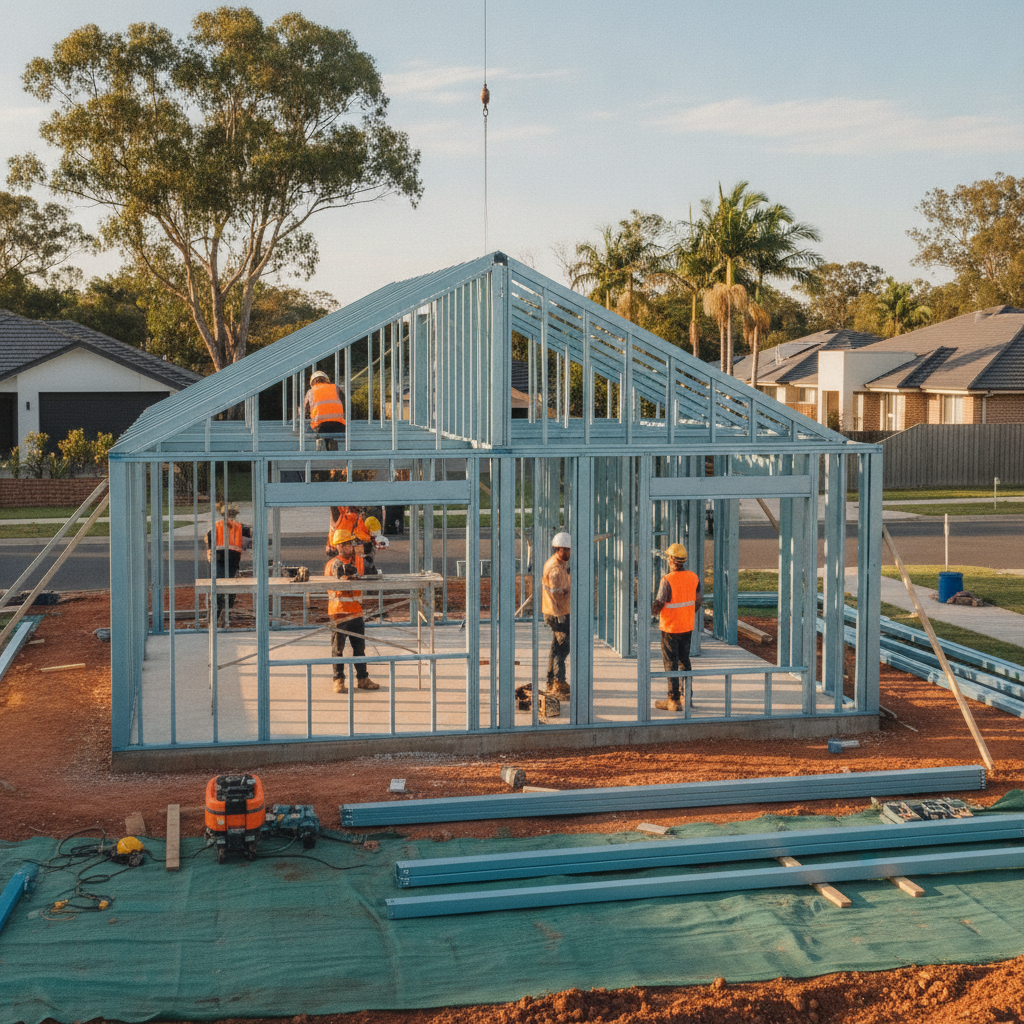
One of the technical benefits of using a steel frame for your kit home is the precision it offers. Steel frames are manufactured to millimetre accuracy and do not warp, shrink, or twist over time. This means your cladding lines will stay straight and true. For materials like metal sheets or fibre cement planks, having a perfectly level and square substrate makes the installation process significantly faster and reduces wastage.
Conclusion
Choosing cladding for your kit home in Australia is more than just a style choice; it is a technical decision that impacts your home's durability, comfort, and maintenance requirements. Whether you opt for the classic lines of weatherboard, the solid feel of brick veneer, or the modern edge of metal, understanding the building techniques involved will ensure a smoother construction process. As an owner builder, taking the time to research these materials and how they interact with your steel frame will result in a home that not only looks stunning but stands the test of time in our unique climate.