Conquering the Clock: The Owner Builder’s Balancing Act
So, you have decided to take the plunge. You have got the land, you have picked out a beautiful steel frame kit home, and you have officially registered as an owner builder. There is just one small detail: you still have a forty hour a week job to attend to. For many Australians, the dream of building their own home is driven by a desire for quality and the satisfaction of a job well done, but the reality of juggling a professional career with a construction site can be daunting.
Time management is the most important tool in your belt, even more than your impact driver or your spirit level. When you are managing a project after hours and on weekends, every minute counts. Success does not come from working harder; it comes from working smarter and leveraging the efficiencies of modern building systems. In this guide, we will look at how you can keep your project moving forward without burning out at your day job.
The Strategic Advantage of Steel Frame Kits
One of the smartest time management moves you can make happens before you even break ground. Choosing the right building material can shave weeks off your schedule. This is where steel frame construction, specifically using high quality Australian BlueScope TRUECORE steel, becomes a game changer for the time poor owner builder.
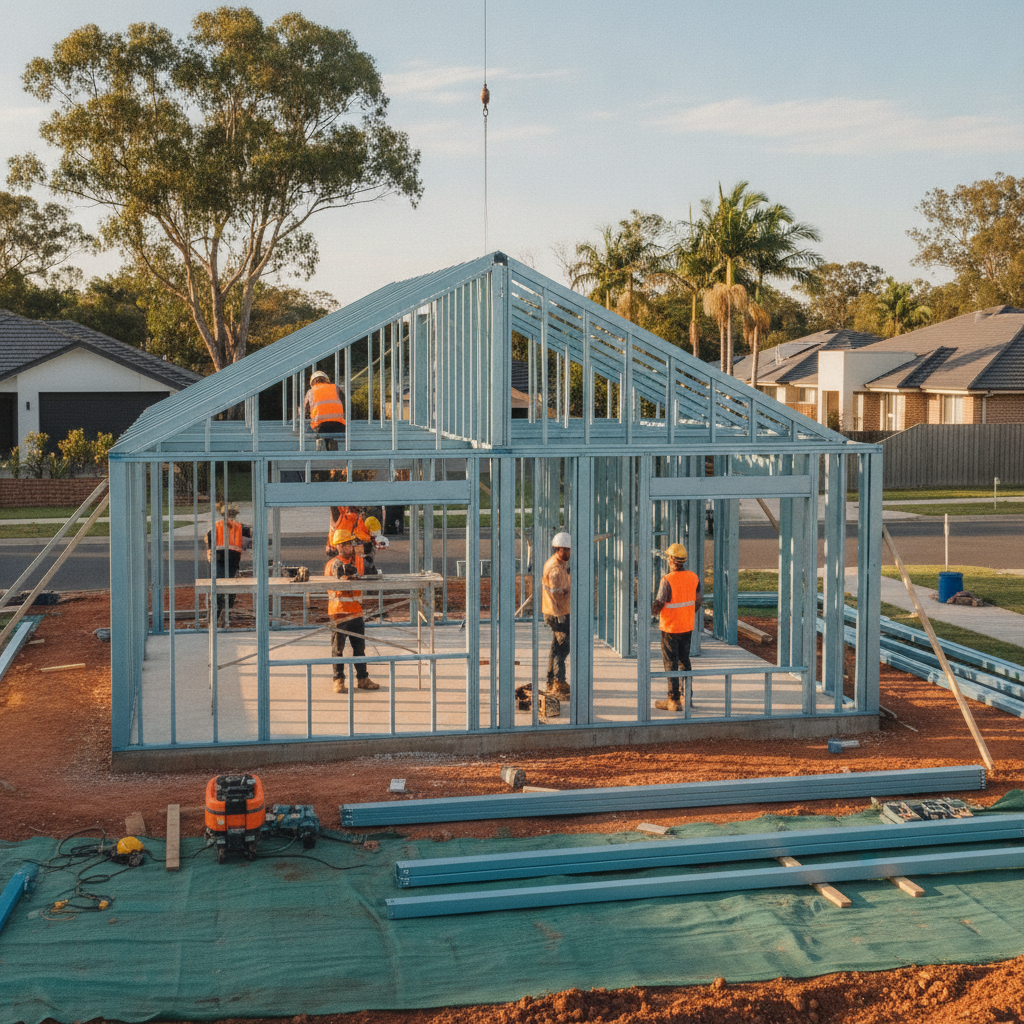
Unlike traditional timber frames that might require on site cutting, measuring, and adjusting, steel frames arrive as a precise kit. They are dimensionally accurate to the millimetre. For someone who only has Saturdays and Sundays to make significant progress, this precision is priceless. You won't spend your precious weekend correcting bows in the wood or figuring out why a wall is half a centimetre out of alignment. The frames go up straight and stay straight. Additionally, because steel is lightweight, it is easier to handle, meaning you can often move sections into place with minimal assistance, keeping the momentum going even when your helpers are busy.
Mastering the Micro-Schedule
When you work full time, you cannot afford to wake up on Saturday morning and wonder, "What should I do today?" Your planning needs to happen during the week. Use your weeknight evenings to perform the administrative heavy lifting so that your weekends are reserved for physical progress.
The 15-Minute Rule
Commit to spending 15 minutes every single night on your project. This isn't for swinging a hammer. Use this time to call trades, check the delivery status of your windows, or review the installation manual for your cladding. By doing one small admin task each night, you prevent a massive backlog of phone calls and emails from piling up on Monday morning when you are trying to focus on your actual job.
Batching Site Deliveries
There is nothing more frustrating than having to take a half day of annual leave just to receive a delivery of insulation. Coordinate with your suppliers to batch deliveries. If you can have your steel frames, roofing, and cladding arrive in a logical sequence that aligns with your planned leave or long weekends, you will minimize the disruption to your work life.
Effective Trade Coordination for the Weekend Warrior
As an owner builder, you are the project manager. While you might be doing the assembly of the kit yourselves, you will still need licensed trades for plumbing, electrical work, and the slab. Managing these professionals while you are in an office or on a work site elsewhere requires clear communication.
The key here is lead time. Good tradespeople in Australia are often booked out weeks or even months in advance. Start your conversations early. Be honest with them about your timeline and the fact that you are an owner builder. Most trades appreciate working on steel frame kit homes because the precision of the frames makes their job easier. For example, the pre-punched holes in steel frames allow electricians and plumbers to run their lines quickly without needing to drill through studs, which keeps their time on site (and your bill) to a minimum.
Utilizing the 'Staging' Method
Break your build down into manageable stages. Instead of looking at the project as "building a house," look at it as a series of small wins.
- Stage 1: Site prep and slab.
- Stage 2: Frame and roof carcass.
- Stage 3: Windows, doors, and cladding (Lock-up).
- Stage 4: Internal fit-out.
Reaching "Lock-up" is your major goal. Once the house is secure and weather tight, the pressure eases. You can work on the interiors at your own pace, regardless of the weather, and your tools and materials are safe inside. Because kit homes are designed as a cohesive system, getting to this stage is often faster than traditional builds.
The Importance of Site Organization
Have you ever spent an hour looking for a specific bolt or a particular tool? When your building time is limited to 16 hours a week (Saturday and Sunday), losing one hour to disorganization is a disaster. It is 6 percent of your total weekly progress gone.
Maintain a clean and organized site. At the end of every Sunday, spend thirty minutes cleaning up, organizing your fasteners, and covering your materials. It feels like a chore when you are tired, but your future self on Saturday morning will thank you. When you arrive on site and everything is exactly where it should be, you can hit the ground running immediately.
Balancing the Mental Load
Building a home is as much a mental challenge as a physical one. To avoid burnout, you must build in rest. It sounds counterintuitive when you are in a rush, but taking one weekend off a month can actually improve your productivity. It prevents the "owner builder fatigue" that leads to mistakes, and mistakes are the ultimate time wasters.
Leverage technology to keep your stress levels down. Use project management apps or even a simple shared digital calendar to track milestones and deliveries. Take photos of everything, especially before the walls are lined. These photos are a great reference for where pipes and wires are located, saving you time and guesswork later on.
The Australian Advantage: Why We Do It
We build our own homes in Australia because we value independence and quality. Using a steel frame kit is a uniquely Australian way to achieve this. The materials are designed for our climate, resisting termites and fire, which provides long term peace of mind. For the working owner builder, the efficiency of these kits is what makes the dream possible. You aren't just building a house; you are managing a sophisticated assembly process that has been designed to fit together logically.
Conclusion
Managing a kit home build alongside a full-time job is no small feat, but it is incredibly rewarding. By choosing high quality, precision engineered materials like steel frames, and by mastering the art of the micro-schedule, you can stay in control of the process. Remember, the goal is progress, not perfection every single day. Keep your site organized, communicate clearly with your trades, and don't forget to celebrate the small milestones along the way. Before you know it, you will be walking through the front door of a home you built with your own two hands, all while keeping your career on track.