Salt, Sand, and Steel: The Reality of Coastal Building
I was standing on a block in Kiama last January, midday heat bouncing off the volcanic rock, watching a bloke try to wrangle a delivery of timber that had already started to warp in the humidity. That is the moment most people realize coastal building is a different beast entirely. When you’re building within a couple of kilometers of the ocean, the air isn't just salty, it’s corrosive. It eats standard fixings for breakfast and turns cheap cladding into a chalky mess within three seasons. This is why we push the steel frame angle so hard for beach builds. Using something like BlueScope TRUECORE steel isn't just a fancy brand choice, it's about making sure your walls stay straight when the afternoon northeasterly hits 40 knots.
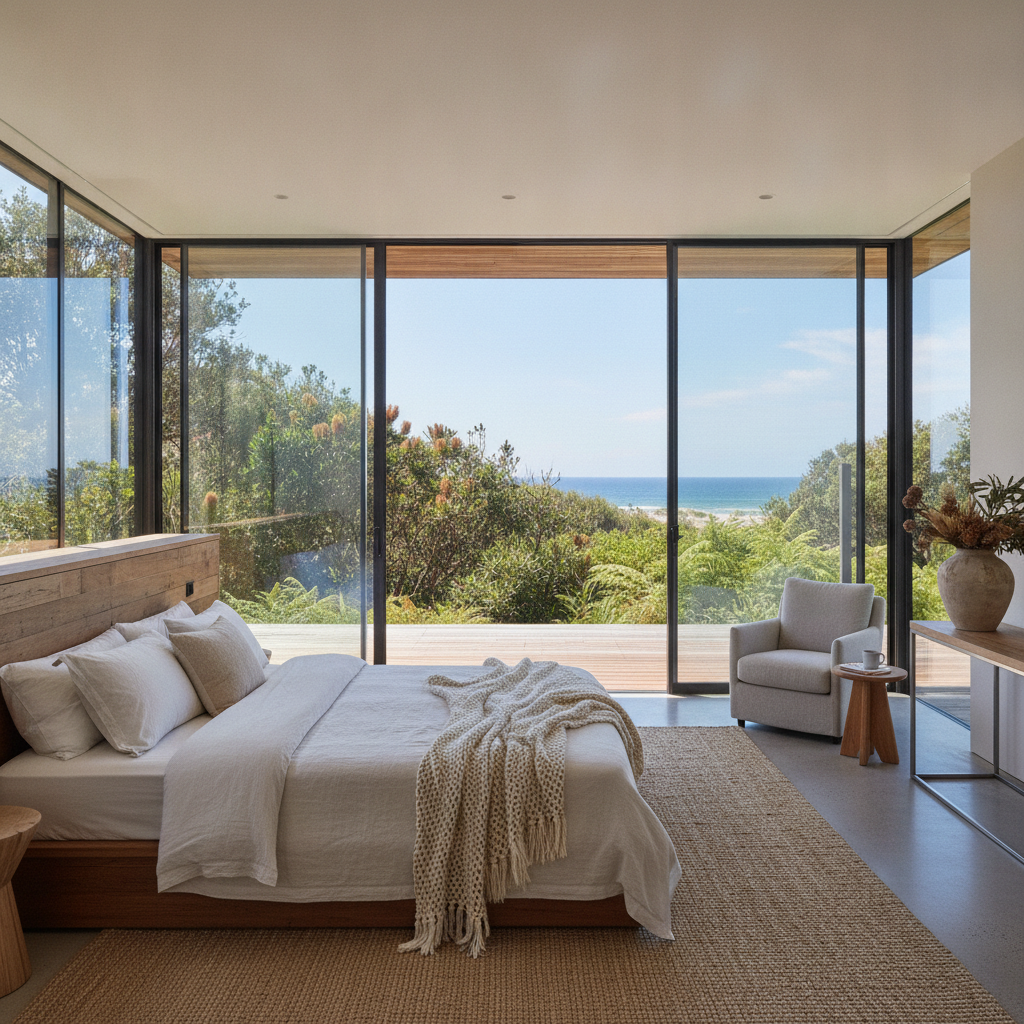
Coastal design used to mean a fibro shack with a corrugated roof. Not anymore. Now, it's about floor-to-ceiling glass and massive decks. But those designs bring headaches. You need structural integrity to handle the wind loads (N3 or even C1 ratings depending on how exposed you are) without losing that open-plan feel. A kit home gives you that bones-up certainty because the engineering is baked into the CAD files before the first piece of steel is even roll-formed. No guesswork on site. Just a frame that fits together exactly how the computer said it would while you were sitting in your air-conditioned office three months ago.
Designing for the Sightlines
If you've bought a block with a view, don't waste it by sticking the kitchen in the wrong corner. Most kit designs are fixed, but the smart ones let you flip the layout to suit the sun. Down south in places like Victor Harbor or the Mornington Peninsula, you want those big windows facing north to soak up the winter sun. Up in Byron or Noosa? You’re trying to hide from it. We often see owner builders get caught out by overlooking the 'reverse living' trend. If your block is flat, put the living areas on the first floor. It’s a bit more work with the floor joists and stairs, but the difference between looking at your neighbor's fence and seeing the whitecaps on the horizon is about two hundred grand in resale value. Plus, it just feels better.
Think about the transition spots too. A coastal home needs a proper 'sand trap' zone. This isn't just a laundry. I’m talking about a dedicated entry point with a tiled floor and maybe an outdoor shower nearby. You don't want the kids dragging half of North Cronulla beach across your nice hybrid laminate flooring. It sounds like a small detail until you’re vacuuming grit out of the rug for the fourth time in a week.
The Steel Advantage in High-Salt Zones
Building near the surf means you’re fighting constant moisture. Timber can swell, it can rot, and in many coastal areas, it’s a buffet for termites that love the damp sandy soil. Steel doesn't have those problems. But you’ve got to be smart about the skin. When we pack a kit for a coastal site, we’re looking at Colorbond Ultra or even Stainless Steel grades for the roofing and cladding. If you use standard grades within 200 meters of the breaking surf, you’ll be looking at rust spots before the housewarming party is over. It’s non-negotiable. AS 2312 is the standard you want to look at for corrosion protection. It dictates what coatings you need based on how close you are to the salt spray. Don't let a sales rep tell you standard zinc is 'fine'. It isn't.
The Owner Builder Reality Check
So you’ve decided to manage the build yourself. Good on you. It’s hard work but watching that first crane lift the roof trusses into place is a massive buzz. Just remember, as an owner builder, you’re the project manager. You need to have your trades lined up months in advance. Plumbers and sparkies in coastal towns are notoriously flat out, especially around the Christmas rush. So, get your slab poured, let it cure properly (don't rush the 28 days), and have your site ready for when the truck arrives with your frames and trusses. Because once that steel is on the ground, you want to get it up and under cover fast. Not because the steel will get hurt, but because you want to get your windows and doors in so the fit-out can start.
Internal Finishes that Handle the Humidity
Lifestyle design isn't just about the floor plan; it’s about the tactile stuff. In a coastal kit home, I always reckon people should go for higher ceilings. 2.7m should be your baseline. It lets the heat rise and gives the whole place an airy, breezy feel that suits the beach. For the walls, standard plasterboard is fine, but consider an moisture-resistant board in the wet areas and even the laundry. For the flooring, skip the solid timber. It moves too much with the coastal humidity drops. Go for a high-quality SPC hybrid or a rectified porcelain tile. They’re bulletproof, easy to mop after a rainy day, and they don't fade when the sun beats in through those big glass sliders.
And windows. Don't skimp here. You want high-performance glazing. Not just for the heat, but for the noise. People forget the ocean is loud. A heavy swell at 2am sounds like a freight train running through your lounge room. Double glazing isn't just for the snowies; it’s for acoustic privacy. Make sure your kit includes sub-sills for the windows too. In driving rain on the coast, water gets pushed into gaps you didn't even know existed. A sub-sill acts like a tiny gutter under your window frame, bailing the water back outside before it can ruin your internal sills.
Practical Tips for Your Coastal Project
- Check your BAL rating early. Many coastal areas are tucked against scrub or national parks. A BAL-29 or BAL-40 rating changes what materials you can use for decking and screens.
- Choose your cladding wisely. Wood-look aluminum or fibre cement weatherboards give you that Hamptons look without the constant painting.
- Position your outdoor living areas away from the prevailing wind. There’s no point having a 40sqm deck if you can't light a candle or hold a napkin down when the breeze picks up.
- Don't forget the external taps. You'll need more than you think for washing down the house, the car, the boat, and the dog. Salt is the enemy; fresh water is your only weapon.
Building a kit home on the coast is about being realistic about the environment. You're building in a place that wants to break things down. If you choose the right materials - like a solid steel frame and high-grade cladding - and you plan the layout to work with the site rather than against it, you end up with a house that’s still going to look mint in twenty years. It's about that first morning coffee on the deck when the mist is still hitting the water. That makes all the paperwork and the mud on your boots worth it. Just make sure you’ve got a good cordless impact driver and a couple of mates who don't mind a bit of heavy lifting on a Saturday morning.