I've seen it a hundred times on sites from the Sunshine Coast down to the Mornington Peninsula. An owner-builder stands there, clutching a clipboard with sweaty palms, watching the council inspector pull a tape measure out. The tension is thick enough to cut with a snips. You've put months of sweat into this kit home, and now a bloke from the local shire gets to decide if you've done it right. It's enough to make you want to pack it in and go back to renting.
But here's the kicker. Inspectors aren't actually out to get you. They're just checklist junkies. If you give them exactly what they need to see, they're in and out in fifteen minutes. If you try to hide a dodgy connection or forget your bracing plan, they'll hang around all day and find five other things to ping you on. Dealing with council is a game of preparation. You need to know the technical triggers before the truck rolls up your driveway.
The Slab and Piers: Getting the Bones Right
Everything starts with the footing inspection. This happens before a single drop of concrete hits the ground. The inspector wants to see your steel reinforcement is sitting on chairs, not in the dirt. They'll look at the depth of your piers. If your engineer specified 600mm and you've only dug 500mm because you hit a rock, you're in trouble. Don't just hope they won't notice. They carry a t-bar for a reason. Plus, they check your setbacks. If your kit home is supposed to be three metres from the fence but it's 2.9 metres, you're looking at a massive headache before the frames even arrive.
If you're building on a slab, they'll check the vapor barrier. That's the plastic membrane underneath. If it's torn or not taped properly at the joins, it's a fail. It sounds pedantic, but rising damp will ruin a house faster than a termite plague. Especially in places like North Queensland where the ground stays sodden for months. Get the prep right. It's the cheapest part of the build to fix now, but the most expensive to fix later.
Steel Frame Inspection: More Than Just Screws
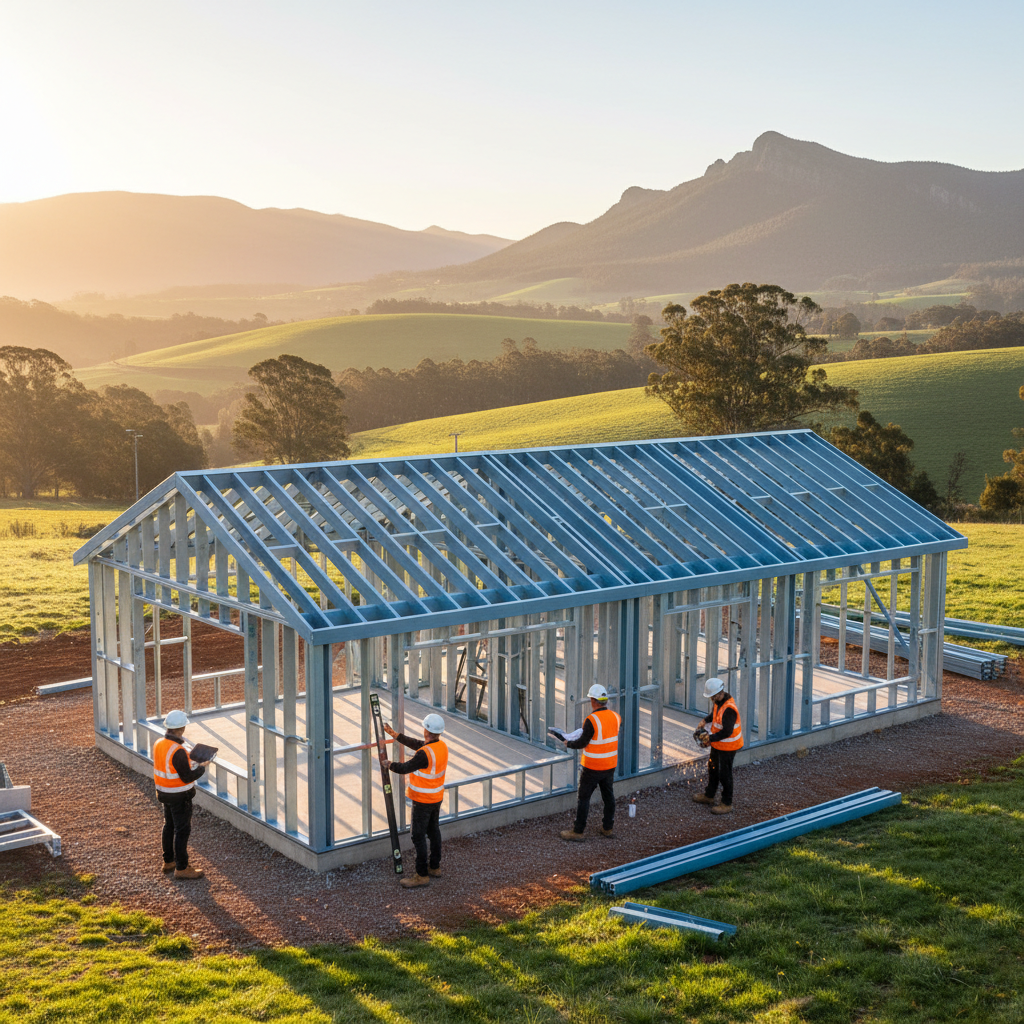
Once your frames are up, this is where it gets technical. Because we use BlueScope TRUECORE steel, the frames are precision-engineered, but that doesn't mean you can't muck up the install. The inspector will be looking at your bracing. This is the big one. They'll cross-reference your engineering drawings with the actual straps or K-braces on the walls. If the plan says you need a strap in a certain bay and it's missing, you aren't getting your certificate. Simple as that.
Spacing matters. I once watched an inspector count the number of screws in a strap. He wasn't being a jerk, he was just checking compliance with AS 4600. Steel frames are incredibly strong because of the system, not just the material. If you skimp on the fasteners, the system fails. You'll also need to show them the tie-downs. These are the bolts or rods that keep your wall frames attached to the slab. In high wind zones or cyclone-prone areas, this is the most critical part of the whole inspection. If those nuts aren't tight or the washers are the wrong size, you'll be spending your Saturday morning readjusting them instead of starting on the cladding.
The Cavity and Insulation Trap
Before the internal lining goes on, you've got the frame inspection. This is the 'pre-cladding' or 'pre-lining' phase. This is when the inspector looks at your thermal break. If you're using steel frames in Australia, Section J of the NCC Volume 2 usually requires a thermal break between the frame and the cladding to stop heat transfer. If you've forgotten to install that foam tape or thermal strip, you're pulling sheets off. It's a nightmare.
They'll also look at your services. Even though you're the owner-builder, your sparky and plumber need to have their rough-ins done. The inspector will check that the plumbing pipes aren't vibrating against the steel and that the electrical cables have those little plastic grommets where they pass through the studs. Steel is conductive. If a cable rubs against a raw edge and shorts out, the whole frame becomes live. That's why those five-cent grommets are the most important bits of plastic in the whole house.
Wet Areas and Waterproofing
This is where most owner-builders get tripped up. Waterproofing. It's the leading cause of building disputes in Australia, and the inspectors know it. They want to see the floor-to-wall junctions coated in that specific polyurethane membrane. They'll check the height of the water-stop angles in the shower. If you're in a high-traffic area, they might even ask for a pressure test on the pipes.
Don't try to save fifty bucks on cheap waterproofing from a clearance aisle. Use a reputable system and take photos of every stage. Sometimes the inspector can't make it the day you're ready to tile. Some shires allow you to provide a certificate from a licensed waterproofer instead, but you need to check that before you start. If you cover it up with tiles and they haven't seen it, they can legally make you rip the tiles up to prove it was done right. And nobody wants to do that on a Tuesday afternoon.
A Few Professional Tips for the Big Day
- Have your paperwork ready. Put your approved plans, engineering specs, and energy rating in a clean folder. Don't make them wait while you hunt for a PDF on your phone.
- Clean the site. An inspector who has to trip over offcuts and lunch wraps is an inspector in a bad mood. A tidy site says you're a builder who cares about detail.
- Ask questions. If you aren't sure about a specific tie-down, ask them. Most of these blokes are former chips or brickies. They appreciate someone who wants to do it right.
- Check your BAL rating requirements. If you're in a bushfire area, they'll be looking for specific mesh over vent holes and non-combustible materials. Don't guess.
Building a kit home is a massive undertaking. It's rewarding, sure, but it's a marathon. The council inspections are just the water stations along the way. They're there to make sure you finish the race with a house that actually stands up and stays dry. Get your TRUECORE frames straight, keep your site clean, and follow the engineering to the millimetre. Do that, and you'll find the inspection process is just another tick on the list rather than a roadblock. Now, get back to it. That roof won't screw itself on.