Cracking the Code of Kit Home Plans
So, you've decided to take the plunge. You're keen on building your own place and you've started looking at floor plans. It's an exciting time. But then the technical drawings land on your desk, and suddenly it feels like you're trying to read ancient hieroglyphics. Don't stress. We've seen plenty of folks go through this exact same thing. It looks daunting at first, but once you know what to look for, it all starts to click.
Understanding your plans is the single most important part of the planning phase. If you get this bit right, the rest of the build flows a whole lot smoother. If you miss a detail now? Well, that's when things get tricky on-site. Let's get stuck in and suss out what those lines and symbols actually mean for your new home.
What exactly is in a Kit Home Specification?
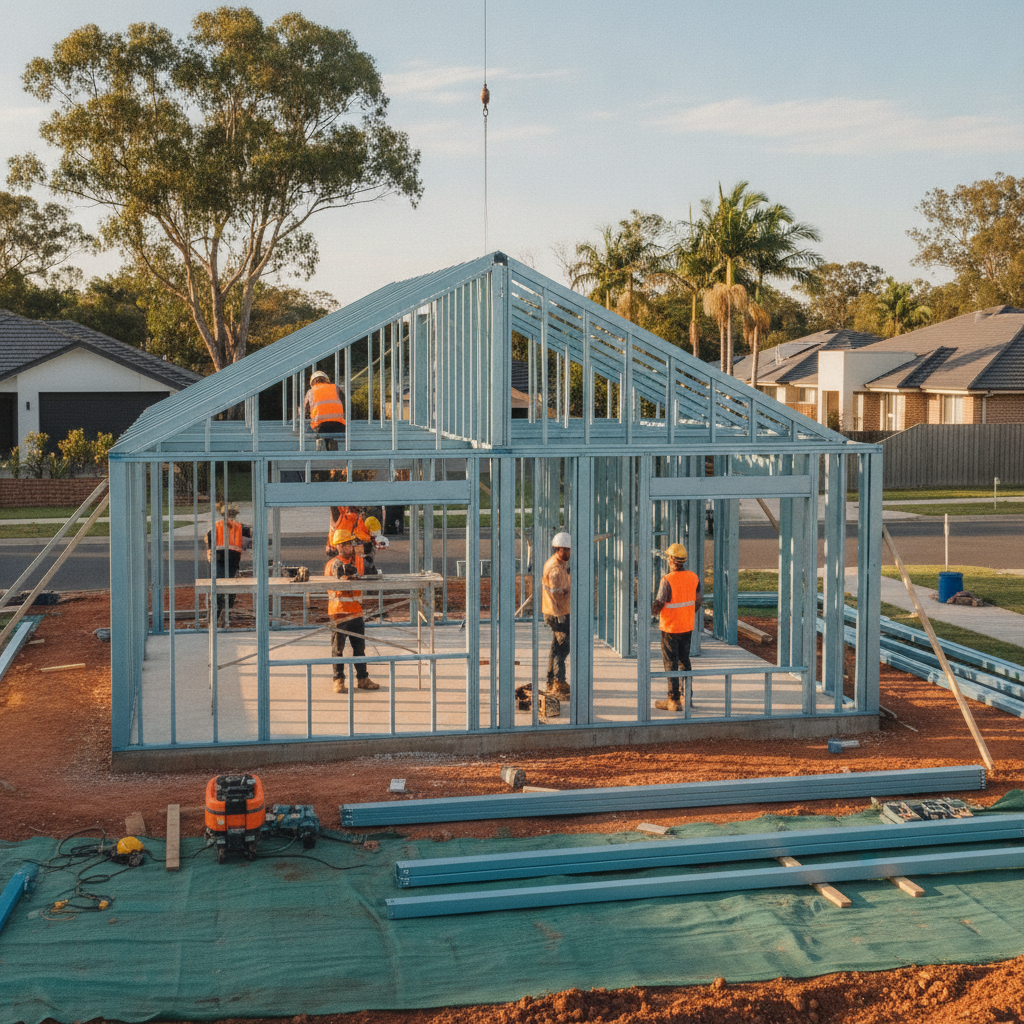
First things first. There's a big difference between a floor plan you see in a glossy brochure and the actual engineering specifications that show up in your kit. One is for dreaming, the other is for building. A standard kit from a quality Australian provider usually focuses on the "shell" of the home. This includes your steel frames, the roof, cladding, windows, and doors.
One thing that catches people off guard is what isn't there. Since you're the owner builder, you'll be arranging things like the concrete slab, the plumbing under the floor, and the electrical fit-out yourself. Your plans will show where these things go, but the actual pipes and wires aren't part of the box that arrives on the back of a ute. It's a team effort between the kit provider and your local tradies.
Reading the Floor Plan Without Getting a Headache
Ever wondered why some lines are solid and others are dashed? It's not just for aesthetics. Solid lines usually represent walls that go from floor to ceiling. Dashed lines often show things above head height, like an overhead cupboard or the edge of a roof eaves. It sounds simple, but missing a dashed line can mean you've accidentally planned a barbie area right where a downpipe needs to go.
1. Check the scale: Usually, it's 1:100. This means one centimetre on the paper is one metre in real life. Always double-check this before you start measuring things with your trusty tape measure.
2. Look for the orientation: Look for the North point. In Australia, getting your living areas facing North is a cracker of a way to keep the house warm in winter and cool in summer. If your plans don't align with your block of land, you might end up with a very hot bedroom in the arvo.
3. Room dimensions: These are usually written in millimetres. 3000 means three metres. It's precise for a reason. Steel frames are manufactured to the millimetre, so there's no room for "she'll be right" when it comes to measurements.
The Importance of Elevations
While the floor plan is a bird's eye view, the elevations show you what the house looks like from the side. You'll get four of these: North, South, East, and West. This is where you see the height of the windows and the pitch of the roof. It's also where you'll see the cladding details. Are you going for a classic horizontal weatherboard look or something more modern? The elevations tell the story.
But here is a tip from the trenches. Look closely at the window heights. If you want a kitchen bench to run under a window, you need to make sure the sill height allows for it. There is nothing worse than realizing your window is ten centimetres too low after the steel frames are already standing.
Understanding the Bill of Materials
This is basically your shopping list. It's a massive document that lists every single piece of steel, every sheet of roofing, and every bag of screws that comes with your kit. It's not exactly a page-turner, but you need to go through it. When the truck pulls up, you or your builder will use this list to check off the inventory.
We use TRUECORE steel from BlueScope because it's tough and holds up against the Aussie elements. On your spec sheet, you might see references to BMT (Base Metal Thickness). This tells you how thick the steel is. Different parts of the house need different thicknesses for structural integrity. It's all been calculated by engineers, so you don't have to do the math, but it's good to know what you're looking at.
Energy Ratings and Insulation Specs
Australia has pretty strict rules about energy efficiency. Your plans will include details about insulation. This isn't just about being eco-friendly; it's about not roasting like a Sunday roast inside your own home. The plans will specify things like R-values. A higher R-value means better insulation. You'll see specs for the roof, the walls, and sometimes even the floor. If you're building in a particularly cold or hot part of the country, pay extra attention here. You might want to beef up what's included to make sure you're comfortable year-round.
The Slab and Site Plan
So, you've got your house plans. Now, where does it go? The site plan shows the house sitting on your block of land. It shows the distance from the boundaries (setbacks) and where the driveway goes. But even more important for the kit home owner is the slab plan. This is a technical drawing for your concretor. It shows the exact dimensions of the concrete base and where any internal thickened sections need to be to support load-bearing walls. Since steel frames are rigid, your slab needs to be spot on. A few centimetres out can cause heaps of trouble when you start bolting the frames down.
Common Symbols You'll Encounter
Looking at the drawings and seeing weird circles with numbers in them? Those are usually call-outs. They point to another page in the plans that shows a "detail drawing". A detail drawing is like a giant magnifying glass on a specific part of the build, like how the roof connects to the wall or how the damp-proof course is installed. Don't skip these. They contain the instructions that keep your house watertight and structurally sound.
And then there's the abbreviations. RL stands for Relative Level (height). AFSL stands for Above Finished Floor Level. If you see a note saying "Window sill at 900 AFFL", it means the bottom of the window is 90cm off the floor. Sussing these out early saves a lot of head-scratching later on.
Practical Tips for Reviewing Your Plans
Take your time. Don't feel pressured to sign off on anything until you've sat down with a cuppa and really looked at it. Grab some coloured highlighters. Use one colour for things you're 100% happy with and another for things you have questions about. Call your kit provider and ask them to explain anything that looks like gibberish. That's what they're there for. No question is too silly when you're building a house.
Another fair dinkum tip: walk around your current house with a tape measure. If the plans say the bedroom is 3.5m by 3.5m, measure out your current bedroom. Does it feel big enough? It's much easier to move a wall on a piece of paper than it is once the steel frames arrive on site.
Wrapping It Up
Building a kit home as an owner builder is one of the most rewarding things you can do. You get to see your home rise from the ground up, knowing exactly how it was put together. But it all starts with those plans. They are your roadmap. If you take the time to understand the specifications, the symbols, and the measurements now, you'll be well ahead of the game. You'll be able to talk to your tradies with confidence and ensure your dream home becomes a reality without the unnecessary stress. So, grab those drawings, spread them out on the kitchen table, and start exploring. You've got this.