Building for the Australian Elements: Why Wind Ratings Matter
When you start planning your dream kit home in Australia, your mind is likely filled with floor plans, kitchen finishes, and where the deck will wrap around to catch the sunset. However, there is a technical side to building that is just as important as the aesthetic: understanding wind ratings. In Australia, our climate is as diverse as the landscape, ranging from gentle breezes in suburban valleys to the ferocious cyclonic winds of the far north coastline.
For an owner builder, failure to account for wind ratings can lead to structural issues, permit rejections, or even safety risks. This guide breaks down the technical jargon into practical knowledge, helping you understand how wind ratings influence your build, especially when working with modern steel frame construction.
The Basics: What is a Wind Rating?
A wind rating (or wind classification) is a measurement assigned to a building site by a structural engineer or a qualified surveyor. This rating dictates the strength and structural requirements your home must meet to withstand the wind speeds common to that specific location. The rating is determined by several factors, including the region of Australia, the surrounding terrain, and how shielded the site is by other buildings or trees.
In Australia, we generally use two primary categories: Non-Cyclonic (N) and Cyclonic (C). These are ranked from N1 to N6 and C1 to C4. Most residential builds in suburban areas fall between N1 and N3, while coastal or exposed rural properties may require higher specifications.
Breaking Down the N Ratings (Non-Cyclonic)
For most people building kit homes in inland Australia or southern metropolitan areas, the N scale is the relevant standard. These ratings are based on the maximum wind speed the house is expected to experience over its lifetime.
N1 and N2: Sheltered Suburban Living
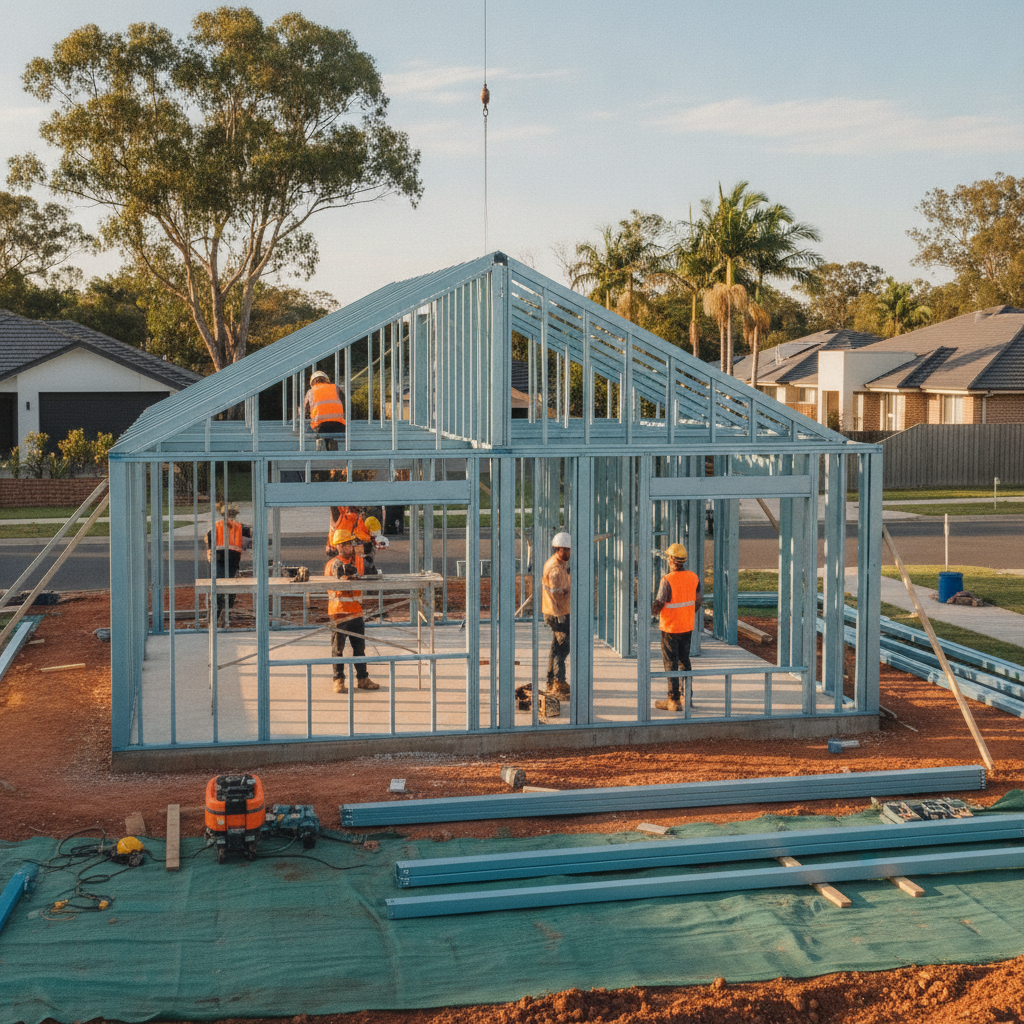
N1 and N2 are the most common ratings for suburban areas where homes are close together and terrain is relatively flat. In these locations, other houses and fences act as windbreaks. While the structural requirements are at the lower end of the scale, your home still needs to be built to Australian Standards. Using a steel frame kit home in an N1 or N2 zone ensures a level of precision and straightness that makes the rest of your fit out much easier.
N3: The Rural and Coastal Standard
If you are building on a larger rural block or near the coast outside of the northern cyclone zones, you will likely encounter an N3 rating. This is a significant step up from N2. At this level, the wind pressure on the walls and roof increases, requiring more robust tie downs and structural bracing. Steel frames are particularly effective here because the material properties of high tensile steel, such as TRUECORE steel, provide incredible strength to weight ratios, ensuring the structure remains rigid under pressure.
N4, N5, and N6: High Wind Inland Areas
These ratings apply to very exposed hillsides or locations near escarpments where wind speeds can reach extreme levels. Building in these zones requires specialized engineering designs and heavy duty connections between the frame, the roof, and the footings.
Understanding C Ratings (Cyclonic Zones)
If you are building in Northern Western Australia, the Northern Territory, or Northern Queensland, you are entering the world of Cyclonic (C) ratings. These sites require homes built to withstand intense pressure and the impact of flying debris.
- C1: Lower cyclonic wind speeds, common in fringe coastal areas.
- C2 and C3: Standard for most tropical coastal towns, requiring specialized roof battens and reinforced frame connections.
- C4: The highest rating, designed for the most extreme weather events on the planet.
For owner builders in these regions, the integrity of the kit is paramount. This is where steel frames truly shine. Because steel frames are engineered using computer-aided design, every screw hole and connection point is precisely calculated to meet the specific C-rating requirements of your site.
The Role of Steel Frames in High Wind Areas
When you are looking at building techniques for high wind areas, the choice of framing material is vital. Steel is an isotropic material, meaning it has consistent strength in all directions. Unlike traditional timber, which can have knots or natural variations that weaken its structure, steel is manufactured to strict tolerances.
In a kit home, the steel frames are typically bolted together or secured with high strength fasteners. In high wind zones, the "hold-down" system is what keeps the roof attached to the walls and the walls attached to the slab. Steel framing systems are designed to transfer these wind loads directly into the foundations, providing a continuous line of strength that is essential for N3 ratings and above.
How is Your Wind Rating Determined?
As an owner builder, you do not get to choose your wind rating, it is determined for you. A site-specific wind classification takes four main variables into account:
1. Wind Region: Australia is divided into Regions A, B, C, and D. Region A is the majority of the south, while D is the most severe cyclone zone in the North West.
2. Terrain Category: This looks at how much cover is around your house. A house in the middle of an open field (Category 2) will face more wind than a house in a crowded suburb (Category 3).
3. Topography: If your house is on top of a hill or a steep slope, the wind speeds up as it travels up the incline. This is known as the speed up effect.
4. Shielding: This considers whether other permanent structures or dense trees are blocking the wind from hitting your home directly.
Practical Tips for Owner Builders
Navigating these technical requirements can feel overwhelming, but here are some actionable tips to keep your project on track:
Request a Site Report Early
Before you finalize your kit selection, get a site classification report. Knowing your wind rating early ensures that the kit you order is engineered correctly. It is much easier to design for an N3 rating from the start than to try and retro-fit bracing later in the piece.
Focus on the Roof Tie Downs
In a wind event, your roof acts like a giant wing. It wants to lift off the house. In steel frame kit homes, pay close attention to the installation of roof battens and the connection between the trusses and the wall frames. These are the critical points that maintain the structural integrity of the home.
Don't Forget the Openings
Windows and doors are often the weakest points in a high wind event. Ensure that the glazing and frames provided in your kit are rated for the same wind speed as your site. If a window blows in, the internal pressure of the house rises instantly, which is often what causes roofs to lift off.
Work With Your Slab Trades
Since the wind loads are transferred through the frames to the slab, your tie down bolts (such as J-bolts or chemical anchors) must be placed exactly where the engineering plan specifies. If you are managing your own slab pour, ensure your tradespeople understand the importance of precise anchor placement.
The Longevity Factor
One of the quiet benefits of using steel frames in Australia relates to our long term climate. Steel does not warp, twist, or shrink over time. In high wind areas, where the structure might be under regular stress from gusts, having a frame that remains perfectly straight and does not develop internal movements is a massive advantage. It means less cracking in your plasterboard and fewer doors that stick when the weather changes.
Conclusion
Understanding wind ratings is a fundamental part of being a successful owner builder in Australia. Whether you are building a weekend getaway in a sheltered valley or a family home on a coastal ridge, knowing the difference between an N2 and an N4 rating will help you make informed decisions. By opting for a high quality steel frame kit, you are choosing a system engineered specifically for these Australian conditions. While the technical side of wind speeds and terrain categories might feel complex, it is the foundation of a home that is safe, durable, and built to last for generations.