Taking the Reins: The Owner Builder Journey in Australia
There is something uniquely Australian about the dream of building your own home. It is about more than just saving on labor costs, it is about the sweat equity, the pride of pointing to a standing structure and saying, "I did that." However, when you embark on a kit home project, the most critical decision you will make is not just the color of the cladding or the floor plan layout, but where you will draw the line between your own DIY efforts and the expertise of licensed trades.
In Australia, the owner builder pathway is a popular route for those looking to stay involved in the construction of their home. When you work with a kit home, much of the heavy lifting regarding design and engineering is handled for you. You receive the precision-engineered steel frames, the roofing, and the windows, but the actual assembly and finishing are in your hands. This guide explores how to navigate the "build vs. hire" dilemma to ensure your home is safe, compliant, and beautifully finished.
The Strategic Advantage of Steel Frames
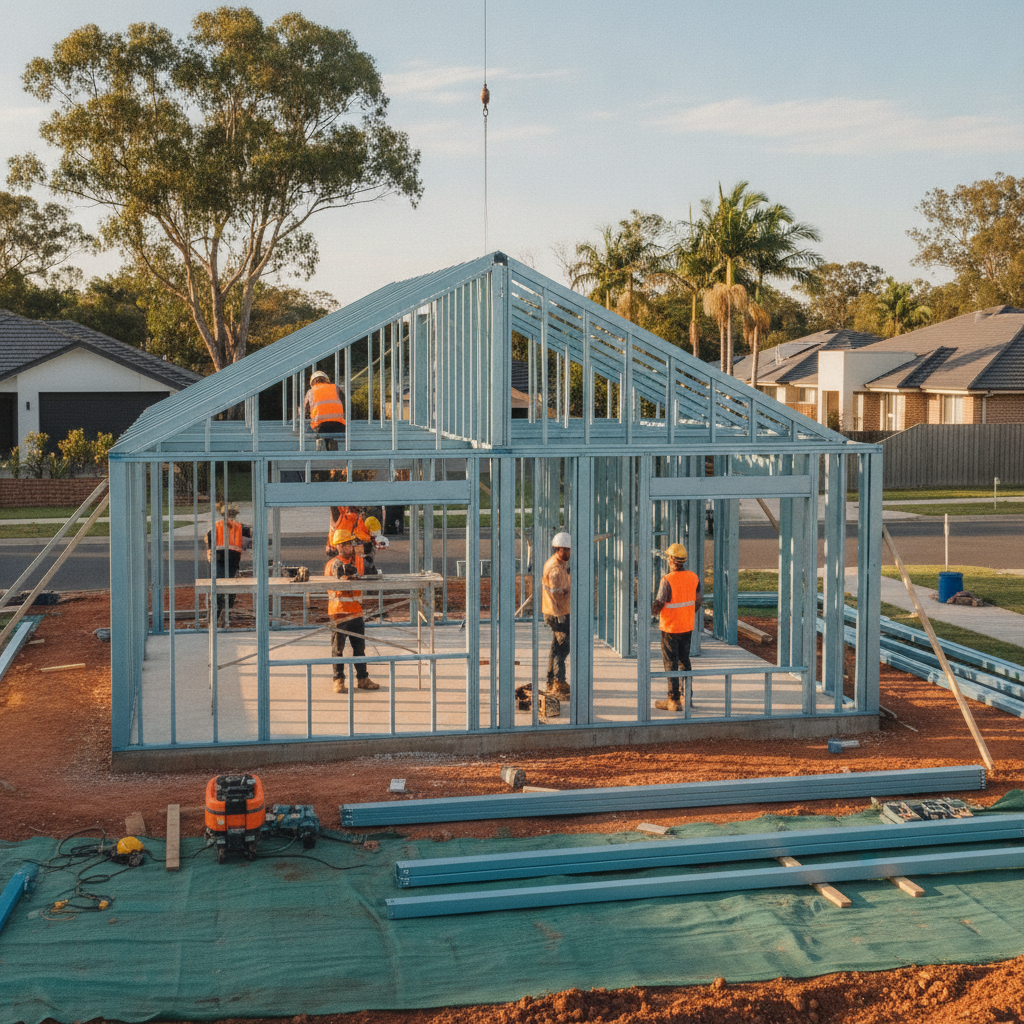
Before diving into the manual labor, it is worth noting why many Australian owner builders opt for steel frame kits. Using BlueScope TRUECORE steel provides a significant advantage for the DIY-inclined. Unlike traditional timber, these frames are straight, true, and resistant to termites. For an owner builder, this means the "bones" of the house are easier to align. You aren't fighting warped studs or natural imperfections, which makes the subsequent DIY tasks, like installing insulation or fixing plasterboard, much more straightforward.
Tasks You Can Tackle Yourself
As an owner builder, your time is your most valuable resource. Here are the areas where you can typically get your hands dirty and add real value to the project.
1. Site Preparation and Management
While a professional will need to pour your slab or install your piers, you can take charge of site cleanliness and logistics. Coordinating the delivery of your kit home components, ensuring there is a clear, dry space for the steel frames to be stored, and managing waste disposal are all vital tasks. A clean site is a safe site, and as the owner builder, you are the head of safety and efficiency.
2. Wall and Roof Framing Assembly
This is where the kit home model really shines for the DIY enthusiast. Because the frames arrive pre-punched and ready for assembly, many owner builders choose to bolt the wall frames together and stand them up. If you are comfortable with a drill, a level, and following a detailed set of plans, this is a highly rewarding phase. It is like a giant, life-sized assembly project. Just remember to have a few extra sets of hands on deck for the heavy lifting days.
3. Installing Insulation and Internal Linings
Once the house is at the lock-up stage, you can spend time on the internals. Installing bulk insulation batts is a straightforward task that requires attention to detail rather than high-level technical skill. Similarly, while professional plasterers are incredibly fast, many owner builders choose to hang the plasterboard sheets themselves to save on labor, perhaps hiring a pro just for the flushing and sanding to ensure a perfectly smooth finish for painting.
4. Painting and Landscaping
These are the classic DIY favorites. Painting your own home allows you to take your time with the finish and can save thousands in professional fees. Likewise, landscaping, building decks, and creating garden beds are tasks that can be done progressively after you have moved in, allowing you to shape the outdoor lifestyle of your Australian home at your own pace.
When to Call in the Licensed Professionals
The Australian building industry is strictly regulated, and for good reason. Certain tasks are not just difficult; they are legally restricted to licensed tradespeople. Attempting these yourself can void warranties, lead to insurance issues, or result in dangerous outcomes.
1. Plumbing and Electrical
In Australia, it is a legal requirement that all plumbing and electrical work be completed by a licensed professional who can provide a certificate of compliance. This includes everything from rough-ins to fitting off the taps and light switches. As an owner builder, your role here is one of coordination. You need to ensure the plumber is there before the slab is poured and the electrician is ready once the steel frames are standing but before the internal walls are closed up.
2. Concrete Slab and Foundations
The slab is the foundation of your entire project. If it is not perfectly level or the dimensions are slightly off, every subsequent step, from the steel framing to the tiling, will be a nightmare. While you might help with the formwork, leave the actual pour and finishing to the experts. A professional concrete team understands the nuances of Australian soil classes and climate conditions.
3. Waterproofing
Water damage is the most common cause of building disputes in Australia. Waterproofing wet areas like bathrooms and laundries is a high-stakes task. Many states require a licensed waterproofer to sign off on the work to ensure compliance with Australian Standards. Given the cost of fixing a leak once the tiles are down, this is a job best left to the specialists.
4. Structural Roofing and Window Installations
While some owner builders feel comfortable installing the metal roof sheeting provided in their kit, it involves working at heights and ensuring the structure is 100% watertight. If you are not experienced with flashing or working on a pitch, hiring a roof plumber is a wise investment. Similarly, large glass sliding doors and windows can be incredibly heavy and fragile. Having a pro install these ensures they are square and sealed correctly against the Australian elements.
Practical Tips for Managing Your Project
Becoming an owner builder is as much about project management as it is about physical labor. Here are a few tips to keep your kit home build on track.
- Keep a Detailed Log: Document every stage of the build with photos and notes. This is helpful for council inspections and future maintenance.
- Build a Relationship with Your Trades: Treat your sub-contractors well. They have a wealth of knowledge and can often give you tips on the DIY sections of your build.
- Understand Your Limits: It is okay to change your mind. If you planned to do the tiling but realize you don't have the time or the patience, hire a pro. It is better to have a quality finish than a DIY job you regret.
- Safety First: Always wear the correct PPE. Steel frames can have sharp edges, and Australian sun is unforgiving. Invest in good boots, gloves, and eye protection.
Conclusion: Finding Your Balance
The beauty of the Australian kit home is the flexibility it offers. By choosing to be an owner builder, you are taking control of your housing future. Whether you spend your weekends bolting together TRUECORE steel frames or simply coordinating the trades who do it for you, the result is a home that reflects your effort and vision. Focus your DIY energy on the tasks that offer the most satisfaction and savings, and respect the expertise of the trades for the technical essentials. With the right balance, your owner builder journey will be a rewarding chapter in your life, ending in a home built to last in the harsh Australian climate.