Taking the Reins: The Owner Builder Journey in Australia
There is a unique kind of pride that comes from standing in a house you helped build with your own two hands. Across Australia, from the coastal fringes to the red dust of the outback, more people are turning to kit homes as a way to achieve their property dreams. But as an owner builder, one of the biggest questions you will face is not just what you want to build, but how much of it you should actually do yourself.
The kit home model, particularly those utilising high quality Australian BlueScope steel frames, offers a fantastic middle ground for the DIY enthusiast. You get the engineered precision of a professional structure, but you retain the control of a project manager. However, the line between saving money through sweat equity and getting in over your head can be thin. This guide explores the balance between DIY tasks and the essential roles of licensed trades to ensure your build is safe, compliant, and stress-free.
The Steel Frame Advantage for DIYers
Before diving into the tools, it is worth noting why steel frame kits have become the go-to for Australian owner builders. Using brands like TRUECORE steel means you are working with frames that are pre-engineered, straight, and true. Unlike timber, which can warp or require significant onsite adjustment, steel frames arrive ready to be bolted together. This precision simplifies the assembly phase, making it much more accessible for someone with decent handy skills and a set of helper 1s.
Knowing Your Limits: The Mandatory Trades
In Australia, the law is very clear about certain aspects of construction. Regardless of how handy you are with a multimeter or a pipe wrench, there are two areas where you MUST hire licensed professionals: electrical and plumbing. In most states, it is illegal to perform your own electrical wiring or connect your own sewage and water lines. Aside from the legal ramifications, these trades are critical for the safety of your family and the longevity of your home.
Engaging these trades early in the process is vital. Your plumber will need to be there before the slab is poured to lay the internal drainage, and your electrician will need to coordinate with you during the framing stage for the rough-in. As an owner builder, your job here is not to do the work, but to manage the schedule and ensure these pros have clear access when they need it.
Tasks You Can Tackle: The DIY Sweet Spot
Once the licensed pros have done their part, there is a wealth of work that is perfect for the motivated DIYer. These tasks can save you a significant portion of your labour costs and give you total control over the finish of your home.
1. Frame Assembly and Standing
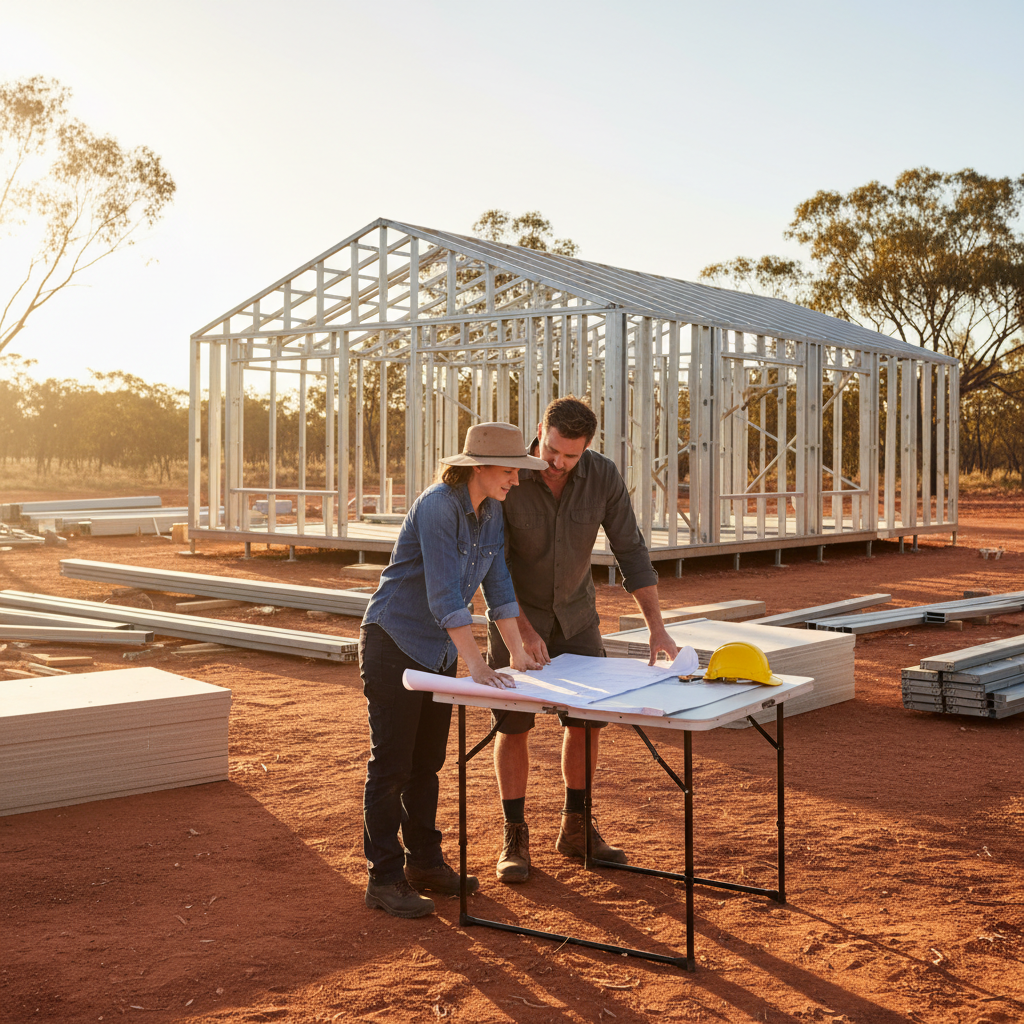
Because modern kit homes are essentially a giant 3D puzzle, many owner builders choose to assemble the steel frames themselves. All the components are pre-cut and pre-punched, meaning you are following a set of detailed plans rather than designing on the fly. You will need a few sturdy ladders, a good quality cordless impact driver, and at least two or three reliable mates. Standing the walls and securing the roof trusses is a major milestone that feels incredibly rewarding.
2. Installing Cladding and Windows
Enclosing the building, or getting it to the lock-up stage, is another area where DIYers can shine. Installing windows and external doors is a straightforward process if you take your time to ensure everything is level and plumb. Similarly, fixing external cladding is a task that requires patience and attention to detail rather than years of specialised training. Whether you are using traditional weatherboards or modern architectural panels, the process is methodical and highly visible, allowing you to see your progress day by day.
3. Insulation and Internal Lining
Once the home is weather-tight, you can move inside. Installing insulation batts is a simple, if slightly itchy, task that any owner builder can manage. Following this, hanging plasterboard (gyprock) is a common DIY task, although many choose to hire a professional plasterer for the flushing (joining and sanding). While anyone can screw a sheet of plaster to a steel stud, achieving that perfectly smooth, seamless finish on the joins is an art form that takes years to master. If you want a high-end finish, consider doing the hanging yourself and outsourcing the flushing.
4. Painting and Flooring
This is where your house becomes a home. Painting is perhaps the most common DIY task in Australia. It requires minimal tool investment and can be done at your own pace. Similarly, many modern flooring options like hybrid planks, laminate, or even some timber floors are designed with DIY-friendly click-lock systems. These tasks are perfect for those who want to be hands-on without needing heavy machinery or advanced technical knowledge.
The Importance of Site Management
Being an owner builder is as much about logistics as it is about hammers and nails. Your most important tool might actually be your smartphone and a well-organised spreadsheet. You are responsible for site safety, waste management, and the delivery of materials. Managing the arrivals of your kit home components, ensuring the slab is ready at the right time, and coordinating when the scaffolding arrives are all tasks that require a clear head and good communication.
Practical Tips for a Smooth Build
- Read the Manual Twice: Your kit home will come with engineering drawings and assembly instructions. Study them before the truck arrives. Understanding the sequence of events is the key to avoiding costly mistakes.
- Invest in Quality Tools: You do not need every tool in the hardware store, but don't skimp on the basics. A high quality laser level, a reliable impact driver, and sturdy scaffolding will make your life much easier and safer.
- Verify Your Permits: Before you even order your kit, ensure your Owner Builder Permit is active and you understand the specific council requirements for your area.
- Respect the Steel: When working with steel frames, remember that they are precision-engineered. If something doesn't seem to fit, don't force it. Re-check your measurements and the plans.
- Build a Relationship with Your Trades: Treat your plumber and sparky as partners in the project. Clear communication about timelines will prevent them from being frustrated and ensure your project stays on track.
Conclusion: Finding Your Balance
Becoming an owner builder in Australia is a journey of discovery. It is about learning new skills, pushing your boundaries, and creating a space that is uniquely yours. By understanding which tasks are best left to licensed professionals and which ones you can confidently tackle yourself, you set yourself up for a successful and enjoyable build. Using a high quality steel frame kit provides the perfect foundation, giving you the structural confidence to focus on the elements where your DIY spirit can truly shine. Take your time, plan your phases, and enjoy the process of bringing your Australian dream home to life.