Taking the Reins: The Owner Builder Journey in Australia
There is a unique sense of pride that comes from standing in a home you helped build with your own two hands. Across Australia, more people are turning to kit homes as a way to create a high quality lifestyle while maintaining control over the construction process. As an owner builder, you are the project manager, the decision maker, and, often, the lead laborer. However, one of the most critical skills you can develop is knowing when to pick up the tools yourself and when to call in the professionals.
Deciding what to DIY and what to outsource is a balancing act of time, skill, and legal requirements. While the dream of building a home from the ground up is exciting, being realistic about your capabilities ensures that your project stays on track and meets Australian building standards. In this guide, we will explore the nuances of kit home construction, specifically focusing on steel frame builds, to help you determine where your sweat equity is best spent.
The Steel Advantage: Why Your Frame Choice Matters
Before diving into the tools, it is worth noting why so many Australian owner builders are opting for steel frame construction. Using high quality materials like BlueScope TRUECORE steel provides a precision engineered foundation for your home. Unlike traditional timber, steel frames are straight, true, and resistant to termites, which is a massive win in the Australian climate.
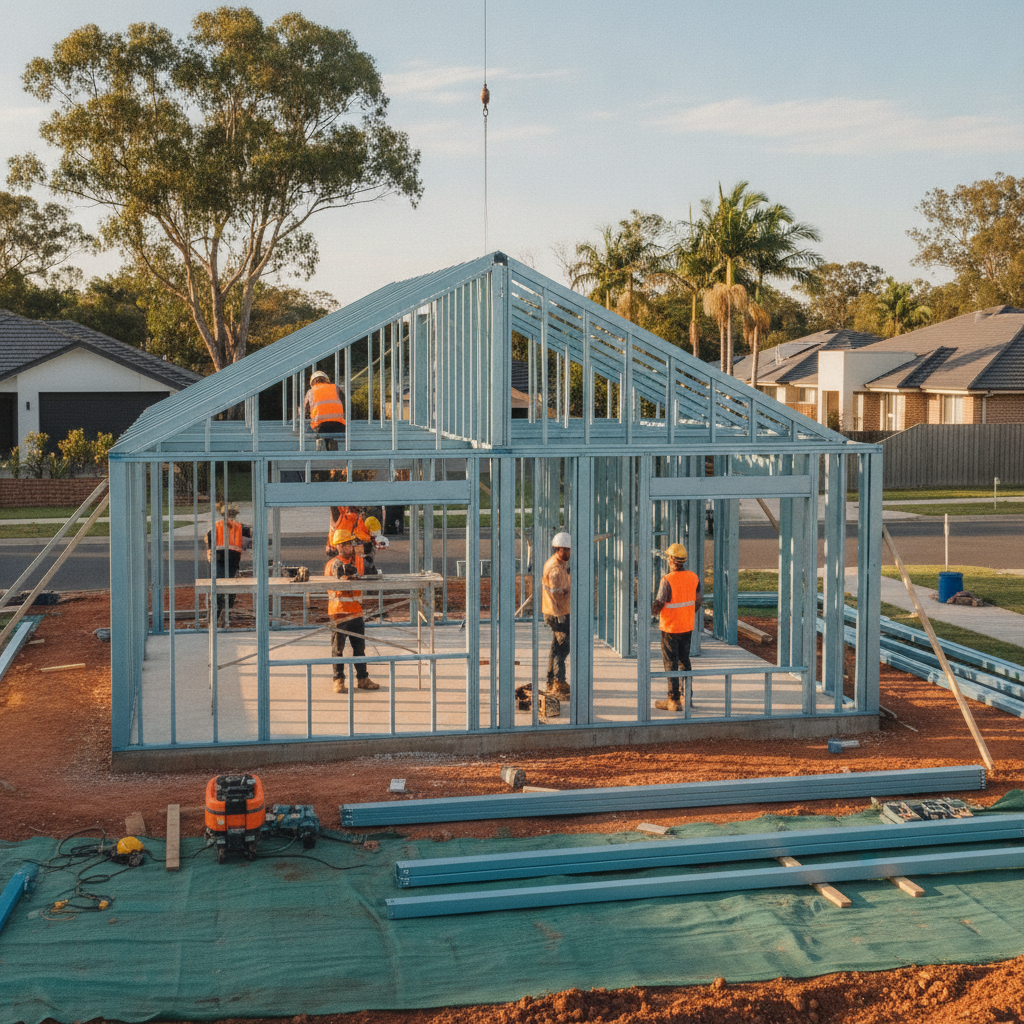
For the DIY enthusiast, steel frames are often supplied as a pre-punched, easy to assemble system. This precision makes the initial stages of the build much more approachable for someone who is handy with a drill but perhaps not a master carpenter. The accuracy of the steel means your walls are plumb and your corners are square, which makes every subsequent step, from fixing plasterboard to installing cabinetry, significantly easier.
What You Can (and Should) Tackle Yourself
If you have a decent set of tools and a bit of practical experience, there are several stages of a kit home build where you can save significantly on labor costs by doing the work yourself.
1. Site Preparation and Management
While you will need a professional for heavy excavation, you can handle a lot of the site management. This includes clear site access for delivery trucks, installing sediment fences, and general site cleanup. Keeping a tidy site is not just about aesthetics, it is about safety and efficiency for the trades you do hire.
2. Assembling and Erecting the Steel Frame
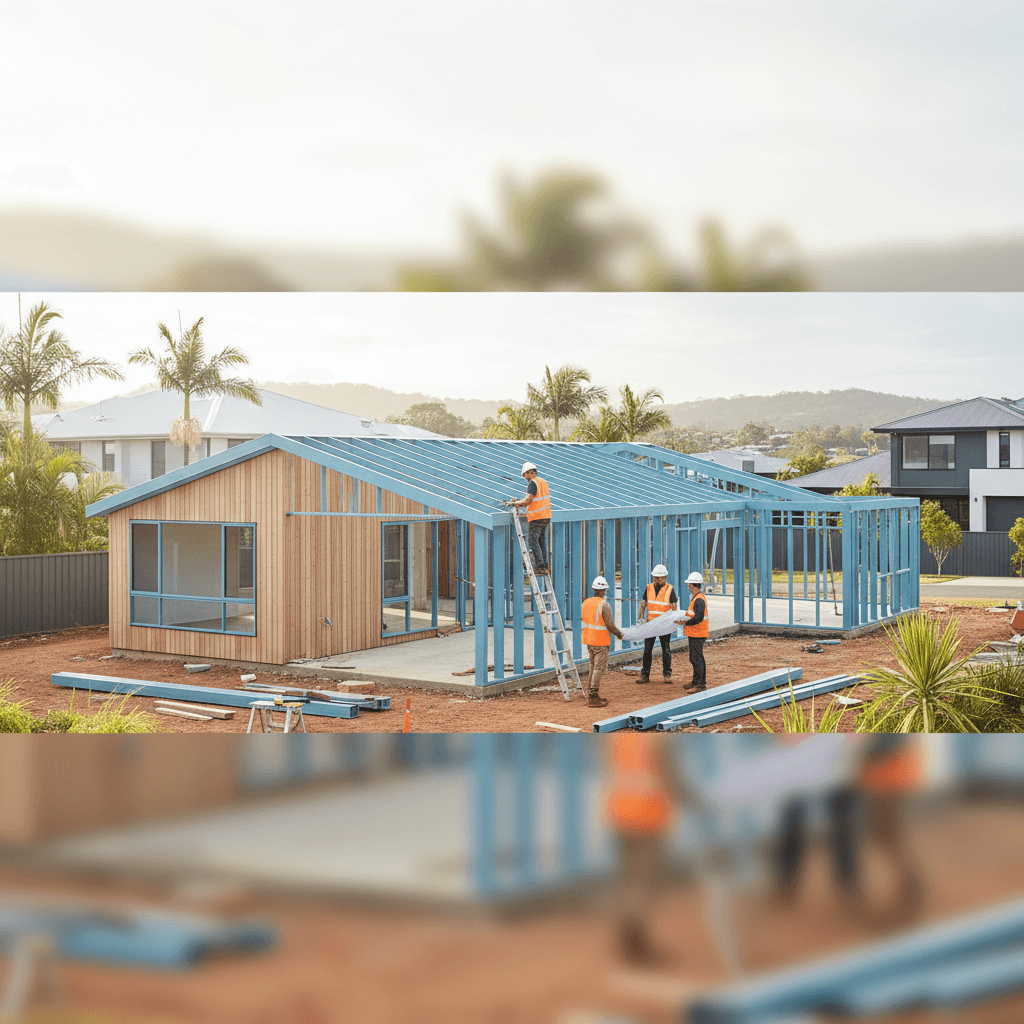
This is where the kit home model really shines for owner builders. Because the frames are engineered to fit together like a giant jigsaw puzzle, many owner builders choose to stand the walls and trusses themselves. With a couple of helpful mates and the right safety equipment, you can see the skeleton of your home rise in a matter of days. Since the steel is lightweight compared to heavy timber beams, it is physically more manageable for a small DIY crew.
3. Installing Windows and Doors
Once the frame is secure, installing the windows and external doors is a rewarding DIY task. Kit homes usually come with high quality aluminum or timber units designed to fit perfectly into the provided openings. Taking the time to ensure they are perfectly level and flashed correctly for waterproofing is a job that rewards the patience of an owner builder.
4. Internal Linings and Insulation
Installing insulation batts is a straightforward, albeit itchy, job that requires no special licensing. Following this, if you have a knack for detail, you might choose to tackle the plasterboard. While flushing (plastering the joins) is an art form that many prefer to leave to the pros, many owner builders find they can handle the hanging of the sheets themselves.
When to Call in the Professional Trades
In Australia, certain tasks are strictly governed by law and must be performed by licensed professionals. Trying to DIY these tasks can lead to heavy fines, voided insurance, and, most importantly, safety hazards.
1. Electrical and Plumbing
This is a non-negotiable area. All electrical wiring and plumbing work must be done by a licensed contractor who can provide a certificate of compliance. As an owner builder, you can assist by "chasing" lines or digging trenches (with the plumber's guidance), but the actual connections must be handled by the pros.
2. Concrete Foundation and Slab
The slab is the most important part of your house. If it is not level or if the dimensions are slightly off, every other stage of the build will be a nightmare. Professional concreters have the specialized gear to ensure your slab is perfectly flat and meets the engineering requirements for your specific site soil type.
3. Roofing and High Level Work
Working at heights carries significant risk. While some kit home owners choose to install their own roof sheeting, many find that hiring a professional roof plumber is worth the investment. They have the safety harnesses, scaffolding, and experience to ensure the home is watertight quickly, protecting your interior from the unpredictable Australian weather.
4. Waterproofing Wet Areas
Water damage is one of the most common issues in Australian homes. Properly waterproofing bathrooms and laundries is technical work. If a DIY waterproofing job fails, the repairs can cost tens of thousands of dollars. Most owner builders find peace of mind by hiring a certified waterproofer who provides a warranty for their work.
The Hybrid Approach: The Best of Both Worlds
The most successful owner builders often take a hybrid approach. This involves doing the bulk of the manual labor where possible, but acting as a "high level assistant" to specialized trades for the technical parts. For example, you might help the carpenter with the external cladding but let them lead the project to ensure the finishing is professional.
When working with steel frames, you will find that many trades appreciate the precision. An electrician will find it easier to run cables through the pre-punched service holes in the steel studs, and a tiler will appreciate the perfectly straight walls. Communication is key here, talk to your trades early about your desire to help out on site to ensure they are comfortable with the arrangement.
Practical Tips for the DIY Owner Builder
- Invest in Quality Tools: If you are going to spend hundreds of hours on site, don't rely on cheap, entry level power tools. A high quality impact driver and a reliable laser level are essential for working with steel frame kits.
- Understand the Sequence: Building a home is all about the order of operations. You don't want to install the insulation before the electrical rough-in is complete. Create a detailed project timeline before you start.
- Safety First: Invest in proper PPE, including steel-capped boots, gloves for handling steel, eye protection, and ear protection. If you are working on a ladder or roof, ensure you have appropriate fall protection.
- Quality Control: Just because you are doing it yourself doesn't mean you should settle for "near enough is good enough." Check, double check, and triple check your measurements.
Conclusion: Building Your Future
Choosing to be an owner builder for your kit home is a journey involving a steep learning curve, but the rewards are unmatched. By understanding the balance between DIY tasks and professional trade requirements, you can manage your project efficiently and safely. A steel frame kit home provides the perfect platform for this journey, offering a durable, precise, and user-friendly system that empowers everyday Australians to build their dream homes.
Whether you are tightening the last bolt on your steel frame or watching a professional plumber finish the final connections, remember that ogni step forward is a step closer to moving into a home that you truly understand from the inside out. Stay patient, stay safe, and enjoy the process of bringing your vision to life.