Stop looking at the glossy brochures for a second.
It's midday on a Tuesday in Western Sydney. The sun is beating down on a stack of BlueScope TRUECORE steel, and you're standing over a pile of screws wondering why you thought you could do this alone. Most people get into the kit home game because they want control. They want to say they built their own place. But there's a massive difference between being the boss of the site and actually swinging the hammer.
As someone who's seen hundreds of owner builders start strong and finish exhausted, I've noticed a pattern. The ones who succeed aren't always the handiest with a drill. They're the ones who know their limits. They know when to call in a sparky and when to spend the weekend installing insulation batts themselves. Australian kit homes are brilliant because they give you a head start with pre-punched frames and precise layouts, but the finishing line is still a long way off once that truck pulls out of your driveway.
The Slab and the Site: Don't Touch It
Seriously. Unless you spent twenty years as a concreter, pay a pro. I've seen blunders on site levels that ended up costing thirty grand to fix before the first wall even went up. If your slab isn't square and level, your steel frames won't fit. Steel doesn't have the 'give' that timber does. If a timber stud is out by 5mm, you can shave it. If a steel frame is out because your slab is a dog's breakfast, you're in for a world of pain. Get a licensed concretor to do the pour. Make sure they understand the tolerances required for steel frame construction. It's often better to pay a premium for a crew that uses lasers and knows how to read a technical site plan than it is to save a few bucks on a cowboy with a wonky spirit level.
Putting the Puzzle Together: The Steel Frame Stage
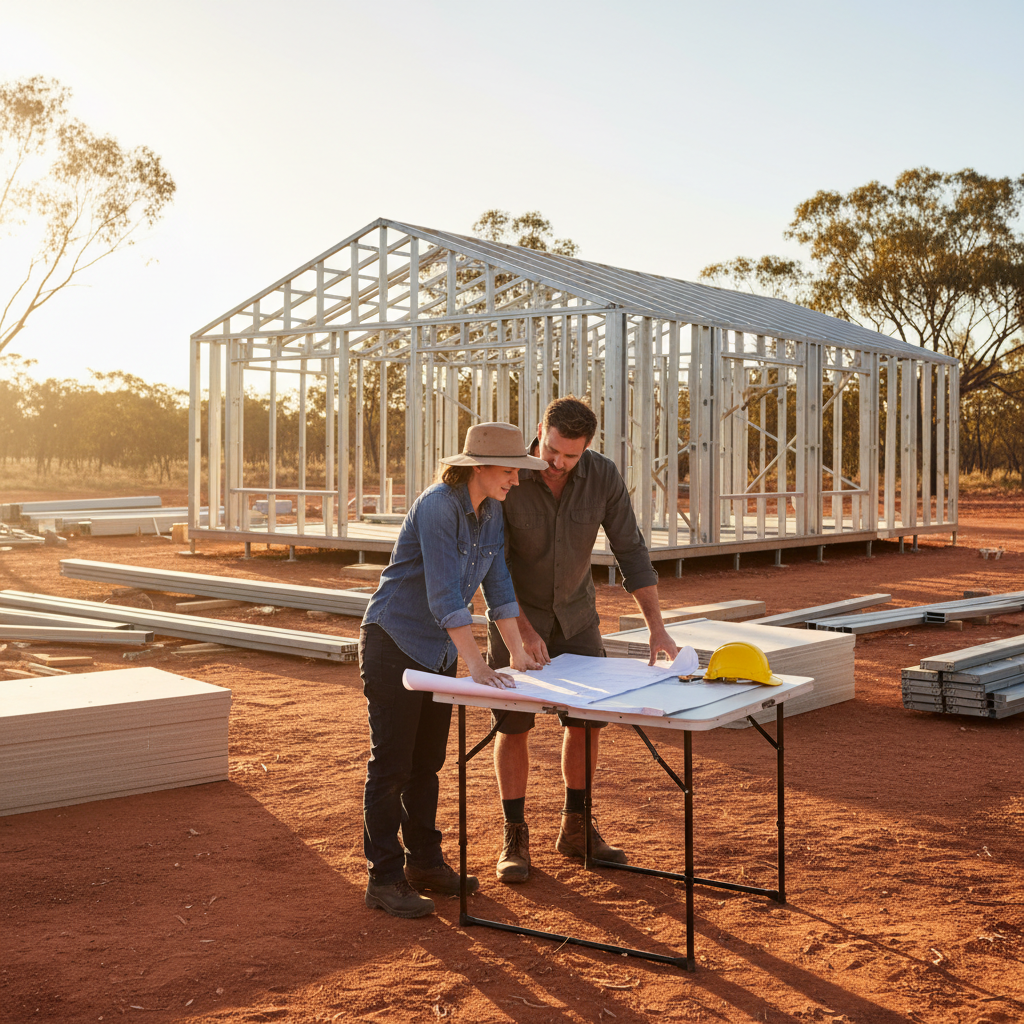
This is where the DIY dream actually starts to feel real. Most kit homes we see involve steel frames that arrive numbered. It's essentially a giant Meccano set for adults. Because the holes are usually pre-drilled, you aren't guessing where the bolts go. You and a couple of mates can actually get the main structure up over a long weekend if you've done your homework.
But here is the trick. You need a decent impact driver. Not that cheap one you bought for five bucks on sale, but a proper 18V unit that won't burn out after fifty screws. You'll be driving 10-16x16 wafer head screws until your ears ring. Wear gloves. Steel edges can be sharp, especially around the junctions. Most owner builders find the framing stage the most rewarding because you see the shape of your house emerge from the dirt in record time. Just remember to check your corners for square constantly. If the first corner is out, the whole house will be a parallelogram by the time you reach the other side.
The No-Go Zones: Licensing Matters
In Australia, the law is pretty clear about what you can't touch. Plumbing and electrical are protected for a reason. You need a certificate of compliance for these stages to get your final occupancy certificate from the council or your private certifier. Don't even think about wiring your own power points. Aside from the obvious risk of turning your new house into a bonfire, you'll void your insurance.
Plus, there is the gas. Roughing in your pipes is a job for the tradies. What you can do is have a chat with them about the layout. Before they arrive, mark out where you want your vanity, where the fridge goes, and where the dishwasher sits. It saves them time, which saves you money. Some plumbers are happy for you to dig the trenches if you're keen on some manual labor, but always ask first. Some are picky about the depth and the bedding sand because they're the ones signing off on the AS 3500 standards.
Cladding and Roofing: The Middle Ground
Windows and doors are heavy. Don't try to hang a sliding glass door by yourself unless you want a trip to the chiro. But once the windows are in and flashed correctly, you can start looking at the cladding. Whether you're going for classic corrugated iron or a modern fibre cement look, this is a prime DIY opportunity. It's repetitive work. It's dusty. But it's not rocket science.
Roofing is different. If you have a simple gable roof, maybe you can tackle it with a harness and some common sense. But if your design has multiple hips and valleys, or a steep pitch, get a roof plumber. Falling off a ladder is a quick way to end your building career before the kitchen arrives. Plus, getting the flashing right around chimneys or skylights is an art form. A single leak can ruin your ceiling insulation and plasterboard six months down the track.
The Internal Grind
Insulation is the most thankless task in building. It's itchy, it's hot, and you spend most of your time with your arms over your head. This is the perfect DIY job. It's almost impossible to screw up, and it saves you a packet on labor. Get some good quality glasswool or polyester batts, a sharp knife, and a mask. Make sure there are no gaps. A 5% gap in your insulation can lead to a 50% loss in thermal efficiency. That's a huge deal when those Australian summers hit 40 degrees.
Plastering? That's a divisive one. Hanging the sheets is fine. It's the stopping and sanding that breaks people. If you want a dead-flat finish that looks good when the afternoon sun hits it, pay a specialist to do the flushing and sanding. Nothing screams 'amateur build' like visible joins in the living room ceiling. On the other hand, painting is the ultimate owner builder task. Take your time with the masking tape. Buy a high-quality roller. Do three coats instead of two. It's the final layer that everyone sees, so don't rush it just because you're tired of the project.
The Reality Check
Being an owner builder is basically becoming a part-time project manager, site foreman, and cleaner. You'll spend more time at Bunnings then you do at home. You'll spend your Sunday nights reading the NCC (National Construction Code) to make sure your balustrades are up to spec. It’s hard work. But there is a specific pride in sitting on your veranda, looking at the steel rafters you bolted together, and knowing you played a massive part in it. Just don't be afraid to pull the pin and hire a pro when a job gets too technical. Your house, and your sanity, will thank you for it later.