The Great Shift Inland
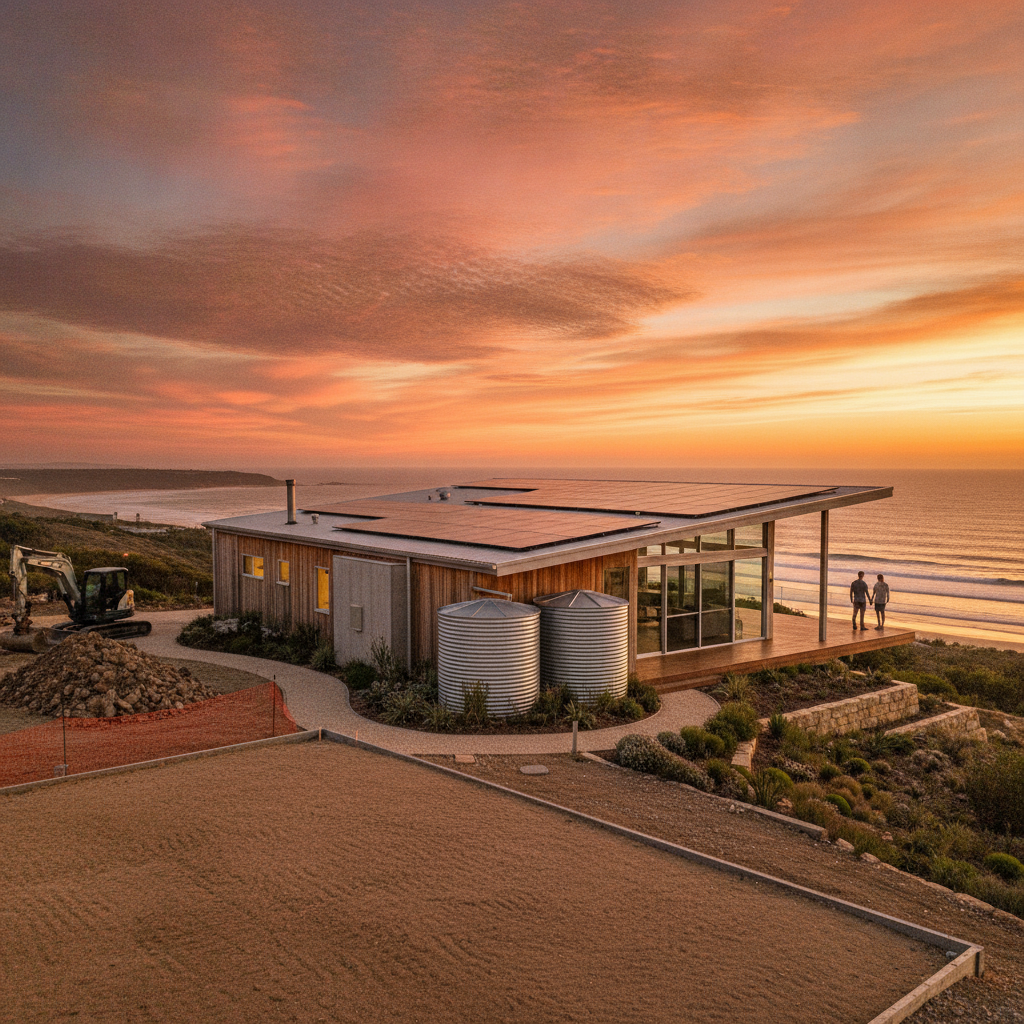
Walk down any suburban street in Sydney or Melbourne right now and you will see it. Moving trucks. Not just people shifting three suburbs over to get a bigger backyard, but families packing up for the bush. The NBN finally works well enough in regional hubs that a Zoom call doesn't drop out every time the wind blows, and that has changed everything for the Australian housing market. People are selling 600 square metre blocks in the city and looking at five acres in places like Mudgee, the Sunshine Coast hinterland, or the Margaret River region. But once they get there, they realise that finding a local builder with a start date before 2026 is next to impossible. That is where kit homes have stepped in to bridge the gap.
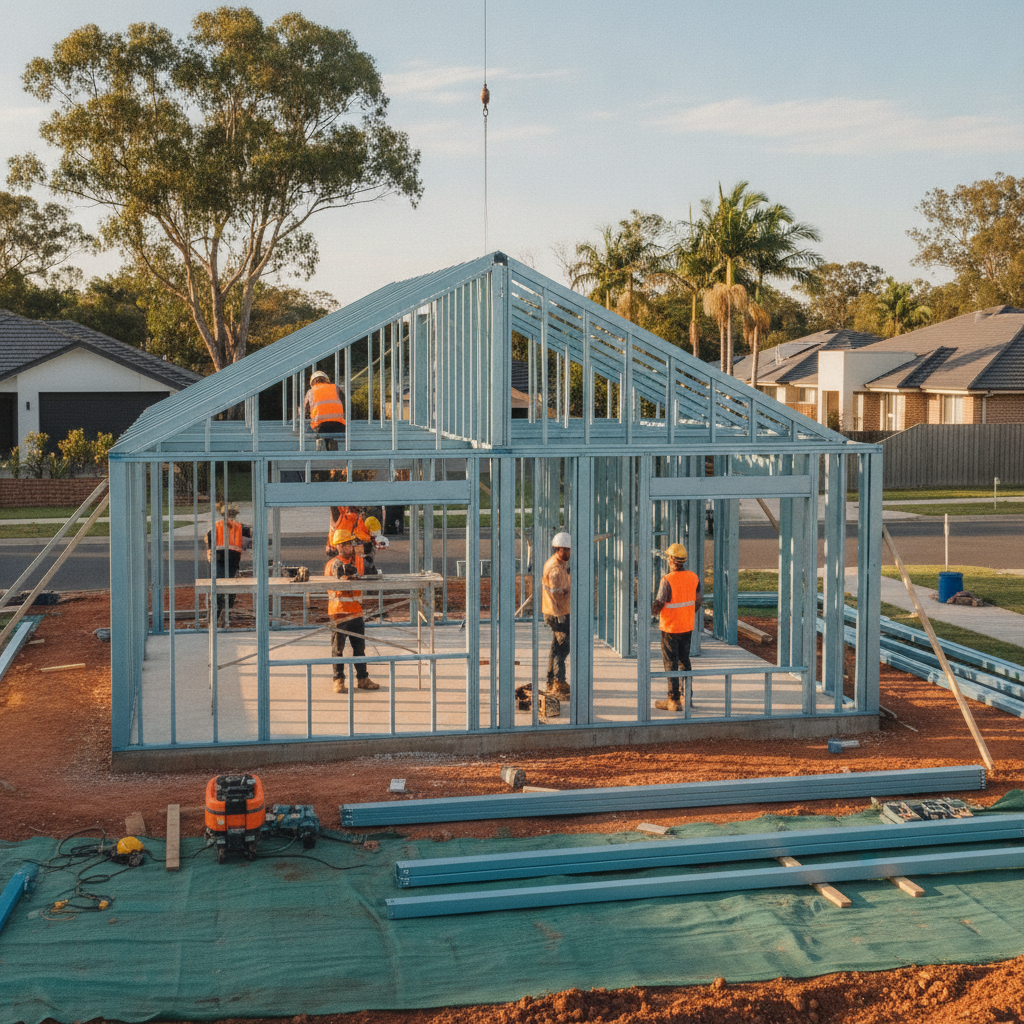
Building a home in a rural area used to be a massive headache. You'd spend months trying to coordinate deliveries and praying the timber didn't twist in the sun while waiting for a chippy to show up. Use of steel frames has solved a lot of that. We see people opting for kits because they want control. They don't want to be at the mercy of a volume builder's shrinking margins and 18 month delays. They want to be the owner builder, standing on their own slab, watching the crane drop off a pack of BlueScope TRUECORE steel that is precision cut to the millimetre. It's a different way of thinking about a home. It's not a product you buy off a shelf, it's a project you manage from the dirt up.
Why Rural Blocks Demand Steel
If you are building in the Australian bush, you are fighting two main enemies: termites and fire. Timber is great, don't get me wrong, but in a high BAL (Bushfire Attack Level) zone, steel is just common sense. It's non-combustible. It won't buckle or rot. When we look at housing trends for 2024 and beyond, durability is the huge driver. People are tired of high-maintenance builds. They want a house that can sit through a humid Queensland summer or a freezing Tasmanian winter without the door frames jamming because the wood expanded. Steel frames stay straight and true. Plus, for the owner builder, it's lighter to move around the site. You aren't breaking your back quite as hard when you're lining up a wall junction.
And let's talk about those termites. I have seen 40 year old houses in the Northern Rivers that look fine on the outside, but you touch the skirting board and your finger goes right through. They're basically held up by the paint. Using a steel frame kit means one less thing to worry about. You still need your barriers and your inspections according to AS 3660.1, obviously, but the bones of your house aren't a buffet for subterranean pests.
Design Choices for the New Regional Lifestyle
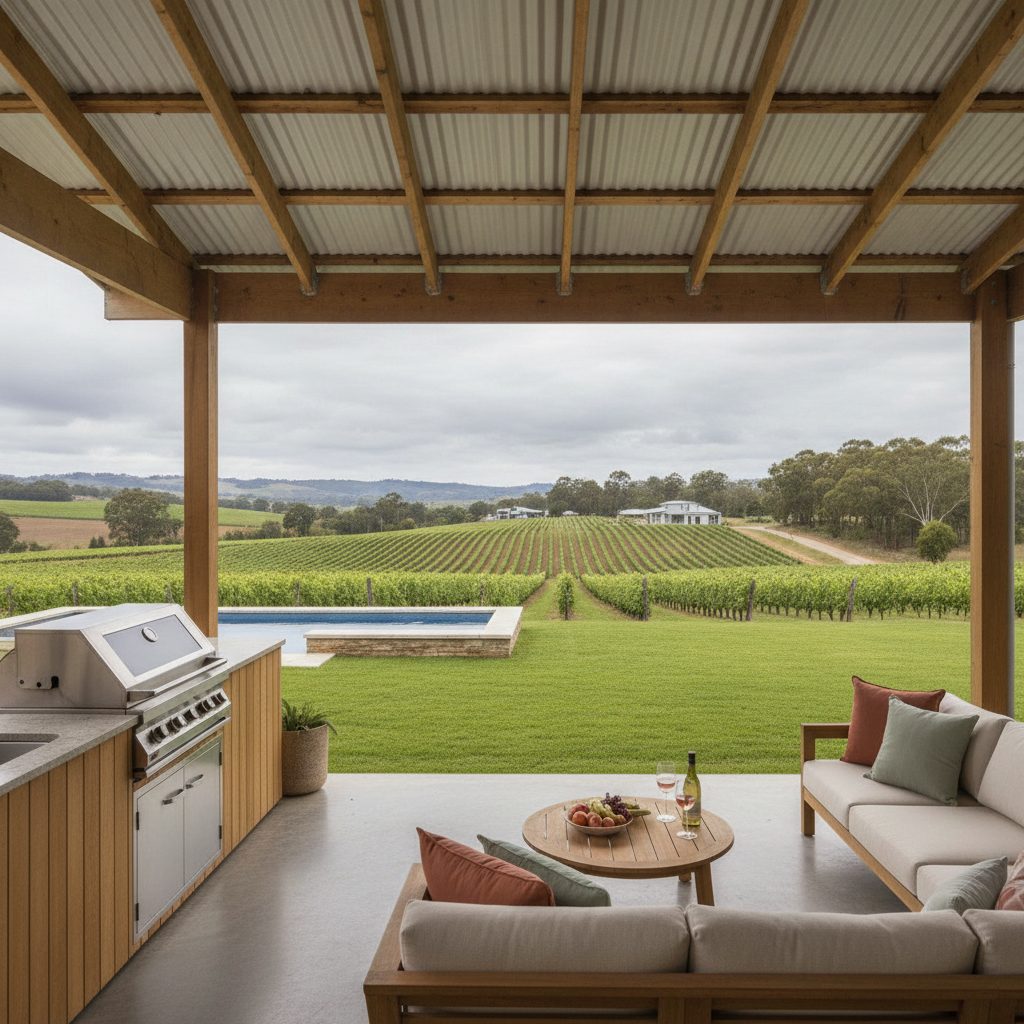
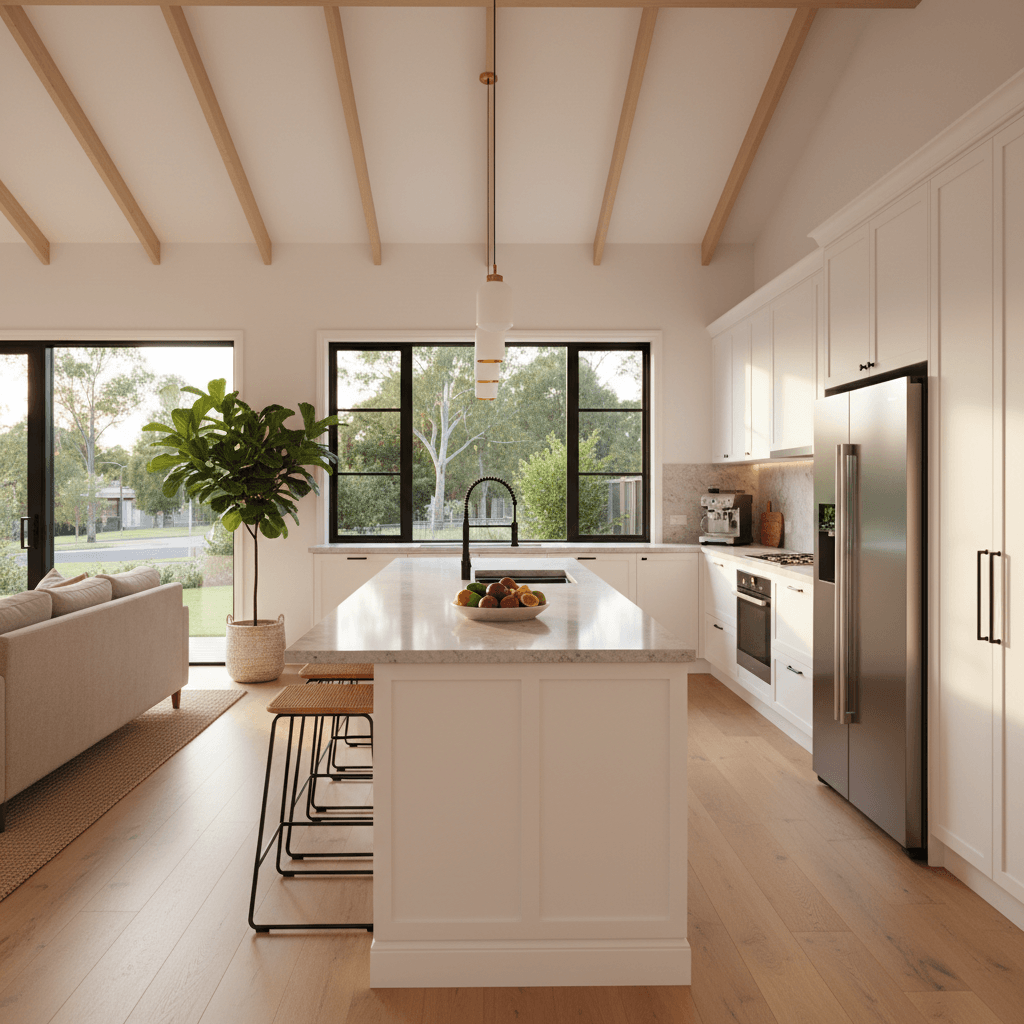
The look of these homes is changing too. It's no longer just basic sheds with a bed in the corner. We are seeing a massive trend toward wide-span living areas and massive verandahs. Because if you move to the country and don't have a spot to sit with a beer and look at the trees, what was the point? High ceilings are back in a big way. People want that airy, open feeling that you just can't get in a 2.4m ceiling height suburban box. Because of the strength of steel, you can achieve those larger open spans without needing massive, expensive timber beams that cost a fortune to transport to remote sites.
Dark cladding is also everywhere. Colorbond Monument or Night Sky. It looks sharp against the green of a paddock. We include all that cladding in the kits, along with the roofing and the windows, so it all arrives together. It's like a giant Meccano set for adults. But don't underestimate the work. Just because the frames are easy to bolt together doesn't mean you can skip the prep. Your slab has to be dead level. If your slab is out by 10mm, you'll be fighting those steel frames all the way to the roofline.
The Reality Check for Owner Builders
Listen, being an owner builder isn't just about wearing a high-vis vest and looking busy on Saturdays. It's about paperwork. You have to get your Owner Builder permit, which usually involves a short course depending on which state you're in. You need to manage your trades. You haven't lived until you've tried to get a plumber to show up on a Friday afternoon when the fishing is good. But the payoff is that you know exactly what is behind your walls. You know how the insulation was installed. You know the windows are flashed correctly because you did it, or you watched your subbie do it.
One tip most people forget: site access. If you bought a beautiful block at the end of a winding dirt track, can a semi-trailer get down there? I've seen kits sitting on the side of a main road two kilometres from the house site because the driveway was too narrow or too steep. You have to think about these things before the truck leaves the warehouse. Measure the gate. Check the overhead branches. It saves a lot of swearing on delivery day.
Technical Specs and the NCC
Standards matter. Every kit home in Australia has to meet the National Construction Code (NCC). For residential houses, that is Volume 2. You’ll be looking at things like energy efficiency ratings and structural integrity. Our kits use TRUECORE steel because it meets the relevant Australian Standards like AS 1397 and AS 4600. When you take your plans to council for the DA or a Complying Development move, having those engineered plans ready to go is a lifesaver. It’s what separates a proper kit home from a random accumulation of materials.
Don't forget about your BAL rating. If you're in the trees, your council will likely hit you with a rating from BAL-12.5 up to BAL-FZ (Flame Zone). This dictates what kind of glass you need in your windows and how you seal your eaves. Steel frames are great here, but you still need to get the details right in your fit-out. It’s all part of the rural build reality.
Practical Advice for the Planning Phase
So, you've found the land and you've picked a design. What now? Get your soil test done early. Your slab design depends entirely on what is happening under the grass. If you’ve got reactive clay, your engineer is going to specify a much beefier slab than if you’re sitting on rock. This is a cost you can't avoid. Also, sort out your temporary power and water. Building a house without a toilet on site is a disaster waiting to happen. Rent a portaloo. Trust me.
When the kit arrives, organize your site. Keep your frames off the ground on some pallets or bit of timber. Keep your cladding covered and dry. There is nothing worse than trying to find a specific bracket or a bag of screws in a muddy pile of steel. Spend the first day just sorting your inventory. It feels like you're not doing much, but it saves hours of frustration later when you're mid-way through a wall assembly and can't find the head flashing.
Building your own place is a grind. It's exhausting and you'll probably end up with more than a few scrapes on your knuckles. But there is something about walking through a front door that you helped hang, into a house that sits on a frame you bolted together, while looking out over the hills you moved to see. It beats the city commute any day of the week.