The Great Australian Shift: Why Regional Living is Calling
There is a quiet revolution happening across Australia. From the rolling green hills of the Gippsland to the rugged beauty of the Margaret River region, thousands of Australians are looking at their city commute and deciding there has to be a better way. This movement, playfully known as the tree-change, is no longer just a retirement dream. It is being led by young families, remote workers, and creative souls looking for space, air, and a connection to the land.
However, moving to a regional area presents a unique set of challenges. Traditional builders often have long wait times in rural zones, and mobilization costs for city-based companies can be astronomical. This is exactly where the modern Australian kit home has found its rhythm. By offering a streamlined, manageable way to build high quality dwellings, kit homes are bridging the gap between dreaming of a rural life and actually living it.
The Appeal of the Kit Home in Rural Australia
When you move to a regional property, you often want a house that reflects the environment. You want wide verandas, open plan living that captures the breeze, and a sturdy structure that can stand up to the Australian elements. Kit homes are uniquely suited to this because they are designed for transportability and site-specific adaptability.
Unlike traditional builds where every piece of timber is measured and cut on-site, a kit home arrives as a sophisticated package of components. For a tree-changer, this means a reliable delivery of the home's primary structure, including the frames, roofing, cladding, and windows, often to locations where sourcing individual materials would be a logistical nightmare.
Why Steel Frames are a Regional Game Changer
In many parts of regional Australia, the environment is as harsh as it is beautiful. This is why the shift toward steel frame construction, specifically using brands like BlueScope TRUECORE steel, has become a hallmark of the modern kit home. Steel is termite-proof by nature, which is a massive consideration for properties situated near bushland or old-growth forests.
Furthermore, steel frames are incredibly stable. They don't warp, twist, or shrink over time, which means your windows and doors are less likely to stick after a wet winter. For the owner-builder, steel frames are also significantly lighter than traditional timber, making the physical assembly process much easier on the back and the brain. They arrive pre-punched for electrical and plumbing, saving valuable time when the trades arrive on-site.
Managing Your Project: The Owner-Builder Advantage
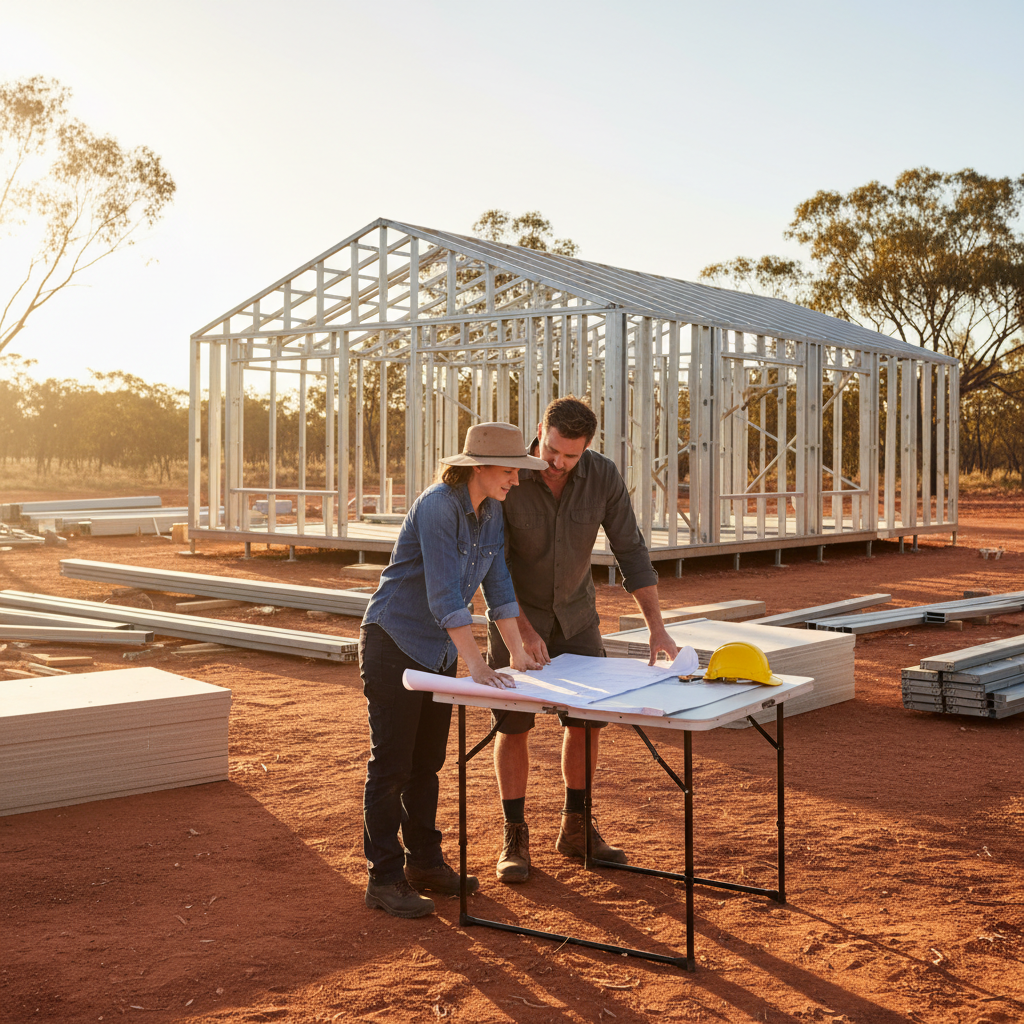
One of the most rewarding aspects of the kit home journey is the ability to take the reigns as an owner-builder. While the kit provider supplies the high-quality shell and structural components, you become the project manager. You get to select your local plumber, your favorite electrician, and the craftsman who will lay your floors.
This approach gives you a level of control that a standard turnkey build rarely allows. You can pace the project to suit your lifestyle, ensuring that every detail, from the insulation thickness to the color of the cladding, meets your specific standards for regional living.
Kit Home Tips for a Seamless Build
- Site Access is Key: Before your kit arrives, ensure your regional property has a clear, accessible track for a large delivery truck. A little bit of gravel and clearing can save a lot of headaches on delivery day.
- Smart Storage: Have a plan for where your components will be stored. While steel frames and roofing are durable, keeping your windows and doors in a dry, secure spot is vital.
- Local Knowledge: Engage with local trades early. Regional tradespeople often have deep knowledge of local soil types, wind ratings, and council requirements that city-based consultants might miss.
Design Trends: Aesthetics for the Modern Rural Home
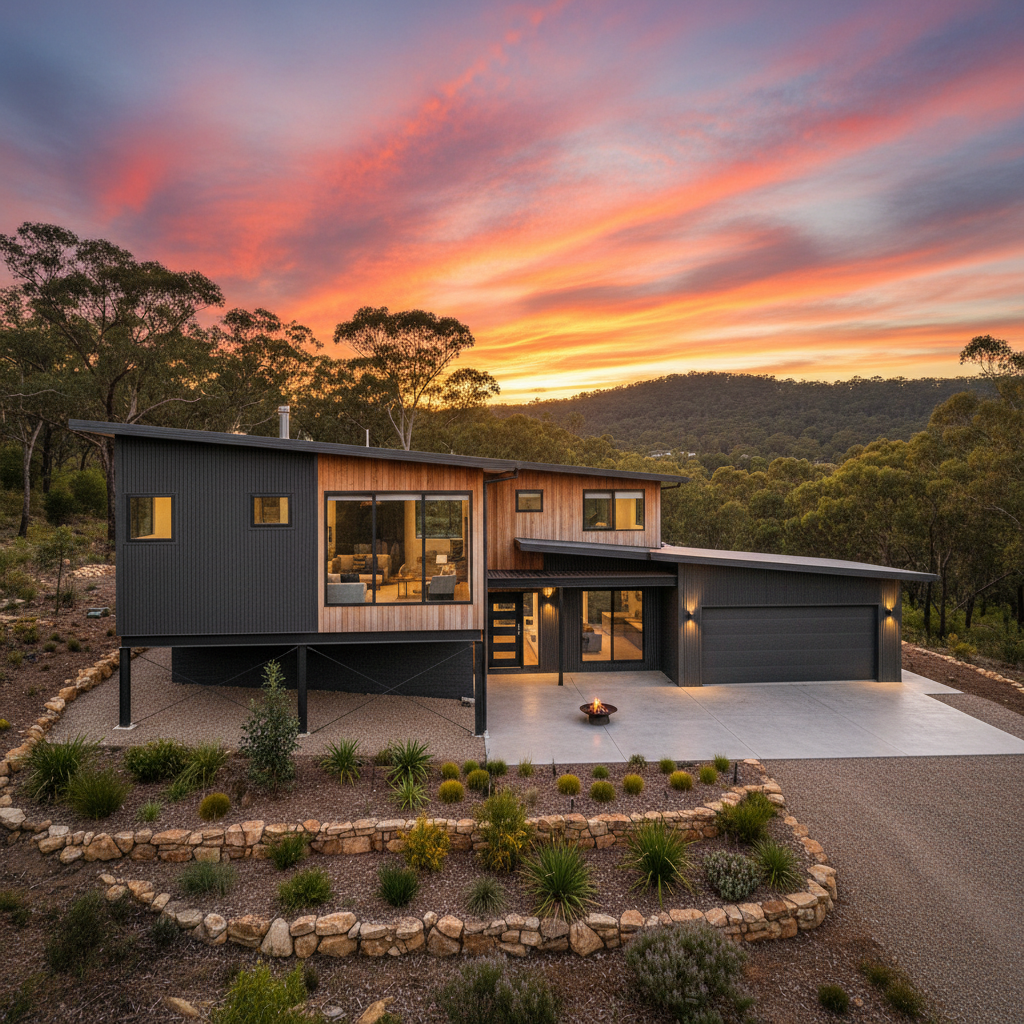
Current Australian housing trends show a move away from the overly ornate towards a clean, contemporary Australian aesthetic. The modern kit home often mirrors this, using materials like corrugated steel cladding and large glass openings to blur the line between the indoors and the landscape.
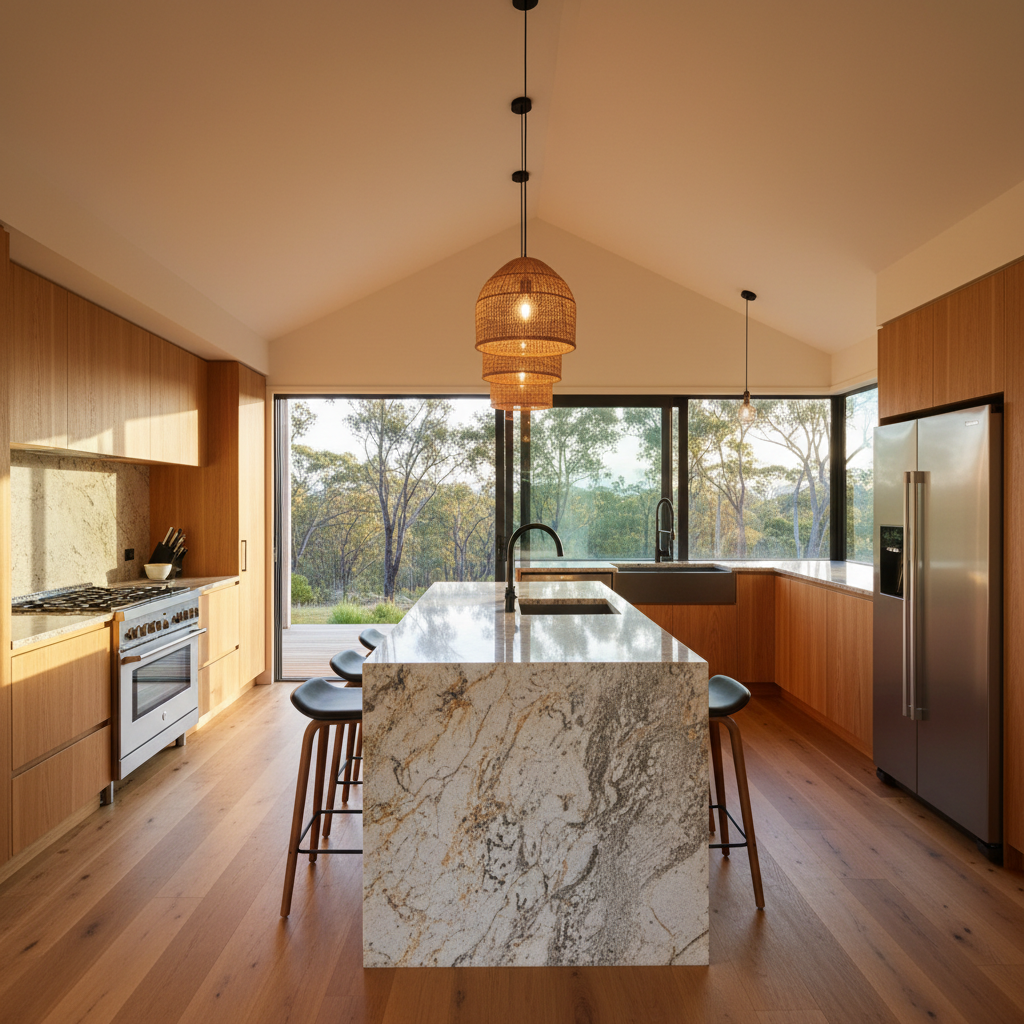
For tree-changers, the focus is often on 'The Great Room', a large, open-plan kitchen and living area that serves as the heart of the home. High ceilings and strategic window placement are used to capture cross-ventilation, reducing the need for artificial cooling during those hot Australian summers. The use of dark, earthy tones for cladding is also trending, allowing the home to settle visually into the surrounding bush or paddock.
Technical Insight: Understanding Your Kit Components
It is important to understand exactly what goes into a high-quality kit. A comprehensive package usually includes the internal and external steel wall frames, roof trusses, external wall cladding, and the roof sheeting itself. Details such as gutters, downpipes, and even the insulation are often part of the deal.
When these components arrive, they are essentially a giant, high-tech puzzle. Because they are engineered to exacting standards, the margins for error are significantly reduced compared to traditional stick-builds. This technical precision is what allows someone who isn't a professional builder to successfully manage the assembly of their own home structure.
Owner-Builder Tips: Navigating the Process
Stepping into the role of an owner-builder is a significant commitment, but the sense of pride is unmatched. Here are a few ways to ensure your project stays on track:
- Get Your White Card: Even as an owner-builder, you need to understand on-site safety. Completing your general construction induction is the first step toward a professional site environment.
- Staging your Trades: Don't try to book everyone for the same week. Ensure your slab is fully cured before the frames go up, and give your roofers space to work before the internal fit-out begins.
- Focus on the Envelope: Your priority should always be getting the building 'weather-tight'. Once the roof is on and the windows are in, you have a secure space to store tools and materials for the interior work.
Sustainability in the Scrub
Living regionally often goes hand-in-hand with a desire for a smaller environmental footprint. Kit homes are inherently more sustainable because there is significantly less waste on-site. Since the components are manufactured to spec, you don't end up with a skip bin full of off-cuts and wasted timber.
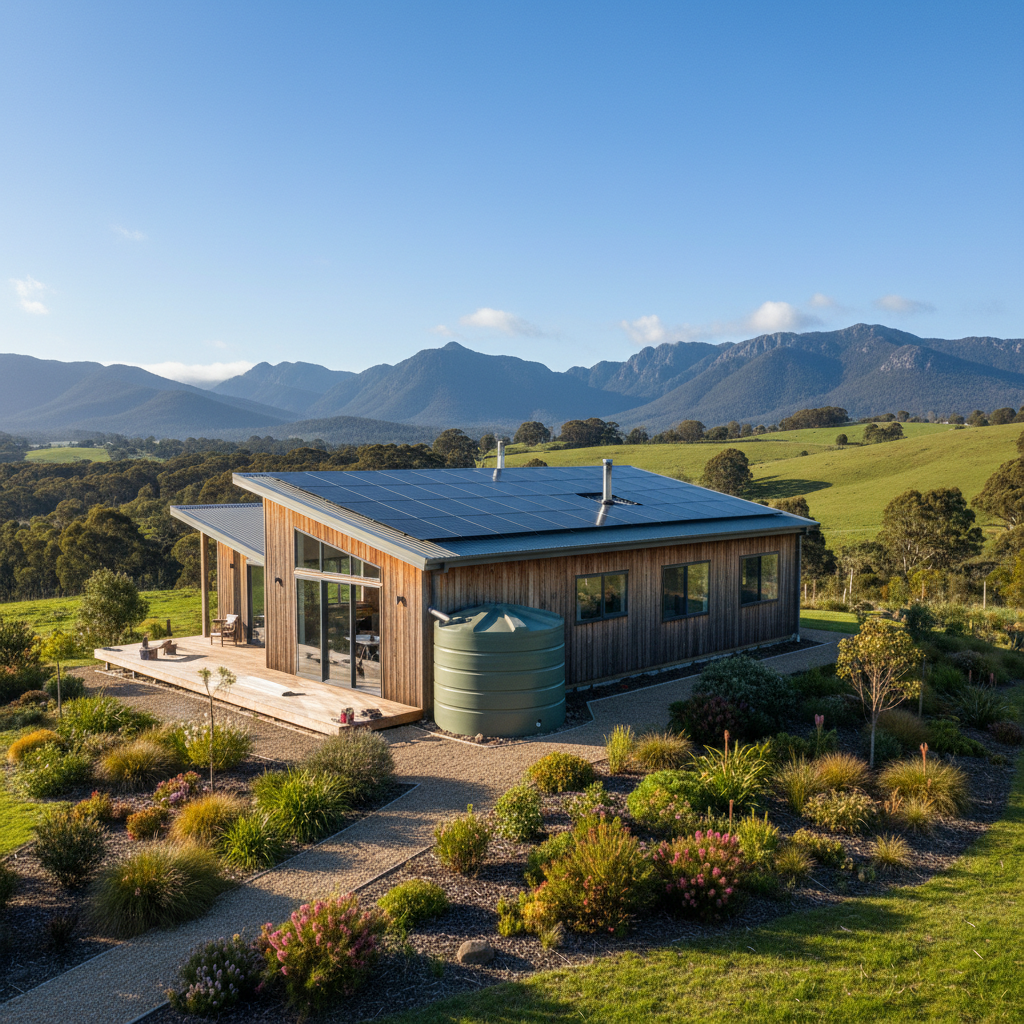
Additionally, steel is a highly recyclable material. When combined with modern insulation and smart orientation on your block to take advantage of the sun, a kit home can be an incredibly energy-efficient sanctuary. Many tree-changers are also opting for larger rainwater tank setups and solar arrays, which integrate perfectly with the simple, effective roof designs of most steel kit homes.
Conclusion: Your New Chapter Awaits
The move to a regional area is as much about the journey as it is the destination. Building a kit home offers a hands-on way to connect with your new community and your land from the very first day. It offers a path to a high-quality, architecturally designed house without the complexities often associated with rural construction.
By choosing a steel frame kit, you are investing in a structure that is built for the Australian climate, resistant to the elements, and manageable for a dedicated owner-builder. Whether you are looking for a small cottage in the hinterland or a sprawling family home on a چند-acre plot, the kit home path provides the flexibility and reliability needed to make your tree-change a resounding success. The air is fresher out here, the stars are brighter, and with the right approach, your dream home is well within reach.