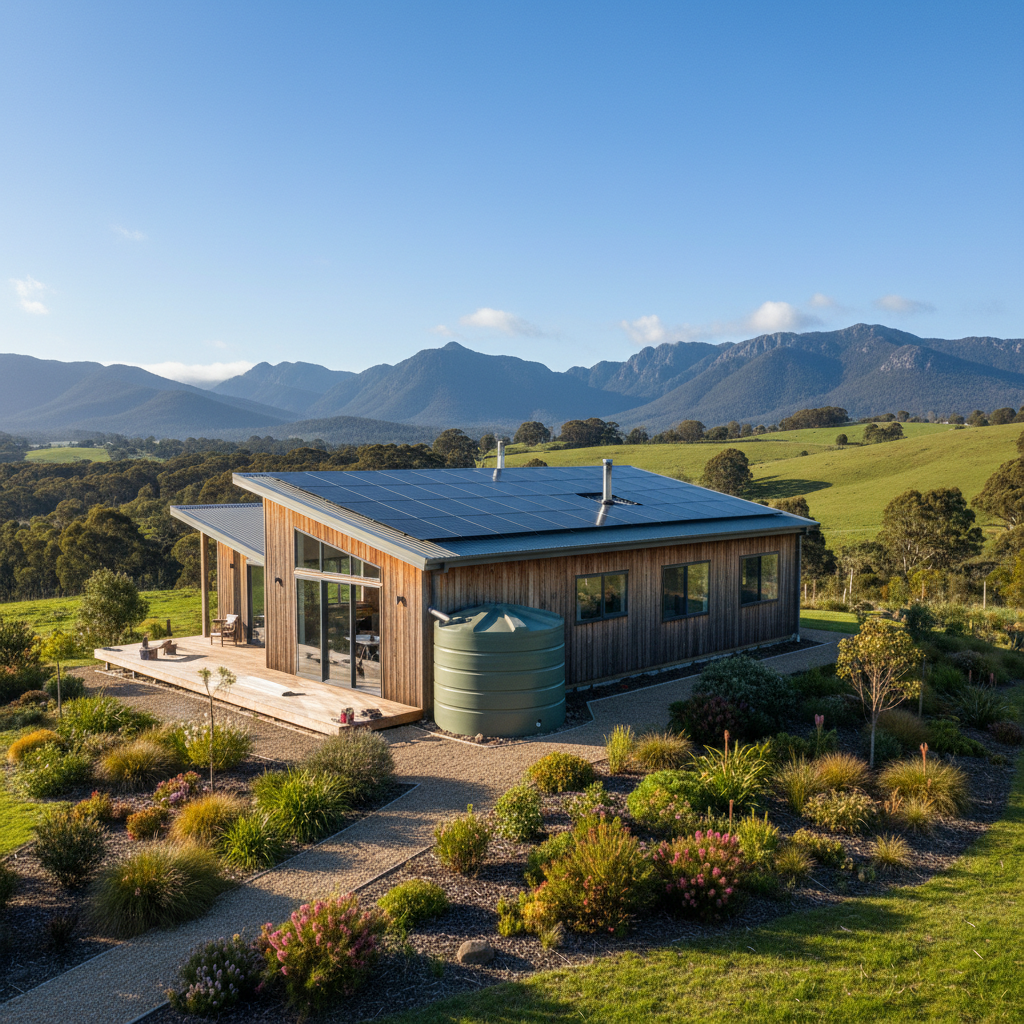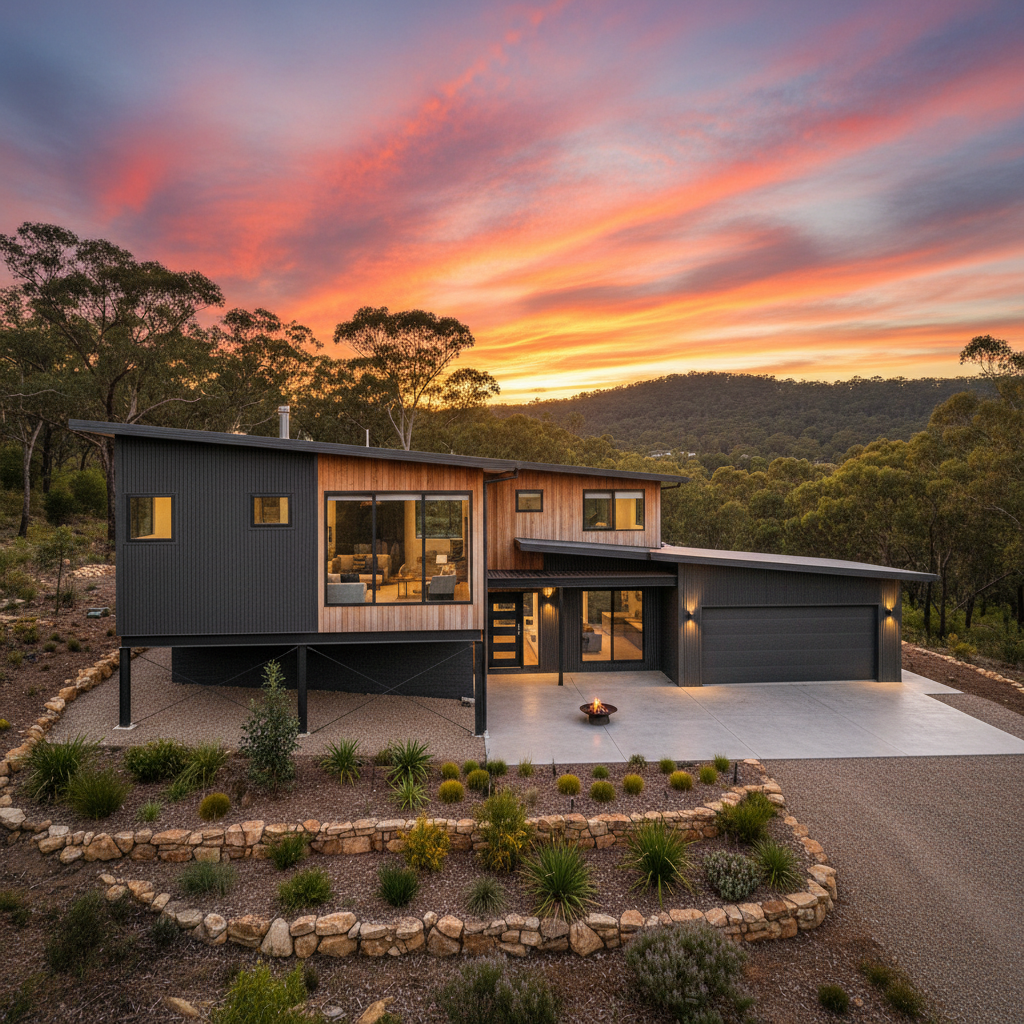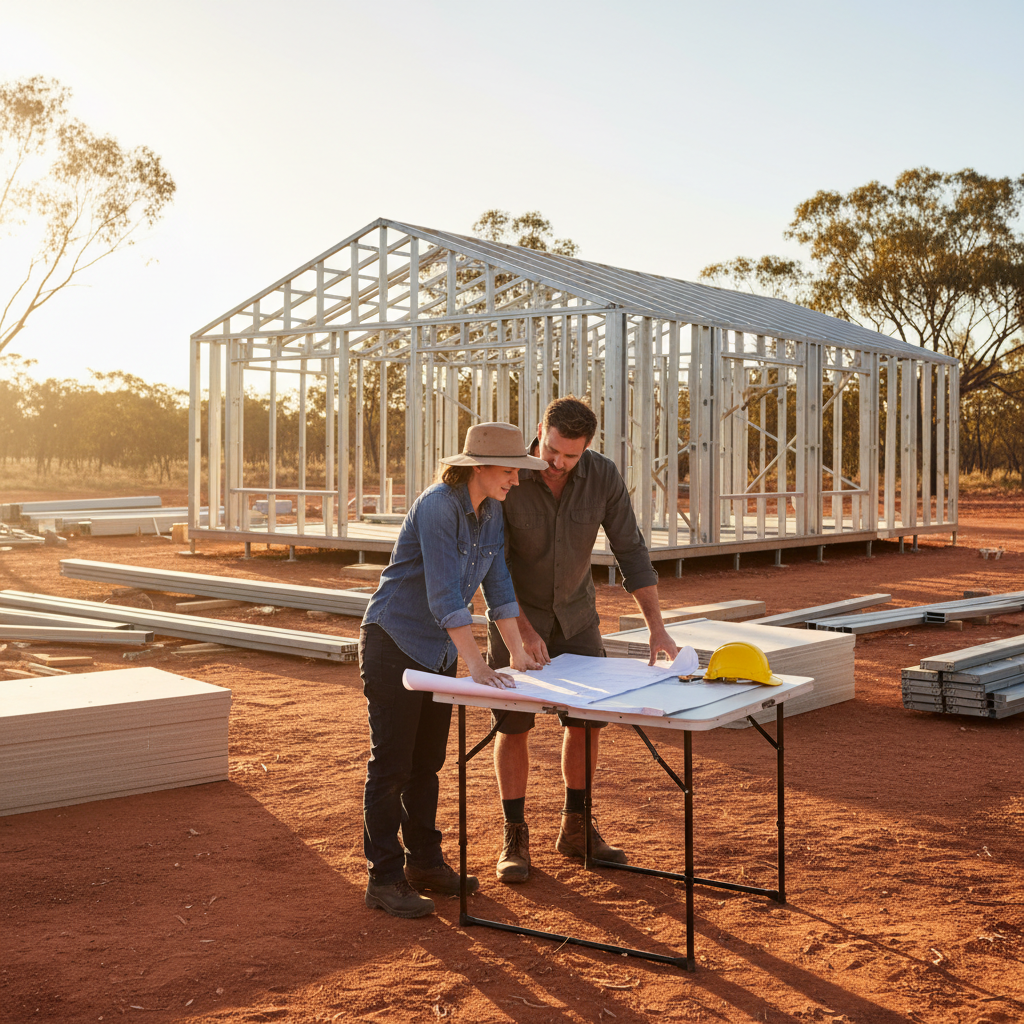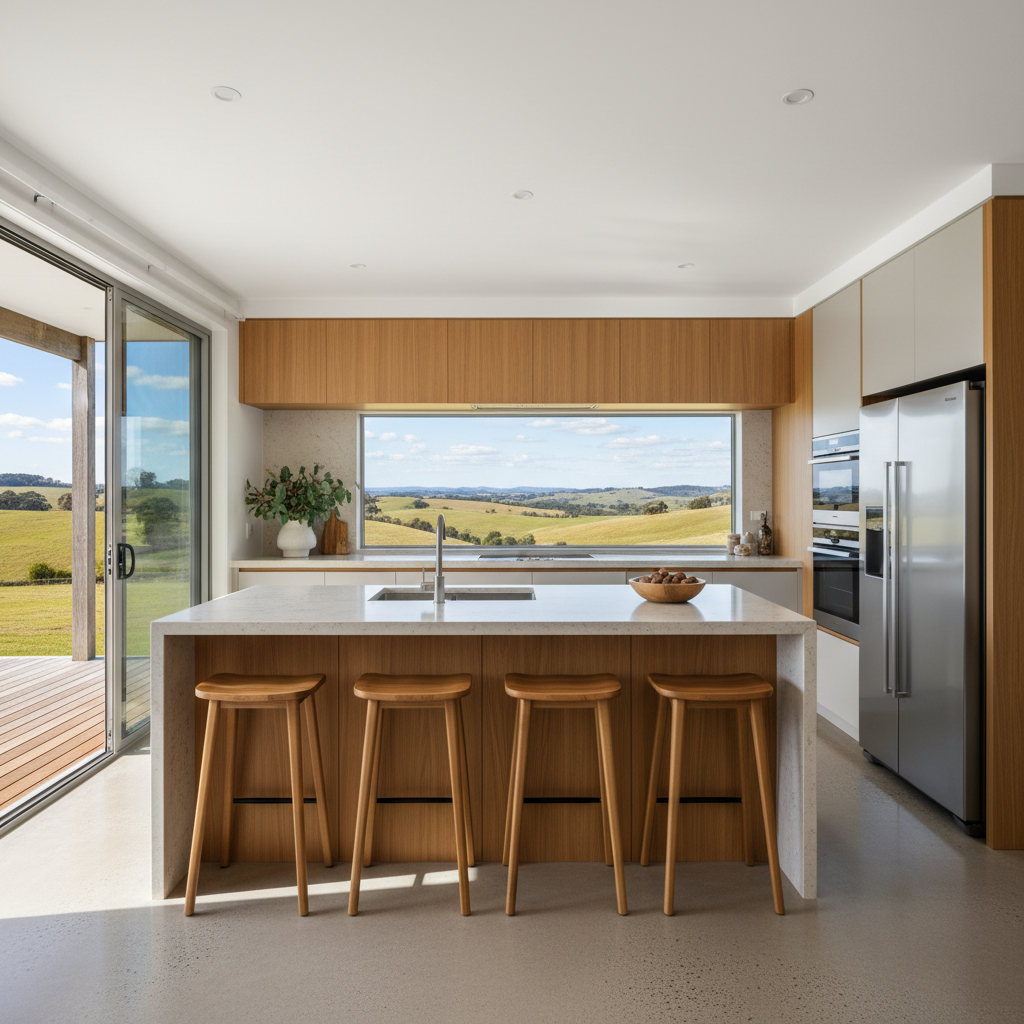
A few years back, if you told a boss you wanted to answer emails from a 10 acre block in Mudgee or a hilly patch of Gippsland, they would have laughed you out of the office. Not anymore. The 9 to 5 grind in a glass tower is dying, and it is taking the dream of the suburban brick-and-tile mortgage with it. These days, I am seeing more and more people chucking in the Sydney or Melbourne commute to become owner builders on rural land. They are not waiting for a developer to build a cookie-cutter estate, either. They are grabbing one of our steel frame kits and doing it themselves.
The Shift to Regional Living
It is not just about cheaper land. People are genuinely sick of sitting in traffic on the M1 or the Monash. With Starlink making high-speed internet available in spots that used to be black holes, the bush has become a viable office. But here is the thing. Finding a builder in regional NSW or rural Queensland right now is like trying to find a needle in a haystack. Most of them are booked out for two years, or they will charge you a king's ransom just to drive out to your site. This is exactly why the kit home market has exploded. You get the house delivered on a truck, and you take control of the timeline yourself.
I spoke to a bloke last month who bought a block near Armidale. He was working in IT and realized he only needed to be in the city once a quarter. He chose a steel frame kit because he could manage the project while still working his day job. It makes sense. You get the precision of BlueScope Steel frames, which are straight as a die, and you don't have to worry about a local carpenter frameset being wonky because they could not find decent timber.
Why Steel Frames Make Sense for the Bush
If you are building in the Australian bush, you are fighting two main enemies: termites and fire. Termites are relentless. I have seen them eat through a timber-framed house in a matter of months in some parts of Queensland. Using TRUECORE steel means the skeleton of your house is literally termite-proof. It is one less thing to stress about when you are lying in bed at night listening to the crickets.
Then there is the BAL (Bushfire Attack Level) rating. If your block is surrounded by trees, the council is going to hit you with a BAL rating. Steel is non-combustible. It does not provide fuel for a fire. While you still need the right windows, toughened glass, and specific seals to meet Australian Standard AS 3959, starting with a steel frame and Colorbond roofing gives you a massive leg up. Plus, it won't warp or twist over time. Timber moves with the moisture in the air. Steel stays put. That means your plasterboard doesn't crack as much when the seasons change, which is a big deal in places like the Snowy Mountains or the Top End where the weather swings wildly.
Practical Tips for the Rural Owner Builder
Before you get carried away with floor plans, you need to suss out your site. A kit home is great, but it does not just float there. Here are some things I have learned from watching people succeed (and fail) over the last 15 years.
Sort Your Access Early
The truck bringing your kit is big. Really big. If your driveway is a narrow, winding dirt track with low-hanging branches, that driver is going to pull up at the gate and tell you it's your problem. You need a clear path and a flat spot to drop the frames. I have seen kits ruined because they were dumped in a boggy patch of dirt during a wet week in February. Get some road base down before the truck arrives.
The Slab Must Be Spot On
Steel frames are engineered to the millimeter. If your concrete slab is out of level by 20mm, those frames won't line up and you'll be swearing like a trooper trying to get your roof sheets on. Hire a pro for the slab. It is the one part of the job you do not want to DIY if you are not experienced. Tell the concretor it is for a steel kit home so they know they have to be precise.
Check Your Wind Rating
Australia is divided into wind regions. A house built in suburban Adelaide doesn't need the same structural beef as one on a ridge in North Queensland. When you order a kit, you must know your site's specific wind classification (like N2, N3, or C1). We engineer the steel to suit that rating. Do not guess this. Check with your local council or a private certifier first.
Design Trends in Modern Kit Homes
The days of kit homes looking like glorified sheds are long gone. What I am seeing now is a move towards the "Modern Farmhouse" look. People want high ceilings, open-plan living, and massive verandahs. Because a steel frame has a high strength-to-weight ratio, we can achieve larger spans without needing chunky internal load-bearing walls. This is perfect for those big windows that frame the rural views you moved there for in the first place.
Another big trend is the "Mud Room." If you are living on a rural block, you're going to get dirty. Smart owners are modifying their kit layouts to include a dedicated entry with a bench and a drain in the floor for hosing off boots. It's those small, practical tweaks that make a house a home. Plus, adding a wraparound verandah does more than just look good. It's functional. In the Aussie summer, keep the sun off your walls and your cooling bill will drop. It's basic physics, but it works.
Managing the Trades
As an owner builder, you are the boss. You'll be hiring the sparky, the plumber, and the plasterer. Here is a trade secret: send them the engineering plans before they give you a quote. Plumbers, in particular, need to know they are working with steel so they can bring the right grommets. You cannot just run copper pipe through a steel stud without protection or it will corrode. It's a simple fix, but if they haven't worked with steel kits before, they might act like it's a mystery. It isn't. It's just different.
And don't be afraid to get your hands dirty. One of the best parts of building your own home is that feeling when the roof goes on. You've co-ordinated the delivery, you've seen the frames go up like a giant Meccano set, and suddenly it looks like a house. It's hard work. You'll have sore muscles and you'll probably lose a few weekends to it, but the payoff of sitting on that deck on a Saturday arvo with a cold drink is worth every bit of it.
The Reality Check
Building a kit home isn't just about clicking 'buy' and watching a house appear. You have to deal with council DAs (Development Applications), site inspections, and the NCC (National Construction Code). It can be a headache. But compared to the alternative of paying a massive margin to a volume builder who treats you like a number? I'd take the owner builder route every single time. You know where every screw is. You know the insulation was put in right because you saw it yourself. You have skin in the game.
Rural living isn't always quiet, either. There are cows next door, tractors at 6am, and the constant battle against the weeds. But at least you're not listening to your neighbor's TV through a thin wall in a duplex. You have space. You have a house that was built to last using Australian steel. And most importantly, you have a home that actually fits the life you want to live now that you have escaped the city grind.