Sydney is cooked. Melbourne isn't much better. I spent twenty years on sites across the suburbs, watching blocks get smaller and prices get stupider while the quality of suburban spec homes went backwards. Lately, though, something has shifted. My phone doesn't stop ringing with people asking about regional blocks in places like Mudgee, the Sunshine Coast hinterland, or down near Gippsland. These aren't just dreamers. They're families who've realized they can buy fifty acres for the price of a parking spot in Surry Hills, but they're hitting a massive wall: finding a builder who will actually travel out past the black stump without charging a fortune in travel allowances.
This is where the kit home makes sense. It isn't just a cheap alternative. It's often the only logical way to get a house onto a rural site without losing your mind or your life savings. When you're building out in the sticks, you're dealing with limited local trades and logistical nightmares. A kit home shows up on a crane truck with every frame, truss, and sheet of cladding ready to go. You aren't chasing a delivery driver who got lost looking for a farm gate that doesn't exist on Google Maps. It's all there.
The Reality of Rural Logistics
Building in a regional area is a different beast compared to the suburbs. You've got BAL (Bushfire Attack Level) ratings to worry about, lack of town water, and soil that can turn from rock to soup the moment it rains. Most traditional builders have standard plans that just don't work for sloping country blocks or high fire-risk zones. They want flat, easy ground. If your block has a bit of character, they'll slap on forty grand in 'site costs' before they've even dug a hole. Because kit homes are often built on piers or stumps rather than just a flat slab, they follow the lay of the land better. Plus, if you're in a BAL-29 or BAL-40 zone, using a steel frame house is almost a non-negotiable. Using BlueScope TRUECORE steel means your skeleton won't burn, it won't warp, and termites will break their teeth trying to eat it. In the Aussie bush, that's peace of mind you can't put a price on.
I remember a bloke in the Hunter Valley last year. He bought a beautiful piece of dirt but the local builders quoted him a three-year wait. Three years. He ended up going the kit route, managed the project as an owner-builder, and had the roof on before the following Christmas. He didn't do all the hammer work himself, but he controlled the schedule. That's the secret. You aren't at the mercy of a big company's project manager who doesn't know where your site is.
The Owner Builder Advantage
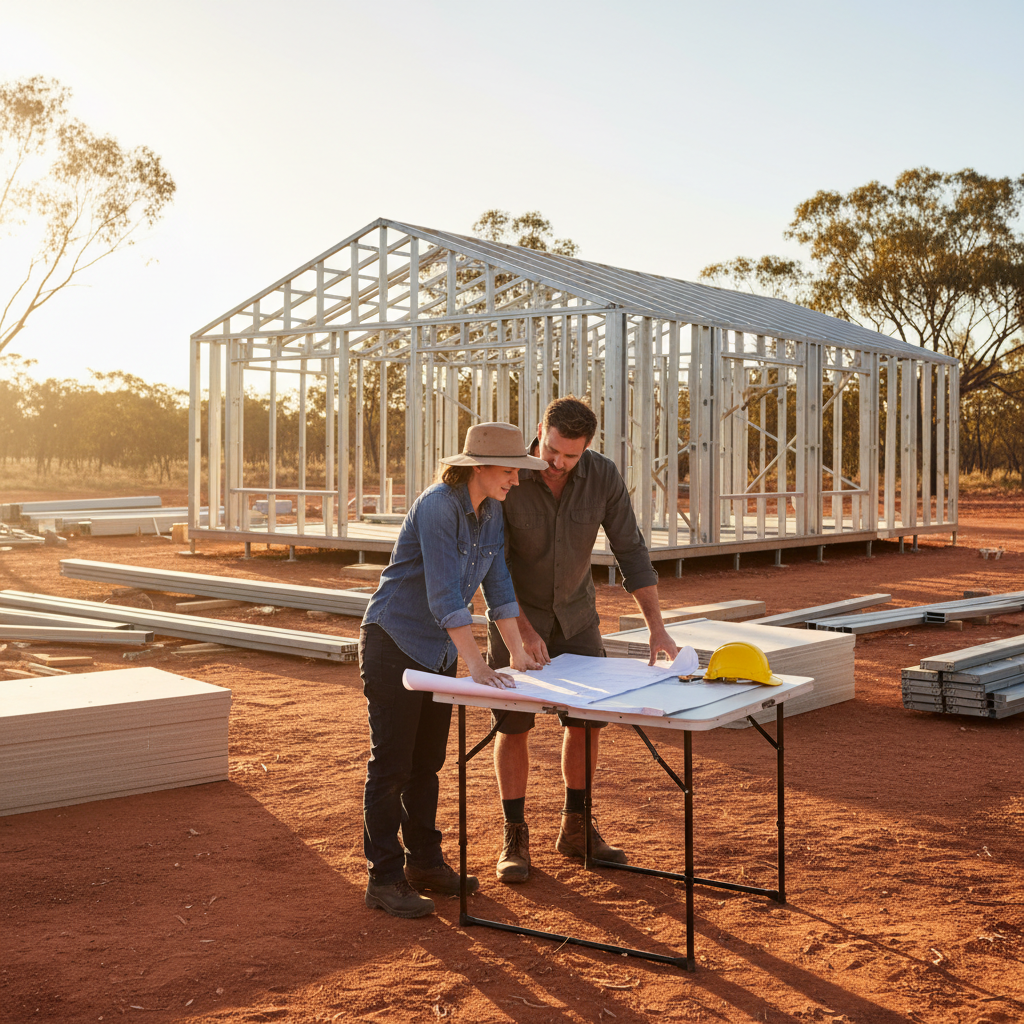
Don't get it twisted. Being an owner-builder isn't just about swinging a hammer on the weekends. It's about being the boss. You're the site manager. You'll spend more time on the phone and the laptop than you will with a nail bag on. But that's where the value is. You hire the plumber, you vet the sparky, and you make sure the tiler isn't cutting corners. Because we provide the frames, roofing, windows, and doors, the big 'messy' part of the procurement is done for you. You aren't running to Bunnings every twenty minutes because you forgot a box of screws or a length of flashing.
If you're going down this path, get your White Card and your Owner Builder permit early. Every state has different rules, so check with your local authority. In NSW it's Fair Trading, in Victoria it's the VBA. Do the course. It taught me stuff about site safety and insurance that I still use every day. And whatever you do, don't skimp on the site works. If your driveway isn't solid enough for a heavy delivery truck, that kit is staying on the side of the road. I've seen it happen. Not pretty.
Why Steel Stands Up in the Scrub
Steel frames are a standard for a reason. Wood moves. It breathes, it twists, and if the moisture content isn't spot on, your plasterboard will be cracking within six months. Steel stays true. When those frames arrive, they're straight as a die. This makes the rest of the fit-out easier. If your walls are straight, your kitchen cabinets go in without a fight. If your doorways are square, the doors don't bind. It's simple logic. Plus, the weight. Steel is lighter than green timber. When you're manhandling frames into place on a windy hill in the afternoon, you'll be glad you aren't lifting heavy jarrah or pine.
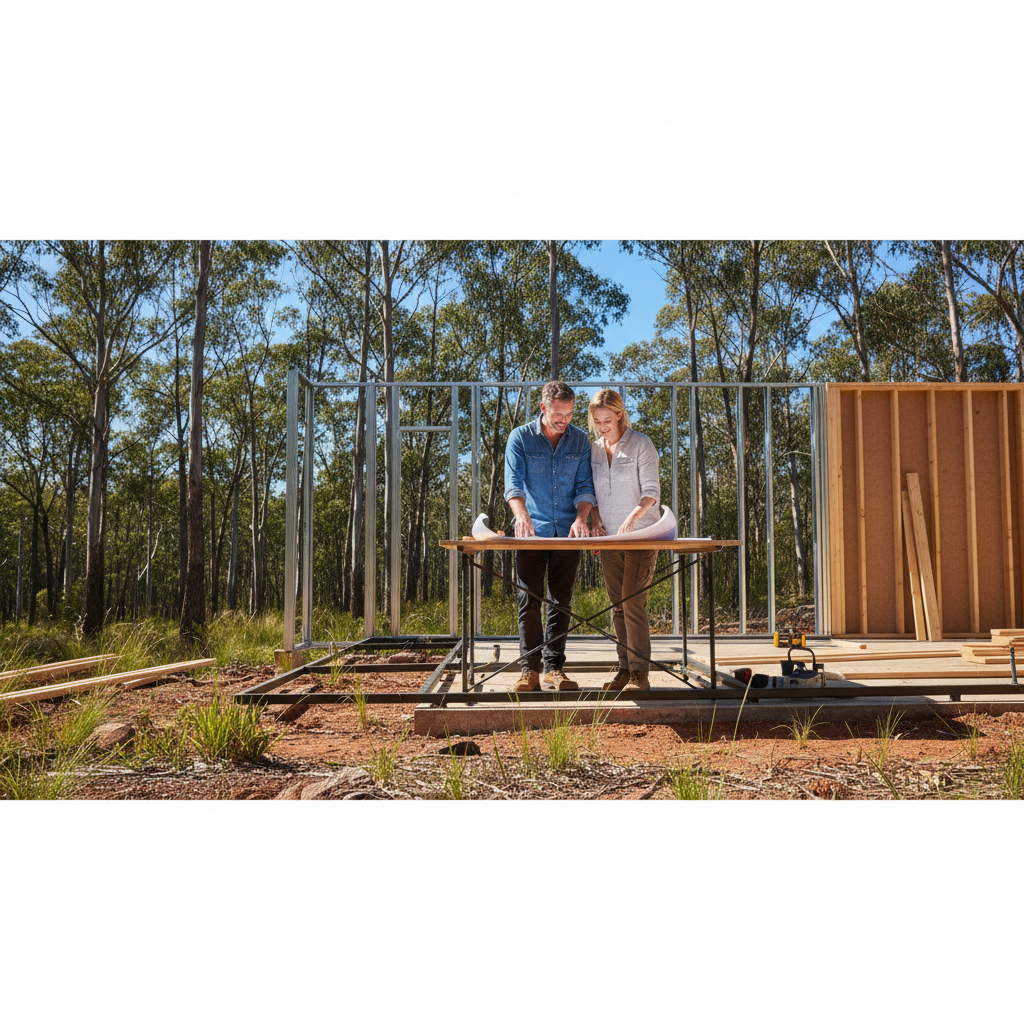
One tip for the steel frame newcomers: buy a decent impact driver and a big bag of tek screws. Don't try and cheap out on the tools. If you're doing the framing yourself, get a laser level. The ground is never as flat as you think it is, and a laser doesn't lie. Most kit homes come with a detailed manual, but nothing beats a bit of common sense and a good spirit level.
Designing for the View, Not the Street
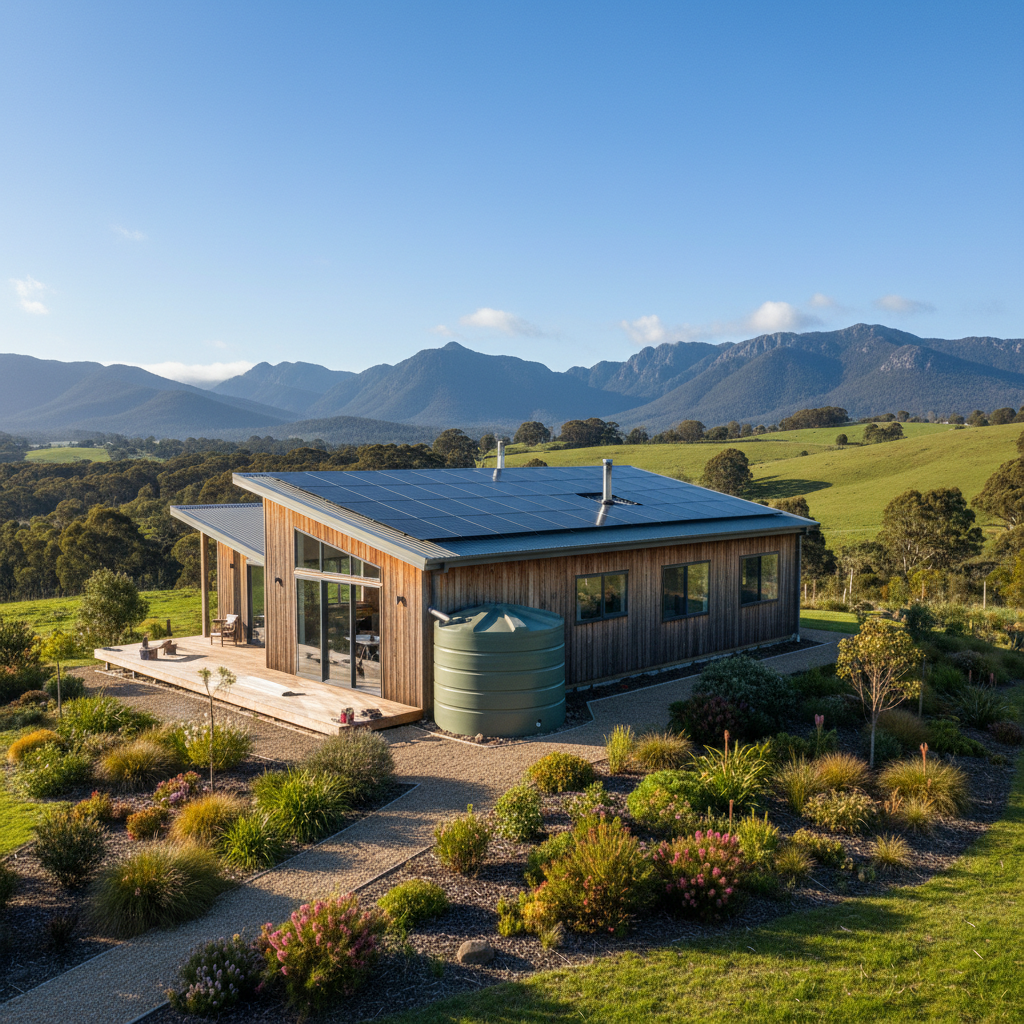
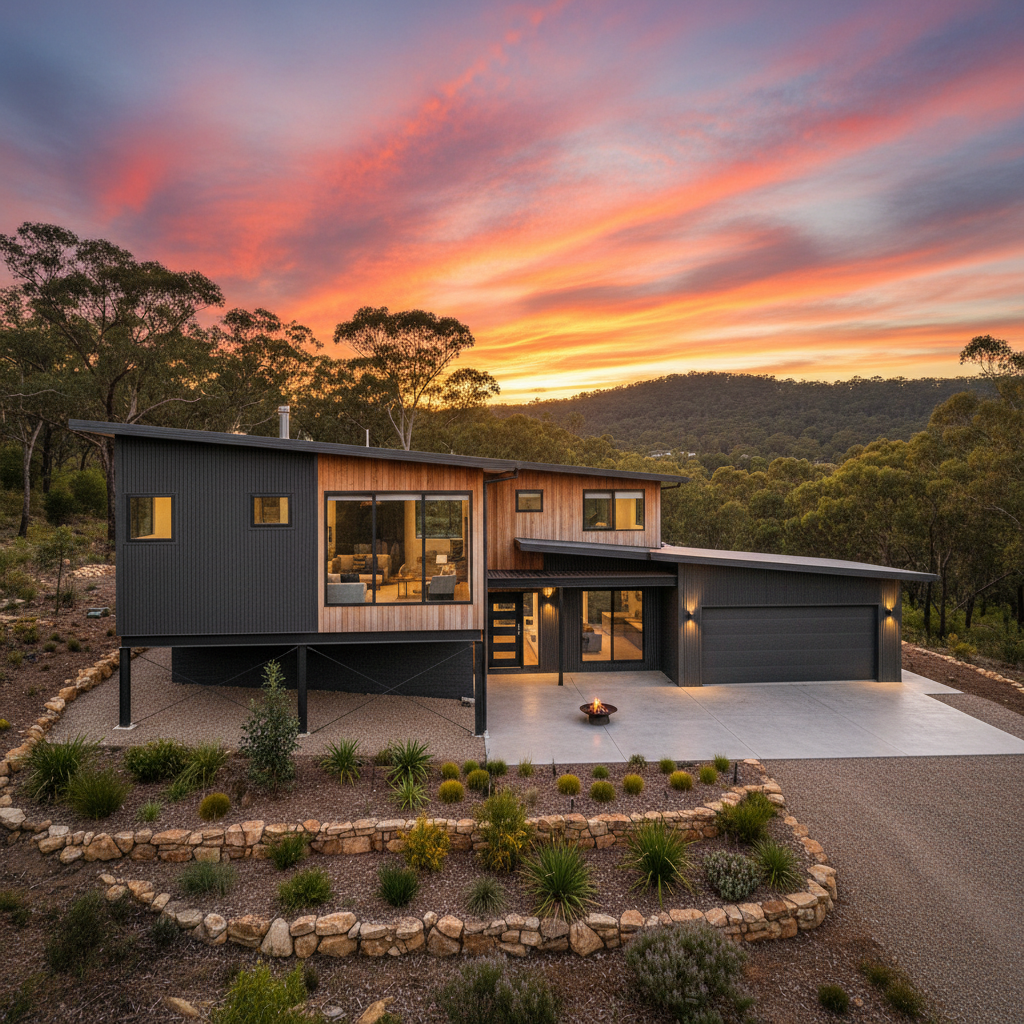
In the city, houses are designed to hide from the neighbors. In the country, you design to bring the outside in. This is a massive trend right now. Huge windows, wide eaves, and massive decks. When you're picking a kit design, look at how the sun hits the block. If you've got a view to the south, don't just put a solid wall there because the plan says so. Talk to the supplier about moving windows. Most kits are flexible enough that you can flip the layout to suit the north-facing aspect. You want that winter sun hitting your floorboards. It saves a fortune on heating. Australians are finally waking up to passive solar design, and about time too.
Practical Tips for the Regional Kit Builder
- Check your access. If a semi-trailer can't turn around near your house site, you need a plan B for delivery.
- Get your tanks in early. You'll need water for the build, and if you aren't on town mains, those rainwater tanks are your lifeline.
- Talk to the locals. The local hardware store owner knows which Sparky actually shows up and which one spends all day at the pub.
- Don't forget the dirt. In regional areas, your septic system (OSSDR) is as important as the house. Get the soil test done before you fall in love with a floor plan.
- Storage is king. Country life means gumboots, coats, and tools. Don't pick a tiny floor plan that has no cupboards. You'll regret it the first time it rains for three days straight.
Closing the Gap
The Australian dream isn't a four-bedroom house with a twenty-centimeter gap between you and the neighbor anymore. It's a bit of space, a veggie patch, and a house that doesn't cost a million dollars to build. Kit homes aren't a shortcut, but they're a smarter way to work. They give you the bones of a high-quality, steel-framed house while letting you keep your hands on the steering wheel. If you're willing to put in the legwork to manage the project, the result is a home that actually belongs to you, not the bank or a developer. Just make sure you've got a good pair of boots and a charged-up drill. You're going to need them.