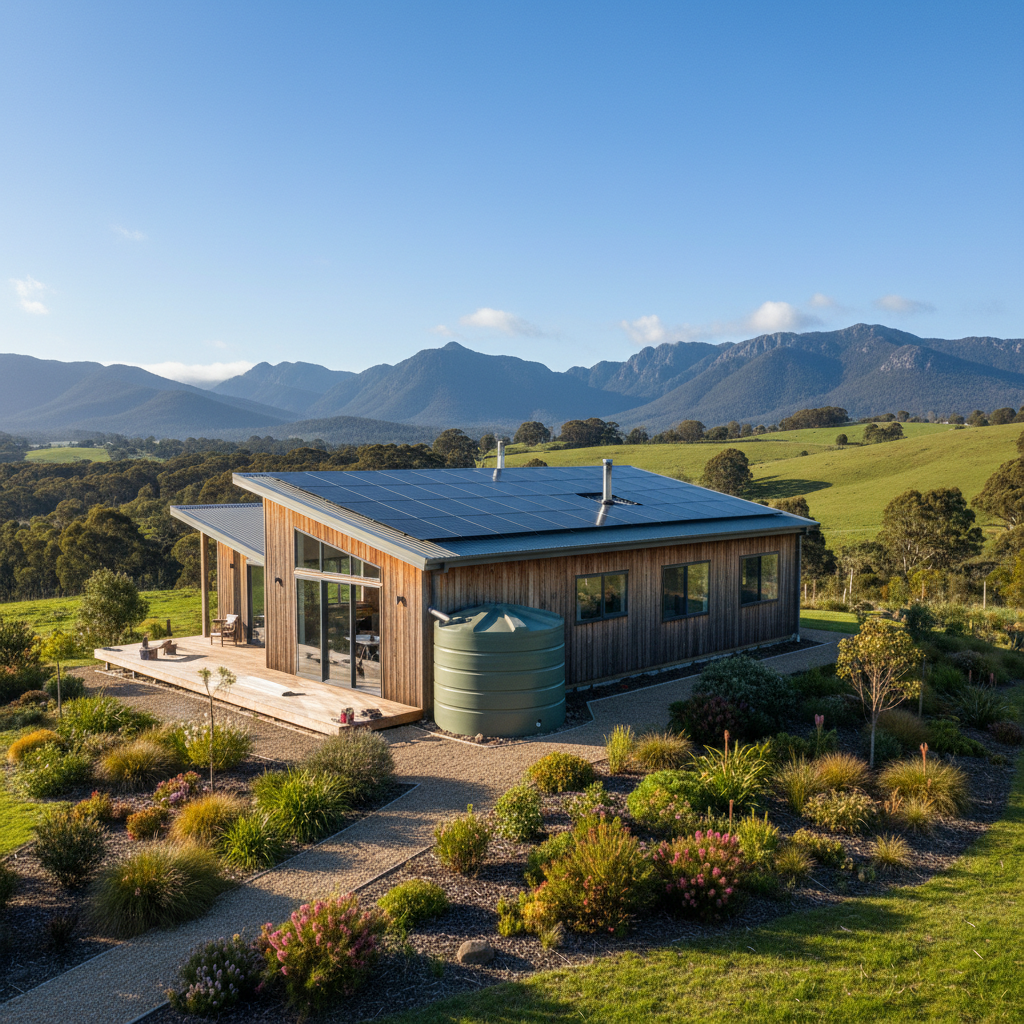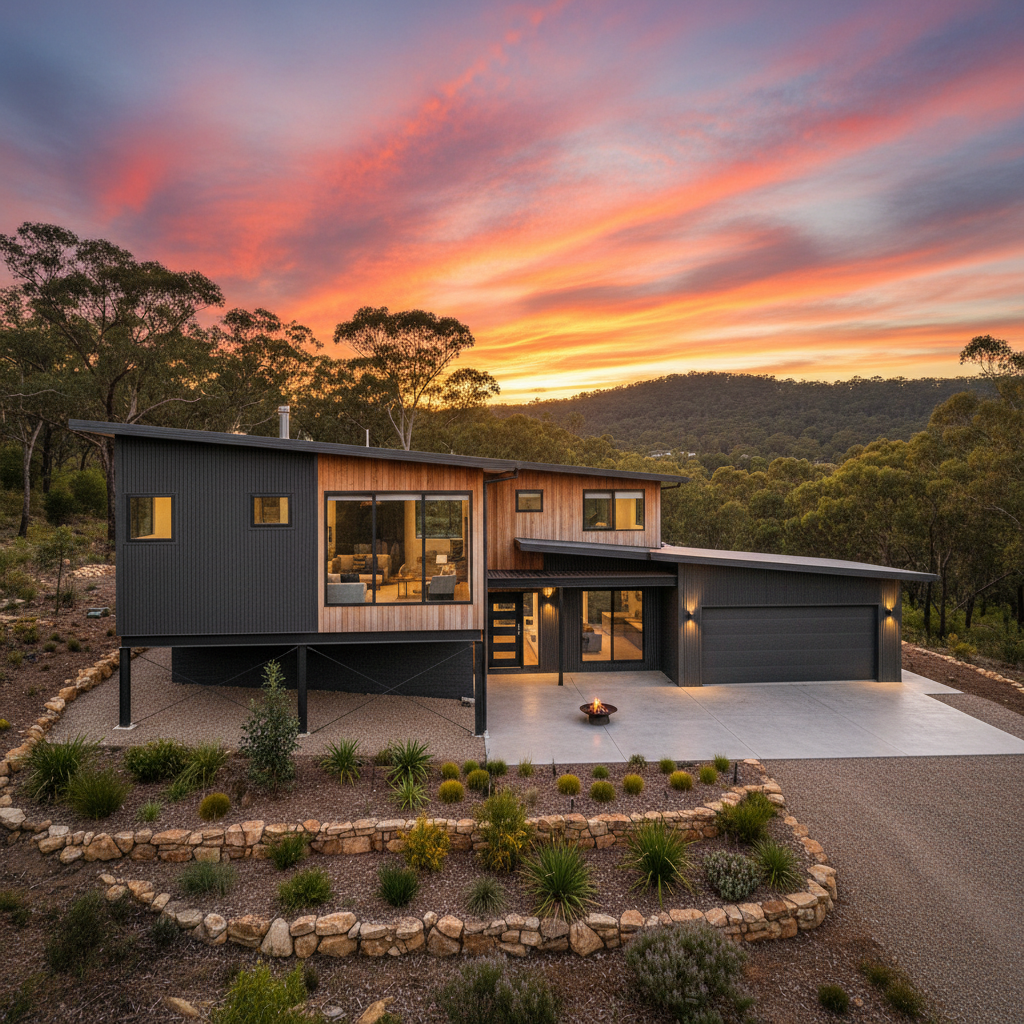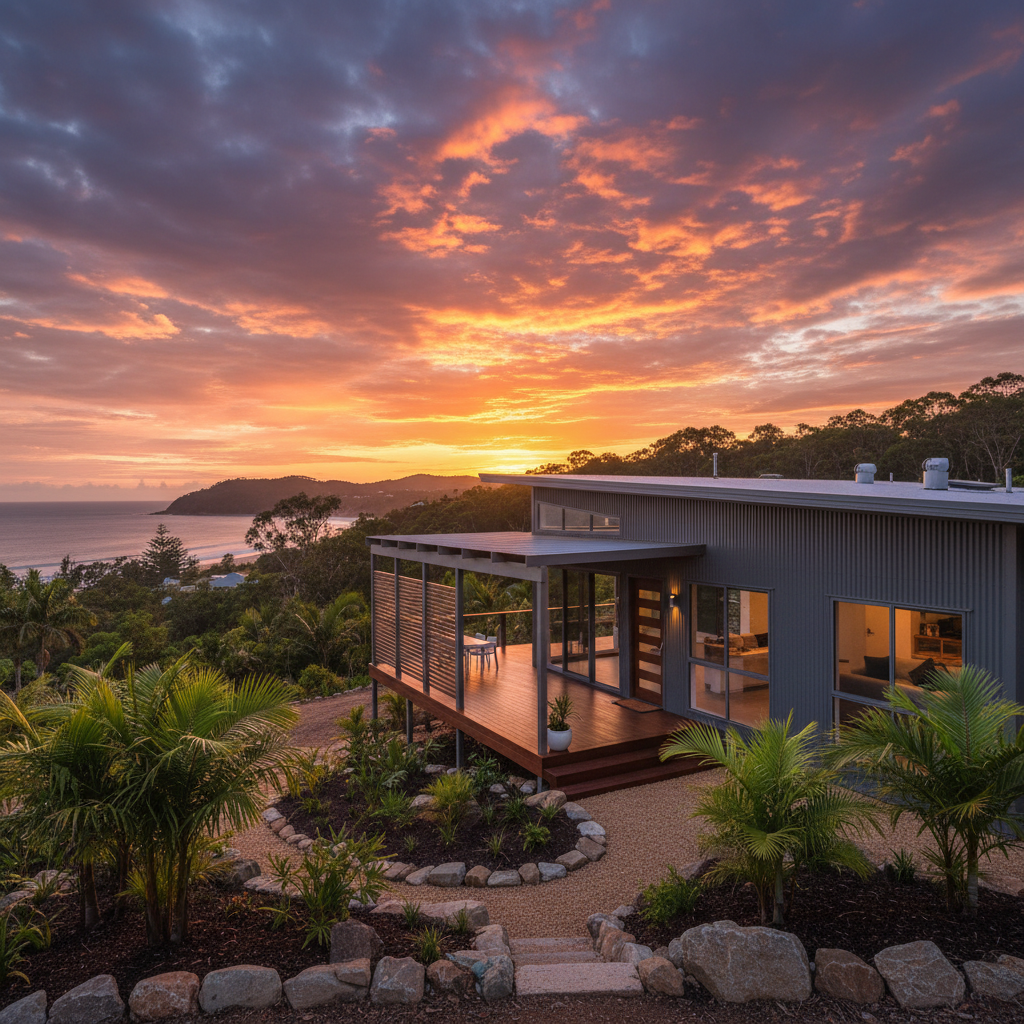
The Great Australian Dream used to be a quarter-acre block in the suburbs with a Hills Hoist and a short commute to a CBD office. Not anymore. I've spent fifteen years watching the shift, and lately, it's turned into a stampede. People are ditching the humidity of Sydney or the grey drizzle of Melbourne for bush blocks in the Byron hinterland, the Sapphire Coast, or out towards the Glass House Mountains. But here's the kicker. When you get out there, you quickly realise that finding a local builder with a free window in their schedule is like trying to find a needle in a haystack during a gale. That's exactly why kit homes have become the secret weapon for the Aussie tree-change.
The Regional Reality Check
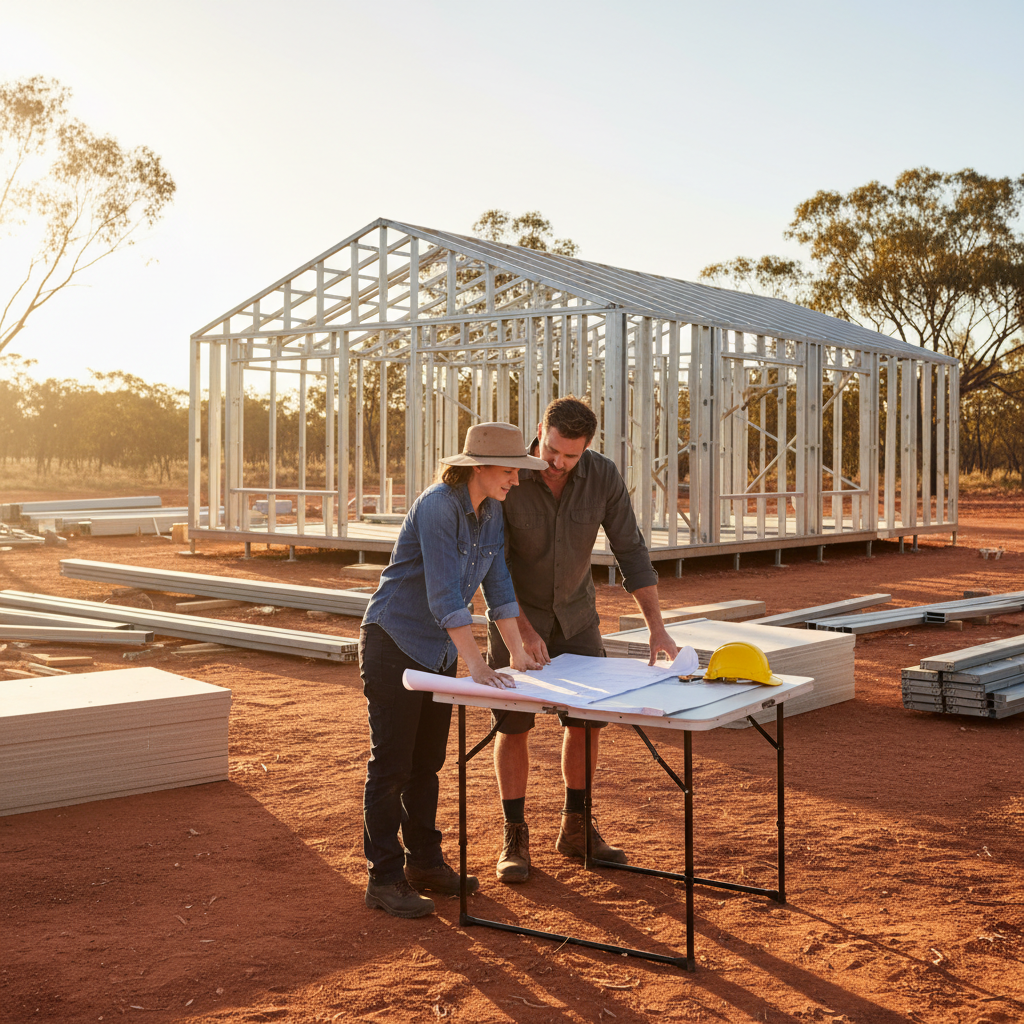
Moving to the country sounds romantic until you're standing on a sloped block in a high BAL (Bushfire Attack Level) zone and the only builder in town tells you he's booked out until 2026. It's frustrating. It's enough to make you want to pack it in and head back to a cramped apartment. This is where the kit home model actually makes sense for real people. You aren't waiting on a builder to design something from scratch between his other jobs. You've got the plans, you've got the engineering for the council, and you've got the bulk of the materials arriving on a semi-trailer in one hit. It puts the control back into your hands, which is a big deal when you're 50 kilometres from the nearest hardware store.
Steel Frames and the Australian Elements
If you're building in the scrub, you've got two main enemies: termites and fire. I've seen timber frames in regional Queensland that looked fine on the outside but were basically held together by the paint and a prayer because white ants had a field day. It's gut-wrenching. That's why we use BlueScope TRUECORE steel. It's precision-engineered. It doesn't warp because of a bit of humidity, and termites won't touch it. Plus, in high bushfire risk areas, having a non-combustible frame is a massive head start for meeting your BAL requirements. It gives you a bit of peace of mind when the hot northerly winds start blowing in November.
Owner Builder Tip: Managing Your Site
Being an owner-builder isn't just about swinging a hammer. In fact, most of the work happens on your phone and with a clipboard. You need to be the conductor of the orchestra. My advice? Get your site access sorted before the truck shows up. There is nothing worse than a driver refusing to go up a muddy track because the pad hasn't been cleared properly. You'll be left with a pile of steel and cladding on the side of the road, and that's a bad start to any project. Build a proper gravel crossover. Spend the extra money on a decent site shed. It makes a difference.
Design Trends: From 'Sheds' to Architectural Statements
The old image of a kit home being a glorified shed is dead and buried. I've walked through kit builds lately that would put high-end suburban displays to shame. We're seeing a massive trend towards 'Modern Farmhouse' aesthetics. Think steep pitches, dark cladding like Monument or Night Sky, and massive expanses of glass to soak up the view you moved to the country for in the first place. Because the kits come with windows and doors included, you can plan those sightlines from day one. You aren't limited to a boring box. You can have the raked ceilings. You can have the wide verandahs that keep the afternoon sun off the glass. It's about designing for the block, not just plopping a house down and hoping for the best.
Why Regional Australia Suits the Kit Model
Logistics in the bush are a nightmare. Ask anyone who has tried to coordinate thirteen different suppliers for a remote build. One guy forgets the screws, another guy brings the wrong roofing profile, and suddenly you've lost three weeks. With a kit, the inventory is managed for you. Everything from the trusses and wall frames down to the insulation and the last flashing is part of the package. So. You spend less time chasing deliveries and more time actually managing your trades. You hire a local plumber and electrician, get a slab poured, and then move through the stages. It's a structured way to build that suits the slower pace of regional areas where 'tradie time' can sometimes be a bit flexible.
The Technical Bit: Follow the Specs
One thing I always tell people: don't get creative with the engineering. These kits are designed to Australian Standards like AS 4100 for steel structures. If the plans call for a specific spacing on the tek screws or a certain type of bracing, do exactly what it says. We've seen DIYers think they know better, and it only leads to headaches during the private certifier's inspection. Stick to the manual. It's there for a reason. Often, your council will want to see the engineer's certification for the TRUECORE frames before they even let you break ground, so keep your paperwork organised from the start.
The Living Experience
There is a specific feeling you get when you're finally sitting on that verandah. It's Saturday arvo, the kookaburras are making a racket, and you realize you aren't paying a landlord or a massive mortgage for a house that looks exactly like the one next door. You built this. Or at least, you managed the people who did. There's a connection to the dwelling that you just don't get when you buy a turnkey home from a volume builder. It’s hard work, sure. You'll probably have a few arguments over paint colours or where the power points should go. But for a tree-changer looking to escape the rat race, it's the most honest way to get into a new home without losing your mind in the process.
If you're eyeing off a patch of dirt in the country, don't just look at what's already built. Look at what you could do yourself. A kit gives you the bones of a great house, the rest is up to you. Just make sure you've got a good pair of boots and a lot of patience for the local council office.