Flat or Fancy Footings? Picking Your Kit Home for Your Australian Block
Right, let's talk about kit homes. You've been scrolling through designs, no doubt, picturing yourself on that verandah, cold beer in hand. But before you get too far down that rabbit hole, stop. Take a good, hard look at your block of land. Is it flat as a billiard table? Or does it look like a startled kangaroo bounded across it a few times, leaving a bit of a mess? This isn't just about aesthetics, mate. It's about how you build, what you build, and frankly, how much grey hair you’re going to collect during the process.
Picking the right style of kit home-single-storey on a slab or an elevated design on piers-isn't some minor detail. It's foundational. Get this bit wrong, and the rest of your owner-builder dream can turn into a bit of a nightmare. We've seen it heaps of times. A bloke buys a flat-pack design for a sloping site, then wonders why the builder quotes him an arm and a leg for earthworks and retaining walls. Or someone drops a fancy elevated design on a perfectly flat block, just to realise they've paid extra for air space they don't really need. So, let's get into the nitty-gritty of matching your kit home to your patch of dirt.
The Ground Floor Gang: Single-Storey Kits on the Flat
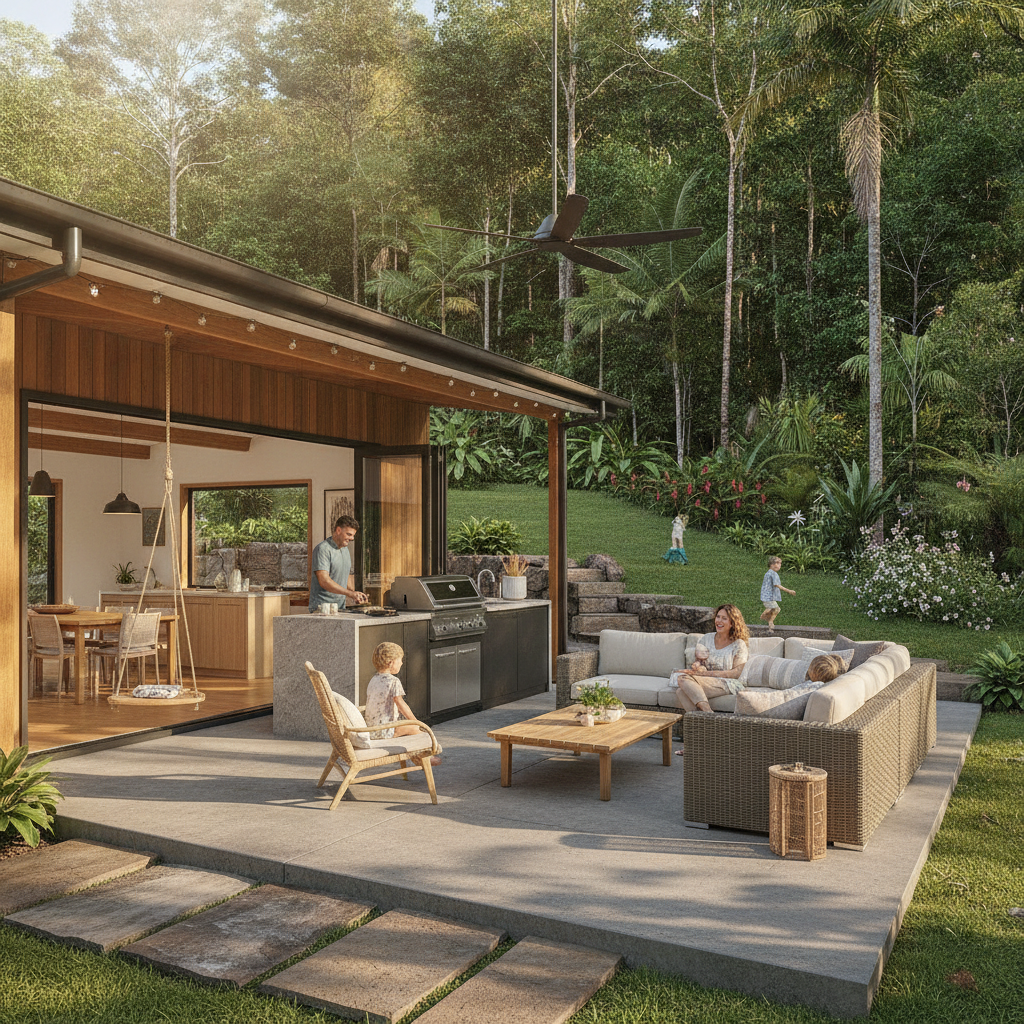
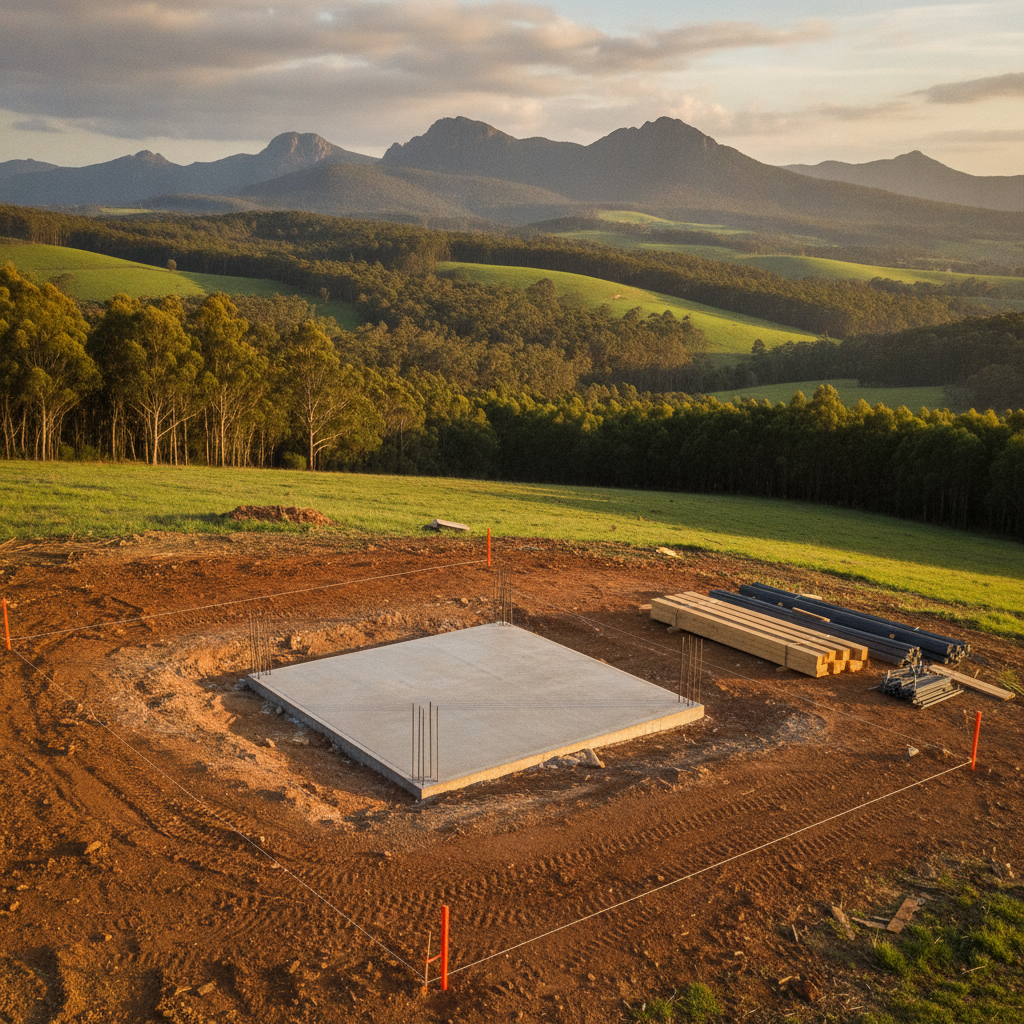
A single-storey kit home, sitting snugly on a concrete slab, is the go-to for a reason. If your block's pretty level, or only has a slight fall, this is often your simplest and most straightforward option. Think of those classic suburban blocks, or a nice big rural spread without too many undulations. You pour a slab, you erect the steel frame-easy as that. Well, 'easy' in the kit home world, meaning less complex than other options.
There are some serious upsides here. For a start, site preparation is generally less involved. You're not moving mountains of dirt, nor are you dealing with complex piering systems. It means your earthworks package should be simpler. Access during construction is a breeze, too. All your materials, your BlueScope Steel TRUECORE frames, the roofing, the cladding-everything gets delivered and can be handled at ground level. No fancy scaffolding needed just to get the wall frames up. Less mucking around with lifts and hoists for the roof trusses. Your tradies, especially the ones with dodgy knees, will thank you. Plus, let's not forget accessibility. If you're building your forever home, or thinking about resale to families with young kids or older folks, a home without steps is always a winner. It just flows better.
Now, it's not all sunshine and roses. A single-storey house takes up more of your land footprint compared to an elevated design with the same internal living space. If you've got a smaller block, or you're keen on a bigger backyard, that's something to chew on. And if you're on a coastal block hoping to catch a glimpse of the ocean, a flat build might leave you staring at the neighbour's roof. No worries, though, we’ve got options for that too.
Reaching for the Sky: Elevated Kit Homes for Tricky Blocks
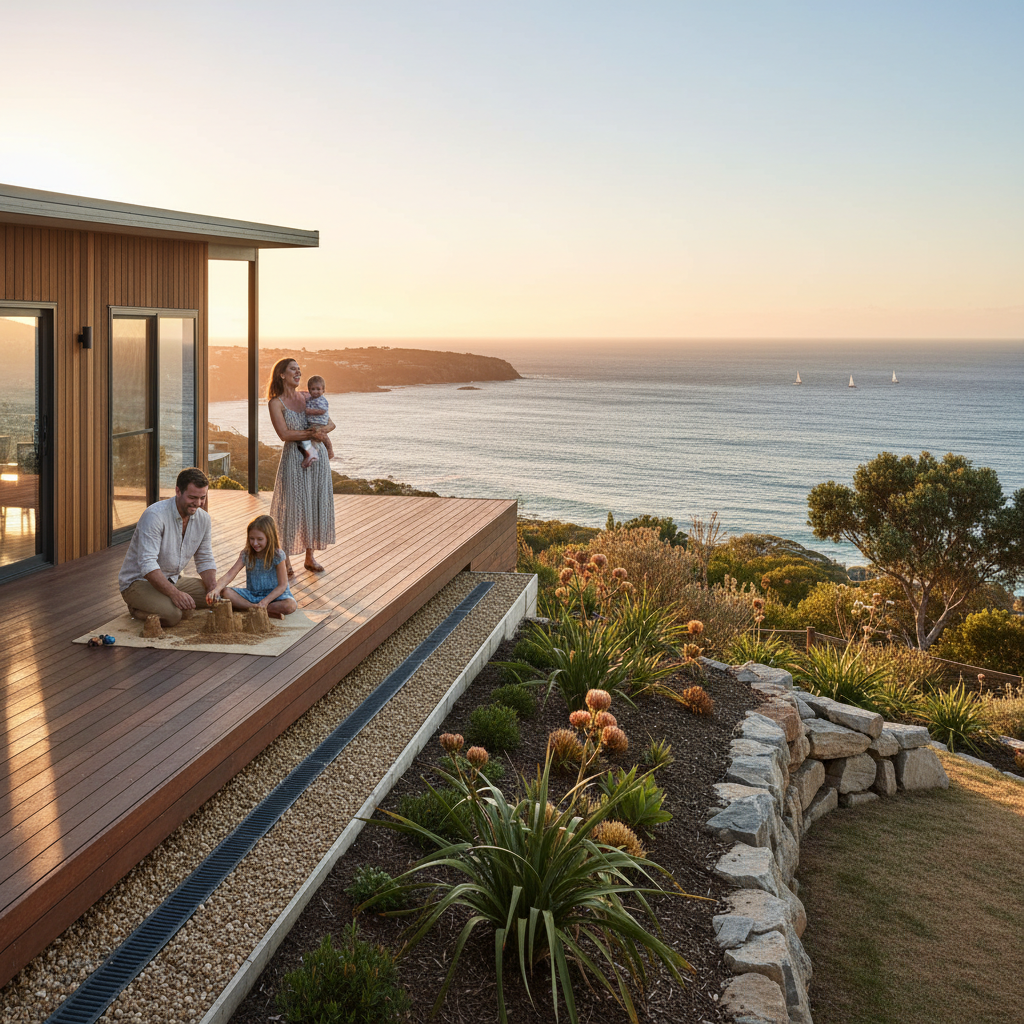
When your block looks like a bobsled run, an elevated kit home isn't just a design choice; it's often a necessity. These homes sit up on stumps, piers, or a pole system, effectively levelling out your living space even when the ground beneath is anything but. We're talking about those stunning blocks with views, steep coastal sites, or even just a backyard with a decent slope you want to use intelligently. The design often allows for a garage or storage underneath, sometimes even extra rooms if you plan it right.
The advantages here are pretty clear. Views, glorious views! Lifting your house up can punch you above the tree line or give you those expansive vistas you paid good money for. Natural light floods in from all angles, and you get heaps better cross-ventilation, which is brilliant for those sweltering Aussie summers. Plus, when you lift a house, you're usually doing less cut and fill on the actual block. This can sometimes mean less earthmoving and retaining wall work, which, depending on the site, can save you a fair bit of grief and cash. And with our TRUECORE steel frames, you've got a lightweight, strong, and termite-resistant structure that's perfect for these elevated designs. Termites don't chew steel, that's a simple fact. That's a huge plus in some parts of Australia.
But let's be realistic. Elevated builds are more complex. Your site works are going to involve precise pier or stump placement, often requiring serious excavation for foundations, sometimes deep-set concrete piles. You’re also looking at building platforms and scaffolding for the construction phase. Getting materials up to the first floor is a whole different ballgame compared to a slab. And of course, you'll need external stairs and probably a big deck, which means more carpentry and detailing. Working at height requires different safety protocols, too. So, while the end result can be absolutely stunning, the process for an owner-builder needs more careful planning and likely more skilled labour.
Sussing Out Your Block: The First Big Step, Seriously
Before you even dream of blueprints, you need to know your land intimately. Get a proper site survey done. Not just a basic one. You need a detailed contour plan showing every rise and fall, every existing tree, every boundary peg. You'll also need a geotechnical report, or a soil test, to understand what's actually under your feet. Is it solid rock? Loose fill? Reactive clay that swells like a sponge? All this dictates your foundation design, whether it's a simple slab or a complex pier system.
While you're at it, consider the aspect of your block. Where does the sun hit in winter? How about that brutal western sun in summer? Where do the prevailing winds come from? This impacts your home's energy efficiency and how comfortable it'll be to live in, especially if you're chasing those cross-breezes. Think about access for construction, too. Can a semi-trailer get to the site with your kit? Is there room for a crane if you need one? These practicalities can either make or break your build timeline and budget, though we aren't talking specifics on cost here, just the complexity it adds.
Don't forget the council regulations. Each local council has its own quirks. Setbacks from boundaries, maximum building heights, specific requirements for bushfire attack levels (BAL ratings), flood zones, and environmental overlays. Getting a DA (Development Application) can be a minefield if you haven't done your homework upfront. For elevated homes, BAL ratings can be particularly tricky. You might need specific fire-resistant materials for stumps and sub-floor areas, or even non-combustible cladding to meet AS 3959 standards. It's all part of the game.
Owner-Builder Workarounds and Wisdom
As an owner-builder, your level of involvement and existing skills really play into which option is best. For a single-storey slab build, you'll be managing the concrete pour, which is a big day, but then your steel frames go up pretty quick. Material handling is simpler. You're mostly working at ground height, which feels safer and often more manageable for a DIYer.
An elevated build demands more precision and a higher tolerance for working off the ground. Getting your pier tops perfectly level for your bearers to sit on, that's critical. If one's off, the whole house is off. Scaffolding is almost always a requirement, not a luxury. Learning how to properly brace and plumb wall frames on an elevated platform takes a steady hand. While our TRUECORE steel frames go together like a big Meccano set, getting that Meccano set perfectly square and plumb when you're 3 metres off the ground is a different beast to doing it on a flat slab. You might be relying more on experienced carpenters for the sub-floor and framing stages, or you'll need to seriously brush up your own skills.
Design Choices: It's All in the Flow
The type of kit home you choose directly influences the living experience. A single-storey plan often offers a very direct connection to the surrounding yard. Think sliding doors opening right onto a patio or garden bed. This is great for families with kids and pets, or anyone who likes their indoor and outdoor spaces to merge seamlessly. The layout is usually straightforward, less reliance on stairs internally, which just makes daily living a bit easier for many.
With an elevated design, your connection to the 'ground' is more often through a large deck. This becomes your primary outdoor living space, often offering incredible outdoor entertaining areas that feel like an extension of your indoor rooms. The space underneath your elevated home is valuable, too. It can be left open for carports, a workshop, or enclosed for storage, a rumpus room, or even guest accommodation, depending on your local council rules and engineering. This versatility is a huge selling point for folks who need flexible spaces, or just more storage than a standard garage provides. Imagine a spot for your boat or caravan, out of the weather, tucked neatly underneath.
Real-World Trade-Offs: What We've Seen
We had a customer up in Port Macquarie a few years back. Bought a beautiful, steeply sloping block, coastal views to die for. He was keen on an elevated kit home. We helped him out, naturally. But he hadn't fully considered the cost of bringing power and water up to the building platform, which was a fair bit higher than street level. And the council insisted on a particular type of retaining wall along one boundary, which ate into his budget something fierce. He got his dream home eventually, but it was a longer slog than he'd anticipated.
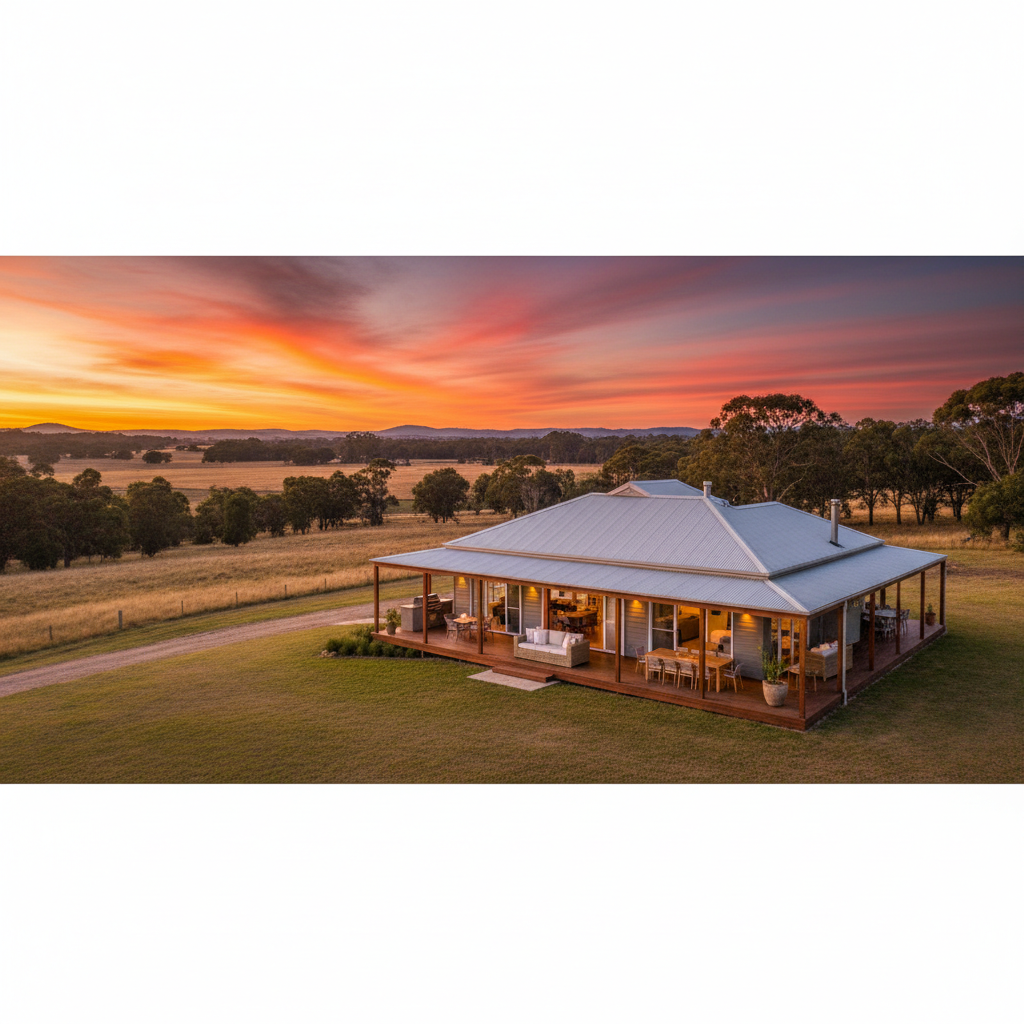
Then there was the family near Bendigo. A nice big, mostly flat rural block. They chose a sprawling single-storey kit home, the 'Murray' design, I think it was. They loved the idea of everything on one level. What they didn't fully account for was how much slab they were pouring. That's a lot of concrete, a lot of mesh, a lot of prep. Their concrete bill was a shocker for them, even though for that size footprint, it was par for the course. Every choice has its trade-offs. There's no magic bullet, just different ways to tackle the same goal: getting a roof over your head.
So, before you fall head over heels for a particular kit home design, get your boots dirty. Walk your block. Stare at it. Get a professional opinion on the lay of the land. Understand its quirks. Because that piece of dirt, that's your starting point. And a smart start makes for a far smoother build.