The Mud, the Dust, and the Dream
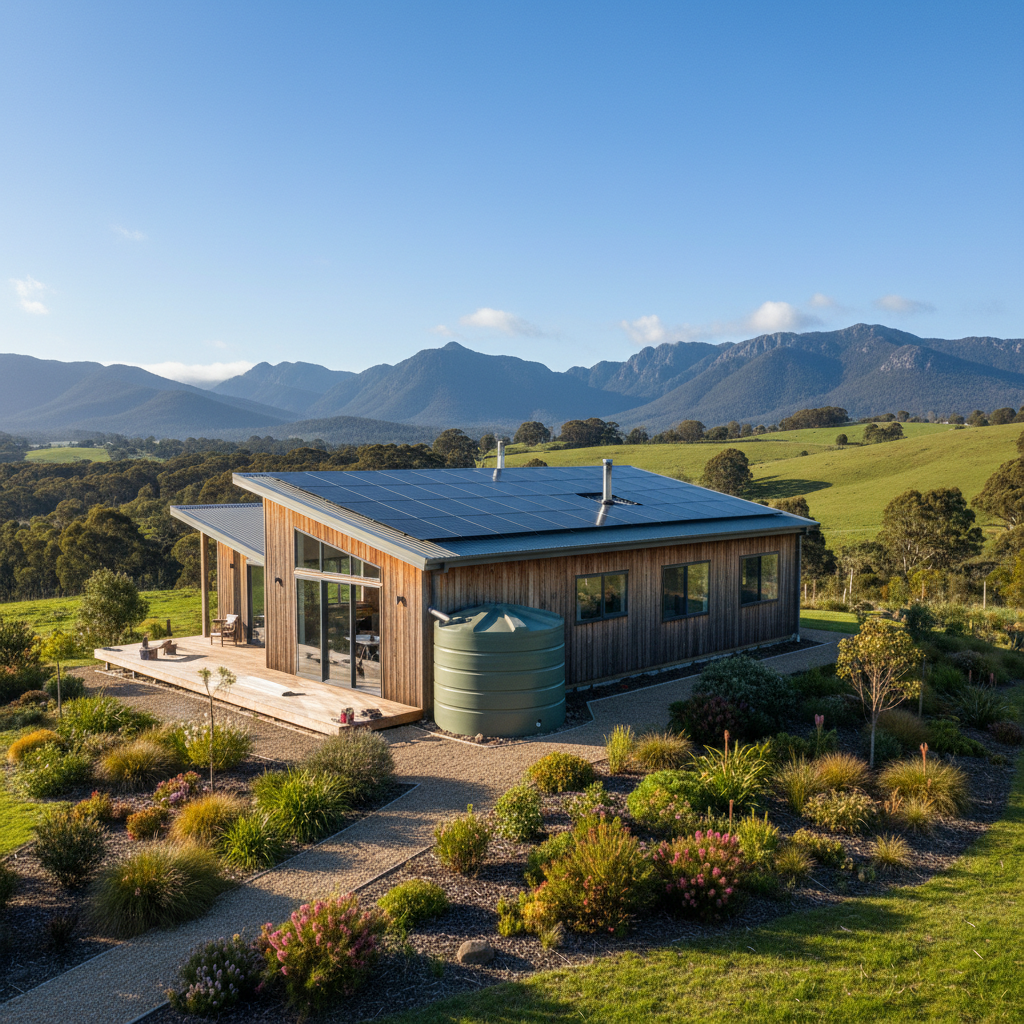
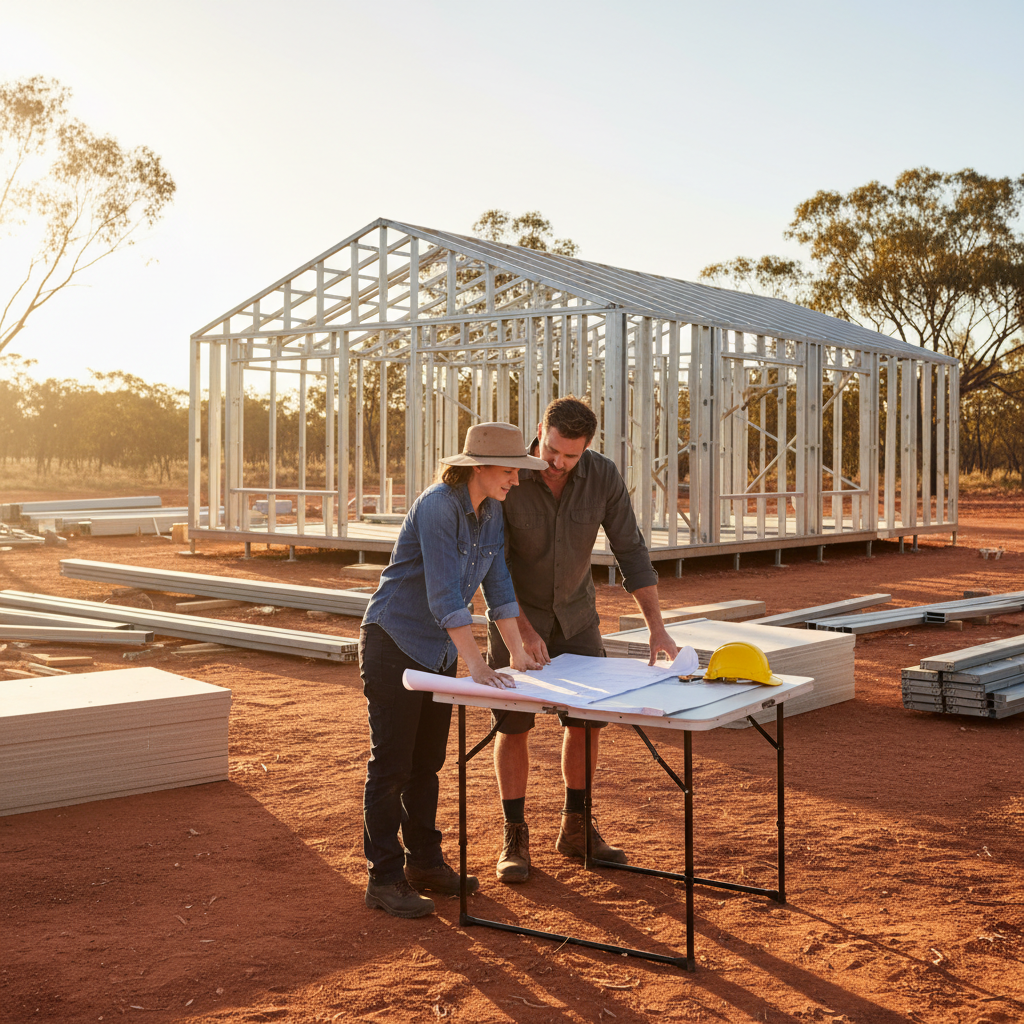
You've seen the glossy brochures. A pristine kit home sitting perfectly on a manicured lawn without a speck of dirt in sight. But anyone who’s actually spent a Saturday morning on a building site in Dubbo or the Sunshine Coast knows that's not how it starts. Usually, it starts with a pile of TRUECORE steel frames sitting on a concrete slab and a sea of red dust or ankle-deep mud surrounding it. Landscaping isn't just about planting a few bottlebrushes once the painter leaves. It's the difference between your house looking like a shipping container dropped in a paddock and a genuine home that feels settled into the Australian bush.
Building your own place as an owner builder is a massive win, but don't leave the dirt for the very end. I’ve seen guys spend two years getting the internal joinery perfect only to realize they forgot to plan for drainage. Now they've got a swamp under the back deck every time it rains in Feb. Thinking about your external zones while you're still waiting for your window delivery saves you a world of hurt later on. Plus, it makes the place livable from day one.
Drainage is Your Best Mate
Before you even think about buying a singular plant from the local nursery, we need to talk about water. Site works are the boring part of your project, but they’re the most vital. In Australia, we get dry spells that crack the ground followed by downpours that turn everything into a soup. Because kit homes often sit on a slab on ground or raised piers, you've got to ensure the fall away from the house is spot on. If you’re building with steel frames, you’ve already won the war against termites, which is a massive relief. But water sitting against your slab is still a disaster for your foundation stability.
Cut in your swales early. If your block has any sort of slope, you want to redirect that runoff before it hits your house. Use some clean gravel or even just a well-dug trench lined with geofabric. I reckon it's worth hiring a small excavator for a day early on in the piece. Get your levels sorted while the site is still a mess. It’s way harder to do once you’ve got a finished driveway and a delicate front porch. If you're on a bushfire-prone block, check your BAL rating requirements too. Most councils get cranky if you have thick mulch rubbing up against your external cladding. Stick to river pebbles or non-combustible materials right next to the house.
The Connection Between Steel and Stone
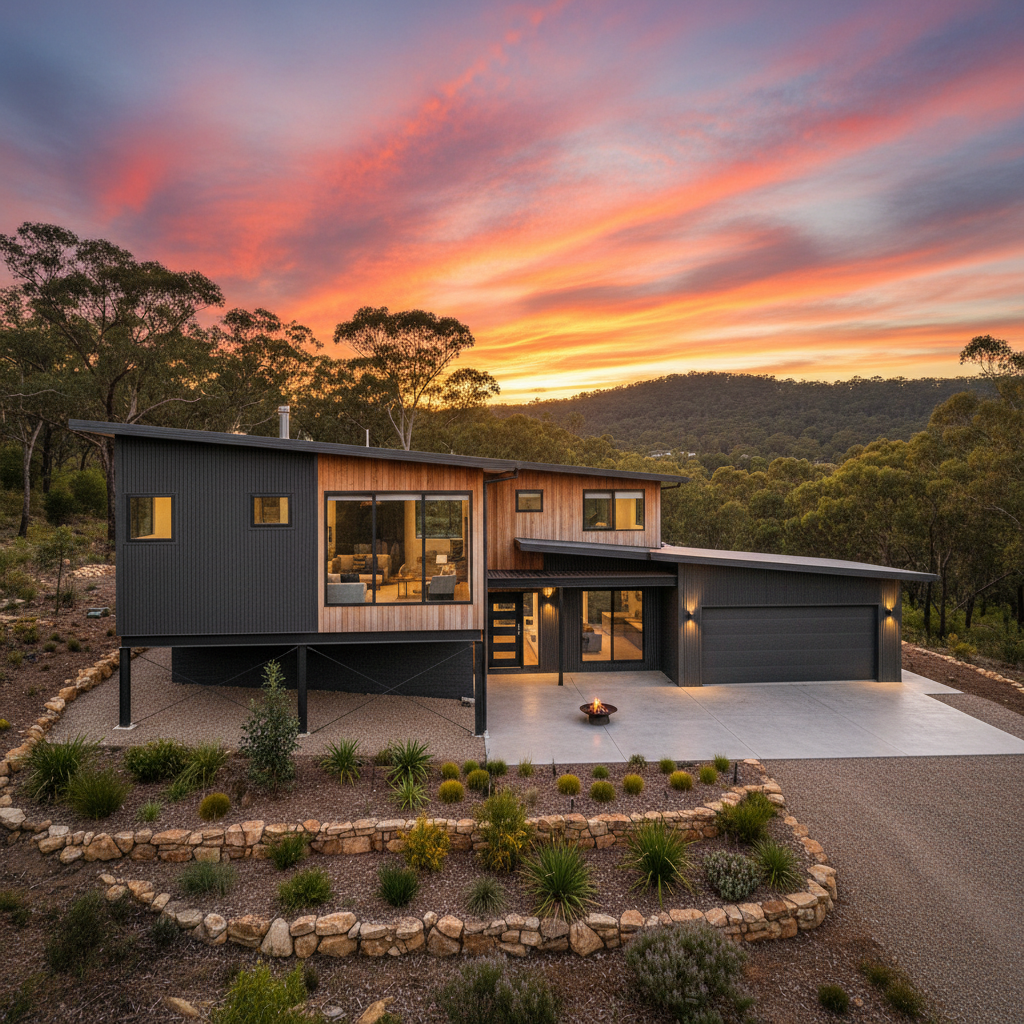
Our kits come with a mix of roofing and cladding traditionally made from BlueScope steel, which has that sharp, modern Australian aesthetic. To make that look good, you need textures that contrast against those clean lines. Smooth steel loves raw stone. It loves timber. If you’ve gone for a dark cladding like Monument, try using light-coloured sandstone for your retaining walls or garden edging. It pops. It looks intentional.
Think about your outdoor living areas as rooms without a ceiling. One of the best things about a kit home is the flexibility. You can design your deck to flow straight out from the living room. But don't just stop at the edge of the timber. Extend that feeling with a fire pit area or a paved zone. I always tell owner builders to use site leftovers where they can. Had some leftover structural steel? Weld up a frame for a vertical garden. Got some spare cladding? Use it to build some raised planter boxes that match the house perfectly. It ties the whole project together and keeps the skip bin costs down.
Planting for the 40-Degree Days
We've all done it. Bought a fancy plant because it looked good in the shop, stuck it in the ground, and watched it shrivel into a crisp three weeks later because the western sun hit it like a blowtorch. When you’re landscaping a new build, you’re usually starting with zero shade. Your kit home is tough, especially with that steel frame, but your garden needs help. Focus on 'pioneer' plants first. These are the hardy natives like acacias or certain eucalyptus species that grow fast and provide a bit of a canopy for your more delicate stuff later. Grevilleas are a winner because they're basically bulletproof and the birds love 'em.
And here’s a tip from someone who’s seen a lot of owner-builder projects go sideways. Put your irrigation in before you do anything else. Even if it's just a basic poly pipe system buried a few inches deep. When you’re busy finishing the tiling inside, you won't want to be standing out there with a hose for two hours every evening trying to keep your new lawn alive.
The Practicality of Access
When you're planning your paths, think about the 'Bunnings Run'. You’re going to be doing a lot of them. You want wide, stable paths from where you park the ute to your main entry points. Stepping stones are fine for a cottage garden feel, but if you’re wheeling a barrow full of cement or carrying a heavy door, you'll want something solid underfoot. Crushed granite or packed road base is cheap, looks okay, and gets the job done until you’ve got the budget for something fancier. It stops the kids and the dog from tracking mud onto your brand-new vinyl plank flooring, too.
The Bushfire Reality
Let's get real for a second. If you’re building in a rural or peri-urban area, your landscaping choices aren't just about looks. They’re about safety. AS 3959 is the standard for construction in bushfire-prone areas, and while our steel kits are great for fire resilience, your garden can be a fuse if you isn't careful. Keep trees a decent distance from the roofline. Clear out the undergrowth. Deciduous trees can actually be quite good on the north side of a house—they provide shade in the summer but let the sun hit your windows in the winter after the leaves drop. Just make sure you aren't planting high-oil stuff like Bottlebrush right under your eaves.
Building for the Future
Lifestyle isn't just about a nice view. It’s about how the house works for you in five years' time. Maybe you’re planning a pool later on. Leave the access clear! I can’t tell you how many people build their kit home, finish their beautiful front garden, and then realize they can’t get a bobcat into the backyard to dig the pool. Leave a three-meter gap somewhere. You’ll thank me later. Landscaping is a long game. It’s okay if it takes a few years to get it perfect. Start with the big stuff – drainage, levels, and shade trees. The rest is just the icing on the cake. Now, get out there and start digging. That dirt isn't going to move itself.