Stop treating your yard like an afterthought
Most owner-builders I talk to spend six months arguing over kitchen island benches and ensuite tiling before they even think about the dirt outside the front door. It's a mistake. A massive one. You've got this shiny new kit home, maybe it's got those crisp BlueScope steel lines and a fresh coat of Surfmist paint, but if it's sitting in the middle of a bald paddock or a gravel dead-zone, it looks like a shipping container that fell off a truck. You need to ground the thing. I've seen beautiful TRUECORE steel framed homes in the Victorian high country that look like they've grown out of the granite, and I've seen carbon copies in suburban Brisbane that look completely alien because the owners forgot to plant a single tree.
Working with the Australian sun, not against it
Design and lifestyle aren't just about what's inside the four walls. In Australia, your backyard is your second lounge room. If you're building a kit home with a large north-facing deck, you've already won half the battle with passive solar design. But don't just stop at the sliding door. Deciduous trees like an ornamental grape or a Crepe Myrtle are the secret weapon for any kit home builder. Plant them on the western side. In January when the sun is trying to melt your flyscreens, these trees are thick with leaves and dropping the temp by five degrees. Then winter hits, the leaves drop, and that precious sun hits your windows. It's simple stuff, but people miss it while they're obsessing over grout colours.
The floor-to-earth transition
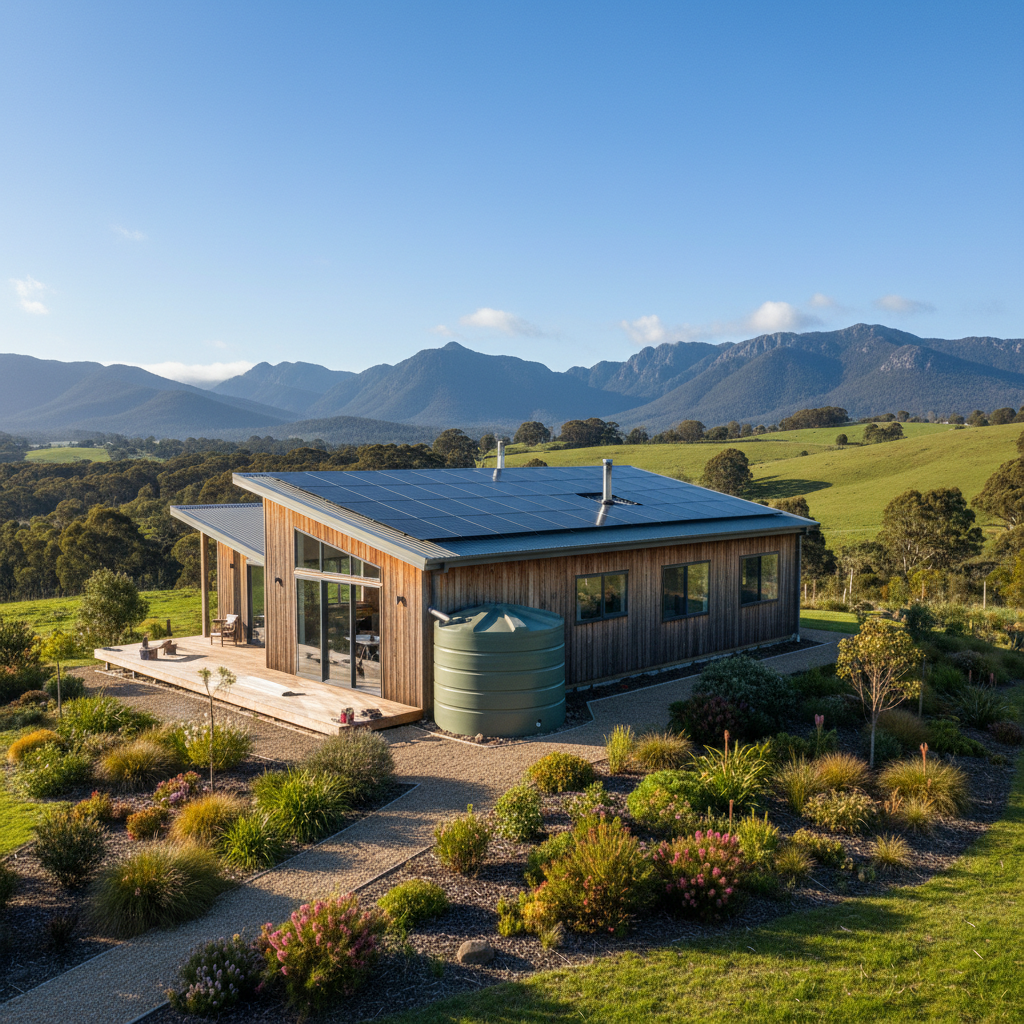
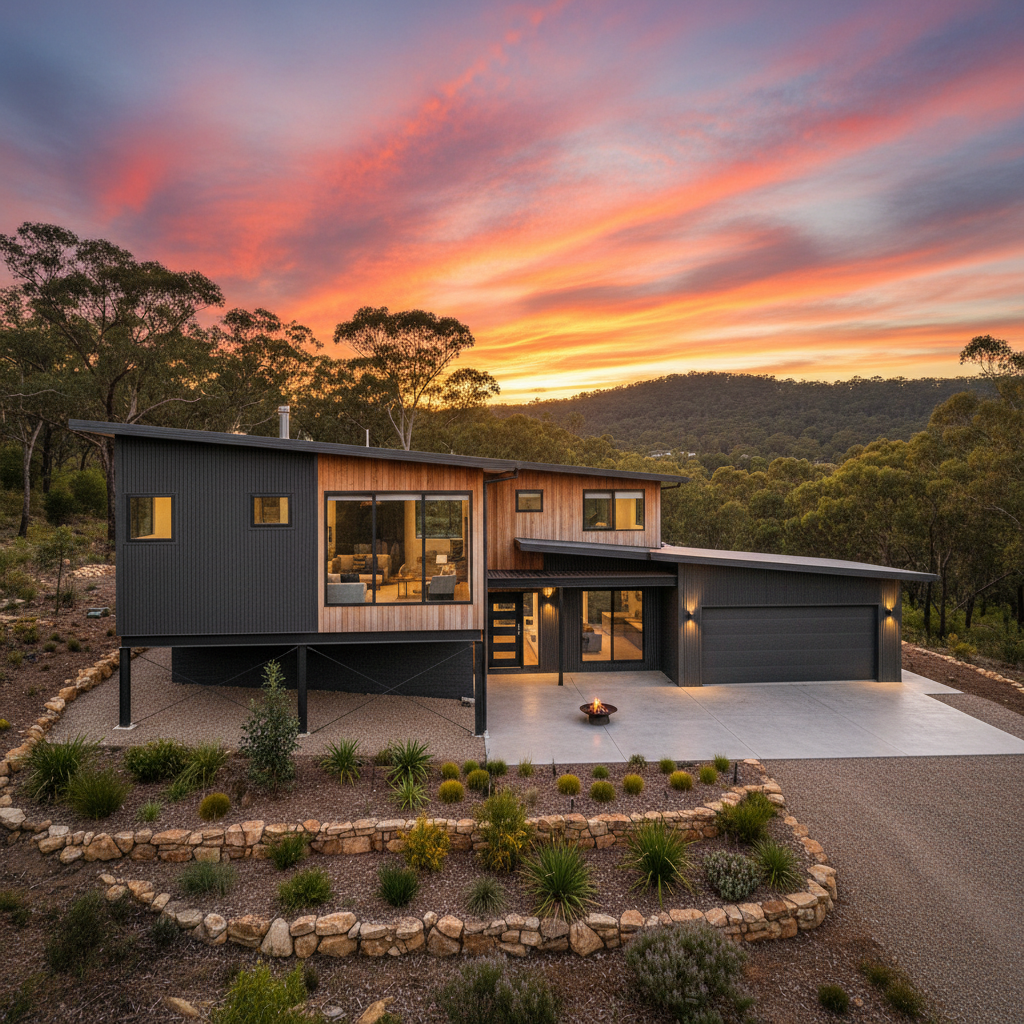
Steel frames give you incredible precision. Coming from a background in timber, I still get a kick out of how straight a steel wall is. But that precision can look a bit clinical if you don't soften the edges. I always tell people to think about 'layered' landscaping. Don't just chuck a row of lilly pillies against the slab and call it a day. Start with prostrate grevilleas or native violets right at the edge of the house, then move up to mid-sized shrubs like Westringia, and finally your canopy. Use the straight lines of your cladding as a backdrop for the messy, organic shapes of Aussie natives. If you've gone with a dark cladding like Monument or Ironstone, those silvery-green leaves of a Banksia or a Eucalyptus caesia will absolutely pop. It looks expensive, but it's just basic horticultural contrast.
Why we love wide decks and deep eaves
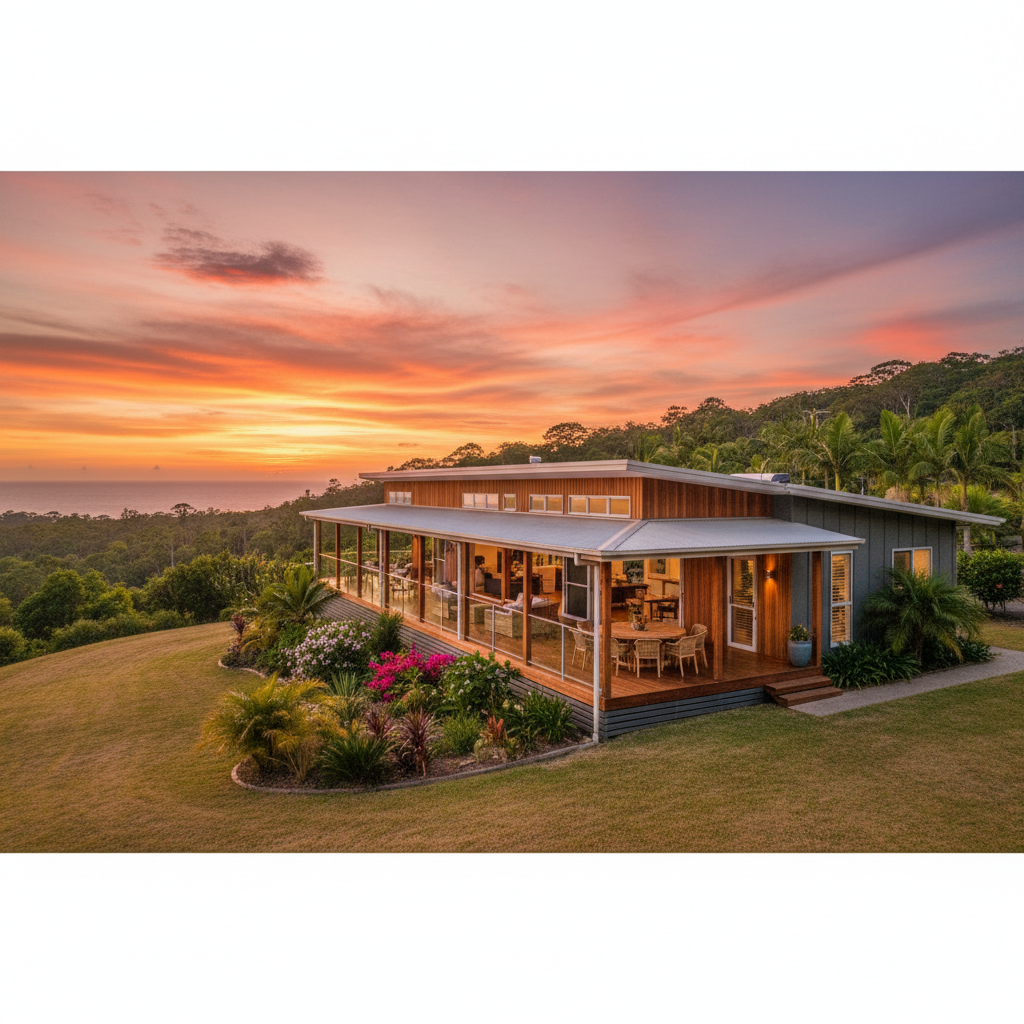
Your kit home lifestyle revolves around the transition zones. If you're an owner-builder, pay close attention to your floor levels. Aim for a seamless transition from your internal living area to your outdoor deck. When the floor levels match, the house feels twice as big. Plus, it's safer for the kids and grand-kids when they're charging in and out. Since our kits use steel floor systems, you can get these levels spot on without worrying about the borer or termite issues you get with timber joists sitting close to the ground. Just make sure you've got enough clearance for airflow and inspections – AS 3660.1 is your bible here for termite management, even with a steel frame, because you've still got timber in your fit-out and furniture.
The 'Borrowed Landscape' trick
You don't need five acres to feel like you're living in the bush. I once helped a bloke in a tight suburban pocket of Newcastle who was building one of our smaller two-bedroom kits. He didn't have room for a massive garden, so he 'borrowed' the neighbor's massive old Jacaranda tree by framing it perfectly in his kitchen window. When you're standing at your site before the slab goes down, don't just look at the view. Look at the shadows. Look at the neighbor's sheds. Use your landscaping to hide the ugly bits and frame the good bits. A well-placed bamboo screen in a narrow side-passage can turn a view of a colorbond fence into a private tropical sanctuary. It's about curation, not just planting stuff.
Hardscaping for the owner-builder
If you're doing the site works yourself, keep it simple. Large format pavers set in crushed granite look a lot more modern than old-school poured concrete paths, and they're more forgiving if you're not a pro tradie. They also allow water to soak back into the ground rather than creating a boggy mess against your footings. Water management is huge. When you're planning your kit home layout, map out where your downpipes go. Don't just let them dump onto the ground. Connect them to a tank and then use the overflow to feed a rain garden. It's sustainable, it looks great, and it saves you a fortune on water or council penalties during a dry spell.
Designing for the wind
Building in places like the South Coast of NSW or the windy plains of Western Victoria presents its own set of dramas. You can have the sturdiest steel frame in the world, but if the wind is howling across your deck at 40 knots, you won't want to sit out there. Use your landscaping as a windbreak. Clumping bamboos or dense native hedges can filter the wind rather than blocking it entirely. This creates a pocket of still air around the house, which makes your insulation work better. It’s all connected. A house isn't just a box; it's a part of the ecosystem of your block. If you treat it that way from the start, you'll end up with a place that feels like a home, not just a building project.