Stop Worrying About Appearance and Start Thinking About Flow
Most people sit down with their floor plans on a Sunday afternoon and start dreaming about marble splashbacks or those fancy brass taps they saw on Instagram. Stop right there. A kitchen in a kit home isn't a museum piece. It's the engine room of the house. If you get the layout wrong, it doesn't matter how expensive your stone benchtop was, you'll hate every second of making school lunches in it. I've seen too many owner-builders focus on the 'lifestyle' photos and forget that they actually have to live in the space. Real life involves grocery bags being dumped on the nearest flat surface, kids fighting over the toaster, and trying to find the bin while your hands are covered in raw chicken juice.
The first thing you should do is walk through your proposed floor plan mentally. Imagine it's 7:15 am on a Tuesday. The rain is hammering down on your Colorbond roof, the dog wants out, and you're trying to get three people fed. Where is the milk? How far did you walk to get the cereal? If you're doing more than three steps between the fridge and the bowl, your layout is broken. This isn't just about the 'work triangle' they taught in the 80s. That's old school. Modern Australian life is more about work zones. You need a prep zone, a cleaning zone, and a 'get out of my way' zone for the rest of the family.
The Island Bench Trap
Everyone wants an island bench. I get it. They look great and they're the hub for afternoon homework or a Friday night beer. But in a kit home, space is a resource you have to manage carefully. A massive island in a compact living area can kill the flow of the entire house. If the gap between your main bench and the island is less than 1200mm, you're going to be bumping hips with everyone. My advice? If you're tight on room, look at a G-shaped kitchen or a peninsula. It gives you that extra prep space without creating a permanent obstacle in the middle of the room. Plus, it's easier to keep the plumbing and electrical contained in one run of cabinetry, which makes life easier for your sparky and plumber later on.
And another thing about islands. Don't put the sink there if you don't have to. Nothing ruins a kitchen's look faster than a mountain of dirty dishes sitting right in the center of the room while you're trying to relax on the couch. Keep the mess hidden away on the back bench if you can. Keep the island clear for serving or as a dedicated breakfast bar. It's cleaner, literally and visually.
Steel Frames and Your Kitchen Design
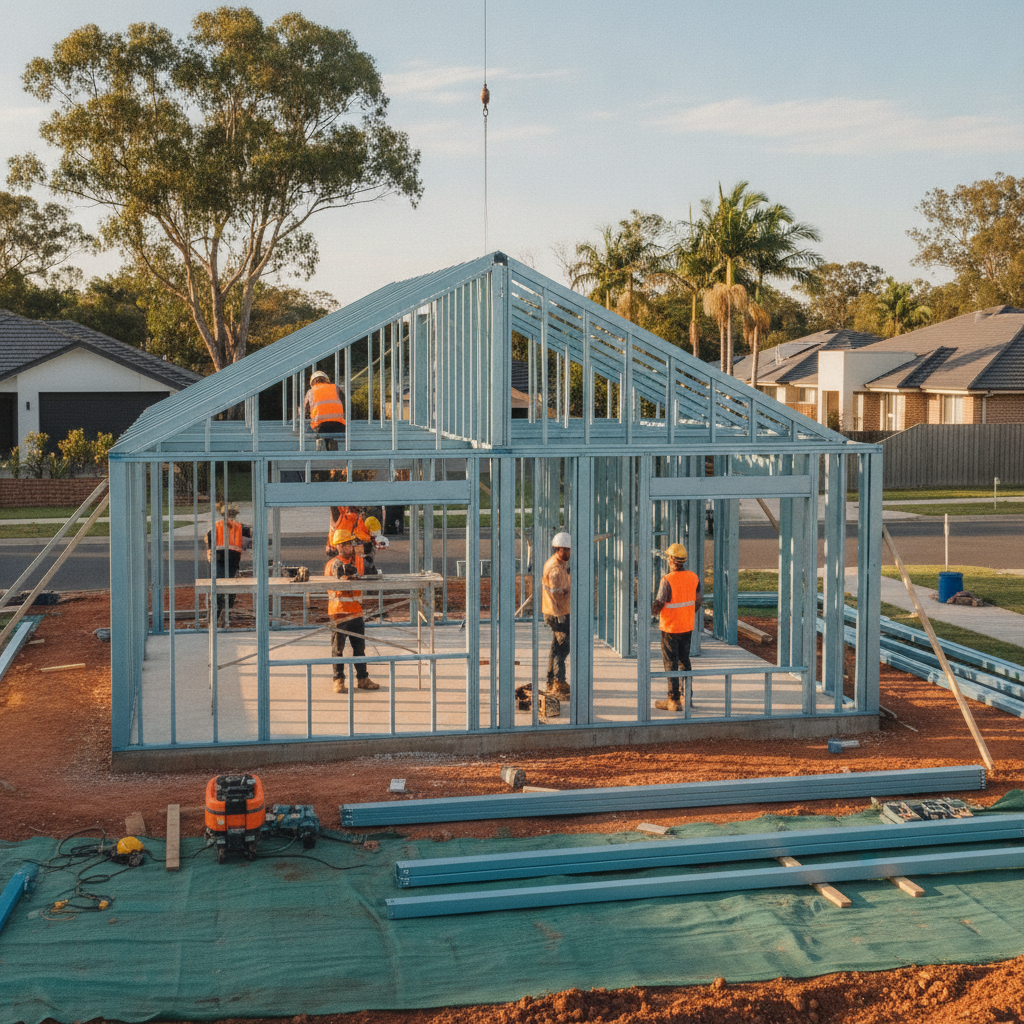
Because you're building with steel frames like TRUECORE, you've got some serious advantages. Steel is dead straight. It doesn't warp or twist like timber often does when it dries out. This is a godsend for your cabinet maker. When your walls are perfectly plumb, those overhead cupboards go up without a fight. There's no shimmying or packing things out just to get a door to hang straight. But remember, once those steel studs are in place based on your kit design, moving things is a headache. You’ve got to get your plumbing and electrical points sorted before the internal linings go on. If you decide last minute that the fridge belongs on the other side of the room, you're looking at cutting into steel, which is a job for a grinder, not a hand saw. So, get the plan locked in during the design phase. No 'we'll figure it out on site' nonsense.
The Butler's Pantry: Luxury or Waste of Space?
Lately, every second kit home customer wants a butler's pantry. I reckon for some families, they're brilliant. If you do heaps of entertaining or buy in bulk from Costco, you need that storage. But for a smaller kit home? You're better off using that four square meters to make the main kitchen more functional. A well-designed floor-to-ceiling pantry with pull-out drawers can hold just as much as a walk-in butler's pantry without the extra walls and doors. Don't sacrifice your living room space just to hide a toaster. It’s a trade-off. Think about what you actually do every day. Do you really need a separate room to wash a glass? Probably not. Spend that money on better appliances or high-quality insulation instead.
Light and Air
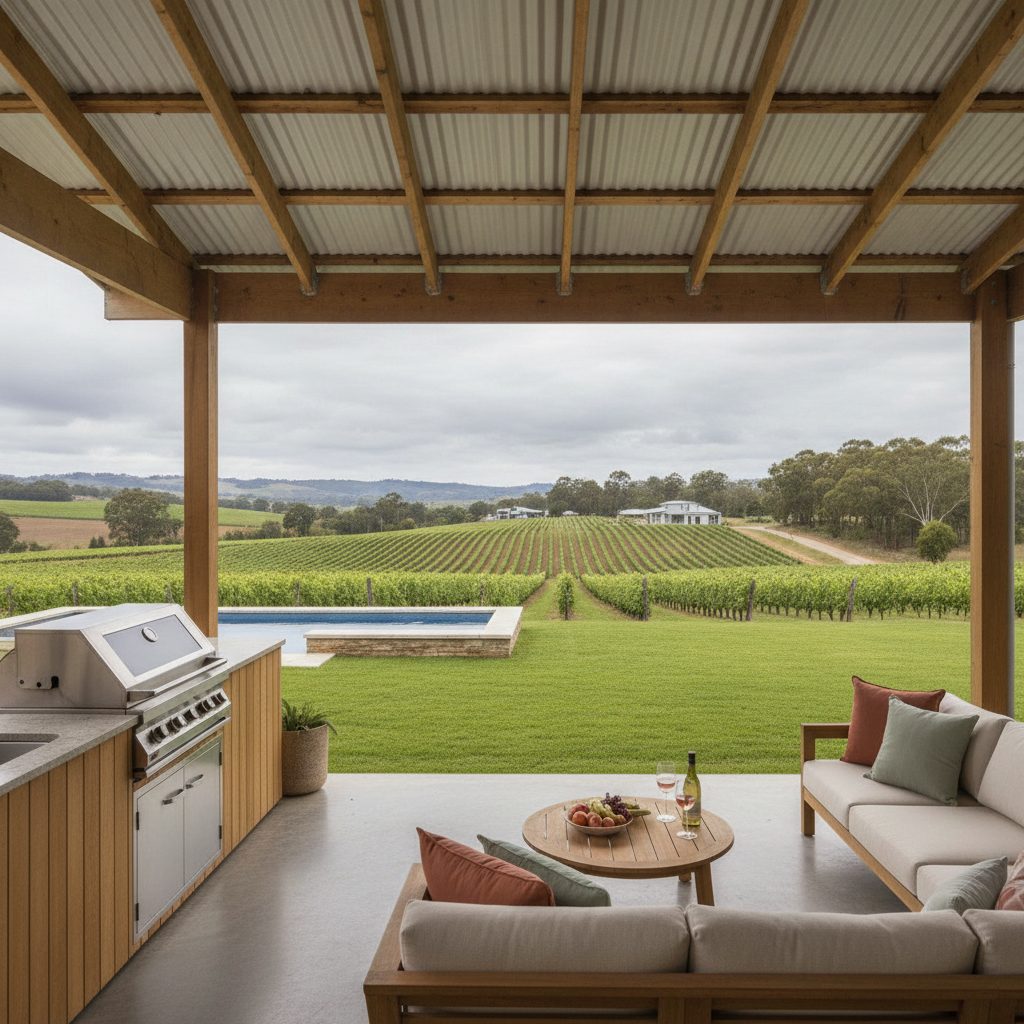
Natural light is the most underrated part of kitchen design. Most people shove the kitchen in a corner and rely on downlights. Big mistake. One of the perks of a kit home is usually the location—maybe you're on a nice block in the Yarra Valley or out near Dubbo. Use it. Put a window splashback in. It lets light flood onto your workspace and makes the whole house feel bigger. Just make sure you aren't staring directly into your neighbor's fence. If the views aren't great, look at a skylight. Cooking in the dark is depressing. Also, think about the prevailing breeze. If you can line up a window in the kitchen with a sliding door in the living area, you'll get a cross-breeze that clears out cooking smells faster than any rangehood ever could.
Hard-Wearing Material Choices
As an owner-builder, you're usually looking for value but you don't want junk. For the kitchen, focus on durability. Laminate benchtops have come a long way. They aren't the ugly, peeling stuff from your nan's house in the 70s. Modern high-pressure laminates are tough as nails. If you've got a busy family with kids who treat the kitchen like a workshop, skip the natural stone. It stains. It chips. It needs sealing. Go for a decent quartz or a high-end laminate. Save the 'fancy' budget for things you touch every day, like your sink mixer or the drawer runners. Get the soft-close ones. Trust me, it’s worth the extra few bucks when the kids are slamming drawers at 6:00 am searching for a spoon.
Floor-wise, most kit homes look great with polished concrete or timber-look vinyl planks. Vinyl is a smart play for kitchens. It's waterproof, it doesn't crack if you drop a heavy cast-iron pan, and it's much easier on your knees when you're standing there for an hour prepping a Sunday roast. Real timber looks nice, but the first time the dishwasher leaks, you'll be kicking yourself.
The Kickplate and Beyond
Most people forget the little things until the very end. Where do the bin and the recycling go? If you haven't planned a double pull-out bin under the sink, you'll end up with a plastic Coles bag hanging off a door handle or a smelly bin sitting at the end of the bench. It's those small details that make a kit home feel like a custom-built residence. Think about power points. You need more than you think. Put them inside the pantry for the microwave. Put them at the ends of the island for laptop chargers. Nowadays, everyone is on a phone or tablet while they eat or cook. Don't have cords stretching across your traffic zones.
Designing the layout for your kit home kitchen is one of those jobs where you should measure twice and think four times. It's the heart of the home, sure, but it's also a workspace. Treat it like a workshop. Keep the tools within reach, make sure the lighting is spot on, and don't let anyone convince you to put the stove right next to the fridge. That’s just a recipe for a high power bill and a fridge that struggles to stay cold. Stick to the basics, focus on clear walkways, and your new home will be a joy to live in from the day you move in.