Setting the Foundation for Success
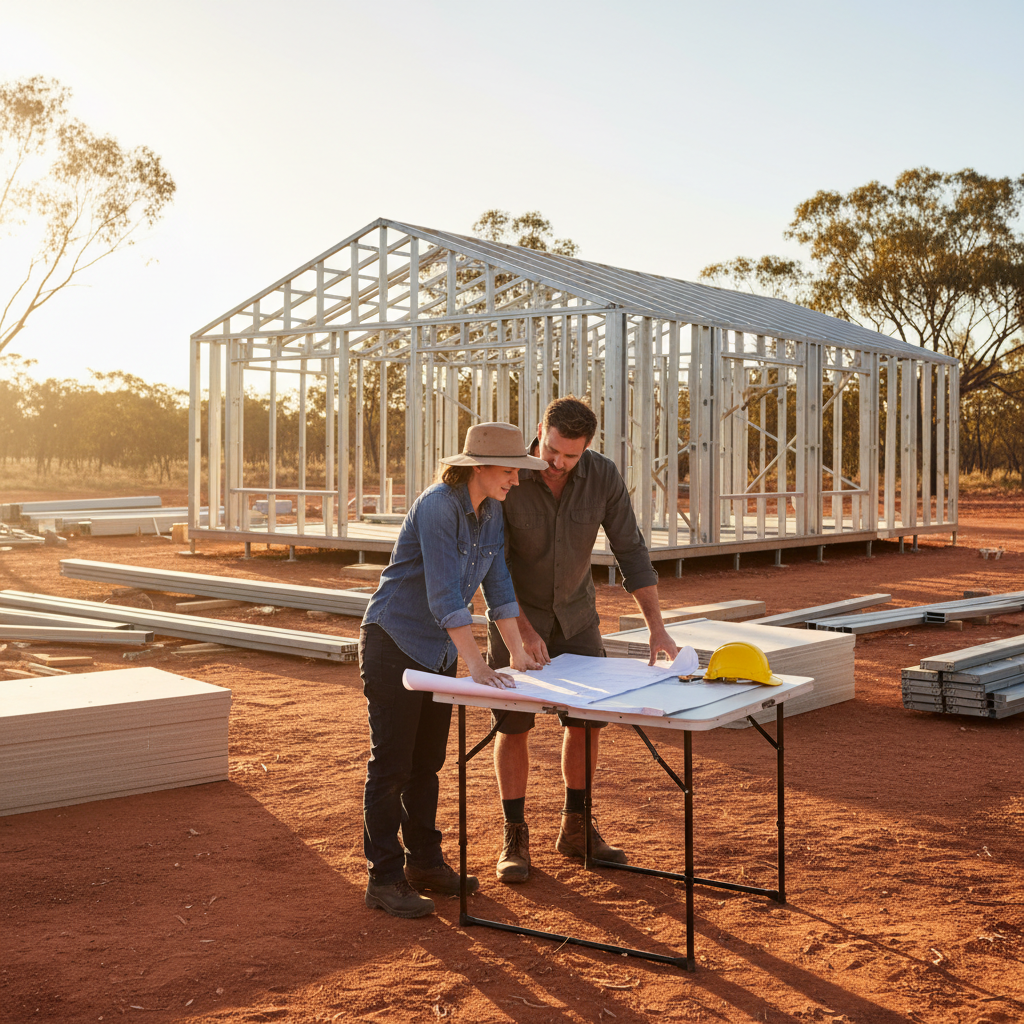
There is a unique kind of excitement that comes with the arrival of your kit home delivery. Seeing the flatbed truck pull up with your TRUECORE steel frames, roofing, and cladding marks the moment your dream project becomes a physical reality. However, the success of your build and the ease of the construction process depend heavily on what you do before that truck ever arrives.
Site preparation is the unsung hero of the building world. It is the phase where you transform a raw piece of Australian dirt into a technical construction site. In the world of kit homes, being prepared means ensuring that when those frames are unloaded, they have a level, stable, and accessible place to live. Poor site prep can lead to delays, safety hazards, and structural headaches down the track. Let’s dive into the technical essentials of getting your site kit-ready.
Understanding Your Land: The Site Survey and Soil Test
Before any machinery arrives, you need to know exactly what you are working with. A site survey performed by a licensed professional is non-negotiable. This survey identifies your boundaries, easements, and the exact fall of the land. In Australia, building near a boundary or over a hidden utility line can result in costly legal issues or the dreaded order to tear it down.
Coupled with the survey is the soil test. Your engineer needs to know the soil classification (such as Class S, M, H, or E) to design the correct slab or footing system. Reactive clay soils, common in many parts of Australia, expand and contract with moisture levels. If your site preparation does not account for the specific soil type, even the strongest steel frame can experience movement issues. As an owner-builder, having your soil report ready early ensures your slab is engineered perfectly for your specific patch of Australia.
Clearing and Benchmarking
Once the paperwork is sorted, the physical work begins. Clearing the site involves removing vegetation, large rocks, and any debris from the building envelope. It is vital to clear a wider area than just the footprint of the house. You need space for scaffolding, material storage, and trade access.
The term "benchmarking" refers to creating a level pad for your home. Depending on the slope of your block, this may involve "cut and fill" techniques. This is where soil is taken from the high side of the site and moved to the low side to create a flat building platform. It is a technical process that requires heavy machinery like an excavator or bobcat. Proper compaction of the filled area is critical. If fill soil is not compacted to engineering standards, the slab may sink or crack over time. Always ensure your earthmover provides a compaction certificate if required by your local council.
Managing Drainage and Erosion
Water is the biggest enemy of a stable building site. During the preparation phase, you must consider how water will move around the site once the natural vegetation is gone. Simple silt fences should be installed to prevent sediment from washing into gutters or neighboring properties, which is a significant legal requirement in most Australian jurisdictions.
Consider installing temporary drainage or a "swale" (a shallow channel) to redirect rainwater away from the building pad. If the site becomes a boggy mess every time it rains, your kit delivery might be delayed because the truck cannot get close enough to the site without getting bogged. A dry, well-draining site is a productive site.
Access: The Logistics of Kit Delivery
One of the most overlooked aspects of site preparation is the logistics of the delivery itself. Kit home components, particularly long steel roof sheets and pre-assembled frames, arrive on large trucks or semi-trailers. You need to ensure there is a clear, wide path from the main road to the unloading zone.
Check for overhead obstacles like low-hanging power lines or tree branches. Also, consider the turning circle required for a large vehicle. If your driveway is steep or narrow, the delivery driver may have to unload at the gate, which means you will need a way to transport the heavy materials to the building pad yourself. Preparing a dedicated, flat, and dry "laydown area" close to the slab will save you hours of manual labor later. Use wooden sleepers or dunnage to keep the steel frames and cladding off the ground, protecting them from moisture and dirt.
The Slab: Your Pivot Point
For most kit home builds in Australia, a reinforced concrete slab is the foundation of choice. The precision of your slab is paramount. When building with steel frames, there is very little room for error compared to traditional timber. Steel is manufactured to millimetre-perfect dimensions. If your slab is out of square or not level, the frames will not sit correctly, and you will face significant alignment issues when it comes time to install windows and doors.
Ensure your concreter uses the architectural drawings provided with your kit to set the plumbing and electrical "rough-in" points accurately. Moving a pipe once the concrete has set is a technical nightmare. Double-check all measurements before the pour. This is the moment where the "measure twice, cut once" mantra applies to the entire footprint of your home.
The Connection to Services
While the kit arrives as a package of materials, the site must be ready to support the construction process. This means arranging temporary power and water. Most trades will need power for tools, and water is essential for everything from mixing mortar to cleaning up. If grid power isn't available yet, you may need to hire a generator. Having these services organized before the kit arrives ensures that you or your trades can start standing the frames the very next day.
Safety First: Site Fencing and Signage
From a technical and legal standpoint, your building site is a workplace. Even as an owner-builder, you have responsibilities for the safety of anyone who enters the site. Temporary fencing should be erected to secure the site. This prevents unauthorized access and keeps the general public away from stored materials and open excavations. Displaying the required site signage, including your owner-builder permit and emergency contact details, is a vital part of the preparation process.
Final Checklist Before the Truck Arrives
Before you get the call that the delivery is on its way, do one final walk-through of the site. Is the laydown area clear? Is the slab fully cured and swept clean? Is there a clear path for the crane or Hiab truck to operate? Are your tools and safety gear ready?
Preparing your site is about more than just moving dirt. It is about creating an environment where the high-quality components of your kit home can be assembled efficiently. By taking the time to get the technical foundations right, you ensure that the rest of your building journey is as smooth and rewarding as possible. When those steel frames are finally standing tall against the Australian sky, you will be glad you did the hard work early.