The Great Australian Integration
Walk into any suburban display village in Western Sydney or the back blocks of Perth right now and you'll see the same thing. Huge glass sliders that disappear into wall cavities, floor levels that match the outdoor deck perfectly, and outdoor kitchens that cost more than my first three cars combined. People aren't just chucking a BBQ on a concrete slab anymore. They're building outdoor rooms. When you're tackling a kit home as an owner builder, you've got a massive advantage here. You aren't stuck with a cookie-cutter 'alfresco' that's barely big enough for a four-seater Mimosa set from Bunnings. You can plan for a space that actually works when the North-Westerlies are howling.
The outdoor lifestyle in Australia is a bit of a lie we tell ourselves sometimes. We talk about 'outdoor living,' but for three months of the year, it's 38 degrees with flies thick enough to choke a horse. Or it's sideways rain that turns your expensive outdoor lounge into a soggy mess. A real alfresco area needs to be a fortress against the elements, not just a roof over some dirt. That's why the bones of the thing matter so much. If you're using a BlueScope steel frame kit, you're already ahead. Steel doesn't warp when the humidity hits 90 percent in January, and it stays dead straight for your finishing timbers or cladding.
Orientation is Everything
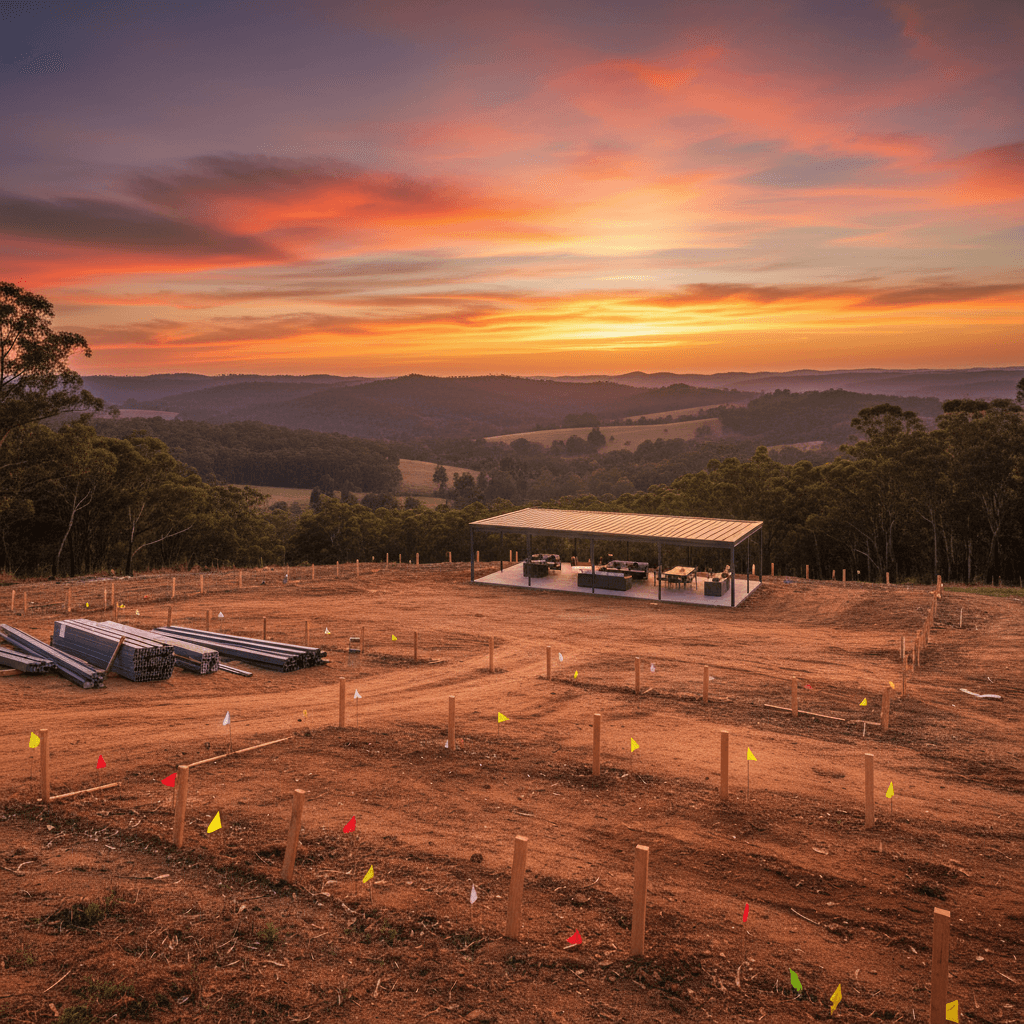
I've seen so many owner builders get this wrong. They find a floor plan they love, plonk it on the block based on the driveway, and end up with an alfresco that faces West. Absolute disaster. By 4pm, that beautiful outdoor area is an oven. You'll never sit there. You want that space facing North or North-East if you can swing it. This catches the winter sun but keeps you out of the worst of the summer heat. If your block forces your hand and you're stuck with a Western aspect, you need to think about vertical screening immediately. Think laser-cut steel panels or even motorised blinds that can drop down when the sun starts digging in.
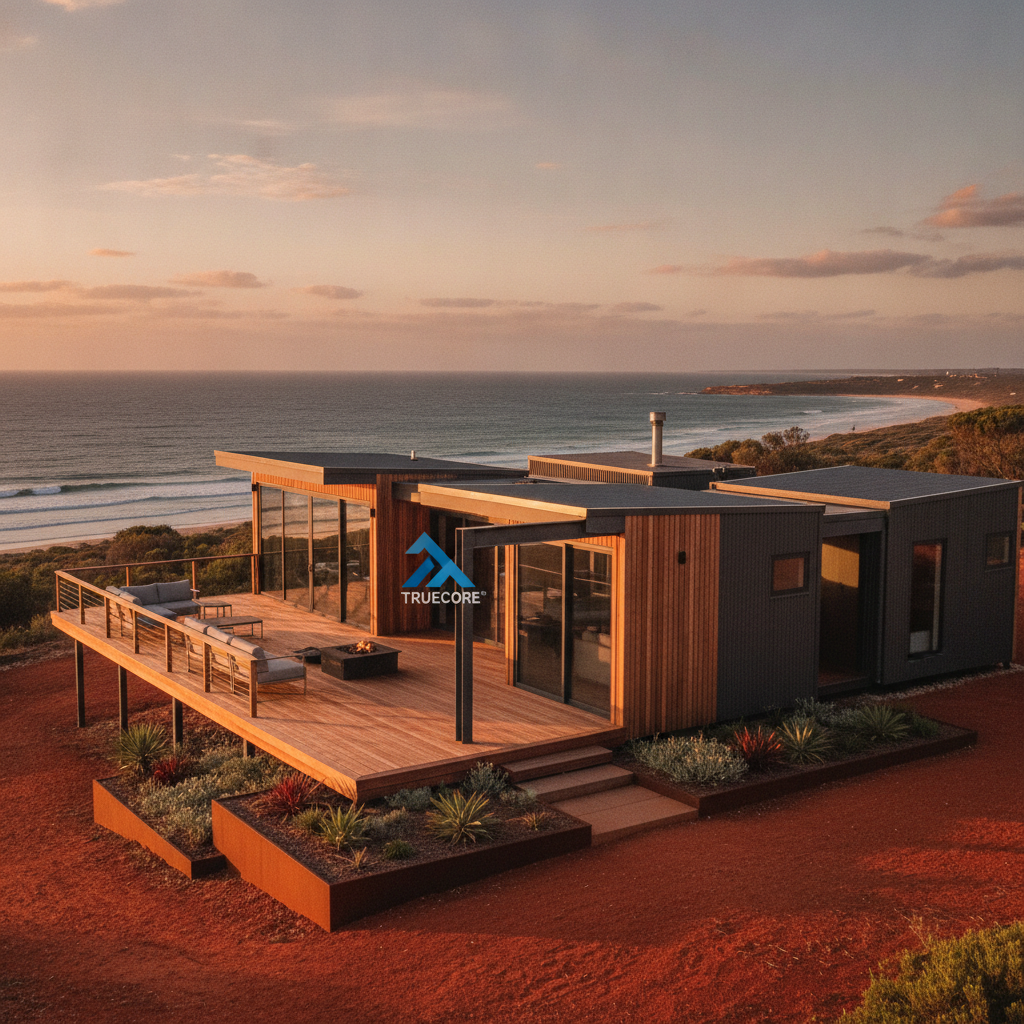
Think about the wind too. Every coastal town in Australia has 'the breeze.' In some spots, like Geraldton or the Illawarra, that breeze is more like a gale. If you design your kit home with an L-shape footprint, you can tuck the alfresco into the crook of the 'L.' This gives you a natural windbreak. Using TRUECORE steel frames for these larger spans is a no-brainer because you can get those wide, open openings without needing massive, chunky timber beams that'll eventually twist and crack your plasterboard.
The Steel Frame Advantage for Big Spans
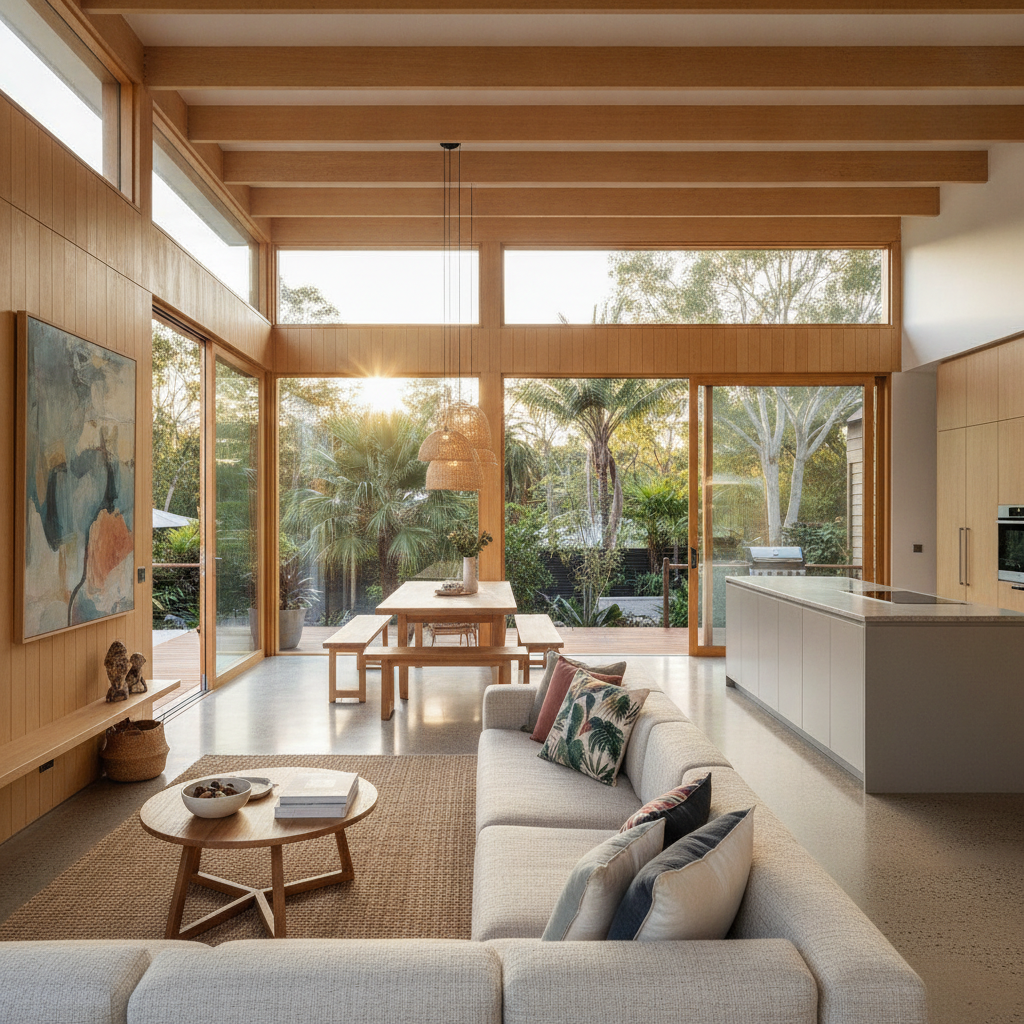
One of the best things about modern kit homes is the engineering. Because we're using cold-formed steel, the strength-to-weight ratio is through the roof. This matters for your lifestyle because it allows for those massive 5-metre or 6-meter openings. You want a stacker door that makes the wall disappear? Sticking a heavy timber lintel over that is a massive job for an owner builder. It's heavy, it's awkward, and it'll probably sag over time if it isn't sized perfectly. A steel lintel or a box beam integrated into your frame kit is light enough for two blokes to lift and it'll stay straight forever. No sticking doors. No funky gaps in the eaves.
Plus, let's talk about the nasty stuff. Termites. If you're building in Queensland or the Top End, timber in an outdoor area is basically a five-star buffet. Even treated stuff has its limits once you start cutting and drilling into it. Steel frames don't need toxic chemical sprays every few years. They're termite proof by nature. That gives you a bit of peace of mind when you're sitting out there with a cold one on a Friday arvo. You aren't literally hearing your house being eaten.
Materials and Texture
An alfresco area shouldn't just look like a shed stuck on the back of a house. It needs texture. Since your kit comes with the roofing and cladding, think about how you can mix those up. Maybe you use a standard Colorbond weatherboard-style cladding on the main house but switch to a vertical feature profile in the alfresco. It creates a visual break. It makes the space feel like a destination. I always reckon adding some natural timber elements, like a decking or some spotted gum screening, softens the look of the steel and glass. It's that balance between the 'hard' industrial strength of the kit and the 'soft' lifestyle feel.
Owner Builder Tips for the Outdoor Zone
If you're managing the build yourself, the alfresco is where you can really lose your shirt on the budget if you aren't careful. But it's also where you can add the most value. Here's a few things I've learned from 15 years in the game:
- Plumb it early: Even if you can't afford the outdoor kitchen now, get the plumber to run the gas, water, and waste lines through the slab or under the floorboards before you close everything up. Retrospective plumbing is a nightmare and costs three times as much.
- Lighting circuits: Don't just stick a single batten light in the middle. Run three separate circuits. One for task lighting (the BBQ), one for ambient dimmables over the dining table, and one for garden accents. It changes the whole vibe at night.
- Ceiling fans are non-negotiable: In Australia, a ceiling fan is the difference between a usable room and a sweatbox. Since your kit uses steel trusses, make sure you've got a noggin in place specifically for the fan mounting. You don't want that thing wobbling.
- Power points: You need more than you think. One for the bar fridge, one for the phone chargers, one for the electric bug zapper, and maybe one for a TV if you're that way inclined.
Practicality vs. Aesthetics
We all want that Pinterest-perfect look, but you've got to live in the thing. If you're building in a Bushfire Attack Level (BAL) zone, which heaps of us are these days, your material choices for the alfresco are strictly governed by AS 3959. This is where kit homes really shine. Because the frames, roofing, and many cladding options are non-combustible steel, you're already halfway to meeting those tough BAL-29 or BAL-40 requirements. You won't be messing around with expensive fire-rated timbers that need constant oiling. You just hose the steel down once every six months to get the salt or dust off, and it looks brand new.
Maintenance is the silent killer of lifestyle. If your 'lifestyle' involves spending every second Saturday on a ladder oiling timber rafters, you've done it wrong. By using pre-painted steel finishes for the fascia and gutters, and high-quality insulation in the roof cavity of the alfresco, you keep the heat out and the maintenance down. The insulation is a big one. People forget to insulate their alfresco roofs. Don't be that person. Without it, the radiant heat from the metal roofing will bake you from above, even if there's a breeze.
The Final Word on Flow
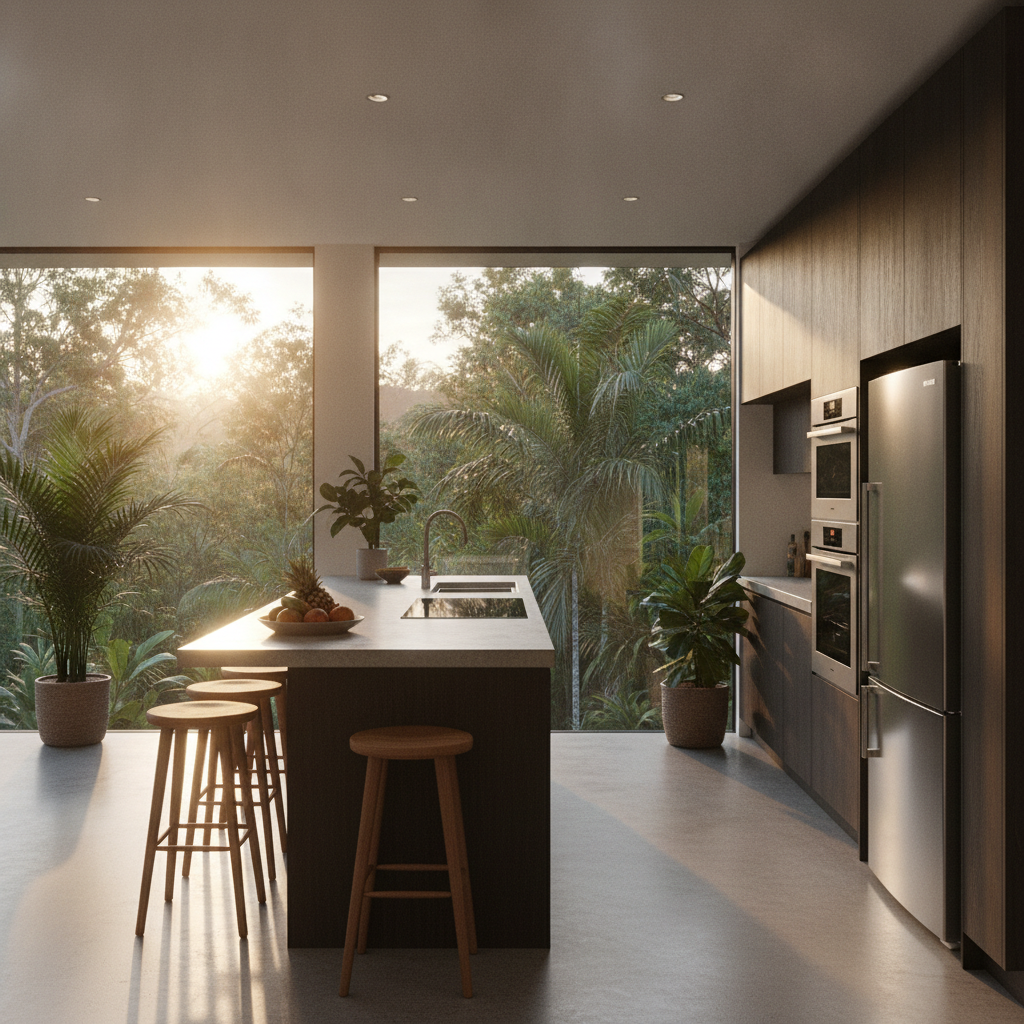
The transition from the kitchen to the alfresco is the heartbeat of a good Australian home. When you're looking at your kit plans, check the 'flow.' Can you see the kids in the pool from the kitchen sink? Is there a direct path from the fridge to the BBQ? These small design details matter way more than what colour your front door is. A kit home gives you the structural skeleton to get these things right from day one. You're building a house that works for the way we actually live, not just some Victorian-era layout with a bunch of tiny boxes for rooms. Keep it open. Keep it tough. And for heaven's sake, keep it out of the afternoon sun.