The Science of the Breeze: Why Layout Matters
When you are planning your dream kit home in Australia, it is easy to get caught up in the aesthetics of floor plans and kitchen finishes. However, one of the most critical technical decisions you will make happens well before the first steel frame is bolted into place. We are talking about airflow. In a climate as varied and often punishing as ours, the ability to cool your home naturally is not just a luxury, it is a fundamental building technique that saves money and improves your quality of life.
Natural cooling through cross ventilation is the process of using wind and pressure differences to pull fresh air through a living space. By understanding the basics of air movement, owner builders can design a home that remains comfortable during a scorching summer afternoon without relying solely on expensive air conditioning.
Understanding Wind Patterns on Your Site
Before you finalize your window schedule, you need to become an amateur meteorologist. Every block of land has its own microclimate. While the Bureau of Meteorology can give you general data about the prevailing winds in your region, local factors like neighbouring houses, large trees, and even the slope of your land will dictate how the breeze actually hits your home.
Typically, coastal areas in Australia benefit from afternoon sea breezes, while inland areas might rely on cooler evening gullies or southerly shifts. Spend time on your site at different times of the day. Identify where the breeze comes from and where it wants to go. This data is the foundation of your window placement strategy.
The Mechanics of Cross Ventilation
For cross ventilation to work effectively, you need two things: an inlet and an outlet. Think of your kit home like a straw. If you block one end, no air moves. To get a cooling effect, the air must be able to flow through the building, carrying heat out as it goes.
The Pressure Difference Rule
Air moves from high-pressure areas to low-pressure areas. When wind hits the side of your house, it creates a high-pressure zone. On the opposite side, a low-pressure zone (or a lee) is formed. By placing windows on both the windward and leeward sides of your home, you create a natural vacuum that draws the air through your living spaces.
The 45-Degree Trick
A common mistake is placing windows directly opposite each other in a straight line. While this works, it often creates a narrow stream of moving air that leaves the corners of the room stagnant. If you offset your windows or place them at a slight angle to the prevailing wind, the air is forced to circulate more broadly throughout the entire room, maximizing the cooling effect.
Choosing the Right Window Styles for Airflow
As an owner builder, you have a variety of window styles to choose from when ordering your kit. Each style interacts with the wind differently, and choosing the right one for each wall is a vital technical skill.
- Louvre Windows: These are the gold standard for ventilation in Australia. They offer nearly 100 percent of the window area for airflow and allow you to direct the breeze precisely by adjusting the blade angle. They are perfect for high-set windows that can be left open even during light rain.
- Casement Windows: These windows act like sails on a boat. Because they swing outward on a side hinge, they can catch breezes moving parallel to the wall and funnel them inside. If your home is not perfectly aligned with the prevailing wind, casements are your best friend.
- Awning Windows: These are hinged at the top and open outward from the bottom. While they provide decent ventilation and can stay open during rain, they are not as efficient at catching a breeze as casements or louvres because the sash can block direct airflow.
- Sliding Windows: These are popular and cost-effective, but remember that you can only ever open half of the window area at any one time.
The Importance of Thermal Mass and Steel Frames
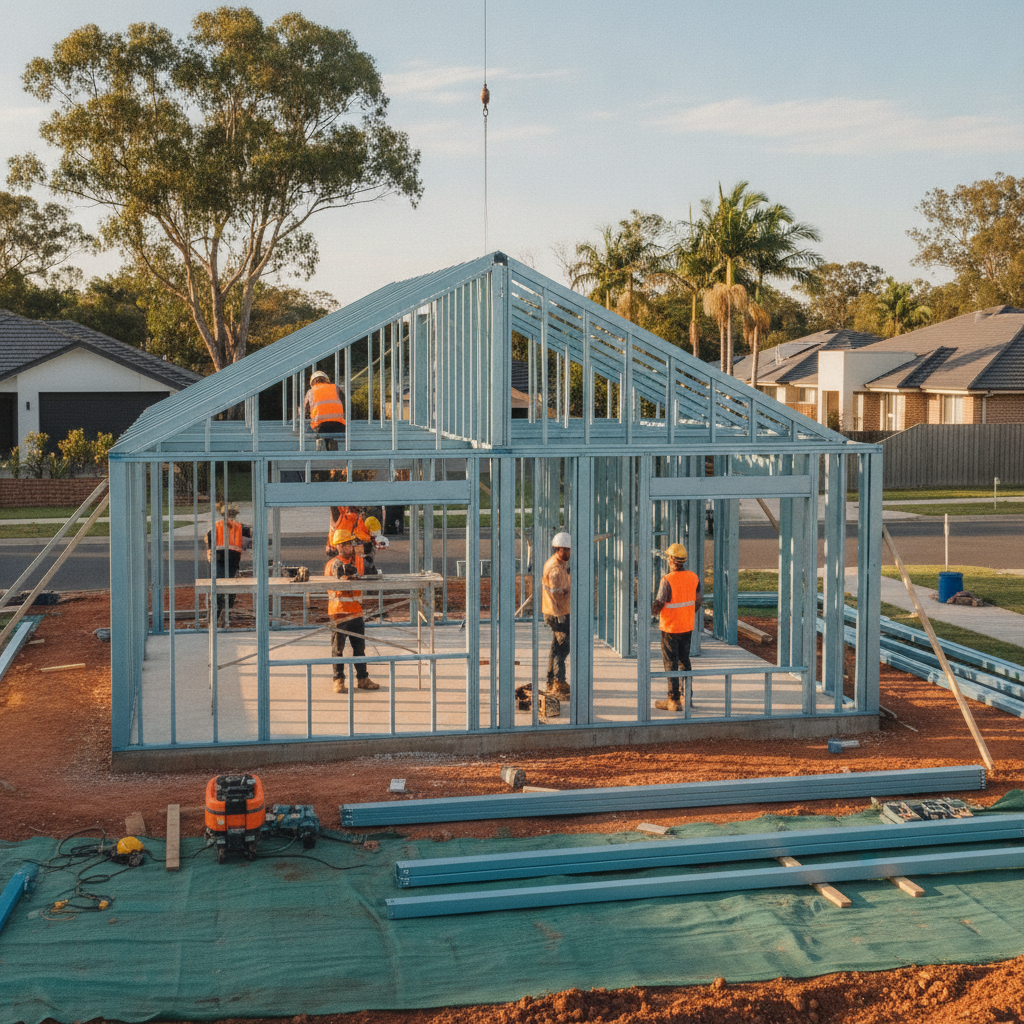
In a modern kit home, your structural choices play a role in how heat is managed. Using high-quality BlueScope TRUECORE steel frames provides a straight, true, and dimensionally stable skeleton for your home. This precision is vital because it ensures that large window openings and sliding doors fit perfectly and operate smoothly for decades. When your frames are square, your seals are tight, meaning when you want to shut the heat out, the house performs as intended.
Pairing your strategic window placement with high-quality insulation (which is typically included in your kit) creates a thermal envelope. The goal is to flush out the heat with the evening breeze and then seal the home in the morning to trap that cool air inside for as long as possible.
Practical Tips for Owner Builders
If you are currently in the planning phase of your kit home project, here are some actionable tips to ensure your cooling strategy works.
1. High and Low Placement
Hot air rises. This is known as the stack effect. By placing some windows or clerestory louvres higher up in your cathedral ceilings or above internal doors, you allow the rising heat to escape. Meanwhile, lower windows on the cool side of the house can draw in the denser, cooler air from ground level.
2. Consider the Internal Doors
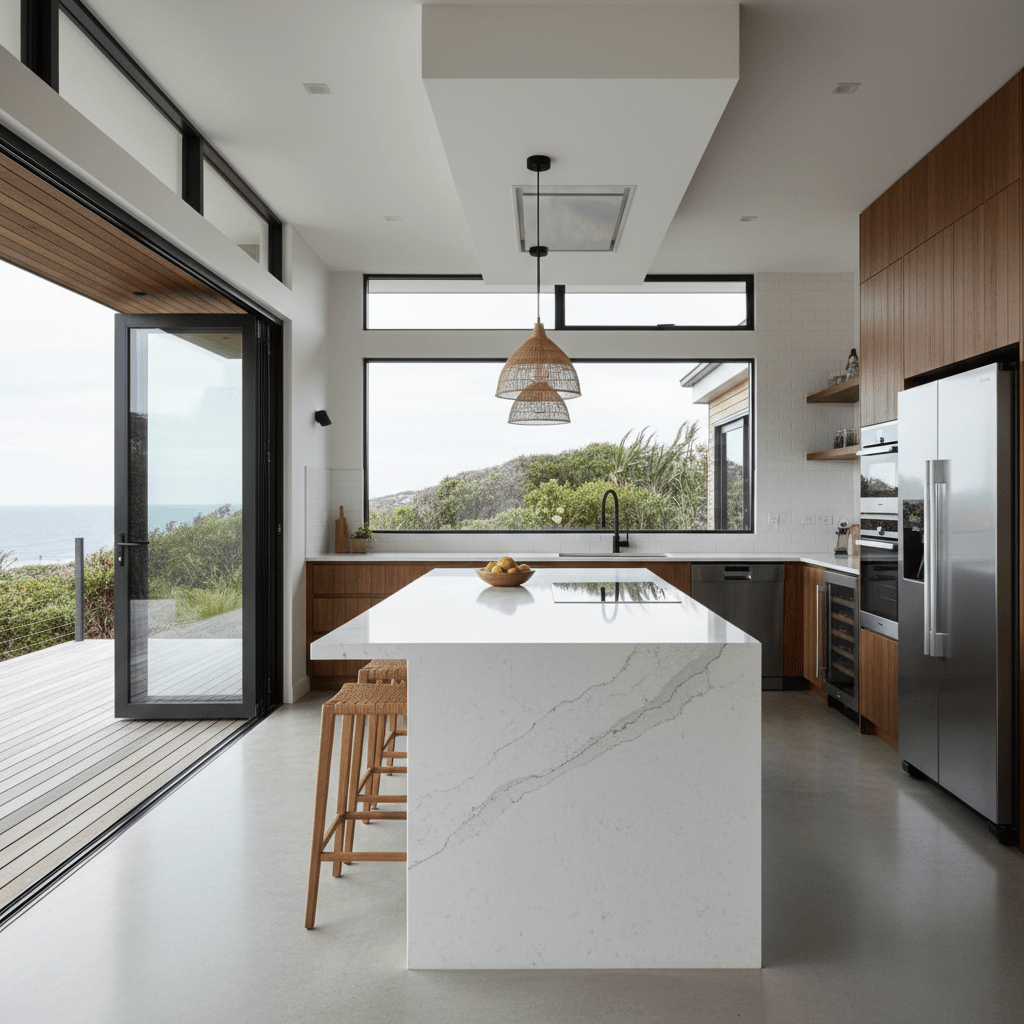
Cross ventilation does not stop at the external walls. If you have a hallway or a series of rooms, the breeze needs a path to travel. Consider using fretwork over doors, internal louvres, or simply planning your room layout so that there is a clear "breeze path" from one side of the house to the other.
3. Strategic Shading
A window in the sun is just a heater. To make natural cooling effective, you must prevent the sun from hitting the glass in the first place. Use the generous eaves often found in Australian kit home designs, or consider adding external awnings or planting deciduous trees on the northern and western sides. This ensures that the air being drawn into your home is as cool as possible.
4. Don't Forget Insect Screens
In Australia, leaving windows open means inviting in the local wildlife. Ensure your window selection includes high-quality flyscreens that do not overly restrict airflow. Stainless steel mesh is a great option for durability and clearer views.
Designing for the Future
As we see more extreme weather patterns across Australia, the technical side of home design becomes even more important. A home that can cool itself is a resilient home. It is less dependent on the electricity grid and provides a healthier living environment by constantly cycling fresh air through the rooms, which reduces the buildup of allergens and moisture.
When you sit down to look at your kit home plans, don't just look at where the furniture will go. Imagine the air moving through the space. Imagine the feel of a cool southerly breeze hitting your face while you sit in the lounge room. That level of comfort is achieved through smart, technical planning during the design phase.
Conclusion
Building your own home as an owner builder is an empowering journey. By mastering techniques like strategic window placement and cross ventilation, you are doing more than just putting up walls, you are creating a home that works with the Australian environment rather than against it. Utilizing the strength and precision of steel frames as your base, and combining it with a deep understanding of site-specific airflow, you can ensure your home remains a sanctuary of cool, fresh comfort for many years to come.