Taking the Reins: Your Journey as an Owner Builder
There is a unique sense of pride that comes with building your own home. In Australia, the kit home movement has empowered thousands of people to move away from cookie cutter developer estates and toward a more hands-on, custom approach. However, transitioning from a dreamer to an owner builder requires a shift in mindset. You are no longer just the client, you are the project manager, the HR department, and the quality control officer all rolled into one.
Managing a kit home project involves coordinating various moving parts. While the kit provider supplies the critical structural components, like the BlueScope steel frames, roofing, and cladding, the successful assembly and completion of the home rest on your ability to manage the site. This guide explores the essential project management pillars every first-time owner builder needs to master to ensure their Australian kit home build remains on track and rewarding.
Understanding the Owner Builder Scope
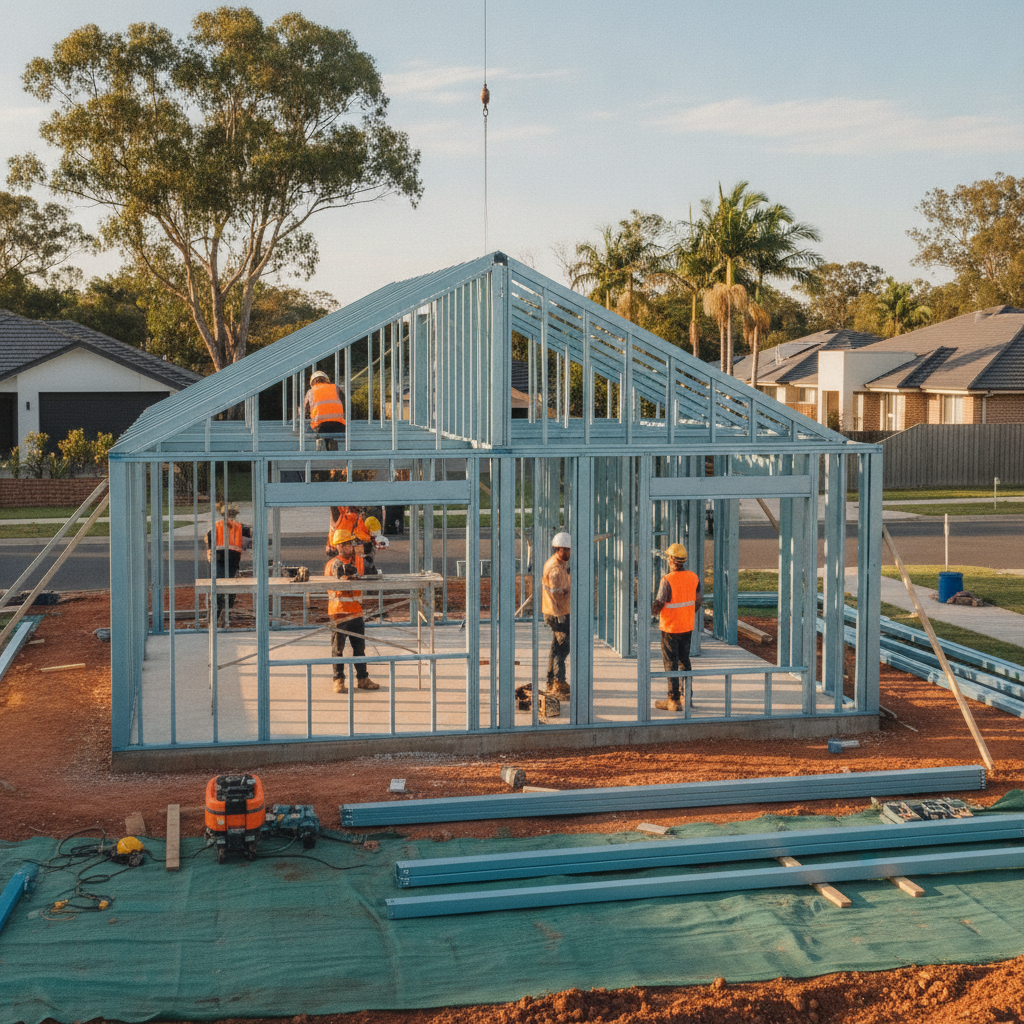
Before the first truck arrives on site, it is vital to understand exactly where your responsibilities begin and end. With a kit home, you aren't just buying a pile of materials; you are buying a system. Your kit provider generally handles the design, engineering, and the supply of the structural 'shell'. This includes the TRUECORE steel wall frames, roof trusses, external cladding, windows, and doors.
As the owner builder, your job is to manage the 'everything else'. This involves site preparation, coordinating the concrete slab or flooring system, hiring licensed plumbers and electricians, and overseeing the internal fit-out. Recognizing this boundary early prevents gaps in your planning and ensures you don't find yourself waiting for a trade that you forgot to book.
The Power of the Master Schedule
In the world of construction, time is just as valuable as physical materials. A common mistake for first-time builders is relying on a mental checklist. Real project management requires a documented master schedule. This isn't just about when the frames arrive; it is about the sequence of events that must happen before and after.
Sequencing Your Trades
Construction follows a logical flow. You cannot install insulation before the roof is on, and you cannot hang plasterboard until the 'rough-in' for plumbing and electrical is complete. When building with steel frames, you have the advantage of precision. Steel doesn't warp or twist, meaning your walls are straight from day one, which makes the job of your following trades much easier. However, you still need to book these trades well in advance. In the current Australian building climate, good tradespeople are often booked out months ahead. Reach out to your preferred sparky and plumber the moment your permits are approved.
Site Logistics and Delivery Management
Imagine a semi-trailer arriving at your property with several tonnes of high quality steel frames, only to find the driveway is too narrow or the ground is a boggy mess. Successful project management starts with site access. You need to ensure there is a clear, hard stand area for delivery trucks to unload.
Once the kit arrives, organization is your best friend. Don't just let the driver drop the packs anywhere. Think about the build sequence. Store your roofing and cladding in a way that allows you to access the wall frames first. Use pallets or timber gluts to keep materials off the ground and cover them with waterproof tarps to protect them from the harsh Australian elements until they are ready to be installed.
Communication: The Owner Builder's Greatest Tool
You don't need to be a master carpenter to be a great owner builder, but you do need to be a master communicator. Your role is to bridge the gap between the kit supplier's plans and the tradespeople's execution. Always have multiple sets of the engineering drawings and assembly manuals on site. If a sub-contractor has a question, the answer is usually in the documentation.
When communicating with trades, be clear and concise. Use written summaries of conversations to ensure everyone is on the same page. If you have chosen a steel frame kit, make sure your plumber and electrician know they are working with steel. They will need specific tools, such as plastic grommets for running cables and pipes through the pre-punched holes in the steel studs, to prevent any rubbing or damage. Providing this heads-up shows you are a professional manager who respects their time and expertise.
Quality Control and Compliance
As an owner builder, you are ultimately responsible for the quality of the work. This means you need to be on site regularly. You don't need to hover over your trades, but you should inspect the work at the end of each day. Check that the frames are being anchored correctly to the slab and that the weatherproofing membranes are installed without tears.
Compliance is another critical factor. Every state in Australia has specific regulations for owner builders, often requiring you to complete a short course to obtain a permit. Beyond the permit, you must ensure that all 'prescribed' work, like electrical, plumbing, and gas, is carried out by licensed professionals who can provide certificates of compliance. Keeping a tidy folder with all your certificates, warranties, and inspection reports is a project management essential that will make the final council sign-off a breeze.
Managing the 'Middle Phase': From Lockup to Living
The phase between receiving your kit and reaching 'lockup' (when the doors and windows are in and the house is secure) is often the fastest and most exciting. However, the momentum can often slow down during the internal fit-out. This is where your project management skills are truly tested. Managing the delivery of kitchen cabinetry, tiling, and painting requires a fine-tuned schedule.
A helpful tip for this stage is to work backwards from your desired move-in date. If you want to be in by Christmas, when do the floors need to be finished? If the floors take a week, when does the painting need to be completed? Setting these internal deadlines keeps the project moving and prevents the 'drifting' that can happen when the structural work is done but the finishing touches seem endless.
Safety First on the Australian Job Site
A project is only successful if everyone goes home safe at the end of the day. As the person in charge of the site, you have a duty of care. Ensure your site is fenced if required by local regulations, maintain a first aid kit, and ensure everyone wearing high-vis and appropriate footwear. Managing site safety isn't just about following rules; it is about creating an environment where tradespeople feel respected and safe, which invariably leads to better quality work.
The Reward of the Hands-On Approach
Building a home is a marathon, not a sprint. There will be days when the weather doesn't play ball or a delivery is delayed. The key to successful project management is resilience. When things don't go perfectly, take a breath, consult your plans, and adjust your schedule.
The beauty of the Australian kit home model is that it offers a structured path to a custom home. By using high quality materials like BlueScope steel and following a systematic approach to project management, you can bypass the stresses of traditional volume building. You gain an intimate knowledge of your home, from the slab up to the ridge capping, ensuring that the final result is exactly what you envisioned for your Australian lifestyle.
Final Thoughts for First-Timers
Being an owner builder is one of the most challenging and rewarding projects you will ever undertake. By focusing on clear communication, rigorous scheduling, and a deep understanding of your kit components, you set yourself up for a smooth build. Remember, you aren't just building a house; you are managing the creation of your future home. Stay organized, stay informed, and enjoy the process of bringing your vision to life on your own piece of Australia.