Taking the Reins: Your Journey as an Owner Builder
There is a unique sense of pride that comes from standing in a home you helped bring to life. In Australia, the owner builder path has become an increasingly popular route for those who want more control over their living space and a deeper connection to the construction process. When you choose a kit home, you are effectively bridging the gap between a full custom build and a managed project. You get the benefit of a pre-engineered system, but the responsibility for bringing it all together sits squarely on your shoulders.
Project management is the heartbeat of any successful build. For a first-timer, the task can seem daunting. You are not just a homeowner anymore, you are the project manager, the scheduler, the quality control officer, and the primary point of communication for every tradesperson on site. Navigating this successfully requires a blend of organization, clear communication, and a solid understanding of the Australian building landscape.
Understanding the Owner Builder Role
Before you even pick up a hammer or sign for your first delivery, you need to understand what being an owner builder legally and practically entails. In most Australian states, you will need to obtain an Owner Builder Permit from your local building authority (such as the VBA in Victoria or Fair Trading in NSW). This process usually involves a short course that covers the basics of safety, legal obligations, and site management.
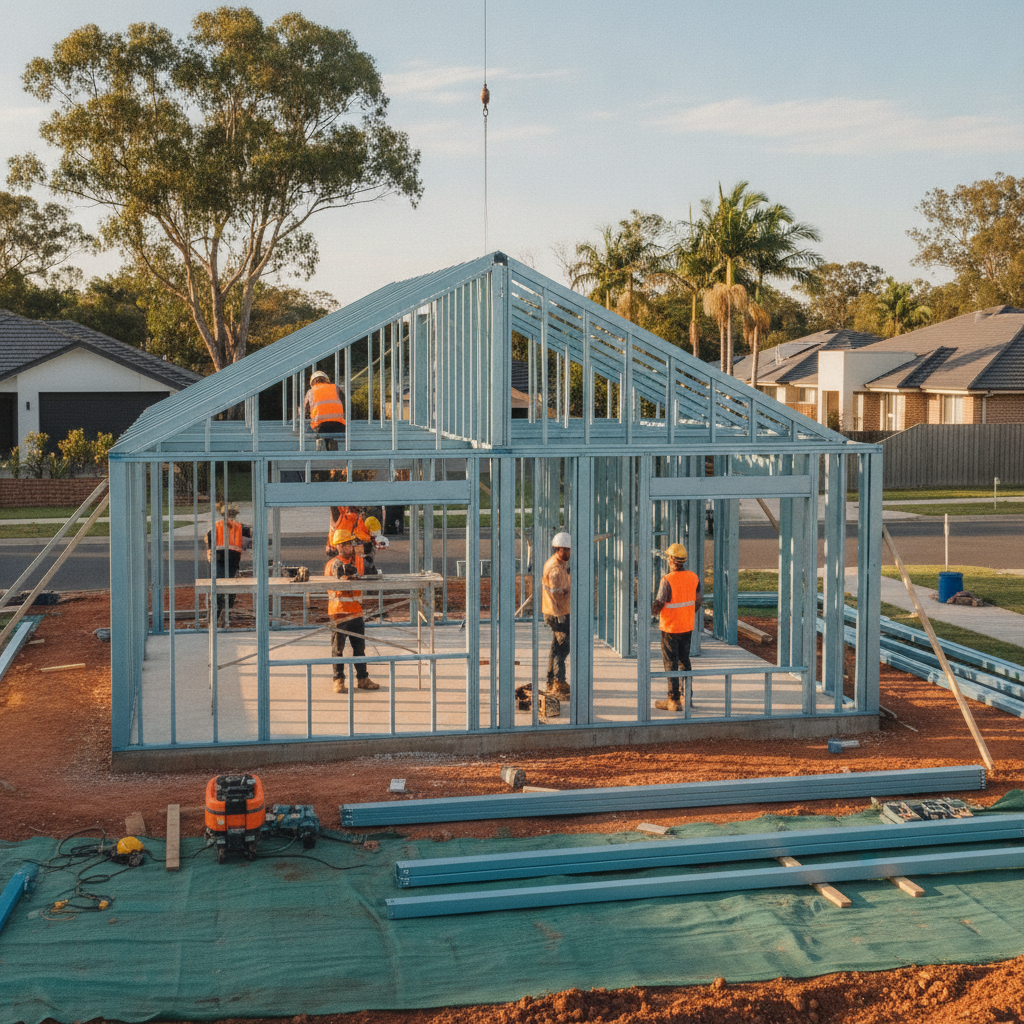
As the project manager, your job is to coordinate the sequence of events. While a kit home provides the structural components, such as the high-quality BlueScope TRUECORE steel frames, roofing, and cladding, you are the one who ensures the slab is poured correctly, the site is accessible for delivery, and the plumbers and electricians are ready to go when the frames are up.
The Importance of Sequence and Scheduling
One of the biggest mistakes first-time builders make is getting the sequence of trades wrong. Construction is a linear process where one stage relies heavily on the quality of the previous one. If your slab is not perfectly level, your steel frames will be difficult to plumb. If your windows are not installed correctly, your internal fit-out will be at risk of weather damage.
Create a master schedule long before the kit arrives. A simple spreadsheet or a project management app can work wonders. You should map out the following key phases:
- Site Preparation and Earthworks: Clearing the land and ensuring drainage is managed.
- Foundation and Slab: Working with a concreter to ensure the base matches the engineering specifications of your kit.
- Kit Delivery and Sorting: When the truck arrives with your steel frames, cladding, and components, you need a clear, flat space to store them safely.
- The Frame Stage: Standing the frames and securing them to the slab.
- The Enclosure (Lock-up): Installing the roofing, external cladding, windows, and doors to make the structure watertight.
- Rough-in: Getting the electrical and plumbing lines inside the walls before the internal lining goes up.
- Internal Fit-out: Insulation, plasterboard, flooring, and cabinetry.
Communication: Speaking the Language of Trades
Your success as a project manager depends on your ability to talk to tradies. Realize that most contractors are busy and manage multiple jobs at once. To get the best out of them, you need to be professional, clear, and prepared.
Always have a written scope of work for every trade you hire. Don't just say, "I need some plumbing done." Instead, show them your kit home plans and list exactly what you need: "Installation of pipes for one kitchen, two bathrooms, and a laundry, including rough-in and final fit-off." When everyone is on the same page, the risk of disputes or errors drops significantly.
Tip: Be the person who makes the site easy to work on. A clean site with clear access and a temporary toilet will make you the favourite client of every electrician and carpenter in town. Happy tradies often result in better quality work.
Managing Deliveries and Inventory
A kit home is a sophisticated jigsaw puzzle. When your delivery arrives, it includes everything from the heavy-duty steel wall frames to the specific screws, brackets, and insulation required to finish the shell. One of your essential project management tasks is inventory control.
As soon as the delivery truck departs, use the packing list provided to check off every item. Organizing your materials by stage is a pro move. Keep your roofing screws away from your framing bolts, and ensure your windows are stored upright and protected from flying debris on site. Using steel frames, like those made from TRUECORE steel, offers a significant advantage here because they are dimensionally accurate and won't warp or twist while sitting on site, unlike traditional timber which can be affected by the Australian sun and rain.
Quality Control and Compliance
You don't need to be a builder to recognize good work, but you do need to be observant. As the project manager, you must be present on site during key crossovers. Before the plasterers cover the walls, walk through with your electrician and plumber to ensure every power point and tap is in the right place according to your design.
Remember that you will have mandatory inspections by a Building Surveyor or Certifier. Common inspection points include the foundation/footings, the slab, the frame, and the final completion. Work closely with your surveyor to understand exactly what they need to see at each stage. Having your kit home's engineering certificates and manuals ready for them will make these inspections go much smoother.
Safety First, Always
The Australian construction industry has strict Work Health and Safety (WHS) requirements. As an owner builder, you are responsible for the safety of anyone who enters your site. This includes providing a safe work environment, ensuring people have the correct White Card certification, and managing risks like falls from heights or electrical hazards.
Ensure your site is fenced off to prevent unauthorized access. Keeping the site tidy is not just about aesthetics, it is about preventing trips and accidents. Investing in good site signage and having a first aid kit on hand are small steps that make a massive difference in your professionalism as a manager.
The Mental Game: Handling the Unexpected
Every building project, no matter how well planned, will hit a snag. It might be three weeks of unplanned rain, a delayed window delivery, or a trade that falls ill. The difference between a stressed owner builder and a successful one is the ability to adapt.
Build a buffer into your timeline. If you think the framing will take two weeks, allow three. This reduces the pressure on subsequent trades and gives you breathing room to fix small issues. Staying calm and focused on the solution rather than the problem will keep the project moving forward.
Why Kit Homes Support the Owner Builder Lifestyle
The beauty of the kit home approach is that it provides a structured framework within which you can exercise your project management skills. Because the engineering is largely handled by the kit provider, and the steel frames arrive pre-punched for services, a lot of the technical guesswork is removed. This allows you to focus on the "big picture" management tasks that truly define the quality and feel of your finished Australian home.
By choosing high-quality materials like BlueScope steel and coordinating your local trades effectively, you aren't just building a house, you are building a legacy. You gain an intimate knowledge of how your home works, from the roof drainage to the internal wiring, which is invaluable for long-term maintenance and future renovations.
Final Thoughts for Success
Being an owner builder is a marathon, not a sprint. It requires patience, a willingness to learn, and an eye for detail. Start with a clear plan, treat your trades with respect, and stay organized with your documentation. The process of turning a delivery of steel frames and cladding into a finished family home is one of the most rewarding challenges you can undertake in the Australian property market.
Take it one stage at a time, keep your site clean, and don't be afraid to ask questions. Every expert was once a beginner, and with the right kit and a solid project management approach, you are well on your way to creating a home that is uniquely yours.