The Owner Builder Journey: From Dream to Doorstep
Taking on the role of an owner builder in Australia is one of the most rewarding challenges you can set for yourself. There is something uniquely satisfying about standing in a room and knowing you coordinated the trades, managed the deliveries, and perhaps even bolted the frames together yourself. However, the difference between a smooth kit home project and a chaotic one almost always comes down to one thing: organization.
When you choose a kit home, you are stepping into the driver seat. You are the project manager, the site foreman, and the primary point of contact. While the kit provider supplies the critical structural components like the TRUECORE steel frames, roofing, cladding, and windows, the orchestration of the build falls on you. This guide is designed to help you navigate that journey with a clear head and a tidy site office.
Establishing Your Command Centre
Before the first truck arrives on site, you need a system for managing information. Modern kit homes involve a significant amount of documentation, including engineering plans, council approvals, and assembly manuals. As an owner builder, you cannot afford to be hunting for a plumbing layout while a contractor is waiting for instructions.
Create a physical site folder and a digital backup. Your physical folder should be weather-resistant and contain hard copies of your site plan, floor plans, and the specific assembly guides for your steel frames. Digitally, use a cloud-based storage system so you can pull up your delivery schedules or window specifications on your phone or tablet while standing in the middle of your building pad.
The Power of the Master Schedule
Timing is everything in construction. One of the most common pitfalls for first-time builders is the 'domino effect,' where one delay ripples through the entire project. To stay organized, you need a master schedule that goes beyond a simple to-do list.
Break your project into clear phases. For a kit home, this usually looks like:
- Phase 1: Site preparation and slab/footing installation.
- Phase 2: Delivery and arrival of the kit.
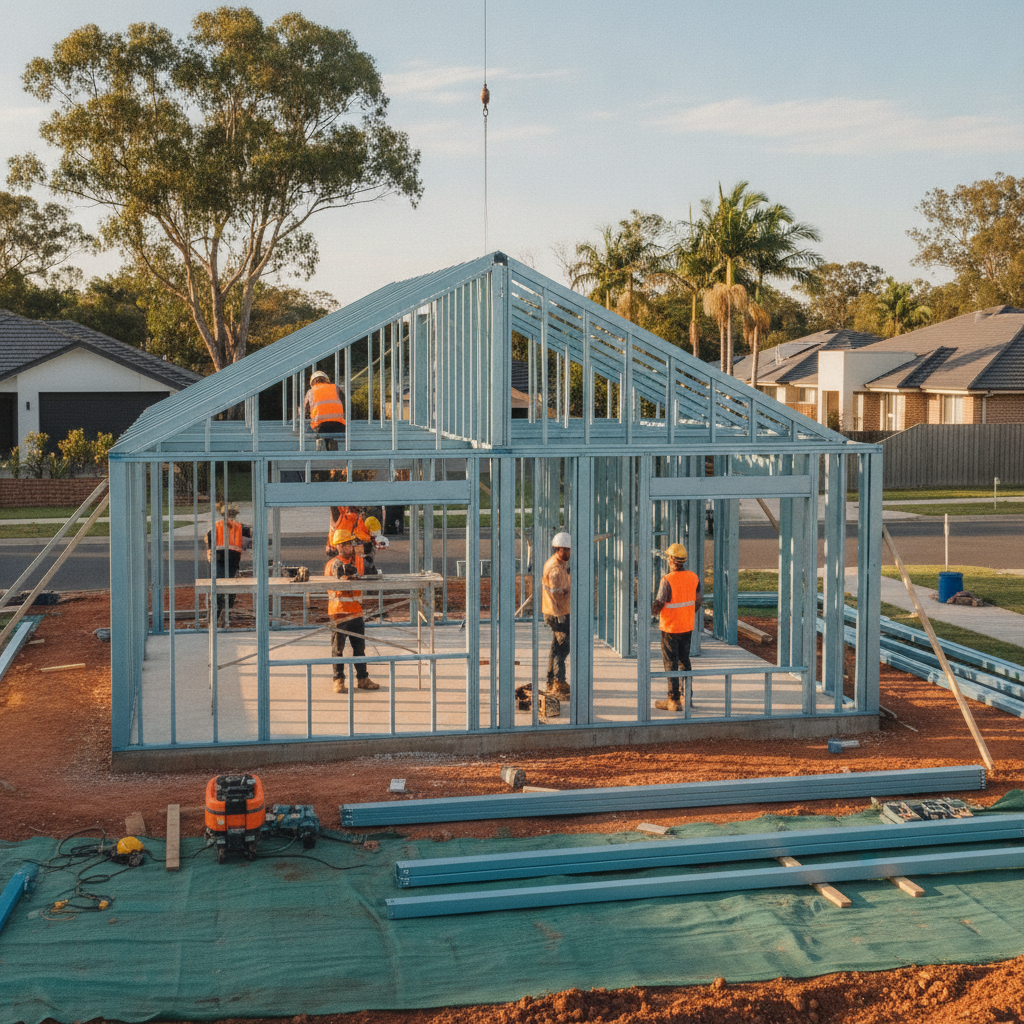
- Phase 3: Standing the steel frames and trusses.
- Phase 4: Fixing the roofing and external cladding.
- Phase 5: Installation of windows and external doors.
- Phase 6: Internal fit-out and services (plumbing and electrical).
As an owner builder, you need to work backward from your desired move-in date. Contact your trades early. Good carpenters, plumbers, and electricians in Australia are often booked out weeks or months in advance. Confirm their availability around the time your kit is expected to arrive.
Managing Deliveries and Site Logistics
When your kit home arrives, it is a massive logistical event. You aren't just receiving a few boxes; you are receiving the bones of your house. In an Australian kit home context, this means bundles of BlueScope steel, rolls of insulation, stacks of cladding, and crates of windows.
Organization on delivery day is critical. Ensure there is a clear, flat area for the truck to unload. Use timber dunnage (blocks of wood) to keep your steel frames and cladding off the ground and away from moisture. Group your materials by their order of use. For example, keep your floor joists or wall frames easily accessible, while tucking the internal doors and trim further back in a secure, dry area.
Pro tip: Check your inventory immediately. Cross-reference the delivery docket with the items on the ground. It is much easier to resolve a missing box of fasteners on day one than it is three weeks later when you are halfway through a wall assembly.
Effective Communication with Trades
Even though you are the owner builder, you likely won't be doing every single task. Managing trades is where many projects get messy. To stay organized, treat every interaction with a contractor as a professional agreement.
When you hire a plumber or an electrician, provide them with a 'Tradie Pack.' This is a simplified set of plans and a clear scope of works. Don't rely on verbal instructions. If you want a specific power point location or a particular tapware height, put it in writing and mark it on the floor or wall studs if possible. This reduces mistakes and ensures that your vision for the kit home is executed accurately.
Working with Steel Frames: A Builder's Advantage
One of the best ways to stay organized during the structural phase is by using steel frames. Because steel frames are manufactured to millimetre-perfect specifications, they arrive labeled and ready to be bolted together. Unlike traditional timber, which might require on-site straightening or sorting through warped studs, steel stays straight and true.
For the owner builder, this means less time spent fixing errors and more time moving forward. When you are assembling your TRUECORE steel frames, follow the layout drawings provided in your kit. Use a system of 'marking off' each section as it is completed. This visual progress report keeps your motivation high and your site plan accurate.
Maintaining a Safe and Tidy Site
A messy site is a dangerous and disorganized site. At the end of every day, spend thirty minutes cleaning up. Pick up offcuts, sweep the slab, and organize your tools. This isn't just about aesthetics; it is about efficiency. When you arrive the next morning, you can start working immediately rather than spending an hour moving rubbish out of the way.
Organize your fasteners and small components into labeled bins. Kit homes come with various screws, bolts, and brackets. If they are all tossed into one bucket, you will waste valuable hours searching for that one specific tek screw. A simple clear-plastic organizer from the local hardware store can save you more time than you might think.
Documentation for Occupation Certificates
The final hurdle of the owner builder journey is getting your final sign-off or Occupation Certificate. If you haven't been organized with your paperwork throughout the build, this can be a nightmare. In Australia, you need to provide certificates of compliance for various stages, such as termite protection, glazing, waterproofing, and electrical work.
Keep a dedicated 'Compliance Folder.' Every time a trade finishes a stage, ask for their certificate on the spot. Don't wait until the end of the project to chase them up. Having an organized file of every inspection report and trade certificate makes the final council or certifier walkthrough a breeze.
The Importance of Flexibility
Being organized doesn't mean being rigid. In the Australian building industry, you have to expect the unexpected. Weather events, delivery delays, or a flu-stricken tradie can throw a wrench in your plans. The key to staying organized during these hiccups is having a 'Plan B.' If it is raining and you can't work on the roof, use that time to organize your internal fit-out materials or finalize your kitchen design. An organized builder always has a productive task waiting in the wings.
Conclusion: Your Dream, Managed Well
Building your own kit home is a marathon, not a sprint. By implementing these organizational strategies, you shift from being a stressed-out laborer to a confident project manager. Remember that the kit provider gives you the high-quality materials, like the durable steel frames and cladding, but you provide the vision and the management that turns those materials into a home.
Stay focused on your master schedule, keep your site clean, and maintain clear communication with everyone involved. Before you know it, those steel frames will be standing tall, and you will be walking through the front door of a home you built yourself. The effort you put into organization today will pay dividends in the quality and enjoyment of your home for decades to come.