The Organized Owner Builder: More Than Just a Clean Site
So, you've decided to take the plunge. You've got the block of land, you've picked out a cracking kit home design, and your delivery of BlueScope steel frames is ready to roll. It's an exciting time, but if we're being fair dinkum, it's also a lot to wrap your head around. Being an owner builder means you're the boss, the site manager, and often the chief bottle washer all at once.
One thing that catches people off guard is just how much paperwork and scheduling is involved before you even pick up a hammer. It's not just about nailing boards or bolting steel. It's about coordination. If the plumber shows up on the same day the windows are being delivered and there's no space for the truck to park, you've got a headache on your hands. Staying organized isn't just a 'nice to have' skill. It's the difference between a smooth build and a total nightmare.
The Central Nervous System: Your Project File
Don't rely on your memory. Ever. You think you'll remember the specific gauge of the screws or the contact number for the council inspector, but you won't. Not when you're three months deep and haven't had a proper weekend off. You need a physical or digital project bible.
We've seen plenty of folks try to wing it with a few loose sheets of paper in the ute. Don't be that person. Grab a heavy duty ring binder or a dedicated tablet app. This should hold everything from your council permits and engineering drawings to your insulation specs and cladding details. When a sparky asks you a question on site, you want to be able to find the answer in seconds, not spend twenty minutes digging through your emails while he charges you by the hour.
Managing the Arrival of Your Kit
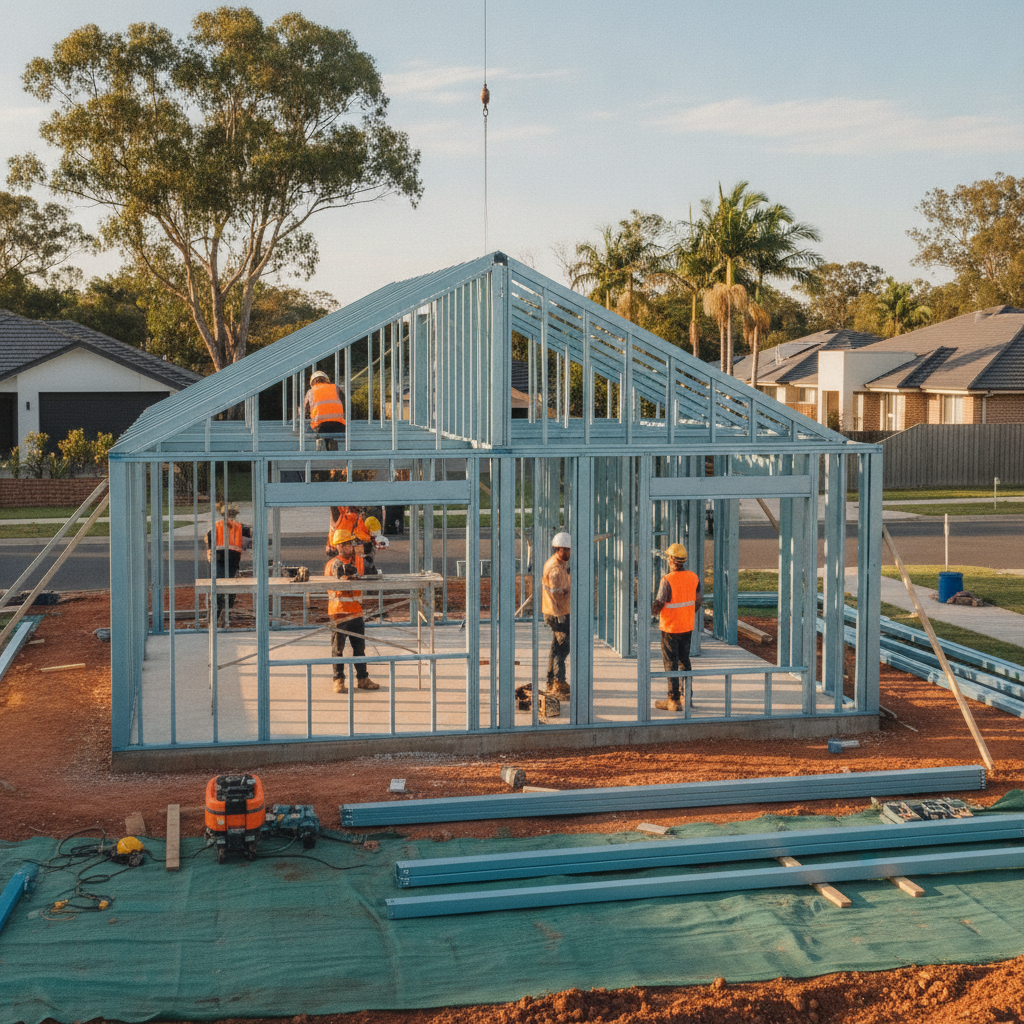
When your kit home arrives, it's a big moment. Usually, you'll see a truck loaded with TRUECORE steel frames, roofing, and all your windows and doors. But where is it all going to go? Have you sussed out a flat, dry area for storage?
Steel frames are tough, but they still need to be treated with respect. Organize your site so the items you need first are the most accessible. There's no point burying your bottom plates under three tons of roofing iron. Think of it like a puzzle. You want to offload in a way that minimizes double handling. Every time you move a component because it's in the way, you're wasting time and energy. And believe us, you'll want to save that energy for the actual building part.
The Tradie Dance: Scheduling Like a Pro
This is where most first timers get tripped up. You're responsible for booking the trades that aren't part of the kit process, like your concreters, electricians, and plumbers. The trick? Build in buffer zones. If the slab pour is scheduled for Tuesday, don't book the frame assembly for Wednesday. What if it rains? What if the concrete truck breaks down?
Give yourself at least a two or three day window between major stages. Reach out to your trades early. Good tradies in Australia are usually booked out weeks, if not months, in advance. A quick phone call a fortnight before they're due to show up can save a lot of grief. Just a simple, "Hey mate, we're still on track for next Thursday," goes a long way. It keeps you on their radar and ensures they don't fill your slot with another job because they hadn't heard from you.
Site Safety and Cleanliness
A messy site is a dangerous site. It's also a slow one. Imagine trying to find a specific bracket in a pile of offcuts and empty lunch wrappers. Not exactly efficient, is it? Make it a rule to spend the last 20 minutes of every day cleaning up. Stack the timber, sweep the slab, and put the tools away.
But it's not just about being tidy. It's about safety. As an owner builder, the buck stops with you if someone gets hurt on your land. Keep your access ways clear. Make sure the site is secure when you leave for the arvo. A few minutes of housekeeping prevents accidents and keeps your subcontractors happy. Nobody likes working in a pigsty.
Communication is the Secret Sauce
Ever wondered why some builds seem to hum along while others are constant friction? It usually comes down to how well the owner builder talks to their team. Be clear about what you expect. If you want the windows installed a certain way or the insulation tucked into every corner, say so. Don't assume people will just know what you want.
Take heaps of photos too. Take photos of the plumbing in the slab before it's poured. Take photos of the electrical runs before the internal lining goes on. These are your 'X-ray' vision for the future. If you ever need to hang a heavy picture or fix a leak years down the line, you'll be glad you have that visual record of what's behind the walls.
The Importance of the Checklist
There's a certain satisfaction in ticking a box. It sounds simple, but a master checklist is your best friend. Break the build down into phases:
- Pre-site works and slab
- Frame and roof installation
- Lock-up stage (windows, doors, cladding)
- Internal fit-out
- Final inspections and landscaping
Within each of these, have a sub-list. Did the termite protection get installed? Are the window flashings correct? Have the roof tie-downs been checked? Don't move to phase two until phase one is 100% sorted. Cutting corners to save a day now will almost certainly cost you a week later on.
Don't Forget to Breath
Building your own home is a marathon, not a sprint. You're going to have days where everything goes wrong. The weather turns foul, a delivery is late, or you realize you've read a plan slightly wrong. It happens to the best of us. Take a breather. Have a barbie with the family and remember why you're doing this in the first place. You're creating a home, not just a structure.
Stay flexible. If a supplier tells you there's a delay on a particular type of cladding, see if there's another task you can pull forward. Maybe you can start on some of the yard work or organize the internal doors instead. A stagnant site is a morale killer, so keep the momentum moving, even if it's just in small ways.
Smart Tool Management
Where's the drill? Who had the laser level last? If you're spending half your morning looking for tools, you're burning daylight. Even a simple shadow board in a shipping container or a dedicated tool trailer can make a world of difference. Label your chargers. Keep your batteries together. It sounds fussy, but it works.
And speaking of tools, make sure you've got the right ones for working with steel. If your kit uses TRUECORE steel, you'll need the right bits and fasteners. Using the wrong gear won't just frustrate you, it could compromise the build. Being organized means having the right equipment ready before the job starts, not running to the hardware store three times in one morning.
The Finish Line
As you get closer to the end, the list of tiny finishing jobs seems to grow instead of shrink. This is the 'snag list' phase. Paint touch-ups, door handles, skirting boards. It can be tempting to move in early and tell yourself you'll finish those bits later. Spoiler alert: you won't. Once the couch is in and the TV is up, those unfinished bits will stay unfinished for years. Push through. Stay organized right until the council signs off on that final certificate. You've come this far, finish it like a pro.
Being an owner builder is a massive challenge, but it's incredibly rewarding. When you're sitting on your new deck, watching the sun go down, you'll know every screw and every beam was handled under your watch. No worries at all.