The Foundation of Success: Why Site Prep Matters
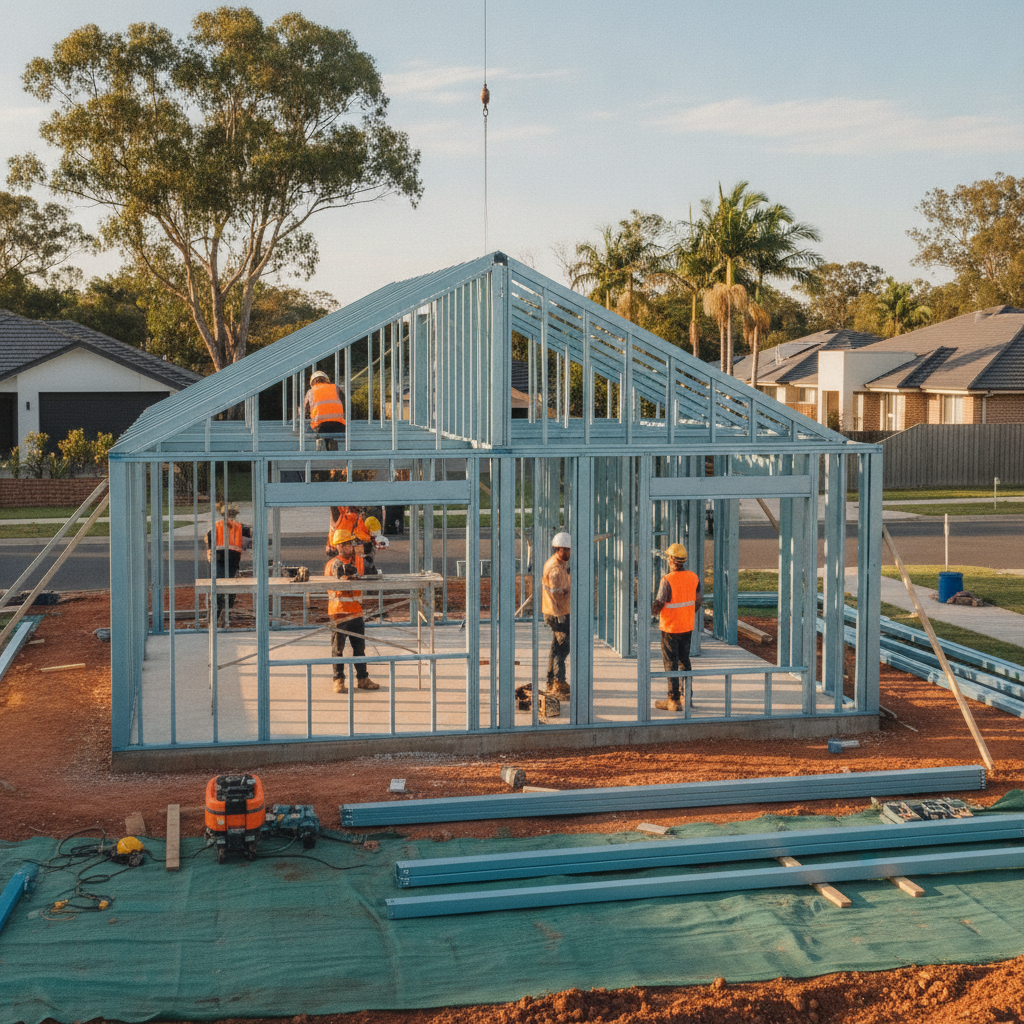
There is a unique sense of excitement that comes with the arrival of your kit home delivery. Seeing those steel frames and cladding materials arrive on site is the moment your dream starts to look like a reality. However, for many Australian owner-builders, the hard work begins well before the truck pulls into the driveway. In the world of construction, the difference between a smooth assembly and a logistical nightmare usually comes down to one thing: site preparation.
Whether you are building a coastal retreat or a rural homestead, the way you prepare your land dictates the longevity and safety of your home. Site preparation is more than just clearing a few weeds. It involves technical earthworks, drainage considerations, and the precision required to ensure your slab or flooring system is ready to receive a technical steel frame. In this guide, we will break down the essential building techniques required to get your site ready for a kit home delivery.
Understanding Your Soil and Site Classification
Before any machinery touches your land, you need to know what you are working with. In Australia, soil classification is a critical first step. Every site is different, and the composition of your earth will dictate what kind of footings or slab design you need. A geotechnical engineer will conduct a soil test to determine the reactivity of the ground, classifying it from Class A (stable, sandy sites) through to Class P (problem sites with reactive clay or soft soil).
Why does this matter for your kit home? Because steel frame kit homes are precision engineered. They are designed to sit on a perfectly level surface. If your site prep does not account for soil movement, you risk structural issues down the line. Getting your soil test early ensures that your concrete slab or sub-floor system is engineered specifically for your patch of dirt.
Clearing the Site and Establishing Access
When that delivery truck arrives, it is often carrying a significant amount of weight in the form of BlueScope steel frames, roofing, and cladding. One of the most common mistakes owner-builders make is failing to provide adequate access. You need to ensure there is a clear, wide, and firm path for heavy vehicles to enter and exit the property.
Start by clearing the building envelope of any vegetation, large rocks, or debris. You should aim for a perimeter of at least three to four meters around the actual footprint of the house to allow for scaffolding and ease of movement during the build. If your site is rural, consider the turn-around space for a semi-trailer. There is nothing worse than a delivery driver being unable to reach the drop-off point because of a narrow gate or a muddy track.
The Art of Earthworks and Levelling
In terms of building techniques, professional earthworks are non-negotiable. Most kit homes are built on either a concrete slab on ground or a raised floor system using steel piers. Either way, the ground must be prepared to a high standard. This process usually involves 'cut and fill', where earth is moved from higher areas to lower areas to create a level building pad.
Compaction is the secret here. If you fill an area with loose soil and do not compact it correctly, your slab will eventually settle and crack. A professional earthmover will use vibrating rollers to ensure the pad is rock solid. Once the pad is level, the focus shifts to drainage. In the Australian climate, we often experience heavy downpours. You must ensure that the site is graded so that water flows away from the building, not toward it.
The Slab or Sub-Floor: Precision is Key
This is where the technical nature of kit home building really comes into play. If your slab is out by even 10 or 20 millimetres, it can create a ripple effect that makes it difficult to bolt down your steel frames. When working with your concretor, stress the importance of the slab being square and level. Steel frames do not have the 'give' that traditional timber might, so the accuracy of your slab is paramount.
If you are building on a sloping site, a raised steel floor system is often a better choice than a slab. This involves installing piers into the ground. Again, the placement of these piers must be exact. Using a laser level to ensure all pier heights are consistent will save you countless hours of frustration when you begin to lay the floor joists and eventually the wall frames.
Planning for Plumbing and Electrical Rough-in
For those building on a concrete slab, site preparation includes the 'rough-in' of your plumbing and electrical conduits. This happens before the concrete is poured. As an owner-builder, you will coordinate with licensed plumbers and electricians to ensure every pipe and cable is in the exact position required by your floor plan.
Check and double-check these positions against your kit home plans. Once that concrete is cured, moving a bathroom drain is an expensive and difficult task. Ensure that the plumbing pipes are capped and protected during the slab pour so they do not get filled with concrete or damaged by machinery.
Receiving the Kit: Practical Storage Tips
Site preparation does not end with the slab. You also need to prepare a dedicated area for storing your kit materials. A kit home is a complete package, meaning you will have a lot of inventory on site at once. You need a flat, dry area where you can organize the components.
- Keep it off the ground: Use timber dunnage or pallets to keep your steel frames and cladding off the direct soil to prevent moisture build-up.
- Organize for efficiency: Try to have the materials you need first (like wall frames and flooring) at the front of the storage area, and roofing or windows toward the back.
- Protection: While BlueScope steel and TRUECORE frames are incredibly durable, you should still have heavy-duty tarpaulins ready to cover your windows, doors, and insulation from the elements.
The Final Checklist Before Delivery
Before you give the green light for the kit to be dispatched, run through this final site checklist:
- Is the slab fully cured? (Usually 7 to 14 days depending on the mix and weather).
- Is the site access clear of low-hanging branches or boggy patches?
- Is there enough space for the crane or Hiab truck to operate safely?
- Do you have a clear area for the delivery of the frames, trusses, and roofing?
- Have you confirmed that your site markers and boundaries are clearly visible?
Conclusion
Preparing your site for a kit home is a rewarding phase of the building journey. It requires a mix of technical foresight and practical logistics. By focusing on a level pad, solid compaction, and clear site access, you are setting yourself up for a successful assembly. Remember, the quality of your finished home is only as good as the foundation it sits on. Take the time to get the earthworks and slab right, and when those steel frames finally arrive, you will be ready to build with confidence.