Navigating the Technical Phase of Your Australian Kit Home
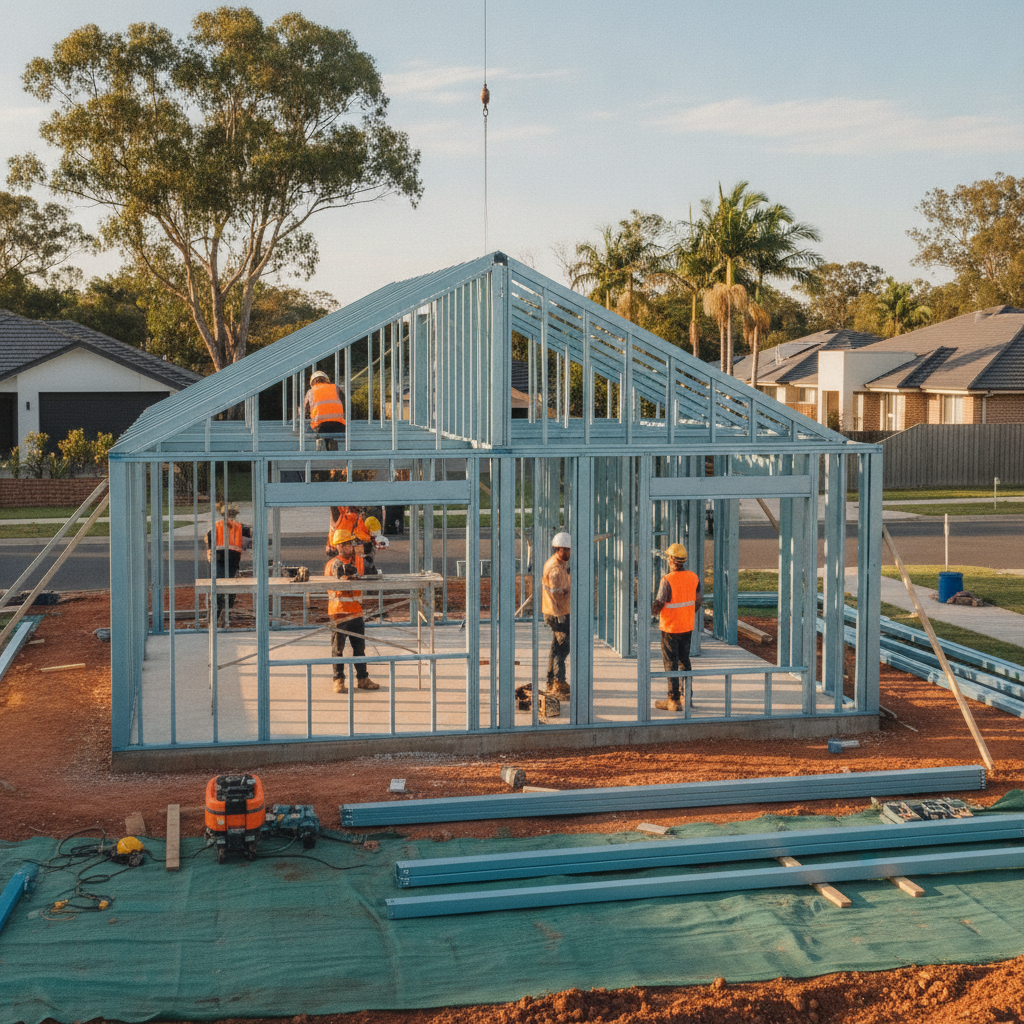
There is a specific moment in every kit home project when the dream starts feeling like a functional reality. It is usually just after your steel frames have been stood up and the roof is on. The structure looks like a house, but it is currently just a hollow shell. This is when you enter the rough-in phase, a critical junction where your electrical cables and plumbing pipes are integrated into the skeleton of the building.
For many owner builders in Australia, the rough-in can feel like a daunting step. Unlike the framing stage, which is visual and intuitive, electrical and plumbing systems are hidden behind walls. However, getting this right is non-negotiable. Re-visiting these services once the internal linings are installed is expensive, messy, and entirely avoidable with the right technical approach. In this guide, we will break down the building techniques required to master the rough-in specifically for steel frame kit homes.
Understanding the Rough-In Process
In technical terms, the rough-in refers to the installation of all the necessary conduits, pipes, and wiring before the wall cladding and ceilings are fixed. It is the bridge between the structural framing and the final fit-out. Because kit homes utilizing TRUECORE steel frames come with precision-engineered service holes, the process is streamlined, but it still requires careful planning and coordination with your licensed trades.
Why Precision Matters Early On
Australia has strict building codes (NCC) and standards (like AS/NZS 3000 for electrical) that must be met. As an owner builder, you are managing these professionals. Understanding the technical requirements allows you to speak their language and ensure your layout is practical for your future lifestyle. Whether you are building a small granny flat in regional Victoria or a sprawling family home in Queensland, the principles of a clean rough-in remain the same.
Electrical Rough-In: Powering Your Lifestyle
When working with steel frames, the electrical rough-in has a few unique technical considerations. Steel is conductive, so protecting your wiring is the first priority. Most high-quality steel kits include pre-punched holes in the studs. These holes often feature flared edges to prevent wire snagging, but your electrician will still use plastic grommets to ensure there is no contact between the copper wire insulation and the steel frame.
Planning Your Outlet and Switch Map
Before your electrician arrives, walk through every room. Physically stand where you imagine your bed or your kitchen island will be. Consider these technical tips:
- Two-way switching: Think about hallway lights and bedroom entrances. It is a simple addition during rough-in that provides massive convenience later.
- Outdoor readiness: Ensure you have planned for external power points, sensor lights, and potentially power for a future shed or rainwater pump.
- Data and Tech: Even in a wireless world, hard-wiring your home office or media room with Cat6 data cabling during the rough-in is a smart move for stability.
The Role of the Switchboard
Your main switchboard location is usually determined by the point of entry for your mains power. However, ensure it is in an accessible location that complies with Australian standards. During the rough-in, the electrician will run all the circuits back to this central hub.
Plumbing Rough-In: Flow and Drainage
Plumbing rough-in is usually split into two parts: in-slab (which happens before you pour your concrete) and wall rough-in. For this discussion, we are focusing on the wall rough-in, which occurs once your kit home frames are standing. This involves running the hot and cold water lines and the sanitary drainage pipes through the walls.
Working with the Steel Frame
Plumbers often enjoy working with steel frames because the holes are already there. However, if they need to create additional penetrations, they must use a hole saw rather than an oxy torch to maintain the integrity of the galvanized coating. Just like electrical, pipes should be secured using plastic clips or insulators to prevent "water hammer" (the banging sound pipes make when the water is turned off) and to prevent the copper or PEX piping from rubbing against the metal studs.
The Importance of Grading
While water lines are pressurized and can go up and down, drainage relies on gravity. Every waste pipe in your bathroom and kitchen rough-in must have the correct fall. Your plumber will ensure that the pipes hidden in your walls and floor cavities are angled correctly to lead to the main sewer or septic connection.
Technical Tips for Owner Builders
As the project manager of your kit home, your job during the rough-in is oversight. Here are several actionable techniques to ensure a smooth process:
1. The "Photo Audit" Technique
This is perhaps the most important tip for any DIY builder. Once the electrical and plumbing rough-in is complete, but BEFORE the insulation and plasterboard go on, take a photo of every single wall in the house. Place a measuring tape in the frame if possible. Knowing exactly where a pipe or a wire sits inside a wall will save you from a disaster later when you try to hang a TV or a towel rail.
2. Check for Noggings
If you plan on having heavy wall-hung items like a floating vanity, a wall-mounted dryer, or a large television, you need extra support. Ensure your plumber and electrician have finished their work, then add timber or steel noggings (the horizontal bracing between studs) to provide a solid fixing point for these items later.
3. Insulation Coordination
Once the rough-in is done and signed off, the insulation (batts) will be installed. Make sure the insulation does not squash or move the pipes and cables. For electrical cables, they should ideally be positioned so that they aren't completely buried in deep insulation to allow for heat dissipation, although this is usually calculated by your electrician when they choose the cable size.
Common Pitfalls to Avoid
In the Australian building industry, we see the same mistakes repeated. Often, it is a lack of communication between the trades. For example, if the plumber places a stack pipe exactly where the electrician intended to put the main switchboard. To avoid this, try to have both trades on-site for a brief walkthrough together before they start their respective rough-ins.
Another common issue is forgetting the "small things" that are hard to add later:
- Provision for an air conditioning head unit (drainage and power).
- Power for a dishwasher or a microwave nook.
- Gas lines if you are opting for gas cooking or hot water.
- External taps for the garden and car wash area.
The Steel Frame Advantage in Rough-In
Building with steel offers a level of precision that traditional methods sometimes lack. Because the frames are manufactured using CAD software, the service holes are usually perfectly aligned. This means your electrician and plumber aren't spending hours drilling through studs, which keeps the site cleaner and the structural integrity of your home at its peak. The strength of BlueScope steel means that even with all the services running through the walls, your home remains straight and true, providing a perfect surface for your eventual wall finishes.
Final Checklist Before Closing the Walls
Before you allow the plasterer to start hanging sheets, run through this final checklist:
- Are all power points and switches in the correct locations according to your floor plan?
- Has the plumber pressure-tested the lines to ensure there are no leaks?
- Are all cables and pipes securely fastened so they won't rattle?
- Have you installed all necessary blocking/noggings for wall-mounted items?
- Have you taken your "photo audit" of every wall?
- Has your electrician provided a Certificate of Electrical Safety (COES) or the equivalent for your state?
Conclusion
The rough-in phase is the nervous system and circulatory system of your new home. While it might not be as aesthetically pleasing as a new kitchen or a fresh coat of paint, it is the foundation of a functional, safe, and comfortable Australian home. By taking an active role in the technical planning and working closely with your licensed trades, you ensure that your kit home project is built to a high standard. Remember, once those walls are closed, your opportunities for easy changes disappear. Take your time, double-check your measurements, and enjoy the process of seeing your owner-builder vision come to life.