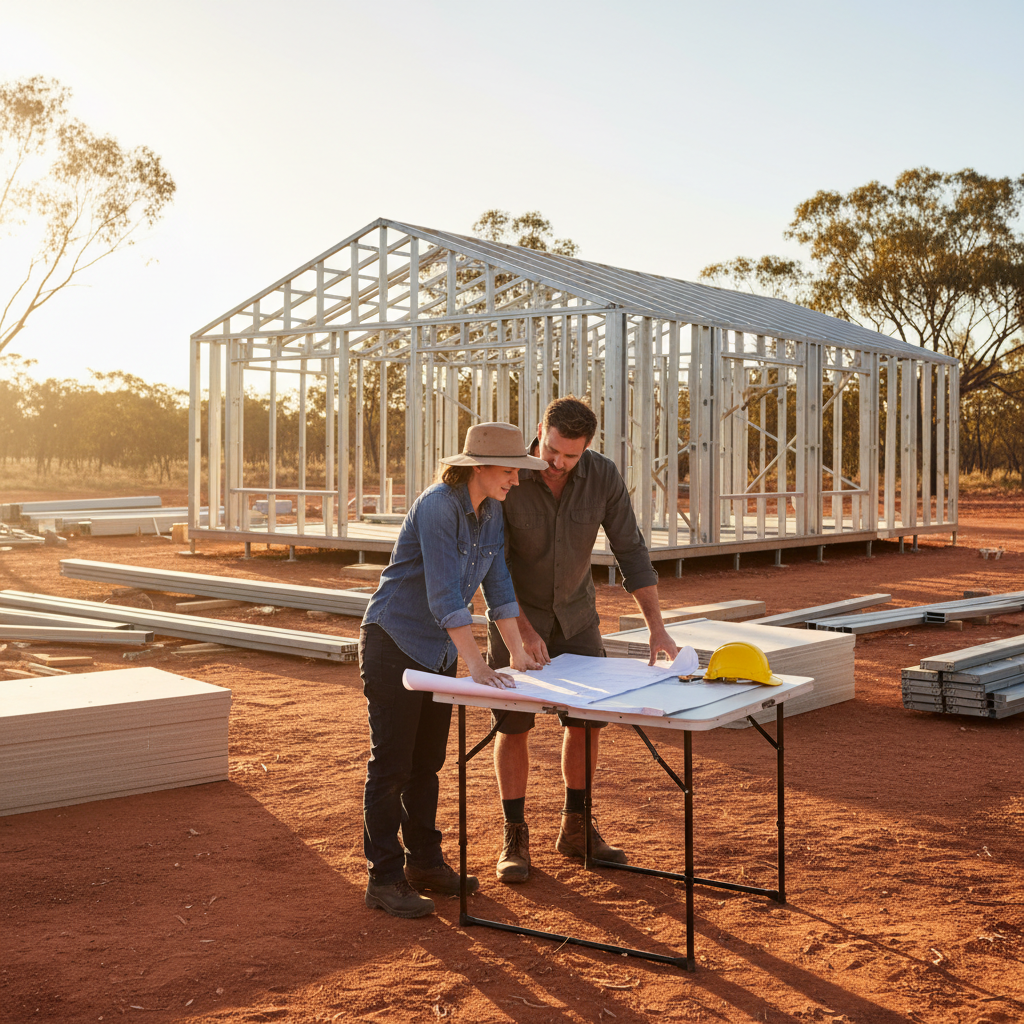
Standing in the middle of a freshly stood steel frame is a great feeling. You look at those blue trusses and the straight lines of the studs and you think the hard work is done. It isn't. The rough-in stage is where the real headaches start if you haven't done your homework. I've seen owner builders in places like Dubbo or the Sunshine Coast breeze through the frame stage only to hit a wall because they didn't coordinate their sparky and plumber early enough. If you're building with BlueScope TRUECORE steel, you're working with a precision product, but that means you can't just hack into it with a hand saw when you realize a pipe won't fit.
The Golden Rule of Steel Frames: Protect the Services
Metals and electricity are best friends, which is exactly why they need to stay apart. When your sparky comes on site to run cables through the pre-punched holes in your steel studs, they cannot just pull the wire through the raw metal. Even though the holes are flared, vibration over time can chafe the insulation. We always tell guys to use plastic or rubber grommets. They're cheap. They snap into the holes. They save you from a dead short ten years down the track that would be a nightmare to find behind finished plasterboard. Most kit suppliers include these, but check your inventory twice. If you're missing them, get to the trade desk at your local hardware store before the sparky arrives at 7am on Monday.
Plumbing and the Hammer Effect
Pipes rattle. It's what they do. In a timber house, a plumber might just slap a few clouts in and call it a day. In a steel frame, if those pipes aren't insulated or clipped properly, your house will sound like a percussion band every time someone flushes the toilet or turns on the kitchen tap. Use felt-lined clips or foam lagging. It's not just about noise, either. Electrolytic corrosion is a real thing. You don't want copper pipes touching steel frames directly. The moisture in the air is enough to start a chemical reaction that eats your pipes from the outside in. Use plastic PEX piping for your water lines where you can. It's flexible, quiet, and doesn't care about the steel. It's the standard for a reason nowadays.
Timing Your Trades
Don't book the plumber and the sparky for the same day. Just don't. They'll spend the whole time tripping over each other's ladders and arguing about who gets the wall cavity in the bathroom. Generally, you want the plumber in first. Water needs fall. Drainage pipes are thick and stubborn. They have to go exactly where they have to go, especially for things like the stack for an upstairs ensuite or the waste for a kitchen island. Electricity is like water but it's easier to bend. A cable can go around a pipe. A 100mm DWV pipe cannot go around a power cable. Get the heavy lifting done first, then bring in the electrical team to weave their magic around the plumbing.
Planning for the Wet Areas
Bathrooms are the most complex part of any kit home build. Because your steel frame arrives pre-engineered, you need to know your tapware heights and toilet offsets before the concrete is even poured, but definitely before the rough-in starts. Are you doing a wall-hung vanity? You'll need extra noggins for that. The steel frame is incredibly strong, but it's thin. You can't just drive a coach screw into a stud and hope for the best like you're mounting a TV on a 4x2. You need to plan for timber or steel backing plates for anything heavy. This includes grab rails, shaving cabinets, and those fancy floating stone tops everyone seems to want in their master suite lately. Talk to your kit provider about adding extra noggins during the design phase. It's way easier than trying to retro-fit them with Tek screws and bits of scrap timber later on.
Kitchen Layouts and Cavity Sliders
I once saw a guy in Geelong forget that he'd planned a cavity slider for his pantry. He ran all the electrical for the light switches right through the pocket where the door was supposed to slide. Total disaster. He had to pull it all out and re-route under the floor. When you're doing your walk-through with the electrical contractor, mark your door swings on the slab with a chalk lead. Visualize the door opening. If you have a cavity slider, that wall is basically off-limits for thick pipes or deep power boxes. You have about 15mm of clearance if you're lucky. Keep your services to the other side of the stud or run them up through the ceiling space and drop them down exactly where they need to be.
And let's talk about the kitchen island. Since you're the owner builder, you're responsible for the slab. If you're on a raft slab, those pipes for the sink and the power for the dishwasher need to be pinpoint accurate. If they're 10cm out, they'll be sticking out of your floor tiles in the middle of the walkway instead of being hidden under the cabinets. Double check your kitchen plan against your plumbing rough-in before the concrete truck turns up. Then check it again.
The Hidden Benefit of Steel for Services
One thing people don't realize is how much easier the actual pulling of wire is in steel. The studs have service holes already punched at regular intervals. No drilling. No sawdust in your eyes. No structural integrity issues because a plumber got a bit too happy with a 50mm spade bit. It's a cleaner site and a faster rough-in, which should save you money on labor if your trades are used to working with steel. If they aren't, explain to them that the holes are already there. Some old-school blokes still try to charge a 'steel surcharge'. Don't cop it. It's actually less work for them.
The Final Walk-Through
Before the insulation goes in and the plasterers show up to hide all your mistakes, take a thousand photos. I'm not joking. Take a photo of every single wall in the house. Put a tape measure in the frame so you know exactly how far that pipe is from the corner. Five years from now, when you want to hang a picture or install a towel rail, you'll be thanking yourself. You'll know exactly where not to drill. Because once that Gyprock is up, those steel studs look the same as timber from the outside, but the stakes are higher if you nick a wire. Get the rough-in right, document it like a crime scene, and the rest of your kit home journey will be a whole lot smoother.
Your trades are your biggest asset. Treat them well, but keep them on a tight leash regarding the specific requirements of steel frames. No one cares about your house as much as you do. So, get in there with a torch and a level after they've finished and make sure every pipe is clipped and every wire is grommeted. It's your name on the owner-builder permit, after all.