The Foundation of a Durable Home
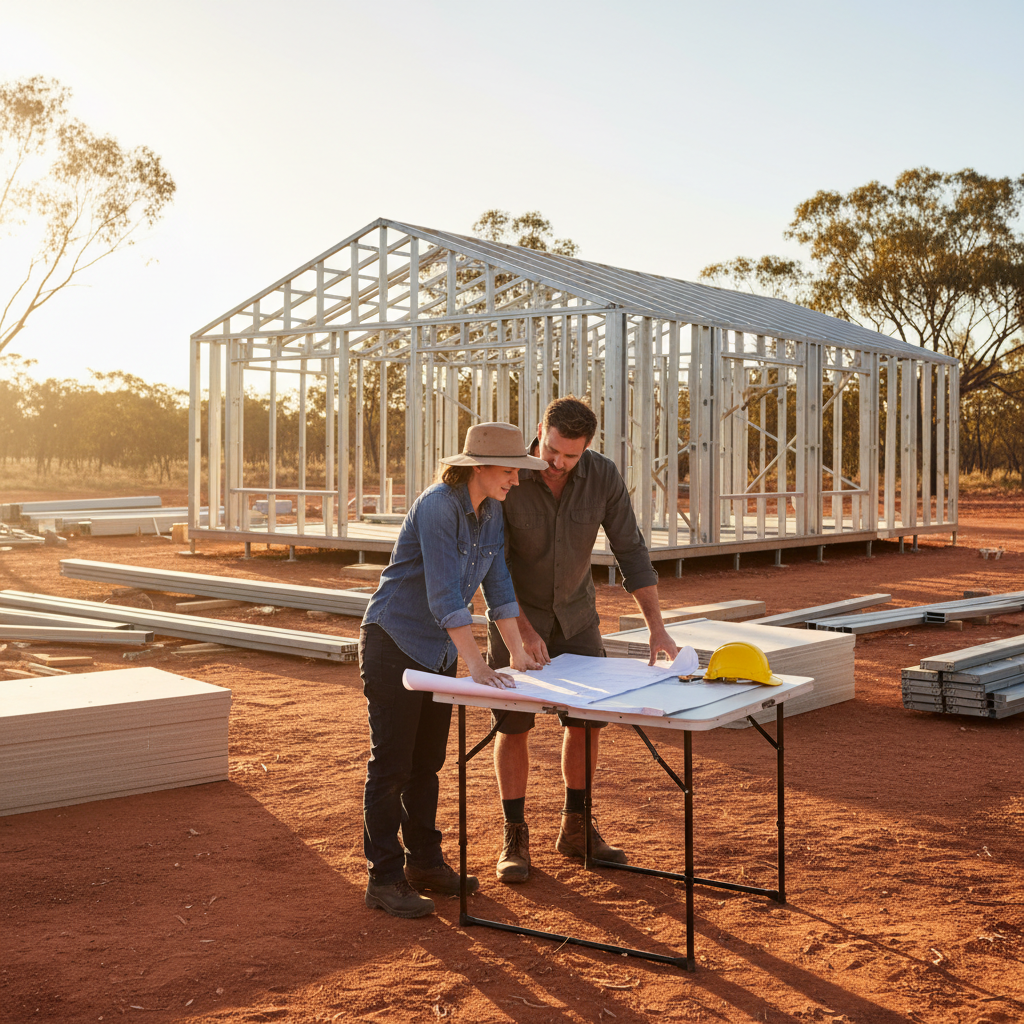
When you are building a kit home in Australia, the sense of accomplishment that comes from seeing your steel frame rise from the slab is unmatched. However, once the structure is up and the cladding is on, the focus shifts to the internal details that ensure your home stands the test of time. Among the most critical technical tasks for any owner builder is waterproofing wet areas. Whether it is a sleek ensuite or a high traffic laundry, getting your waterproofing right is the difference between a pristine home and a structural nightmare.
In Australia, water damage is one of the leading causes of building disputes and insurance claims. For the owner builder, mastering this building technique is not just about passing inspections; it is about protecting your investment, especially when working with high quality materials like BlueScope TRUECORE steel. While steel frames won't rot or termite, moisture can still damage internal linings, cabinetry, and flooring if not contained. In this guide, we will break down the professional approach to waterproofing wet areas to help you achieve a trade quality finish.
Understanding the Standards: AS 3740
Before you pick up a roller or a brush, you need to understand the rules. In Australia, waterproofing is governed by the Australian Standard AS 3740 (Waterproofing of domestic wet areas). This standard dictates exactly where and how high waterproofing must be applied. For example, in a shower, the entire floor must be waterproofed, and the walls must be sealed to a height of at least 1800mm or 150mm above the shower rose.
Even if you are hiring a professional to do the actual application, knowing these standards allows you to oversee the work with confidence. If you are doing it yourself as an owner builder, you must check with your local council or building certifier. Many Australian states require a licensed technician to sign off on a waterproofing certificate, so ensure you have your compliance path cleared before you start.
Preparation: The Secret to Success
Any professional builder will tell you that waterproofing is 90 percent preparation. If the surface is dusty, oily, or uneven, the membrane will not bond correctly, leading to future leaks. Start by ensuring your flooring substrate, usually compressed fiber cement (CFC) sheets or a concrete slab, is structurally sound and perfectly clean.
1. Sweep and Vacuum: A quick sweep is not enough. Use a shop vac to remove every speck of dust from the corners and wall to floor junctions.
2. Check for Protuberances: Ensure there are no stray screws, nails, or lumps of dried levelling compound sticking up. These can puncture the membrane.
3. Prime the Surface: Using the correct primer for your substrate is non negotiable. Priming seals the porous surface and acts as the glue that bonds the membrane to the floor and walls.
The Role of Bond Breakers
One of the most common mistakes DIY builders make is failing to use bond breakers. Houses move, even those built with precision engineered steel frames. Fluctuations in temperature and humidity cause subtle shifts. If you apply a rigid membrane directly over a joint where two surfaces meet (like a wall and a floor), the movement will cause the membrane to crack.
A bond breaker is typically a silicone or polyurethane sealant applied to all internal corners, joints, and penetrations. It prevents the waterproofing membrane from sticking directly to the joint, allowing the membrane to stretch like a rubber band when the building moves. Use a high quality, neutral cure silicone to create a smooth bead along all junctions before applying your first coat of membrane.
Choosing Your Membrane
For most modern kit homes, a liquid applied membrane is the preferred choice. These are easy to apply with a brush and roller and provide a seamless finish. There are two main types: water based and polyurethane based. Water based membranes are increasingly popular for owner builders because they are low odor, easy to clean up, and offer excellent flexibility. Always ensure the product you choose is compliant with AS 4858 (Wet area membranes).
The Application Process: Step by Step
Once your preparation is complete and your bond breakers are cured, it is time to apply the membrane. Professionals usually follow a two coat system, often using a different color for each coat to ensure total coverage.
Step 1: Detailing the Corners
Start with the corners and junctions. Using a brush, apply the membrane over your bond breaker beads. While the membrane is wet, many builders embed a polyester reinforcing fabric into the corner. This provides extra strength at the most vulnerable points of the room. Apply another layer of membrane over the fabric to sandwich it in.
Step 2: Coating the Walls
Move to the walls of the shower enclosure. Apply the membrane in vertical or horizontal strokes, ensuring you reach the required height of 1800mm. Don't forget to waterproof around tap penetrations and shower mixers. These are often overlooked but are prime spots for water to seep behind the tiles.
Step 3: The Floor and Main Areas
Once the walls and corners are detailed, roll the membrane onto the floor. Start from the furthest corner and work your way toward the door. Ensure you achieve a consistent thickness. Professional kits often come with a wet film thickness gauge, which allows you to check that you are applying the right amount of product to meet Australian standards.
Step 4: The Second Coat
Patience is key here. You must allow the first coat to dry completely, usually between 2 to 6 hours depending on the weather and humidity. Once dry, apply the second coat at a 90 degree angle to the first. This cross hatching technique ensures there are no pinholes or thin spots. Once the second coat is applied, the area should be left to cure for at least 24 to 48 hours before any tiling begins.
Integrating with Kit Home Design
One of the advantages of modern kit homes, particularly those utilizing steel frames, is the precision of the structure. When your walls are perfectly plumb and your floor joists are level, the waterproofing process becomes significantly easier. You aren't fighting against warped timber or uneven surfaces. This precision allows for tighter tolerances and a more professional finish in your wet areas.
When planning your layout, consider the plumbing locations. Having your pipes positioned accurately within the steel frame during the rough-in stage means less cutting and patching of your wall linings later. The cleaner your wall linings, the more effective your waterproofing will be.
Common Pitfalls for Owner Builders
Avoid these frequent mistakes to ensure a professional result:
- Skipping the Primer: Without primer, the membrane may peel off like a sunburn, especially on fiber cement sheeting.
- Ignoring the Door Angle: The water stop angle at the bathroom door is a legal requirement. It must be bonded to the floor and waterproofed to prevent water from traveling under the flooring into the hallway.
- Inadequate Drying Time: Rushing to tile over a damp membrane will trap moisture and cause the adhesive to fail.
- Not Waterproofing the Entire Floor: In many Australian jurisdictions, it is now standard practice (and often mandatory) to waterproof the entire floor area of a bathroom, not just the shower base.
Conclusion: Peace of Mind for Your Project
Waterproofing might not be the most glamorous part of building your kit home, but it is undoubtedly one of the most important. By following professional building techniques and adhering to Australian Standards, you create a home that is resilient, healthy, and built to last. For the owner builder, taking the time to master these skills ensures that your beautiful new bathroom remains a source of pride rather than a source of stress. With the right preparation, the right products, and a bit of patience, you can achieve a professional grade seal that protects your home for decades to come.