Taking the Reins: Managing Trades on Your Owner Builder Journey
There is a unique sense of pride that comes with standing on a site and knowing you are the driving force behind the structure rising from the ground. In Australia, the kit home movement has opened doors for thousands of people to escape the cookie-cutter suburban sprawl and build something tailored to their lifestyle. However, once your steel frames arrive and the floor plans are spread out on the tailgate of the ute, the reality of the task ahead sets in. You aren't just a builder, you are a project manager.
Managing subcontractors is perhaps the most challenging yet rewarding part of being an owner builder. It requires a mix of clear communication, strict scheduling, and a bit of a thick skin. Unlike a traditional turn-key build where a construction company handles the headaches, you are the one making the calls at 6:00 AM. This guide is designed to help you navigate those relationships and keep your kit home project on track and under control.
Understanding Your Role in the Build Process
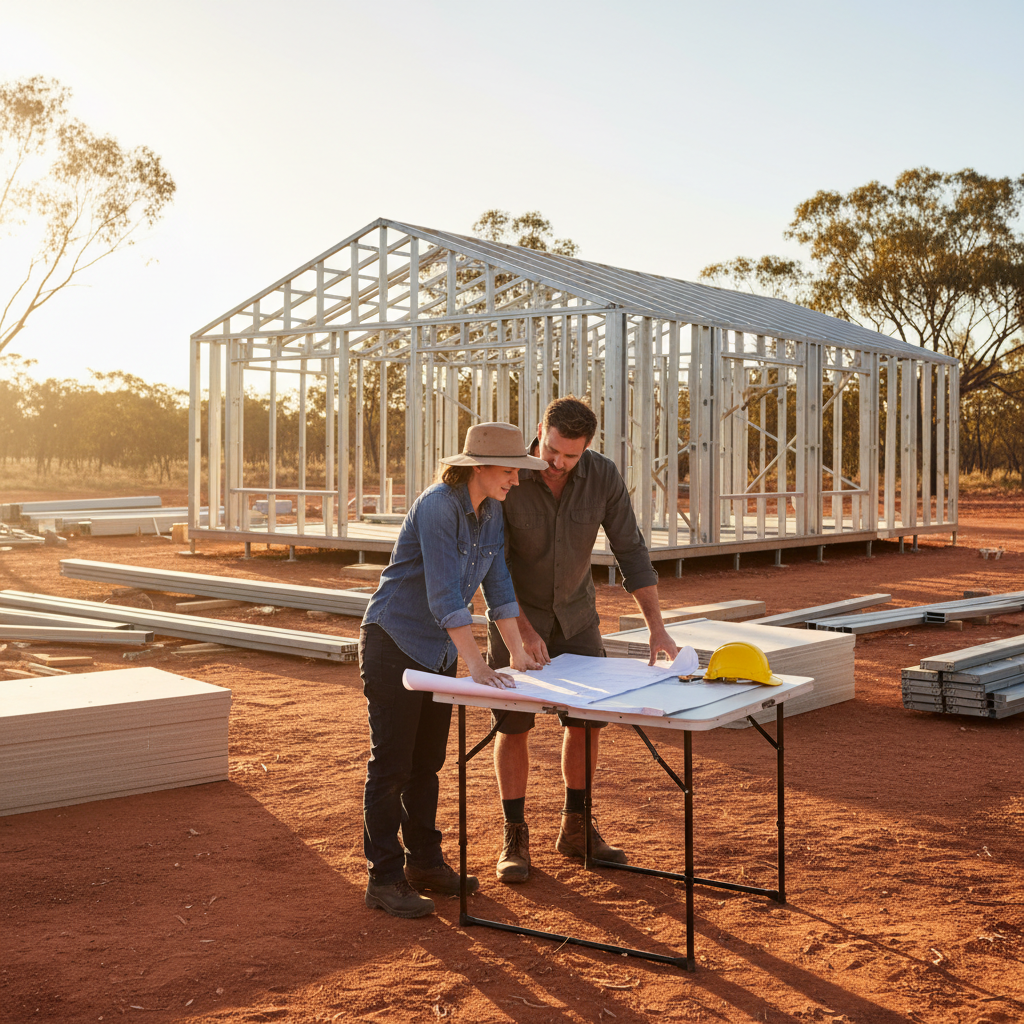
Before you even pick up the phone to call a plumber or an electrician, you need to understand where your kit home supplier fits in and where you take over. When you purchase a kit home, you are typically supplied with the high quality bones of the house, like the BlueScope TRUECORE steel frames, roofing, cladding, and windows. This is the skeleton and skin of your home.
As the owner builder, your job is to coordinate the specialist trades who perform the site works, lay the slab, connect the services, and finish the interior. You are the conductor of the orchestra. If the violinist (the tiler) shows up before the cellist (the waterproofer) has finished, the whole performance falls apart. Understanding the sequence of construction is your first step toward success.
Finding and Vetting Your Subcontractors
Not every tradesperson is comfortable working on an owner builder site. Some prefer the predictable nature of large scale commercial developments. You want to find trades who are local, experienced with kit home assemblies, and communicative. Here are a few tips for building your team:
- Ask for Recommendations: Talk to other owner builders in your local Facebook groups or hardware stores. Word of mouth is still the gold standard in the Australian building industry.
- Verify Licences and Insurance: This is non-negotiable. In Australia, each state has its own regulatory body, such as the VBA in Victoria or Fair Trading in NSW. Always check that their licence is current and covers the specific work they are doing for you.
- Check for Kit Experience: Ask potential subbies if they have worked with steel frame kit homes before. Because steel frames are straight and true, many trades actually prefer them, but it is good to ensure they know the specific fixing requirements for steel.
The Art of the Quote: Getting it Right the First Time
When you send out your plans for quoting, be as specific as possible. Vague requests lead to "allowances" or "provisional sums," which are essentially educated guesses that can change later. Provide your subcontractors with a full set of your kit home engineering drawings and a clear scope of work.
A good tip is to ask for a "breakdown of works." For example, instead of a lump sum for electrical, ask for the cost per power point or light fitting. This makes it much easier to manage if you decide to add an extra outdoor sensor light or a pendant over the kitchen island later on. Always ensure the quote specifies who is responsible for rubbish removal, as those skip bin costs can add up quickly if left to you.
Scheduling: The Pulse of Your Project
One of the biggest mistakes new owner builders make is booking trades too close together. If your plasterer is booked for Monday but the electrician hasn't finished the rough-in because of a rain delay, you lose time and potentially money. Building in Australia is subject to the whims of the weather and supply chains, so flexibility is key.
Create a master schedule using a simple spreadsheet or a project management app. Work backwards from your desired move-in date, but add a 10 to 15 percent "buffer" for each stage. Communicate this schedule to your trades early. Let them know, "I am aiming for the frames to be up by the end of September, which means I'll need you for the roof plumbing in early October." Follow up two weeks before they are due, then one week before, then the day before. It might feel like pestering, but it ensures you stay top of mind.
Site Etiquette and Communication
A happy site is a productive site. While you are the boss, treating your subcontractors with respect goes a long way. Make sure the site is clean and ready for them when they arrive. If the plumber has to spend two hours moving piles of timber just to get to the pipes, they won't be in a hurry to come back for the next stage.
Provide clear instructions but stay open to their professional advice. These tradespeople do this every day, and they might have a better suggestion for the layout of your bathroom plumbing or a more efficient way to run the air conditioning ducts through the steel ceiling batts. Listen to their expertise, but always refer back to your kit home plans to ensure any changes don't affect the structural integrity of the home.
The Importance of Quality Control
As an owner builder, you are the building inspector's primary contact. However, you should also be doing your own daily inspections. You don't need to be a structural engineer to spot a problem. Are the windows installed level? Is the cladding fixed according to the manufacturer's instructions? Is the site being kept safe and tidy?
If you see something that doesn't look right, bring it up immediately. It is much easier (and cheaper) to fix a mistake while the walls are open than it is once the plaster is up and painted. Taking photos of every stage of the build, especially what is behind the walls like wiring and plumbing, is invaluable for future maintenance.
Navigating the Finish Line
As you approach the final stages of your kit home build, things can get frantic. You will have multiple trades on site at once, from the painter to the floor layer. This is where your coordination skills are truly tested. Keep a "snag list" or a "punch list" of small items that need finishing off. Don't make the final payment to a subcontractor until the work is completed to the standard agreed upon and you have received any necessary compliance certificates for that trade.
Building a kit home as an owner builder is a marathon, not a sprint. By managing your subcontractors with professional clarity and local Aussie common sense, you transform the process from a stressful chore into a rewarding adventure. The result isn't just a house, it is a home that you have quite literally brought to life through your own leadership and vision.