Taking the Reins: The Owner Builder Journey
There is a unique sense of pride that comes with standing in a home you helped bring to life. For many Australians, kit homes offer the perfect bridge between a traditional build and a full DIY project. However, once your steel frames and materials arrive on site, the real work begins. Unless you are a licensed plumber, electrician, and carpenter all rolled into one, you are going to need a team of skilled subcontractors to help you cross the finish line.
Managing subcontractors is perhaps the most challenging yet rewarding part of the owner builder process. You are the project manager, the site supervisor, and the quality control officer. While it might sound daunting, with the right approach and a bit of local knowledge, you can lead your project to success. This guide will walk you through the nuances of finding and managing the right trades for your kit home in Australia.
1. Finding the Right Tradies for Your Kit Home
In the Australian building industry, word of mouth is still king. When you are looking for subcontractors, start with your local community. A tradie who comes highly recommended by a neighbour or a local hardware store owner is often more reliable than a random search engine result. Since kit homes involve specific construction stages, look for subcontractors who have experience working with steel frames or owner builders. They will be more comfortable with the workflow of a kit project, understanding that while the frame is provided, the finishing touches require their professional expertise.
Always verify licenses and insurance. In Australia, each state has its own regulatory body, such as the VBA in Victoria or Fair Trading in NSW. Do not be afraid to ask for their license number and check it against the public register. This protects you legally and ensures the work will meet Australian building standards.
2. Clear Communication is Your Best Tool
Communication breakdowns are the leading cause of delays on building sites. From the outset, be clear about what is included in the kit and what the subcontractor needs to provide. For example, when talking to your plumber, show them the plans for your steel frame kit home so they can see exactly where the wall studs are located. This helps them plan their pipe runs efficiently.
Try to avoid using industry jargon if you are not 100 percent sure what it means. It is better to ask a "silly" question than to have a slab poured in the wrong place. Establish a preferred method of contact, whether it is a phone call at 7 am or a text message update at the end of the day. Consistency is key to keeping the momentum going.
3. The Art of Scheduling and Deadlines
One of the trickiest parts of being an owner builder is the sequencing of trades. You cannot have the plasterer start before the electrician has finished the roughing-in. When managing a kit home build, your schedule should be a living document. Start with the big milestones, site preparation, slab, frame assembly, roofing, and cladding, and then fill in the gaps with the specialised trades.
Be realistic about timelines. If a carpenter says a job will take three days, allow four. Weather in Australia can be unpredictable, and a week of heavy rain can throw a whole schedule out of sync. Keep your subcontractors updated on the progress of the stages before them. If the windows are delayed, let the lock-up crew know as soon as possible so they can reschedule their other jobs.
4. Setting High Standards for Site Conduct
As the owner builder, you set the tone for the building site. Most Australian tradies are hardworking and professional, but it helps to establish some ground rules early on. Discuss things like site access, work hours, and where they can park. Keeping a clean and organised site is not just about aesthetics, it is about safety and efficiency. If your site is a mess, materials can be lost or damaged, and it increases the risk of accidents.
Make sure there is a clear understanding of who is responsible for rubbish removal. Many owner builders choose to provide a skip bin on site to ensure the area stays clear. A tidy site shows your subcontractors that you take the project seriously, which often encourages them to take more pride in their own work.
5. Understanding the Role of Tech and Plans
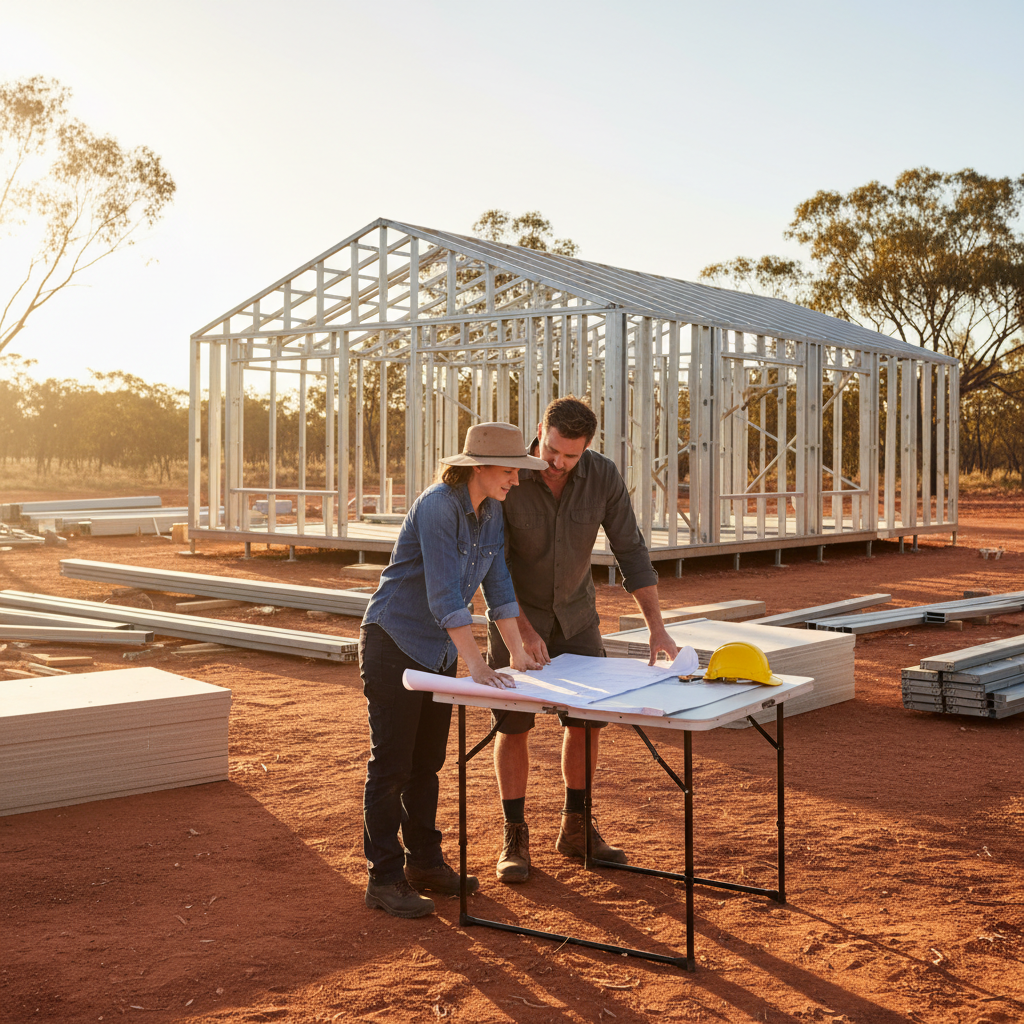
When you purchase a kit home, you receive detailed plans and manuals. Use these as your bible. When a subcontractor arrives on site, walk them through the specific section of the manual that pertains to their job. Modern steel frame kits are engineered with precision, which if used correctly, makes the subcontractor's job much easier. Show them the pre-punched holes in the TRUECORE steel frames for electrical and plumbing lines, as this is a major time saver for them.
Keep a physical and digital copy of all plans on site. If there is a dispute or a question about a measurement, you can refer to the official documents immediately rather than relying on memory. This level of organisation commands respect from tradespeople and ensures the build stays true to the architectural intent.
6. Managing the Handover Between Trades
The transition between one trade and the next is where problems often hide. Before a subcontractor leaves the site and another begins, do a thorough walkthrough. If the cladding is being installed, check that the insulation has been placed correctly and that the building wrap is intact. If you wait until the end of the project to check these things, it will be much harder and more expensive to fix mistakes.
Think of yourself as the link in the chain. You need to ensure the plumber hasn't cut through a structural member of the steel frame or that the tiler hasn't blocked a floor waste. Being present on site during these transitions is the best way to catch errors before they are covered up by the next stage of construction.
7. Creating a Respectful Working Relationship
A little bit of hospitality goes a long way on an Australian building site. You don't need to provide a three-course meal, but having cold water available or the occasional morning tea can build a lot of goodwill. When tradies enjoy working on your site, they are more likely to go the extra mile for you or fit you in when their schedule is tight.
Treat your subcontractors as partners in the project rather than just hired help. They have years of experience and often have great suggestions for better ways to handle a tricky corner or a specific finish. Listen to their advice, but remember that as the owner builder, you have the final say.
Conclusion: Your Path to a Successful Build
Managing subcontractors for your kit home is a journey of constant learning. It requires patience, organisation, and a proactive attitude. By choosing the right people, communicating clearly, and maintaining a high standard on site, you can ensure that your owner builder experience is a positive one. Remember, the goal is not just to build a house, but to create a high quality home that you and your family can enjoy for decades to many years to come. With a solid steel frame as your foundation and a dedicated team of trades by your side, you are well on your way to making your dream home a reality.