Building for the Australian Sun: Why Insulation Matters
When you embark on the journey of building a kit home in Australia, you are not just putting up walls and a roof. You are creating a sanctuary that needs to stand up against some of the harshest weather conditions on the planet. From the humid tropics of Queensland to the frosty winters of the Tasmanian highlands, the Australian climate is diverse and demanding.
For the owner-builder, mastering insulation is one of the most critical building techniques you can learn. It is the difference between a home that feels like an oven in February and one that remains a cool, comfortable retreat. In this guide, we will dive deep into the technical side of thermal management, specifically tailored for the high-quality steel frame kit homes currently trending across the country.
Understanding Australian Climate Zones
Before you peel back the first roll of batts, you need to understand where your project sits in the National Construction Code (NCC) climate zone map. Australia is divided into eight distinct climate zones. Each zone has specific requirements for thermal performance, known as ‘Total R-Value’.
If you are building in Zone 1 (Darwin), your priority is keeping the heat out and managing high humidity. If you are in Zone 7 or 8 (Canberra or Alpine regions), your focus shifts to retaining internal warmth. Most kit homes are designed with versatility in mind, but the way you execute the insulation layer will determine the home’s long-term energy efficiency.
The Role of Steel Frames and Thermal Bridging
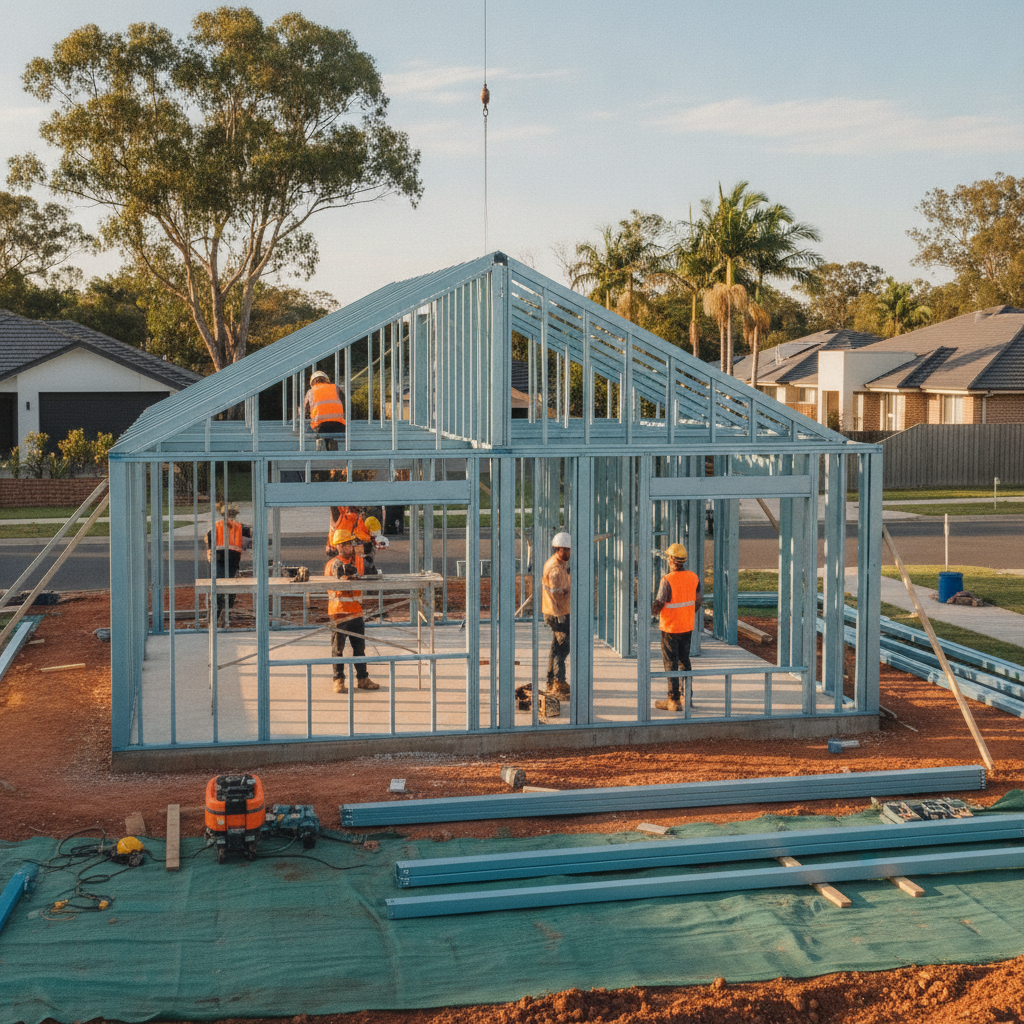
Many modern kit homes utilize high-tensile steel frames, such as those made from BlueScope TRUECORE steel. Steel is a world-class material for precision, durability, and termite resistance. However, from a building technique perspective, steel is an efficient conductor of heat. This leads to a phenomenon known as thermal bridging.
Thermal bridging occurs when heat passes through the frame more easily than through the insulated cavities. To combat this, owner-builders should incorporate a thermal break. A thermal break is a material with low thermal conductivity placed between the steel frame and the external cladding. This ensures that the heat stays outside where it belongs, preserving the integrity of your internal climate.
Choosing Your Insulation Materials
As an owner-builder, you have several options when it comes to the material filling your wall and ceiling cavities. Each has its pros and cons in various Australian contexts:
Glasswool and Rockwool Batts
These are the most common choices for kit homes. They are easy to install between the studs of a steel frame. For Australian conditions, look for high-density batts that offer both thermal and acoustic benefits. This is especially helpful if you are building a multi-generational home or a studio where noise dampening is a priority.
Reflective Foil Laminates (Sarking)
In Australia, radiant heat is a major factor. Reflective foil, often called sarking, is installed under the roofing and behind the wall cladding. It works by reflecting radiant heat away from the house. For those building in hotter climates, ensuring a small air gap between the foil and the cladding can significantly boost its effectiveness.
Bulk Insulation vs. Reflective Insulation
The best building technique is usually a combination of both. Bulk insulation (like batts) stops heat transfer through conduction and convection, while reflective insulation stops heat transfer through radiation. Together, they create a comprehensive thermal envelope for your home.
Installation Best Practices for Owner-Builders
The performance of your insulation is only as good as the quality of the installation. Even a small gap of 5 percent in the insulation layer can result in a 50 percent reduction in thermal efficiency. Here is how to get it right:
- Avoid Compression: Never squash or compress your insulation batts to fit into a space. The air trapped between the fibers is what actually provides the insulation. If you squash it, you lose the R-value.
- Tightly Fit: Ensure there are no gaps between batts or between the batts and the framing members. Use a sharp utility knife to cut batts slightly oversized (about 10mm to 15mm) so they friction-fit into the steel frame.
- Seal the Gaps: Use expanding foam or specialized seals around windows, doors, and service penetrations. Air leakage is a major cause of heat loss and gain.
- Safety First: When working with insulation, always wear a mask, goggles, and long sleeves. Steel frames can have sharp edges, so high-quality gloves are a must for any owner-builder.
Glazing and the Thermal Envelope
Your windows and doors are the biggest 'holes' in your thermal envelope. When selecting components for your kit home, look for high-performance glass. Double glazing has become the gold standard in many parts of Australia, providing an extra layer of trapped air that slows down heat transfer.
The orientation of your home on your site is also a vital building technique. By placing larger windows on the north side of the home, you can take advantage of the winter sun to heat your home naturally, while using eaves or external shading to block the high summer sun. This passive solar design works in harmony with your insulation to lower running costs.
Ventilation: The Often Overlooked Partner
A well-insulated home is a sealed home, but it still needs to breathe. To prevent moisture buildup and mold, owner-builders should consider their ventilation strategy. In tropical zones, this might mean maximizing cross-ventilation through clever window placement. In cooler zones, it might involve a heat recovery ventilation system or simply ensuring that wet areas like bathrooms and kitchens are properly vented to the outside, not just into the roof space.
The Importance of the Roof Space
In the Australian summer, roof space temperatures can soar to 60 degrees Celsius or more. This heat then radiates down into your living areas. To combat this, ensure your kit home includes high-quality roof insulation. A combination of foil sarking under the metal roof sheets and thick batts on the ceiling level is highly effective. If you are building with a vaulted or cathedral ceiling, ensure there is a clear path for ventilation or use high-performance rigid board insulation to maintain a slim profile without sacrificing comfort.
Tips for the Savvy Owner-Builder
1. Check the R-value: Make sure the insulation you purchase meets or exceeds the requirements stipulated in your building approval and the NCC for your specific zone.
2. Stage your install: Install wall insulation only after all electrical and plumbing rough-ins are complete. This prevents tradespeople from moving or damaging your carefully placed batts.
3. Document everything: Take photos of your insulation installation before the internal wall linings go on. This is helpful for building inspectors and serves as a record of the quality of your work.
4. Think about the future: Australia's summers are getting longer and hotter. Investing a little more in high-quality insulation today will pay dividends in comfort and energy savings for decades to come.
Conclusion: A Home for All Seasons
Building a kit home is an empowering experience for any Australian owner-builder. It offers the chance to be hands-on with the construction of your own sanctuary. By focusing on advanced building techniques like proper thermal break installation, choosing the right R-values for your climate zone, and ensuring a gap-free installation, you are doing more than just building a house. You are creating a sustainable, energy-efficient home that will remain comfortable regardless of what the Australian weather throws at it.
Remember, the best insulation is the one that is thought out before the first steel frame is bolted into place. Plan early, install with care, and enjoy the cool, quiet rewards of a well-built kit home.