Building Smart: The Financial Frontier of Kit Homes in Australia
In the current Australian economic landscape, the dream of homeownership is being redefined. As traditional construction costs soar and interest rates fluctuate, savvy Australians are turning to the kit home model-not just for the lifestyle flexibility, but for the profound financial advantages it offers. When you step into the role of an owner-builder, you aren't just building a house; you are managing a high-value investment. This guide explores the 'Cost & Finance' of building kit homes, focusing on tax implications, long-term savings of steel frame construction, and how to maximise your budget.
The Owner-Builder Advantage: Financial Benefits Beyond the Surface
Choosing to be an owner-builder is one of the most effective ways to manufacture equity. By removing the 'builder's margin'-which typically sits between 15% and 25% of the total project cost-you are essentially paying yourself that profit. However, the financial benefits extend beyond just the initial saving.
Understanding Tax Deductions for Owner-Builders
While you cannot 'deduct' your own labour as a business expense if you are building your primary place of residence, there are several tax-related nuances to consider:
- GST Credits: If you are building as part of a business venture or for a property that will be used for rental income, you may be eligible to claim back GST on materials and subcontractors. Always consult with a qualified Australian tax professional to assess your specific eligibility.
- CGT Main Residence Exemption: One of the greatest financial perks in Australia is the Capital Gains Tax (CGT) exemption on your primary home. By building a high-quality kit home with premium materials like BlueScope TRUECORE® steel, you create a high-value asset that can grow in value tax-free.
- Depreciation Schedules: If your kit home eventually becomes an investment property, the 'plant and equipment' and 'capital works' (the building itself) provide significant tax deductions through depreciation. Building with durable materials like steel ensures the asset remains in peak condition for longer.
Why Steel Frames are a Financial Power Move
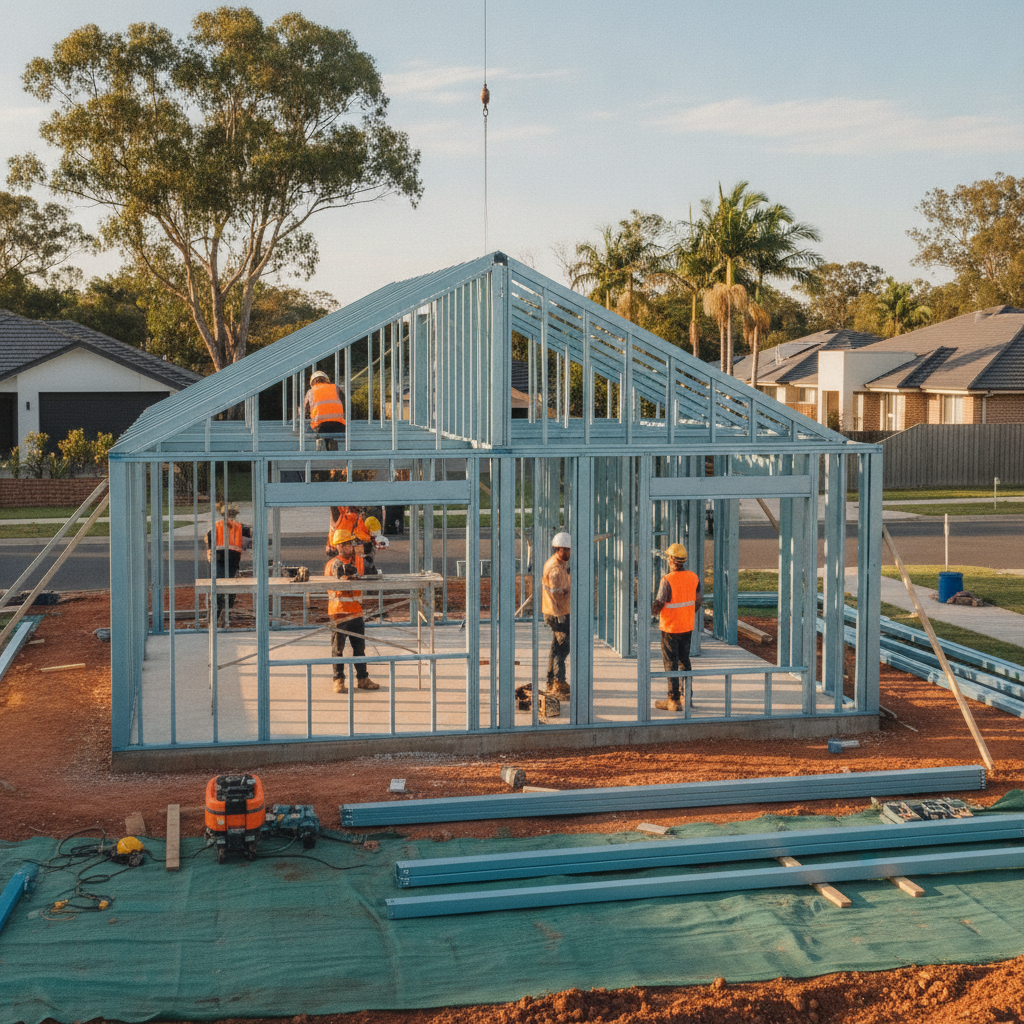
When evaluating the cost of a kit home, it is vital to look past the initial invoice. The material you choose for your skeleton determines your long-term maintenance costs and insurance premiums. At Imagine Kit Homes, we exclusively use prefabricated steel frames manufactured from BlueScope TRUECORE® steel.
The Cost-Efficiency of BlueScope TRUECORE® Steel
While some builders opt for timber to save a few dollars upfront, steel provides a superior Return on Investment (ROI). Here’s why:
- Zero Termite Costs: Australian homeowners spend hundreds of millions annually on termite damage and chemical barriers. Steel is 100% termite-proof. Choosing TRUECORE® steel eliminates the need for expensive ongoing chemical treatments, saving you thousands over the life of the loan.
- Dimensional Stability: Unlike timber, steel doesn't warp, twist, or shrink. From a financial perspective, this means fewer 'call-back' costs for cracked plasterboard or sticking doors, which are common in timber builds as the frame settles.
- Fire Resilience: In many regional Australian areas, Bushfire Attack Level (BAL) ratings can drive up construction costs. Steel is non-combustible, providing a better safety profile and potentially lower insurance premiums compared to traditional timber framing.
- 50-Year Warranty: BlueScope TRUECORE® steel comes with a 50-year structural warranty, giving your investment a level of security that timber simply cannot match.
Budgeting for Your Kit Home: Inclusions vs. Exclusions
A primary trap for first-time owner-builders is failing to account for 'below the ground' and 'after the shell' costs. To manage your finance effectively, you must understand what your kit includes. Our standard kits provide the high-value structural components: architectural plans, engineering certification, BlueScope steel wall frames (2440mm high, 90mm), and roof trusses.
Practical Tips for Budget Allocation
To keep your bank account healthy, allocate your budget across these three phases:
- The Kit (Fixed Cost): This includes your lock-up components like Colorbond roofing, Hardiflex or Blue Board cladding, and aluminium windows. Because this is a fixed price, it provides a stable anchor for your finance application.
- The Subbies (Variable Cost): You will need to budget separately for site works, the concrete slab (or an upgraded DURAGAL floor system for sloping sites), plumbing, and electrical. Getting three quotes for each trade is the golden rule of owner-building.
- The Finishes (Discretionary Cost): This is where projects often go over budget. Kitchen joinery, tiling, and painting are not included in the kit, giving you the flexibility to choose finishes that match your remaining budget.
Owner-Builder Tips: Navigating the Financial Paperwork
Securing finance for a kit home as an owner-builder requires a bit more preparation than a standard turnkey mortgage. Lenders want to see that you are organised and that the house is built to last.
Owner Builder Tip: Present your lender with the engineering certifications and the BlueScope TRUECORE® warranty information. Banks view steel-framed homes as lower-risk assets due to their durability and resistance to common Australian pests and weather conditions. Using a recognised brand like Colorbond for your roof and fascia also adds to the perceived retail value of the home.
Design and Lifestyle: Maximising Resale Value
From a finance perspective, you should always build with resale in mind. Open-plan living, high-quality insulation (like our included 50mm Anti-Con roof blanket), and modern aesthetics like the Corinthian pmad104 front entry door with Gainsborough Trilock hardware ensure that your home appeals to the widest possible market if you ever decide to sell.
The Prefab Advantage
The speed of prefab steel construction is a major financial benefit. Because our frames are prefabricated to millimetre-precision, the time spent on-site by trades is significantly reduced. In the world of finance, time is money-especially if you are paying interest on a construction loan or paying rent while you build.
Is a Kit Home Right for Your Portfolio?
If you are a DIY enthusiast, a regional property owner, or simply someone looking to escape the 'mortgage trap,' the financial logic of a kit home is hard to ignore. By taking the reins as an owner-builder and investing in premium Australian-made materials like BlueScope Steel, you are setting yourself up for a home that is not only affordable to build but incredibly cost-effective to maintain.
Conclusion
Building a kit home in Australia is a strategic financial move that rewards those who are prepared to manage the process. By leveraging the benefits of owner-builder tax exemptions (where applicable), avoiding the pitfalls of timber maintenance through the use of TRUECORE® steel, and carefully managing your sub-contracted trades, you can achieve a high-end home for a fraction of the market cost. Remember, the cheapest build is the one done right the first time-with quality steel, comprehensive engineering, and a clear financial roadmap.