Mastering the Council Inspection Process for Kit Home Builders
Embarking on the journey of an owner builder is an empowering experience. You are not just building a house; you are crafting a legacy with your own hands. However, even the most skilled DIY enthusiast can feel a bit of trepidation when the building inspector’s ute pulls into the driveway. For kit home projects in Australia, council inspections (or inspections by a private certifier) are the crucial milestones that ensure your home is safe, compliant, and built to the high standards of the National Construction Code (NCC).
Understanding the technical requirements of these inspections helps you stay ahead of the game. When you choose a steel frame kit home, you are already starting with a precision engineered advantage. Using BlueScope TRUECORE steel means your frames are straight, true, and won't warp or shrink, making the inspection process significantly smoother. In this guide, we will break down the essential inspection stages from a building techniques perspective, so you know exactly what to look for before the inspector arrives.
The Importance of Preparation and Documentation
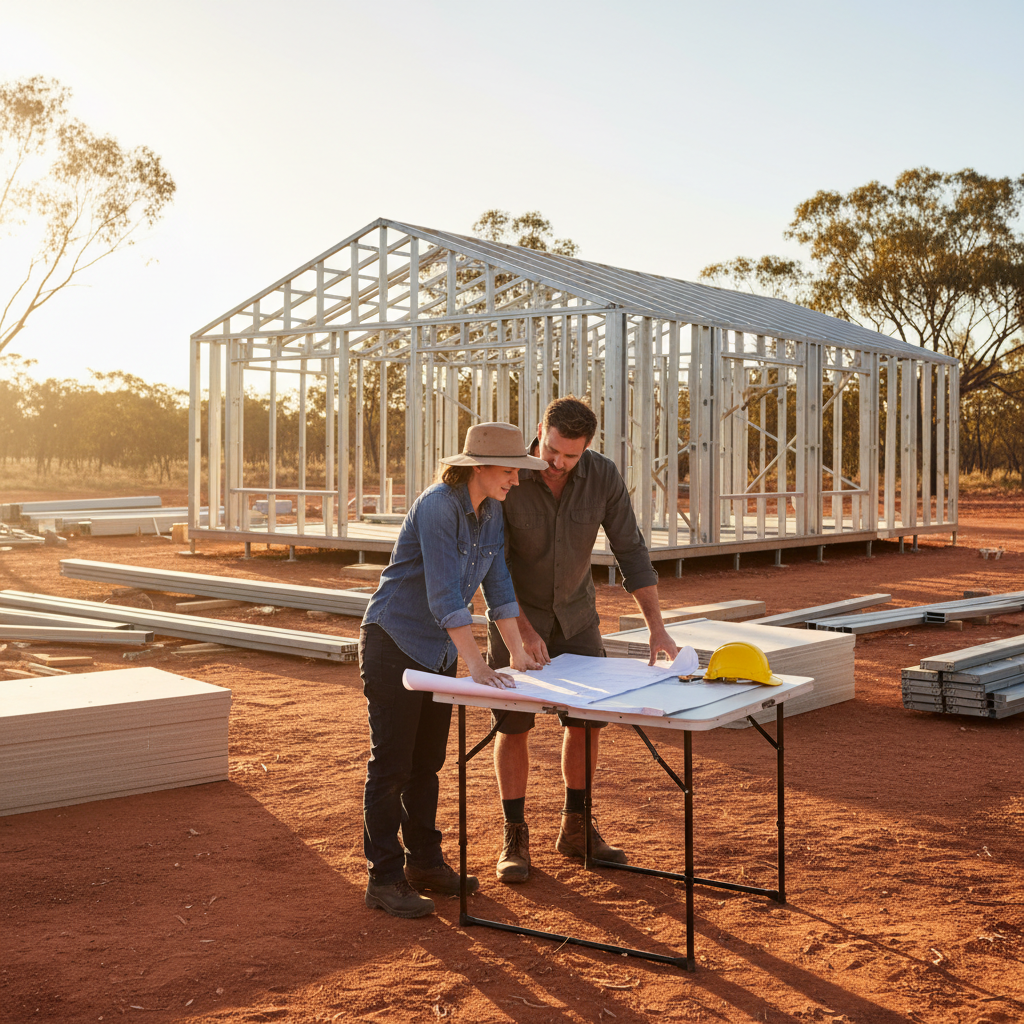
Before any tools hit the ground, the inspection process actually begins with your paperwork. Your council approved plans and specifications are the Bible for your build. The inspector is there to verify that what you are building matches exactly what was approved in your Development Application (DA) or Complying Development Certificate (CDC).
A pro tip for owner builders is to keep a dedicated site folder. This should contain your engineering long-form prints, your slab design, your window energy ratings, and the technical specifications for your cladding and roofing. When an inspector sees an organized site with clear documentation, it builds immediate confidence in your building techniques.
Stage 1: Footing and Slab Inspection
The very first physical inspection occurs before you pour any concrete. This is arguably the most critical stage because once the concrete is down, you cannot change what is underneath. The inspector will check the depth of the footings, the placement of the steel reinforcement (reo), and the moisture barrier (the plastic membrane).
They will also verify that the termite protection measures are in place. In Australia, managing termites is a non-negotiable part of the building code. Even though your kit home uses termite resistant steel frames, the council still requires a physical or chemical barrier to protect any timber elements inside the home like skirting boards or cupboards. Ensure your plumbing pipes are correctly sleeved and that all reinforcement is supported by plastic chairs so it doesn't sink to the bottom of the pour.
Stage 2: Frame and Truss Inspection
This is where the kit home model shines. Once your steel frames and roof trusses are erected, the inspector will visit to check the structural integrity of the skeleton. Because steel frames are manufactured to millimetre precision, the inspector will find that the walls are perfectly plumb and the corners are square.
During this visit, the inspector will look for specifically three things:
- Tie-downs and Fixings: They will check that the frames are securely anchored to the slab or sub-floor according to the engineering specifications. This is vital for wind loading, especially in bushfire or cyclone prone areas.
- Bracing: Every home needs a way to resist lateral loads (wind). The inspector will verify that the bracing panels or straps are installed exactly where the plan specifies.
- Truss Connections: The connection between the roof trusses and the wall frames must be robust. Using the correct brackets and screws is essential here.
Because steel provides a high strength to weight ratio, it often allows for larger open spans, but this means the inspector will pay close attention to the lintels over large windows or folding doors. Make sure you haven't swapped out any specified hardware for a different brand without checking if it meets the same structural rating.
Stage 3: The Rough-In (Pre-Cladding and Internal Lining)
Before you put the sheets of plasterboard on the inside or the cladding on the outside, the inspector needs to see what is happening inside the walls. This is often referred to as the services inspection. Your licensed plumber and electrician will need to have completed their "rough-in" work.
The inspector will check that electrical cables are protected where they pass through the steel studs (usually with plastic grommets to prevent chafing). They will also look at the insulation. Proper insulation is a key component of the 7-star energy rating requirements in Australia. It must be tucked neatly into the frames without gaps or excessive compression. If you are using reflective foil products with your steel roofing, ensure the air gaps are maintained as per the manufacturer's instructions to maximize thermal performance.
Stage 4: Wet Area Waterproofing
Water damage is one of the most common causes of structural failure in Australian homes, which is why waterproofing inspections are so strict. After your wall linings are up in the bathrooms and laundry, but before the tiles are laid, a waterproofing membrane is applied. In many jurisdictions, the inspector must see this membrane or you must provide a certificate of compliance from a licensed waterproofer.
They will check for correct falls in the floor to the wastes and ensure that the membrane travels up the wall to the required height (usually 150mm to 1800mm in shower recesses). Even with moisture resistant steel frames, water penetration into the sub-floor can cause massive headaches, so precision here is paramount.
Stage 5: Final Inspection and Occupancy Permit
The finish line is in sight! The final inspection covers everything related to life safety and health. The inspector will check for:
- Smoke Alarms: Must be hard-wired and interconnected.
- Handrails and Balustrades: Any deck or stairs over 1 metre high must have a compliant rail.
- Termite Management Notice: Usually fixed inside the electrical meter box.
- Window Openings: Restricted openings for windows on second storeys to prevent falls.
- Energy Efficiency: Verification that the appliances and lights match the energy report.
Once the inspector is satisfied that the building matches the plans and meets all safety codes, they will issue a Final Inspection Certificate or an Occupancy Permit. This is the document that officially turns your construction site into a home.
Common Pitfalls for Owner Builders
One of the biggest mistakes involves making "minor" changes on the fly. You might decide to move a window slightly to catch more sun, or change the location of an internal wall. While these seem like small choices, they can interfere with the structural engineering or the energy rating of the home. Always consult your kit provider or an engineer before deviating from the approved plans.
Another common issue is site drainage. Inspectors are increasingly focused on how water leaves your property. Ensure your downpipes are connected to a legal point of discharge early in the process so the site stays dry and compliant throughout the build.
The Advantage of Steel in the Inspection Process
Using steel frames provides a level of consistency that inspectors appreciate. Timber can bow or twist if it sits on a wet site for too long, leading to issues where plasterboard cracks or doors don't close, sometimes necessitating re-inspections. Steel, however, remains dimensionally stable. When the inspector puts a level against your TRUECORE steel frame, they know it will be as straight on the last day of the build as it was on the first. This technical reliability can lead to a much faster sign-off process.
Conclusion
Council inspections shouldn't be a source of stress. Instead, view them as an expert second set of eyes ensuring that your DIY efforts result in a high quality, long lasting home. By understanding the building techniques required at each stage and maintaining clear communication with your certifier, you can navigate the process with confidence. Your kit home project is a significant investment of time and energy, and these inspections are there to protect that investment, ensuring your Australian dream is built on a solid, compliant foundation.