Demystifying the Council Inspection Process for Owner Builders
Taking on a kit home project as an owner builder is one of the most rewarding ways to create a home in Australia. It offers a unique hands-on experience, allowing you to oversee the birth of your dwelling from the ground up. However, for many first-timers, the technical side of compliance and council inspections can feel like a daunting hurdle. Understanding exactly what a building surveyor or council inspector is looking for is the key to a smooth, stress-free build.
In this guide, we will break down the technical journey of a kit home construction through the lens of mandatory inspections. By knowing the benchmarks for success at each stage, you can ensure your project remains compliant with the Building Code of Australia (BCA) and local council regulations.
The Importance of the Certifier Relationship
Before the first shovel hits the dirt, you need to appoint a building certifier. In Australia, this can be a private certifier or a local council officer. Think of your certifier as a technical partner rather than a hurdle. They are there to ensure the safety and structural integrity of your future home. It is a good idea to establish a clear line of communication early on. Ask for their specific checklist or preferred notice periods for inspections, as this varies between jurisdictions.
Stage 1: Footing and Slab Preparation
The foundation is the most critical technical component of your kit home. Before any concrete is poured, an inspection is required to verify that the ground has been prepared according to the engineering specifications. The inspector will check the depth and width of trenches, the placement of steel reinforcement (rebar), and the moisture barrier (plastic membrane).
For those building with a steel frame kit home, the precision of the slab is paramount. Steel frames are manufactured to millimetre accuracy, meaning there is very little room for error in the slab dimensions. Your certifier will ensure the footings are sitting on the right type of soil as indicated in your soil report (Class S, M, H1, etc.).
Stage 2: The Timber or Steel Frame Inspection
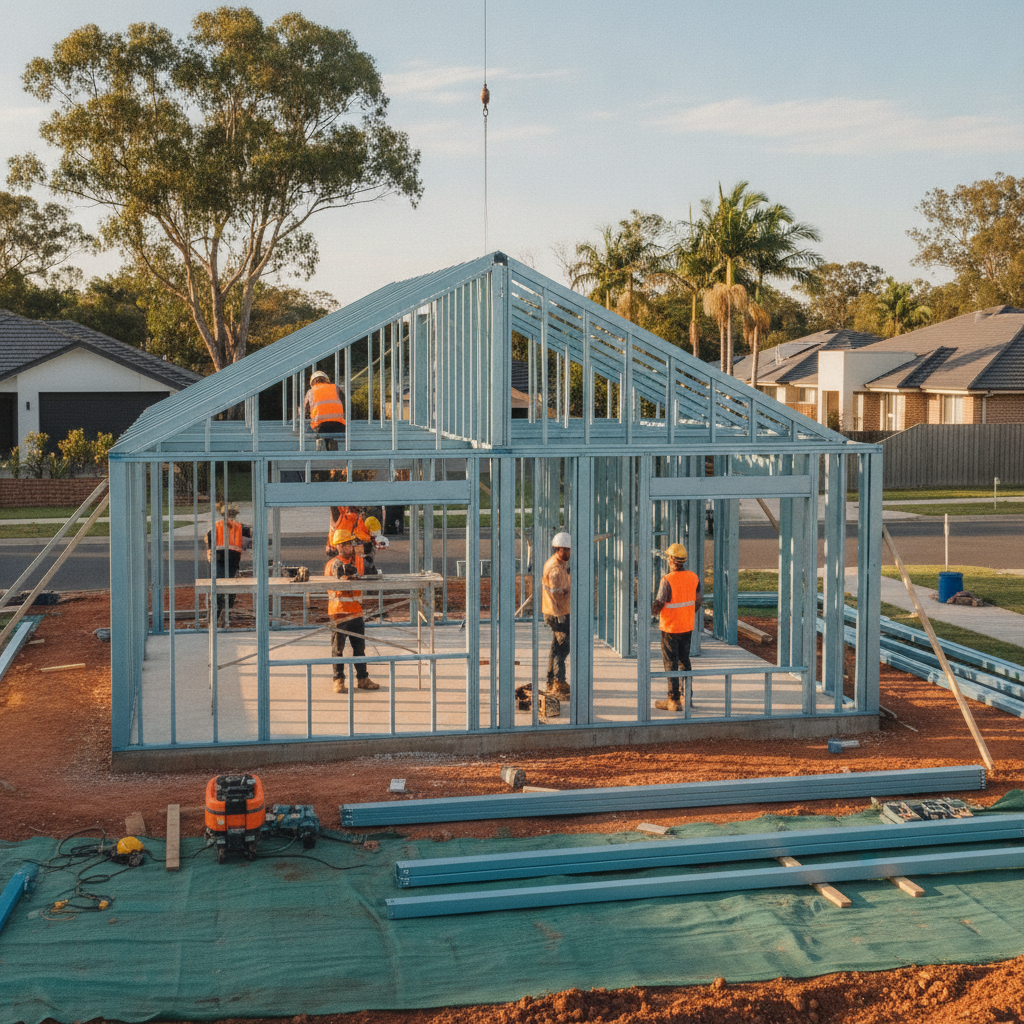
Once your slab is cured and the frame is erected, the frame inspection takes place. This is often the most detailed visit from the certifier. If you are using a high quality kit with BlueScope Steel frames, the precision of the components makes this stage significantly easier to navigate. However, the inspector is looking at more than just the walls.
What the Inspector Checks:
- Tie-Downs and Fixings: Are the frames securely anchored to the slab? The inspector will verify that all chemical or mechanical anchors match the engineering plans.
- Bracing: Every home needs lateral stability. The inspector will check that the bracing sheets or cross-bracing are installed in the exact locations specified in the structural drawings.
- Truss Connections: In the roof, they will look at the connections between the trusses and the wall plates, ensuring the correct brackets and screws have beeen used.
- Plumb and Level: While steel frames are naturally straight, the inspector will verify that the entire structure is true and square.
Pro Tip: Keep your engineered frame layout and truss plans on-site and easily accessible. The inspector will need to refer to these specific documents to sign off on the stage.
Stage 3: External Cladding and Glazing
Often referred to as the lock-up stage, this is where the building becomes weather-tight. The focus here shifts to the building envelope. The inspector or your trades will need to verify that windows and doors are installed according to Australian Standards (AS 2047 for windows). Flashings are a major focus here. Incorrectly installed flashing is a leading cause of water ingress in Australian homes, so the certifier will look for correct overlapping and sealing around openings.
Since your kit includes cladding and roofing materials, ensure you follow the manufacturer installation guides to the letter. This ensures that the warranties on materials like TRUECORE steel or external weatherboards remain valid and that they meet the fire-rating requirements of your specific site, especially if you are in a Bushfire Attack Level (BAL) rated zone.
Stage 4: Services and Rough-In
While this is often handled by your licensed plumbers and electricians, as an owner builder, you are responsible for ensuring these inspections happen before the internal walls are lined with plasterboard. The inspector will want to see the pipework and electrical runs within the wall cavities. They are looking for safety clearances and ensuring that the structural integrity of the frames has not been compromised by trades cutting or drilling through load-bearing members. One of the benefits of modern steel frames is the pre-punched service holes, which reduce the risk of structural damage during this phase.
Stage 5: Insulation and Energy Efficiency
Australia has strict energy efficiency standards (typically measured via a NatHERS rating). Before the internal linings go up, the inspector needs to verify that the insulation matches what was specified in your energy report. They will check the R-value of the batts in the walls and ceiling. They also look for gaps in the insulation, as even a small gap can significantly reduce the thermal performance of the home. This step is vital for ensuring your kit home remains comfortable through Australian summers and winters.
Stage 6: Final Inspection and Occupation Certificate
The final inspection is the home stretch. This is a comprehensive review to ensure the building is safe for habitation. The inspector will check for:
- Handrails and Balustrades: Ensuring they are at the correct height and have safe spacing between rails.
- Wet Area Waterproofing: You will likely need to provide a certificate from your waterproofer, but the inspector may check the falls in the shower and bathroom floors.
- Smoke Alarms: Verification that they are hard-wired and placed correctly.
- Final Drainage: Ensuring stormwater is being diverted away from the building and into the correct discharge points.
Once the inspector is satisfied that all conditions of the building permit have been met, they will issue an Occupation Certificate (or its equivalent in your state). This is the document that officially turns your building site into a home.
Common Pitfalls and How to Avoid Them
In many years of observing Australian building techniques, we have seen where owner builders often get tripped up. The most common delay is missing documentation. Ensure you have your Form 15s (Compliance Certificates for designs) and Form 16s (Inspection Certificates for installations) ready from your trades. If you are doing a DIY kit home, you are responsible for the installation quality of the non-licensed components, so take photos of your work as you go. These can be used as evidence if a certifier has a question about something that has already been covered up by cladding or plaster.
Final Thoughts for the Australian Owner Builder
Managing council inspections is simply a matter of organization and adherence to the plans. Kit homes provide a fantastic framework for success because the technical heavy lifting of the engineering has already been done for you. By following the sequence and respecting the technical requirements of the BCA, you can build a home that is not only beautiful but also structurally sound and fully compliant.
Remember, the goal of every inspection is to ensure that your new home is a safe haven for your family for decades to come. Treat each check-point as a quality assurance milestone on your journey to becoming a successful Australian homeowner.