Taking the Reins as an Owner Builder
There is a unique sense of pride that comes with building your own home. In Australia, the owner builder path has become increasingly popular for those who want more control over their living space and the satisfaction of seeing a project through from a vacant block to a finished residence. Kit homes provide a fantastic foundation for this journey, offering the structural components like precision engineered steel frames and quality cladding while leaving the creative finish and project management in your hands.
However, acting as your own project manager is a significant undertaking. The shift from 'dreamer' to 'builder' involves a steep learning curve. While the kit itself arrives ready to be assembled, the success of the project relies on everything that happens around it. If you are not prepared for the realities of site management, trade scheduling, and local regulations, a dream project can quickly hit hurdles. This guide explores the most common owner builder pitfalls and, more importantly, how you can avoid them to keep your build moving forward.
Understanding the Scope of Your Role
Before the first truck arrives on site, it is vital to understand what being an owner builder actually entails. You are not just 'doing some DIY.' You are effectively the principal contractor. This means you are responsible for site safety, insurance, council approvals, and the coordination of every trade from the plumber to the electrician. One of the biggest mistakes newcomers make is underestimating the administrative side of the build. To keep things on track, you must be organized, communicative, and ready to solve problems on the fly.
Pitfall 1: Diving in Without an Owner Builder Permit
Every state in Australia has specific requirements for owner builders. In many jurisdictions, if the value of the work exceeds a certain threshold, you must complete a certified owner builder course and obtain a permit from the relevant building authority. Skipping this step is not just a minor oversight, it is a legal roadblock. Without a permit, you cannot obtain the necessary insurances, and you may face significant fines. More importantly, it can halt your council approval process entirely. Always check with your local state authority, such as the VBA in Victoria or Fair Trading in NSW, before you begin any site works.
Site Preparation: The Foundation of Success
A kit home is only as good as the ground it sits on. Because modern kit homes use high precision materials, like TRUECORE steel frames, the tolerances for your slab or flooring system are very tight. If your foundation is even slightly out of level, it can cause a ripple effect throughout the entire assembly process.
Pitfall 2: Neglecting Site Access and Storage
It sounds simple, but many builders forget to plan for the arrival of the kit components. A delivery of steel frames, roofing, and cladding requires significant space. If your site is on a slope or has narrow access, you need a plan for where the materials will be unloaded. If the truck can't get close enough, you might find yourself manually moving heavy steel components across a muddy site, which leads to physical exhaustion and project delays. Ensure your site is cleared, accessible, and has a dedicated dry area for storing items like windows and doors before they are installed.
Pitfall 3: Inadequate Earthworks and Drainage
Never rush the site cut and drainage. Many owner builders are so eager to see the frame go up that they overlook the importance of proper water management. Poor drainage can lead to site washouts during rain, making it impossible for trades to work. Ensure your plumber has installed the necessary under-slab drainage and that the site is graded to shed water away from the building zone. A clean, well-drained site is a safe and efficient site.
The Art of Trade Coordination
One of the most complex parts of being an owner builder is managing trades. Unlike a traditional builder who has long-term relationships with a 'crew,' you are likely hire individual contractors for different stages. This is where many delays occur. If the sparky doesn't show up on Monday, the plasterer can't start on Wednesday, and suddenly your whole month is thrown into chaos.
Tips for Managing Trades
- Book Early: Good tradespeople are often booked months in advance. Don't wait until the frame is up to start looking for a plumber.
- Clear Communication: Provide your trades with the full plans and a clear scope of work. Ensure they know they are working on a kit home project.
- Verify Licenses: Always check that your contractors have current licenses and insurance. As the owner builder, the buck stops with you regarding site compliance.
- Sequence Matters: Understand the 'order of operations.' For example, insulation and windows must be in before certain internal works can proceed.
Precision Matters: Working with Steel Frames
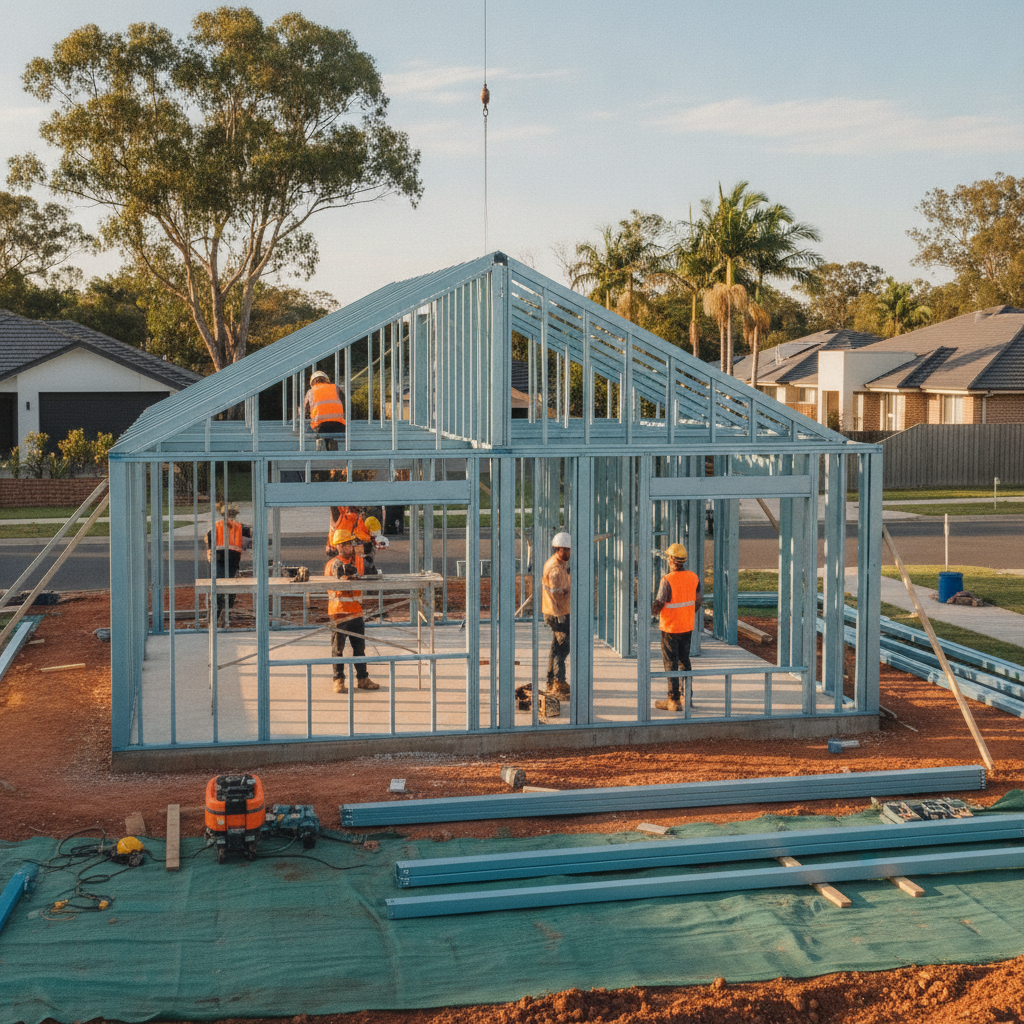
Using steel frames, such as those made from BlueScope Steel, offers incredible benefits for the owner builder. They are lightweight, termite proof, and won't warp or twist over time. However, because they are manufactured to such high levels of accuracy, they require a methodical approach during assembly.
Pitfall 4: Forcing the Fit
If a component isn't lining up, the solution is rarely to force it. Usually, it means the slab isn't perfectly level or a previous section of the frame isn't plumb. Take the time to measure twice and adjust. Steel frames are designed to go together like a giant, logical puzzle. Using the provided engineering plans is essential. Trying to 'wing it' with structural components is a guaranteed way to fail a building inspection and cause long-term structural issues.
Managing the 'Paper Trail' and Council Inspections
In Australia, building a home requires a series of mandatory inspections. These typically occur at the footing stage, the frame stage, and the final completion stage. A common pitfall for owner builders is failing to book these inspections at the right time, or worse, proceeding to the next stage before the previous one has been signed off.
Keep a dedicated project folder. This should contain your approved plans, your building permit, all certificates of compliance from your plumber and sparky, and your inspection reports. When it comes time to get your Certificate of Occupancy, having a clean paper trail will save you weeks of stress and back-and-forth with the surveyor.
Weathering the Storm: External Factors
You can't control the weather, but you can control how you prepare for it. In many parts of Australia, sudden downpours or extreme heat waves can stop work. One of the best things about a kit home is how quickly it can be 'dried in.' Once the steel frames are up and the roofing and cladding are on, you have a protected environment to work in. Prioritize getting the shell of the house finished as quickly as possible. This allows internal trades to work regardless of what is happening outside, effectively 'weather-proofing' your timeline.
Maintaining Your Momentum
Building a home is a marathon, not a sprint. It is natural to feel a burst of energy at the start, only to feel fatigued when you reach the 'fixing stage' (the internal fit-out). This is often where projects stall. To avoid this, set small, achievable milestones. Instead of looking at the whole house, focus on finishing the laundry or getting the kitchen cabinets installed. Celebrating these small wins keeps the momentum high and ensures the project doesn't drag on for years.
Conclusion
Being an owner builder is one of the most rewarding ways to create a home in Australia. By choosing a kit home with a reliable steel frame, you are already miles ahead in terms of structural integrity and ease of assembly. The key to avoiding the common pitfalls lies in the 'Three Ps': Planning, Patience, and Persistence.
Take the time to understand your legal obligations, respect the precision required in site prep, and build strong, professional relationships with your trades. While delays can happen, most are preventable with a bit of foresight. Stay organized, keep your site clean, and remember that every challenge solved is a step closer to the day you finally move into a home that you built with your own two hands. Happy building!