The Great Australian Block: Flat is Rare
Most people start their kit home search by looking at floor plans. They're at the kitchen bench on a Tuesday night, staring at a laptop, arguing about whether the master bedroom needs a walk-in robe or a bigger ensuite. But the biggest decision isn't the floor plan. It's how that house actually sits on your bit of dirt. In Australia, we don't get many perfect, flat blocks. Usually, you're dealing with a slope, some heavy clay, or maybe a patch of rocky ground that looks like it'll break a jackhammer. This is where you have to choose: single storey on a slab, or an elevated kit home on stumps.
It's a decision that changes everything. Not just the look of the place, but your bank balance and how much sweat you'll put into the build. I've seen blokes try to force a slab onto a five-degree slope and end up spending more on a retaining wall than they spent on the actual kit. It's madness. You've got to work with the land, not against it. Because if you fight the site, the site always wins. Eventually.
The Lowdown on Slab-on-Ground
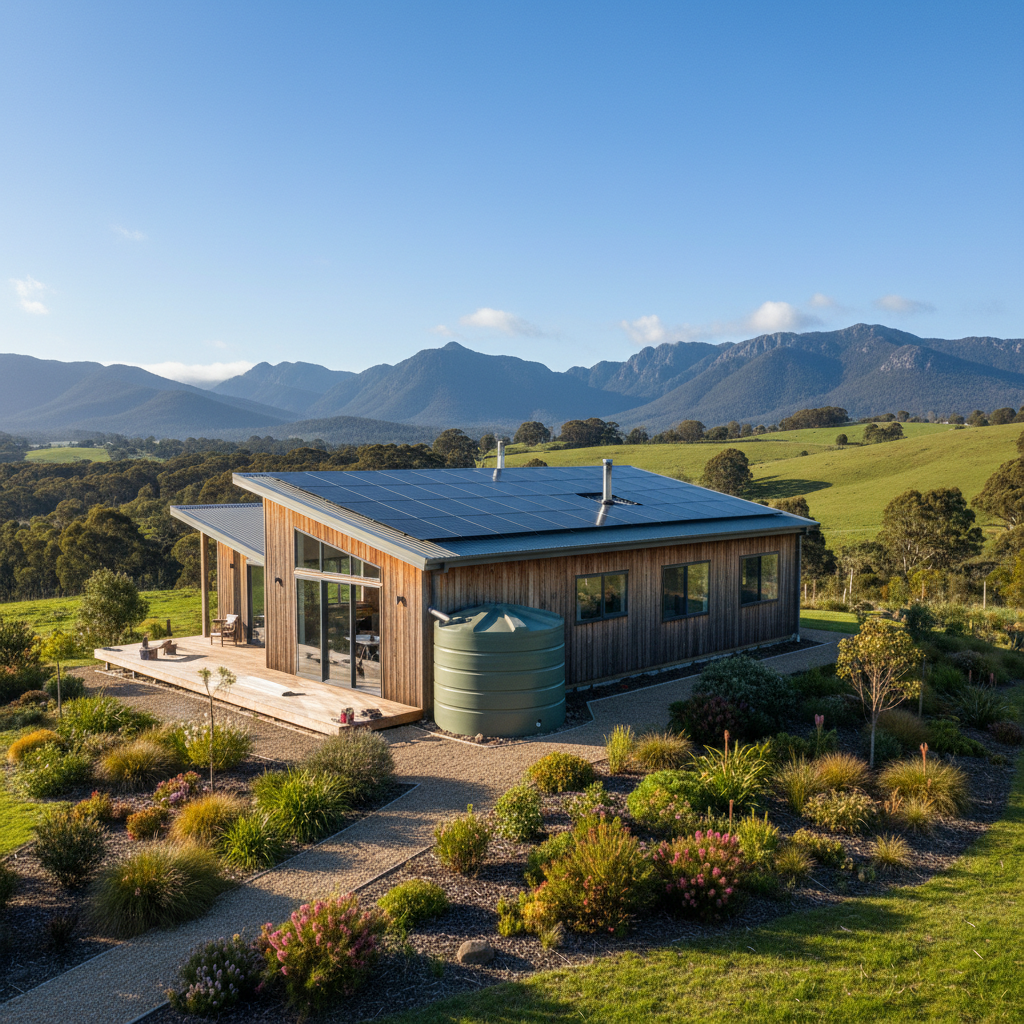
There's a reason major builders love slabs. They're solid. When you walk through a home on a concrete slab, it feels permanent. There's no bounce in the floor when the kids run down the hallway. Thermal mass is a big win here too. If you get your orientation right, that slab is going to soak up the winter sun and keep the place warm well after the sun drops behind the timber line. Plus, if you're getting older or kids are in the picture, no stairs is a massive plus. Level access makes life easy.
But here is the catch. Slabs hate slopes. Even a slight fall across your building envelope means you're looking at significant earthworks. You'll be hiring an excavator for a week, moving tons of fill, and likely putting in some serious drainage. If you're in a high rainfall area like the Sunshine Coast or the leafy parts of Melbourne, poor drainage around a slab is a nightmare. It leads to movement and cracking. Also, once that concrete is poured, your plumbing is locked in. If you want to move a toilet later? Get the jackhammer out. Not fun.
When you use a kit with TRUECORE steel frames on a slab, the precision is great. Everything is dead straight. But you've got to make sure that slab is poured within a 5mm tolerance. If the slab is wonky, your steel frames won't sit right, and you'll spend three days shimming the bottom plate just to get the thing level. It's a trade-off. Easy living, but higher prep work.
Going Up: Why Elevated Kits Often Win
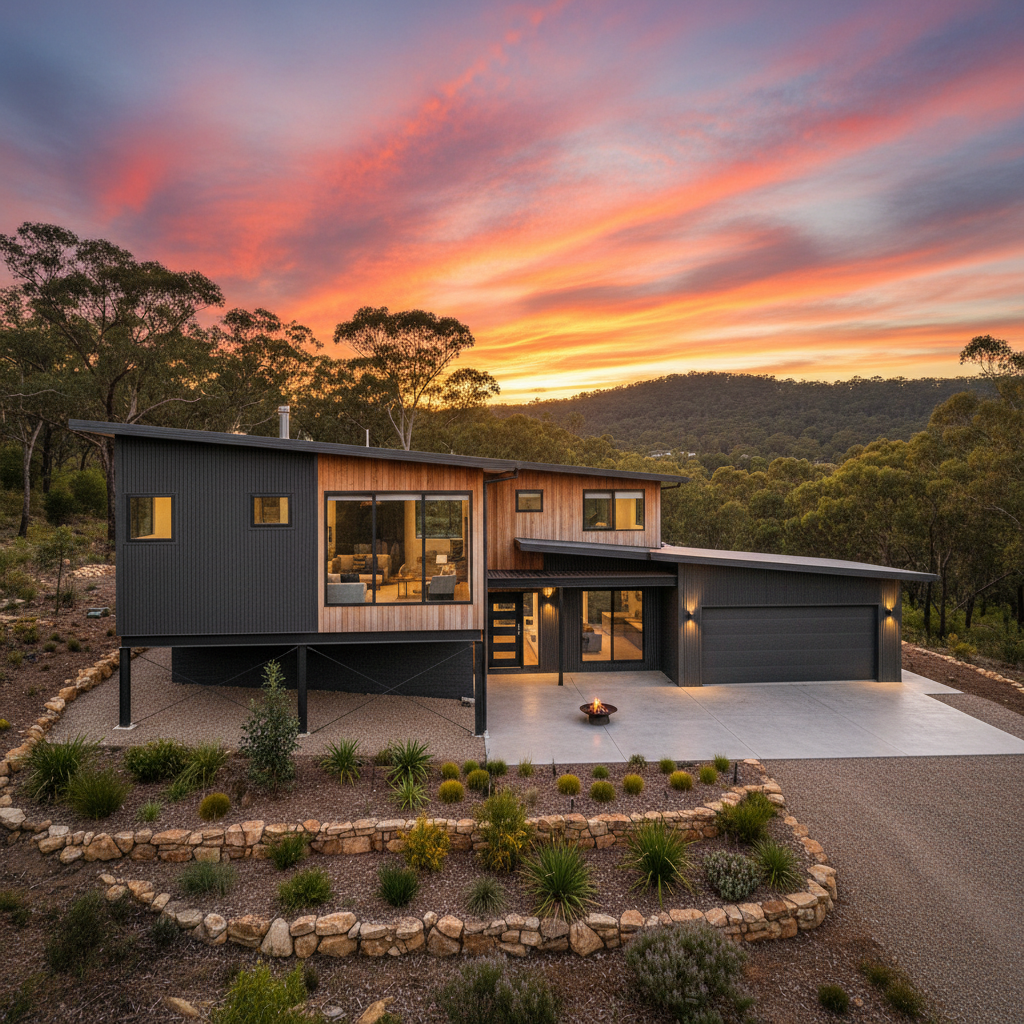
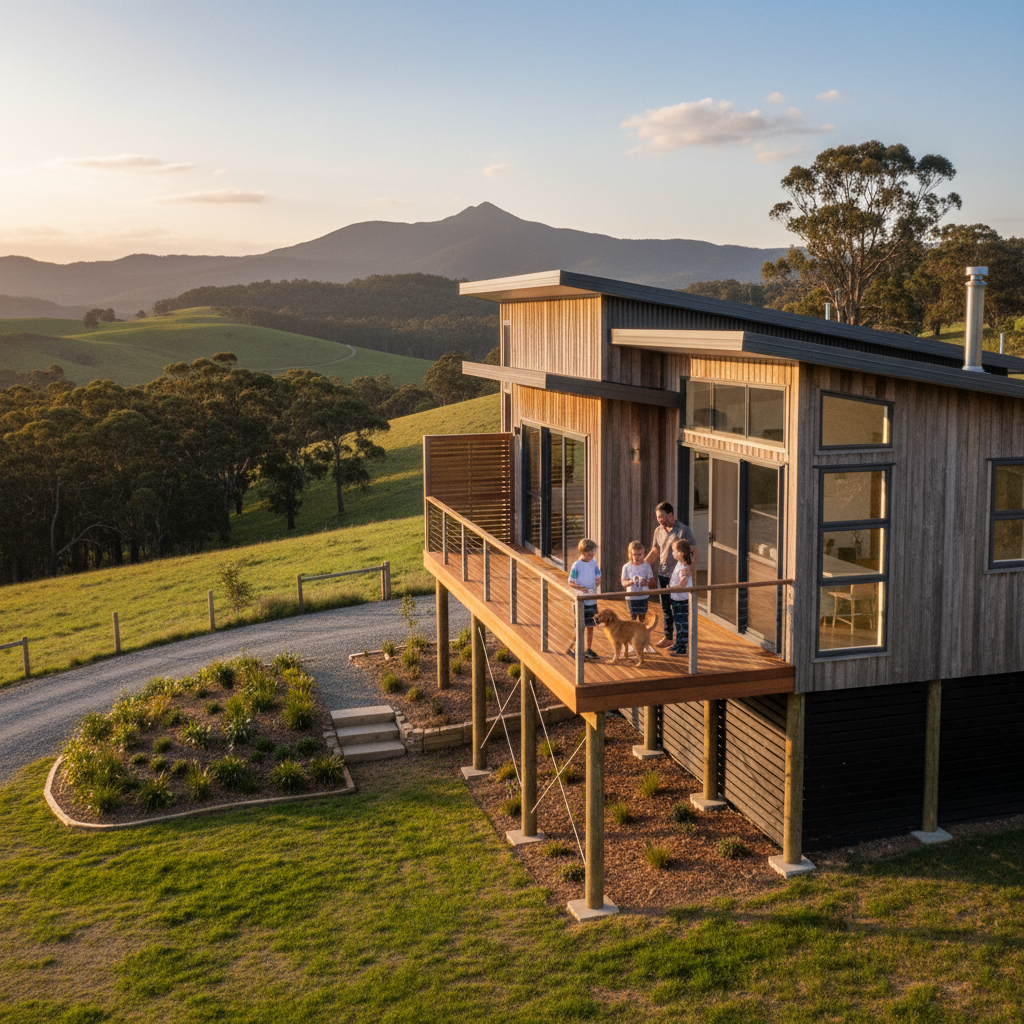
If your block has more than a meter of fall from one side to the other, you should be looking at an elevated kit home. Why? Because stumps are cheaper than dirt. Building up on piers or stumps means you're not fighting the slope. You dig a few holes, set your levels, and you're away. It keeps the house away from moisture, it gives you a spot to run your plumbing and electrical for easy maintenance, and it lets the air circulate under the house. In the tropics or even up in the Territory, this airflow is the difference between a house that's a sweatbox and one that's comfortable.
And let's talk about the view. Getting that extra meter or two of height often catches the breeze and the scenery you paid for. Plus, if you go high enough, you've suddenly got a massive under-croft area for a workshop or car storage. No extra roof area required. Just a few more lengths of steel for the stumps.
The downsides? Stairs. You'll be carrying groceries up them every single day. And the floor feel. Even with a well-engineered steel floor system, there's a different resonance to a timber or compressed-sheet floor compared to concrete. You also have to think about insulation. Most people forget to insulate under the floorboards of an elevated house. Don't be that person. You'll freeze your toes off in a Canberra winter if you don't shove some decent batts or foil under there.
Termites and Durability
Look, we live in Australia. Termites are a fact of life, not a maybe. This is why steel frames have become the standard for the smart owner-builder. They won't eat your house. But the foundation choice changes how you manage the risk. On a slab, you're relying on physical barriers and reticulation systems around the perimeter. With an elevated kit, you've got visual access. You can walk under there with a torch once a month, check the ant caps, and see if the little blokes are trying to build tunnels. It's peace of mind you don't get when everything is buried in the ground.
The Reality of Site Prep
I spoke to a bloke last week who was convinced he could save money by DIY-ing the site prep for a slab. He spent three weeks in a hired bobcat and still didn't get it level. In the end, his concrete bill was double because the thickener beams were massive. It was a mess.
If you're an owner-builder, consider these three things before you pick your kit style:
- Soil Type: If you're on reactive clay (Class H or E soil), a slab needs to be heavily engineered to stop it cracking when the ground wets and dries. This gets expensive. Stumps can often be more forgiving.
- Access: Can a concrete truck actually get to your house site? If you're up a long, winding dirt driveway, those trucks will charge you a fortune in waiting time. Sometimes it's easier to bring in steel floor joists on a truck and bolt them together yourself.
- Services: If you're off-grid, elevated homes make it way easier to manage septic systems and water tanks. Gravity is your friend.
Steel Frames and the Owner Builder
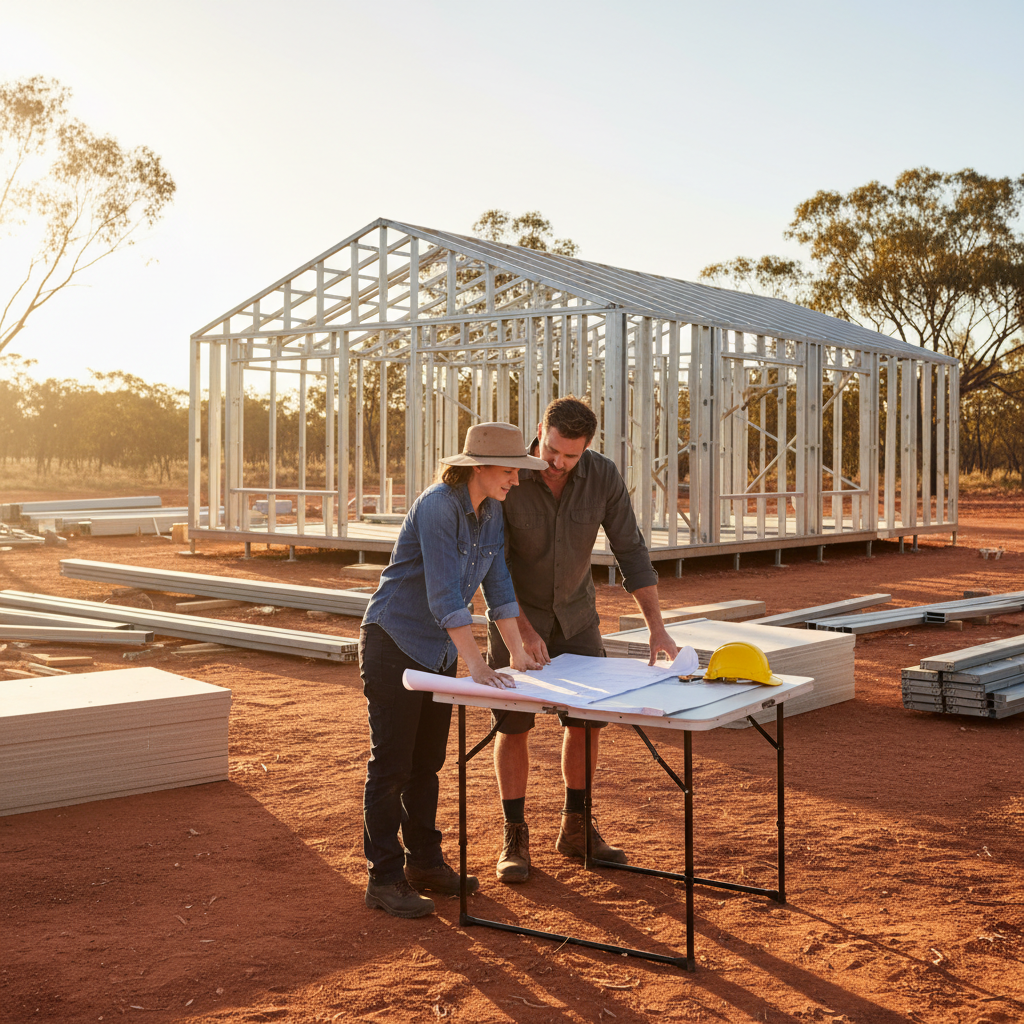
Regardless of whether you go up or stay low, the steel frame is the heart of the kit. The beauty of these kits is the ease of assembly. Most of the hard work is done in the factory. You get a delivery, and it's like a giant Meccano set. But the foundation is the one thing the kit supplier can't do for you. You've got to get those footings right. If you're building an elevated house, spend the time getting your bearers perfectly square. If the floor is out, the walls will be out, and by the time you're trying to put the roof on, nothing will line up. Take your time. Measure twice. Then measure a third time.
Actually, here's a tip. If you're doing an elevated steel floor, use a laser level. Don't rely on a bubble level and a long straight edge. It's 2024. You can buy a decent laser for a couple of hundred bucks at Bunnings. It will save you a week of headaches and ensure your BlueScope steel frames slot together exactly how the engineers intended.
Making the Call
So, which one wins? If your block is flat as a pancake and you want that solid, thermal-mass feel, go the slab. It's the standard for a reason. It's easy for subsequent trades like tilers and floor layers to work on. Just make sure your drainage is sorted so you don't end up with a moat every time there's a summer storm.
But if you've got a view, a slope, or you just want to keep the house away from the creepy-crawlies and damp ground, the elevated kit is the way to go. It gives you more flexibility, it's often easier for a solo owner-builder to manage without heavy machinery, and it has that classic Australian look that never goes out of style.
Deciding this early is the key. Don't fall in love with a floor plan and then try to make it fit a block it wasn't designed for. Assess the dirt first. The house comes second. Most of our kits can be adapted for either, but the site will tell you what it needs. You just have to listen to it.