Taking the Reins: The Owner Builder Journey
There is a unique sense of pride that comes with being an owner builder in Australia. Whether you are situated on a quiet bushy block in the hinterland or a coastal strip, the ability to manage your own project allows for a level of control and personal satisfaction that hiring a volume builder simply cannot match. When you choose to go down the kit home path, you are already ahead of the game with a streamlined process involving high quality BlueScope steel frames and a clear set of components. However, with great control comes great responsibility, particularly when it comes to risk management.
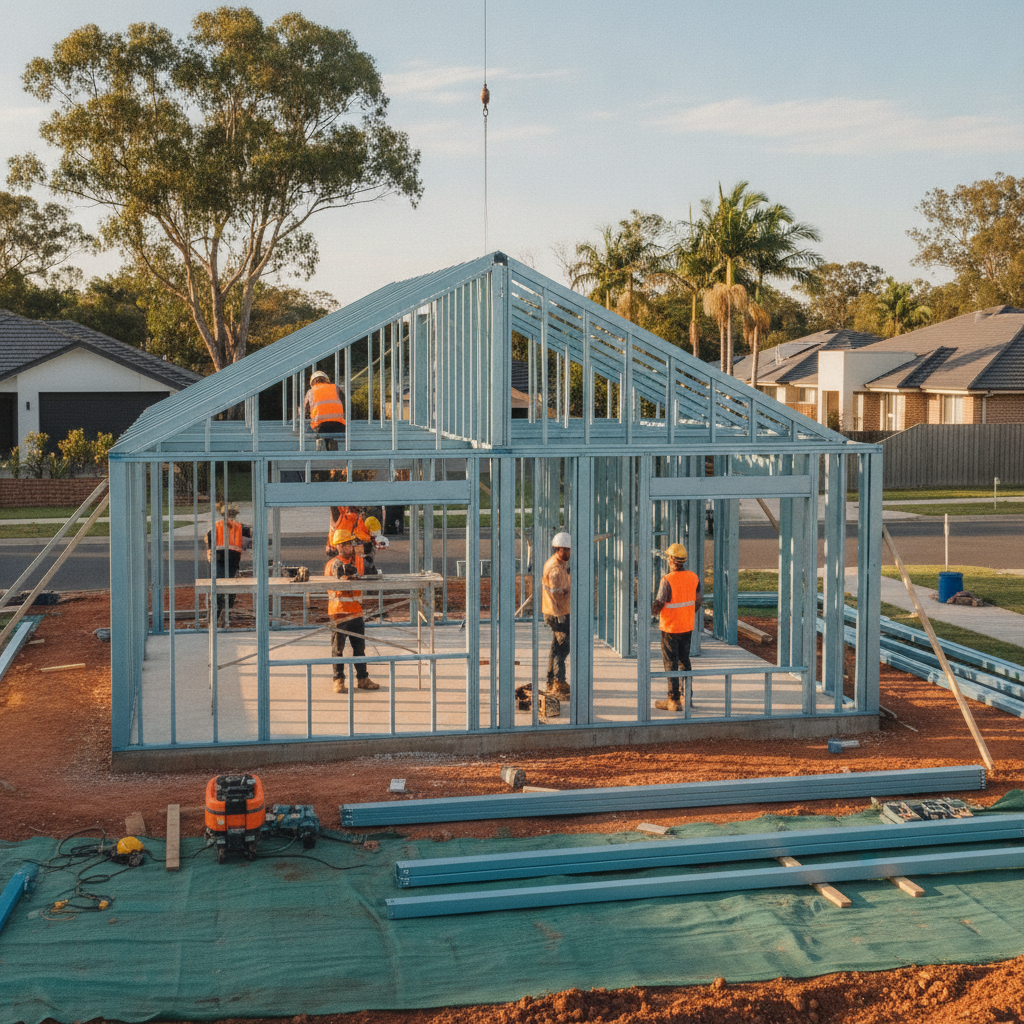
Stepping into the role of an owner builder means you are essentially the site manager, the foreman, and the compliance officer all rolled into one. While your kit home provider delivers the structural bones of your house, like the TRUECORE steel frames, roofing, and cladding, the safety of the site and the protection of the assets fall squarely on your shoulders. This is where insurance moves from being a boring paperwork task to being your most important safety net.
Why Insurance Matters More for Kit Home Projects
Unlike a traditional build where a registered builder carries their own insurance cover for the duration of the contract, an owner builder is the one who must ensure every angle is covered. If a heavy storm rolls through while your steel frames are being erected, or if a member of the public wanders onto your site and trips over a stack of cladding, you are the one held accountable.
The Australian climate and construction environment can be unpredictable. From theft of materials to accidental damage during installation, the financial implications of being uninsured can be devastating. Understanding the specific types of insurance available to owner builders is the first step in ensuring your dream home does not turn into a nightmare.
Construction and Public Liability Insurance
This is often considered the foundation of any owner builder insurance portfolio. Construction insurance (sometimes called Contract Works insurance) covers the physical structure of your home while it is being built. For a kit home, this includes the steel frames, the roof, the windows, and the doors as they are being installed.
Public Liability is equally important. It protects you against claims for personal injury or property damage sustained by third parties. This could include a neighbor, a delivery driver, or even a curious passerby. In Australia, liability claims can be substantial, so ensuring your policy has a high enough limit, typically 5 million or 10 million dollars, is standard practice.
Key tips for Construction Insurance:
- Ensure the policy starts the moment materials are delivered to your site.
- Check if the policy covers "Mitigation of Loss," which helps prevent further damage after an initial incident.
- Verify that the policy covers the full replacement value of the kit and the estimated labor costs.
The Importance of Personal Accident Cover
As an owner builder, you are likely to be hands on. Even if you are just supervising, construction sites are high risk areas. Many people forget that standard health insurance or even workers compensation (which covers your sub-contractors) may not cover you for injuries sustained while working on your own project. Personal Accident insurance provides a weekly benefit if you are unable to work your regular job due to an injury on site, helping you keep your project on track despite physical setbacks.
Voluntary Workers Insurance
One of the best parts of the Australian owner builder spirit is having friends and family drop by to lend a hand. Whether it is helping to stand up the steel frames or installing the insulation, these helpers are often not covered by standard liability policies. Voluntary Workers insurance provides specific protection for your mates and family members if they get hurt while helping you out for free. It is a small price to pay for the peace of mind that those helping you are protected.
Understanding Owner Builder Warranty Insurance
This is where things can get a bit technical, and requirements vary significantly between Australian states like NSW, Victoria, and Queensland. Owner Builder Warranty Insurance (sometimes called Domestic Building Insurance) is generally required if you decide to sell your home within a certain period after completion, usually six to seven years.
This insurance protects the future purchaser of the home if there are structural defects and the owner builder has died, disappeared, or become insolvent. Even if you plan on living in your kit home forever, it is vital to check your local state regulations. Life happens, and if you need to sell unexpectedly, not having this insurance in place can hold up a sale or significantly decrease your property value.
The Gap Between Kit Homes and Modular Homes
It is important to distinguish the insurance needs of a kit home compared to other housing types. Some people confuse kit homes with modular homes, but they are very different animals. A modular home is built entirely in a factory and transported to site. In those cases, the factory often holds the primary insurance until the keys are handed over.
With a kit home, there is a distinct transition of risk. Once your steel frames and materials leave the supplier workshop and arrive at your property, the insurance responsibility shifts to you as the owner builder. You aren't just buying a finished box; you are managing a construction project. This means your insurance needs to be active and comprehensive from day one of site works.
Choosing the Right Trades and Their Insurance
While you are the owner builder, you will be hiring licensed trades for things like plumbing, electrical, and perhaps the concrete slab. Just because you have your own insurance does not mean you should ignore theirs. Always ask to see a Certificate of Currency for their Public Liability and Workers Compensation insurance.
If a plumber causes a fire while soldering pipes, their insurance should be the first point of contact for the claim. However, if they are uninsured, the liability might flow back to you. Keeping a digital folder with copies of all your sub-contractors' insurance certificates is a hallmark of an organized and protected owner builder.
Practical Tips for Managing Your Risk
Beyond just buying a policy, there are active steps you can take to minimize the risk on your kit home site:
- Site Security: Erect temporary fencing to keep the public out. This is a primary requirement for many insurance policies.
- Material Storage: Store your cladding, windows, and doors in a secure, dry area. Theft of building materials is unfortunately common on unsecured sites.
- Signage: Clear "Keep Out" and "Construction Site" signs help establish your legal position if someone enters the site without permission.
- Documentation: Take photos of your site regularly. If you need to make a claim for storm damage to your steel frames, having "before" photos can speed up the process significantly.
Conclusion
Becoming an owner builder is one of the most rewarding ways to create a home in Australia. By choosing a kit home with durable steel frames and high quality finishes, you are setting yourself up for a beautiful and lasting result. However, the grit and determination required to build a home must be matched by a smart approach to insurance.
Do not view insurance as a hurdle, but rather as a tool that allows you to work with confidence. When the frames are up and the roof is on, you want to be able to stand back and admire your handiwork, knowing that your investment, your family, and your future are all securely protected. Before you turn that first sod or receive your first delivery of steel, take the time to speak with a broker who specializes in owner builder insurance. It is the best way to ensure that your journey from kit to castle is a smooth and successful one.