Taking the Reins: The Reality of Owner Building in Australia
There is a unique sense of pride that comes from standing in a home you helped build with your own two hands. Across Australia, from the coastal stretches of Queensland to the rural heartlands of Victoria, the owner builder path is becoming an increasingly popular way to create a bespoke living space while staying deeply involved in the process. However, transitioning from a dreamer to a project manager requires more than just a tool belt and a passion for DIY. It requires foresight, organization, and a solid understanding of the construction timeline.
When you choose a kit home, you are already one step ahead. By receiving a pre-engineered package of components, you bypass much of the guesswork associated with traditional stick-builds. But even with the best components at your disposal, the success of your build hinges on your ability to manage the site, the trades, and the logistics. This guide explores how to avoid the most common delays and navigate the technical side of owner building, with a particular focus on why steel frame construction is a game changer for the modern DIYer.
The Importance of Site Readiness and Compliance
One of the biggest pitfalls for first-time owner builders is rushing into the delivery phase before the site is truly ready. It is easy to get caught up in the excitement of the kit arriving, but without proper preparation, those materials could sit idle, or worse, become a logistical nightmare.
Council Approvals and Engineering
Before a single truck arrives, your paperwork must be airtight. Every local council in Australia has different requirements regarding setbacks, bushfire attack levels (BAL), and drainage. A common mistake is assuming that because a kit is engineered for a general region, it is automatically approved for your specific block. Always ensure your site-specific engineering matches your council's requirements. This includes soil tests and wind ratings, which dictate how your slab or footings are designed.
Access and Storage
Kit homes involve large deliveries. A semi-trailer carrying your steel frames and roofing needs clear, stable access. If your site is on a slope or has narrow access roads, you need a plan. Where will the materials be stored? High-quality components, such as TRUECORE steel frames and Colorbond cladding, are durable, but they still need to be stored flat, off the ground, and in a way that allows you to access the pieces in the order you need them. If the first thing you need is buried under the last thing delivered, you have already created a delay.
The Steel Advantage: Precision and Speed
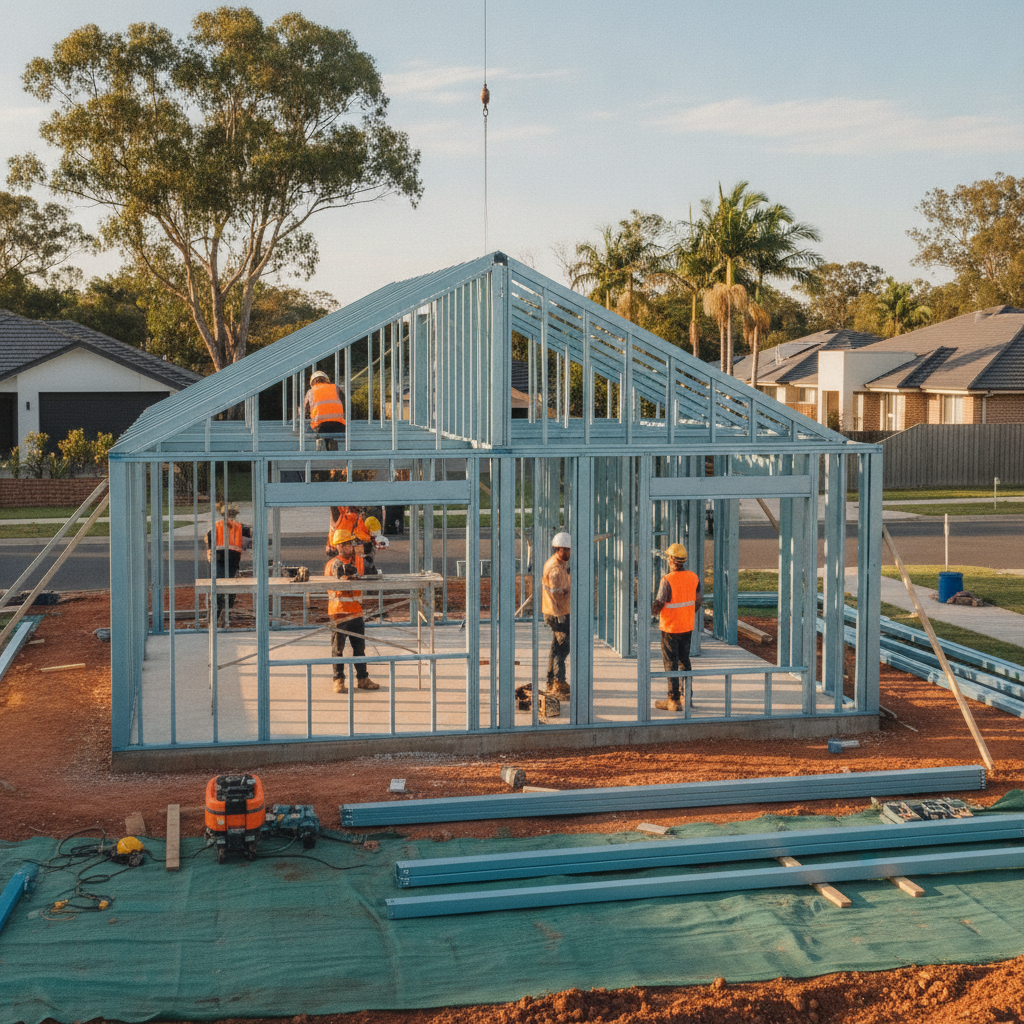
As an owner builder, your biggest enemy is time. The longer your house is under construction, the more exposed it is to the elements and the more stressed your schedule becomes. This is where the choice of materials makes a profound difference. Many Australian owner builders are turning to steel frame construction, specifically components made from BlueScope steel, for several practical reasons.
Dimensional Stability
Unlike traditional timber, steel does not warp, twist, or shrink. From an owner builder's perspective, this is a massive advantage. When your frames arrive, they are straight and true. This means when it comes time to install your windows, doors, and internal linings, everything fits exactly as intended. You won't spend days planing back studs or shimmying out walls to get a flush finish. This precision flows through the entire build, reducing the likelihood of remedial work down the track.
Ease of Handling
Steel frames are surprisingly lightweight compared to their strength. For a DIY team, this makes the physical labor of standing the walls much more manageable. Most steel kit homes come with pre-punched holes for electrical and plumbing services. This might seem like a small detail, but it significantly speeds up the time your sparky and plumber spend on site, potentially saving you on labor costs and keeping your timeline tight.
Managing Trades: The Owner Builder's Balancing Act
Even if you plan to do a lot of the work yourself, you will still need to engage licensed professionals for specific tasks like plumbing, electrical, and gas fitting. The bridge between a kit supplier and a finished home is often the trade management.
Communication is Key
A common delay occurs when a trade arrives on site only to find they cannot perform their job because a previous stage wasn't completed. You are the conductor of this orchestra. Ensure your plumber has installed the in-slab drainage before the concrete is poured. Ensure your electrician knows the specifications of your steel frames so they bring the right grommets to protect the wiring. Being transparent about your timeline and asking your trades what they need from you a week in advance will prevent the "sorry mate, can't do it today" phone calls.
Scheduling the 'Wet' Trades
The slab and the roof are the two most critical milestones. Once the slab is down, you have a platform. Once the roof and cladding are on, you are "dried in." Prioritize getting your roofing and cladding team lined up for as soon as the frames are standing. Once the home is weatherproof, interior work can continue regardless of the Australian weather, which can be notoriously unpredictable.
Avoiding the 'Scope Creep' and Design Delays
It is tempting to make changes once you see the walls moving up. Maybe you want to move a window ten centimeters to the left or change the layout of the kitchen. In a kit home environment, late-stage design changes are a fast track to delays. Because kit homes are pre-engineered, changing a structural element can require new engineering certifications and custom manufacturing, which puts the brakes on your project.
The tip here is simple: Finalize your design before you order. Spend time in the planning phase visualizing the flow of the rooms. If you are using a kit that includes windows and doors, ensure their placement maximizes natural light and ventilation (passive solar design). This preparation pays off in a smoother construction phase.
Protective Measures and Site Safety
Safety is often overlooked by owner builders, but a site injury or a WorkSafe audit can shut a project down for weeks. As an owner builder, you are legally responsible for site safety. This includes having proper fencing, site signage, and ensuring anyone working on the site has their White Card and follows safe work practices. Especially when working with steel frames and roofing, ensure you have the right PPE, including gloves and eye protection, as metal edges can be sharp.
The Finishing Touches: Why the Last 10% Takes the Most Time
Most builders will tell you that the first 90% of a house takes 90% of the time, and the last 10% takes the other 90%. It is a joke, but it feels true. The finishing stages, the architraves, the painting, the tiling, and the cabinetry, require immense attention to detail. This is where many owner builders lose momentum.
To avoid the dreaded "never-ending build," create a checklist of every tiny task required for your Occupation Certificate. Breaking the final stage down into small, achievable goals helps maintain motivation. Remember, since your steel frames haven't moved or settled, your plaster and paint finishes are likely to stay crisp and crack-free for much longer, giving you a professional result even if it's your first time doing the finishing work.
Conclusion: Your Path to a New Home
Building your own kit home in Australia is a challenging but immensely rewarding endeavor. By choosing a system that prioritizes precision, like a steel-framed kit, you remove many of the variables that cause headaches on a traditional building site. Avoiding delays isn't about working faster; it's about planning better. Focus on site readiness, maintain clear communication with your trades, and stick to your design. With a bit of grit and a lot of organization, you'll be turning the key in the door of your new home before you know it, knowing you built it for your family, your way.