Taking the Reins: The Owner Builder Journey in Australia
There is a unique sense of pride that comes with building your own home. For many Australians, the owner builder path is the gateway to a custom lifestyle, offering a level of involvement and control that a standard turnkey contract simply cannot match. Kit homes have become the preferred vehicle for this journey, providing a structured starting point while allowing the owner to manage the process.
However, the transition from dreamer to site manager comes with a steep learning curve. While the kit home model simplifies much of the technical design and material sourcing, the responsibility for a smooth build sits squarely on your shoulders. Delays and mistakes in the owner builder world are rarely about the materials themselves, they are almost always about planning, sequencing, and communication. This guide explores how to navigate the common pitfalls and keep your build on track.
The Myth of the 'Start Whenever' Approach
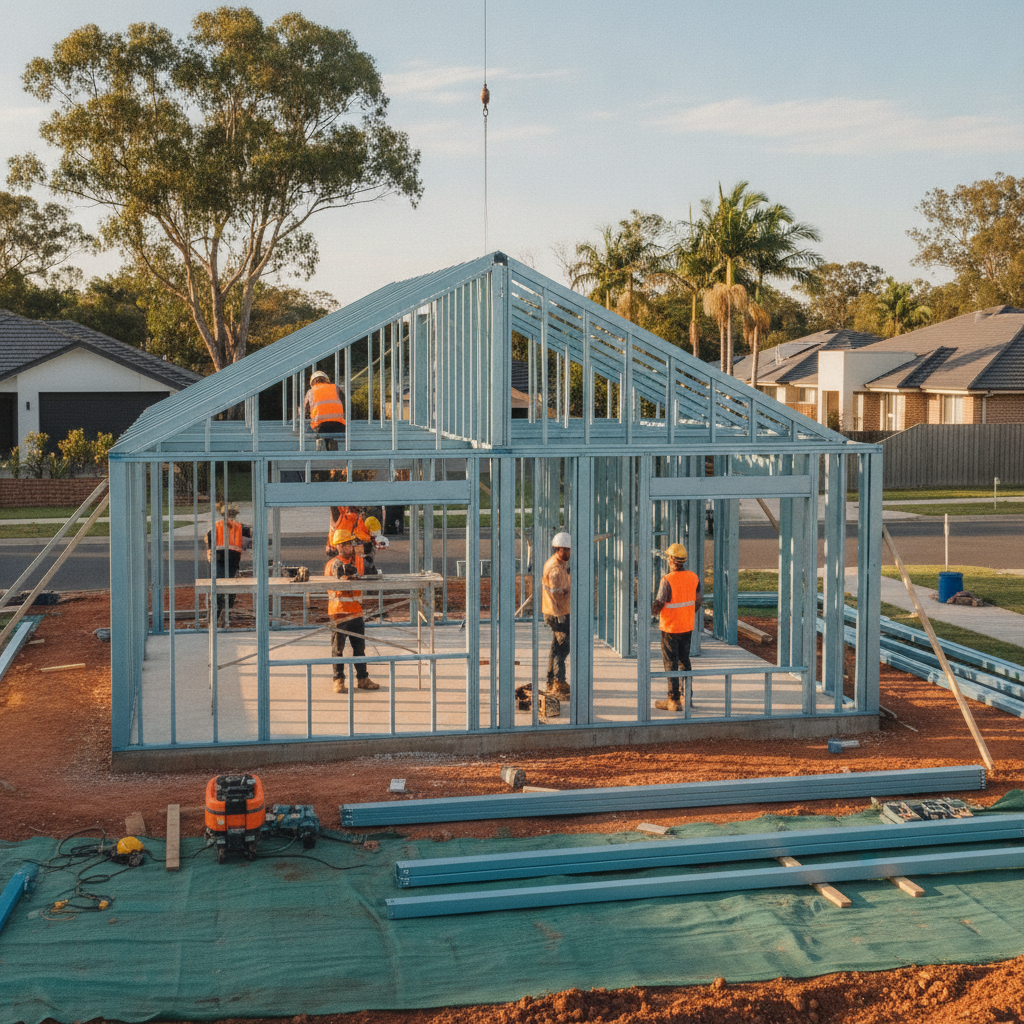
One of the most frequent mistakes owner builders make is failing to sync their site preparation with the arrival of their kit. In the world of steel frame construction, precision is everything. If your slab is poured incorrectly or is not perfectly level, the high tensile accuracy of BlueScope TRUECORE steel frames will highlight those errors immediately.
To avoid a total standstill, your site works must be completed well before the delivery truck arrives. This means having your council approvals in place, your site cleared, and your slab or floor system finished and cured. A common delay occurs when builders wait for the kit to arrive before booking their plumber for the rough-in. In reality, the underground services must be perfectly positioned before the concrete is even poured. Coordination is the secret to avoiding weeks of stagnant progress.
Mastering the Logistics of Steel Frame Delivery
When you choose a steel-framed kit home, you are choosing a material that is lightweight, durable, and resistant to termites. However, because steel frames are engineered to exact specifications, they need to be handled with care on-site. A major pitfall for many DIY builders is poor site access management.
Have you considered where the delivery truck will park? Is there enough room for a crane or hiab to offload the frames? If the truck cannot get close enough to the building pad, you might find yourself manually carrying steel components across a muddy site, which adds days to your timeline and risks damaging the frames. Always ensure your access tracks are reinforced if you are building in the wetter months, and have a clear, flat area designated for material storage.
The Trap of Sequential Thinking
Inexperienced owner builders often think linearly: "I will finish the frames, then I will think about the windows, then I will find a roofer." This is a guaranteed way to introduce months of delays. In the current Australian building climate, lead times for trades and specific materials like custom windows or specialized cladding can be significant.
Successful owner builders use a technique called 'overlapping management.' While the slab is curing, you should already be confirming the delivery dates for your windows and doors. Because kit homes come with pre-designed openings, you don't need to wait for the frames to be up to know the sizes. Use that lead time wisely. By the time your roofing and wall cladding arrive, your local plumber and electrician should already have your project marked in their calendars for the middle of next month. Never wait for one phase to finish before planning the next two.
The Technical Edge: Why Steel Frames Simplify the DIY Process
While managing a site is hard work, choosing steel frame construction actually removes several technical hurdles that often trip up owner builders. Unlike traditional timber, which can warp, twist, or shrink if exposed to the Australian elements during the build, steel frames stay straight and true. This is a massive advantage when it comes to the 'fixing' stage.
If your frames are perfectly square, your plasterboard goes on flatter, your doors swing more smoothly, and your kitchen cabinetry fits without the need for excessive shimming. Many owner builder delays are caused by having to 'rectify' wonky walls before the internal fit-out can begin. By using precision-engineered steel, you effectively skip the rectification phase, saving you time and frustration.
Communication: Managing Your Sub-Contractors
Even if you are doing much of the work yourself, you will likely need licensed trades for electrical, plumbing, and perhaps roofing. A recurring pitfall is the breakdown of communication between the owner builder and these trades. Tradespeople are used to working for professional site managers who know exactly what needs to be ready for them.
To avoid being pushed to the back of a busy sparky's queue, provide them with clear information. Show them the floor plans early. Explain that you are using a steel frame kit, as this informs the type of grommets and tools they need to bring. If a trade arrives and the site isn't ready for them, they will leave, and it might be three weeks before they can fit you in again. Always confirm with your trades 48 hours before they are due on-site.
Weatherproofing and the 'Lock-Up' Race
In Australia, the weather is your biggest unpredictability. A common cause of project fatigue and delay is letting the project sit 'open' for too long. Once your steel frames are standing, your absolute priority should be reaching the 'lock-up' stage. This means getting the roof on, the windows in, and the external cladding finished.
Once the house is weather-tight, the pressure eases. You can work on the interior during rainy days, and your internal materials (like insulation and plasterboard) are protected from damage. Owner builders who get distracted by landscaping or minor external details before the house is sealed often find themselves battling moisture issues or ruined materials. Stay focused on the shell first.
Documentation and Compliance
The paperwork doesn't end when the permit is issued. One of the most frustrating delays happens at the very end of the project: failing to get the final occupancy certificate because of missing documentation. As an owner builder, you must be a meticulous record-keeper.
Every time a licensed trade finishes a stage, ensure you get their compliance certificate immediately. Don't wait until the end of the year to chase them up. Keep a site diary and take photos of everything, especially things that will be covered by walls, such as plumbing lines and electrical runs. This not only helps with inspections but is invaluable if you ever decide to renovate or sell the home in the future.
Final Tips for the Australian Owner Builder
Building a kit home is a marathon, not a sprint. To maintain your momentum and avoid the common pitfalls, remember these three rules:
- Measure twice, order once: Even with a comprehensive kit, you are responsible for the site-specific elements. Double-check your slab dimensions against your frame layouts before any concrete is poured.
- Protect your steel: While TRUECORE steel is incredibly resilient, keep your site tidy. Avoid stacking heavy items against standing frames and ensure all off-cuts are disposed of safely to prevent tripping hazards.
- Be a student of the process: Read the assembly guides provided with your kit multiple times before you even pick up a tool. Understanding the logic of the system prevents the 're-doing' of work.
By staying organized, communicating clearly with your trades, and leveraging the precision of steel frame construction, you can navigate the owner builder process with confidence. The result is more than just a house, it is a home built with your own hands, designed to stand the test of time in the harsh Australian environment.